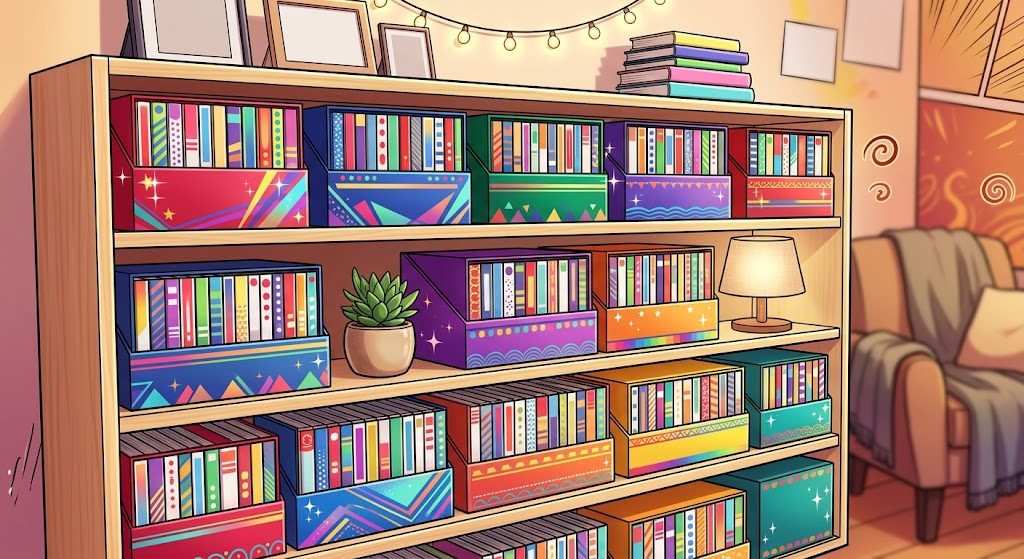
Manga box sets bundle an entire series — or a major chunk of one — into a single purchase, usually at a meaningful discount to buying each volume separately. For horror manga fans putting together a collection, that’s real money saved: a 14-volume set like Tokyo Ghoul comes in roughly $30–$40 cheaper than the same volumes bought one at a time, and most sets include exclusive extras (posters, art booklets, even replica props) that aren’t sold separately.
There’s also a practical side: no mismatched spine designs (the narrow edge you see on a shelf) from different print runs, no gaps in your collection, and no hunting for out-of-stock volumes one at a time. You open the box and the entire story is right there, ready to read.
One honest caveat — during major seasonal sale events, individual volumes sometimes drop sharply in price, which can undercut box set pricing. If you’re patient and don’t mind buying volumes one by one over months, sale-hunting is an option. But for most readers who want everything at once with bonuses included, box sets are the better deal.
Complete Series vs. Arc-Based Box Sets
Not all box sets work the same way. Understanding the difference saves you from surprises at checkout.
Complete series box sets contain every single volume of a finished manga in one box. Buy it once, read the whole story, done. Examples include Demon Slayer (all 23 volumes), Fullmetal Alchemist (all 27 volumes), and Death Note (all 13 volumes including the “How to Read” guide).
Arc-based box sets split a longer series into chunks organized by story arc — think of an arc as a major storyline within the larger series, like a season of a TV show. Naruto comes in 3 box sets covering all 72 volumes. Bleach also spans 3 box sets for its full 74-volume run. One Piece, which is still being published, has 4 box sets covering volumes 1–90 of the ongoing series.
Which format works better for you?
- Go with a complete series set if you already know you love the series (or it comes highly recommended) and you want the whole story in one purchase.
- Go with an arc-based set if you’re testing a longer series and want to try the first major arc before committing to hundreds of dollars’ worth of manga.
One thing to watch: arc-based sets don’t always cover the entire series. One Piece’s 4 box sets go up to volume 90, but the manga is still ongoing with new volumes being released. Always check the volume range printed on the box before buying so you know exactly what you’re getting.
Best Manga Box Sets by Genre
Action & Shonen (Manga Aimed at Teens)
Shonen is a category of manga created for a teenage audience, typically featuring action and adventure. It’s where many of the most popular series live.
Demon Slayer Complete Box Set — All 23 volumes plus an exclusive booklet and double-sided poster. The series is finished, so this one box is the complete story from start to finish. It’s one of the most popular entry points for new manga readers, and for good reason — the pacing is tight and it ends at the right time without dragging on.
Naruto Box Sets 1–3 — The complete 72-volume series split across three box sets. Box Set 1 (volumes 1–27) includes a mini-manga of the author’s original prototype chapter, a poster, stickers, and an exclusive trading card. Each subsequent set has its own unique bonuses. If you watched the anime (the animated TV adaptation) and want the full manga experience, this is the way to go.
One Piece Box Sets 1–4 — Covering volumes 1 through 90 across four massive sets, this is the biggest manga box set collection available. One Piece is still being published, and these sets cover the first 90 volumes of the ongoing series. Box Set 1 covers the series’ opening story arcs (volumes 1–23), and each set after that follows a group of major arcs. Since the manga continues past volume 90, these sets won’t give you the complete story — but they’ll get you deep into one of the most beloved manga ever created.
Bleach Box Sets 1–3 — The full 74-volume series across three sets. Each box includes a unique bonus — the first has a collector’s booklet, the second includes the author’s original concept chapter as a mini-comic, and the third features a cover art gallery. Together, they give you the entire Bleach saga.
Dragon Ball + Dragon Ball Z Box Sets — Two separate complete box sets: Dragon Ball (16 volumes) and Dragon Ball Z (26 volumes). Both include posters and collector’s booklets with creator interviews. These are the foundation of modern shonen manga.
Chainsaw Man Box Set — Part 1 of the series in 11 volumes with an exclusive double-sided poster. Part 2 finished its run in March 2026, so a Part 2 box set may follow. For now, this set covers the first complete arc and it’s a wild ride.
Dark, Horror & Supernatural
Tokyo Ghoul Complete Box Set — All 14 volumes of Sui Ishida’s dark supernatural horror series, plus an exclusive double-sided poster. Published by VIZ Media and rated Older Teen (16+), this is a complete story with a definitive ending. The art is stunning and the story pulls no punches.
Tokyo Ghoul Complete Box Set (Volumes 1–14)
Tokyo Ghoul:re Complete Box Set — The sequel series, all 16 volumes with a double-sided poster. If you finish the original Tokyo Ghoul and want more, this picks up the story. Also published by VIZ Media.
Death Note Complete Box Set — Volumes 1–12 plus the bonus Volume 13 “How to Read” encyclopedia and a fold-out guide. Written by Tsugumi Ohba with art by Takeshi Obata, this psychological thriller is compact enough to read in a weekend but clever enough to reread for years.
Berserk Deluxe Editions — Not a traditional box set, but if you’re drawn to dark fantasy and want a premium reading experience, this is worth knowing about. 14 oversized hardcover volumes from Dark Horse Comics, each collecting 3 standard volumes’ worth of content. The larger format lets Kentaro Miura’s incredibly detailed art breathe. Think of these as the collector’s alternative for a series that never received a standard box set.
Drama & Slice of Life
A Silent Voice Complete Series Box Set — All 7 volumes (1,344 pages) by Yoshitoki Oima, plus an exclusive double-sided poster and a replica of Shoko’s communication notebook — a meaningful bonus that ties directly into the story. Published by Kodansha Comics, this Eisner-nominated series was recognized by the American Library Association. It’s a beautiful, emotional story about bullying, disability, and redemption that hits hard and stays with you. You’ll find this set at most major manga retailers including Amazon, Barnes & Noble, and Kinokuniya.
Fullmetal Alchemist Complete Box Set — All 27 volumes, the companion novel “The Ties That Bind,” and a double-sided poster. The box itself has an internal shelf design and a carrying handle, which is a nice touch for a set this size. Fullmetal Alchemist blends action with genuine emotional depth, and the story is complete — no sequel-baiting, no loose threads.
Upcoming Releases to Watch
Jujutsu Kaisen Complete Box Set — Announced by VIZ Media for Fall 2026. This one will include all 30 volumes plus Volume 0 (a story set before the main series) and a double-sided poster. If you’ve been waiting to collect JJK, holding out for this box set is the move.
How to Pick the Right Box Set for Your Budget
Box set prices scale with volume count. Here’s a rough breakdown of what to expect at each tier:
| Budget | What You Can Get |
|---|---|
| Under $50 | Shorter complete series — A Silent Voice (7 vols), Death Note (13 vols). Great starting points that won’t break the bank. |
| $50–$100 | Mid-length sets — Tokyo Ghoul (14 vols), Chainsaw Man Part 1 (11 vols). Solid value for a complete story arc. |
| $100–$150 | Full series collections — Demon Slayer (23 vols), Fullmetal Alchemist (27 vols). The sweet spot for most collectors. |
| $150+ | Mega-series arc sets — individual One Piece, Naruto, or Bleach box sets at this tier. Collecting the full run of these series across multiple box sets is a bigger investment. |
To put those tiers in perspective: if individual volumes retail for $9.99 each, a 14-volume set bought separately would cost about $140 — and box-set pricing typically brings that total down noticeably. The more volumes in the set, the more you save.
If you’re unsure whether you’ll like a series, try the first 2–3 individual volumes before committing to the full box set. It’s a small upfront cost that can save you from a $100+ purchase you end up not finishing.
It’s worth comparing across retailers — Amazon, Barnes & Noble, Books-A-Million, and the Crunchyroll Store all carry manga box sets, and pricing varies more than you’d expect. The same set can differ by $10–$20 between stores on any given day. Seasonal sales (especially around the holidays) can knock significant amounts off.
Age Ratings Explained: Choosing the Right Set for Every Reader
North American manga publishers use a standardized rating system printed on the back cover of every volume. Here’s what each rating means:
- All Ages (A) — No swearing, mild fantasy violence at most. Dragon Ball falls here.
- Ages 10+ (Y) — Mild action and violence, some crude humor. Appropriate for older kids.
- Teen 13+ (T) — Moderate violence, mild language. This covers most popular shonen series: Naruto, Demon Slayer, One Piece.
- Older Teen 16+ (OT) — Significant violence, darker themes, some nudity possible. Tokyo Ghoul, Attack on Titan, and Chainsaw Man land here.
- Mature 18+ (M) — Explicit content, intended for adult readers only. Berserk is the most well-known series at this rating.
You can always check the rating on the publisher’s website — VIZ and Kodansha both list ratings on their product pages.
If you’re buying a box set as a gift for a younger reader, always check the rating first. A series that looks colorful and fun on the cover might carry an Older Teen or Mature rating for content reasons.
Storage and Display Tips for Box Sets
A shelf full of manga box sets looks incredible — but a little planning goes a long way toward keeping everything in good shape.
Shelf depth: Standard manga volumes are about 5.5 inches deep. Go with shelves that are at least 8 inches deep so the box sets sit comfortably without hanging over the edge.
How much space do they take up? A standard manga volume is about half an inch wide. A 23-volume set like Demon Slayer takes up roughly 12 inches of shelf width, while a 7-volume set like A Silent Voice needs only about 4 inches.
Weight matters: A box set with 20+ volumes is heavy. Before loading up a shelf, make sure it can handle the weight. Flimsy floating shelves are risky for large sets.
Popular shelving: The IKEA Kallax is a collector favorite — the cube compartments fit manga box sets well, and the modular design means you can expand as your collection grows.
Avoid sunlight: Direct sunlight fades covers and yellows pages over time. If your shelf is near a window, consider UV-filtering curtains or repositioning the shelf to a shadier spot.
Keep sets upright: Store box sets standing up, not stacked flat. Stacking puts pressure on the lower boxes and can warp the spines (the narrow book edges visible on the shelf) over time.
Leave room to grow: Don’t pack your shelves to maximum capacity. Leave some breathing room on each shelf for future additions — your collection will thank you.
Frequently Asked Questions About Manga Box Sets
Are manga box sets worth it?
For most readers, yes. You pay meaningfully less than for individual volumes, get exclusive bonuses you can’t buy separately, and end up with an organized display piece instead of a loose stack of books. The one exception: if you’re not sure you’ll like a series, buy the first couple of individual volumes to test the waters before committing to a full set.
What’s the difference between a box set and an omnibus?
A box set gives you individual volumes packaged together in a display box, usually with bonus items like posters or booklets. An omnibus binds multiple volumes into a single thick book — typically 3 volumes in one — with no box and no extras, but usually cheaper per page. Box sets are better for collectors who want the original volume format and exclusive bonuses. Omnibus editions are better if you just want to read the story as affordably as possible.
Do box sets include the full series?
It depends on the set. Demon Slayer, Fullmetal Alchemist, Death Note, and Tokyo Ghoul box sets each contain the complete series in one box. Longer series like Naruto (3 box sets), Bleach (3 box sets), and One Piece (4 box sets) split the story across multiple sets. For One Piece specifically, the manga is still ongoing, so the available box sets only cover the first 90 volumes. Always check the volume range listed on the box before buying so you know exactly what you’re getting.
Where is the best place to buy manga box sets?
Amazon, Barnes & Noble, Books-A-Million, Crunchyroll Store, and Kinokuniya all carry manga box sets. Prices vary between retailers — sometimes by $10–$20 for the same set — so it’s worth comparing before you buy. Watch for seasonal sales around the holiday season, when box sets often see their deepest discounts.
Prices referenced in this article were accurate as of April 2026. For the latest pricing, please check Amazon.