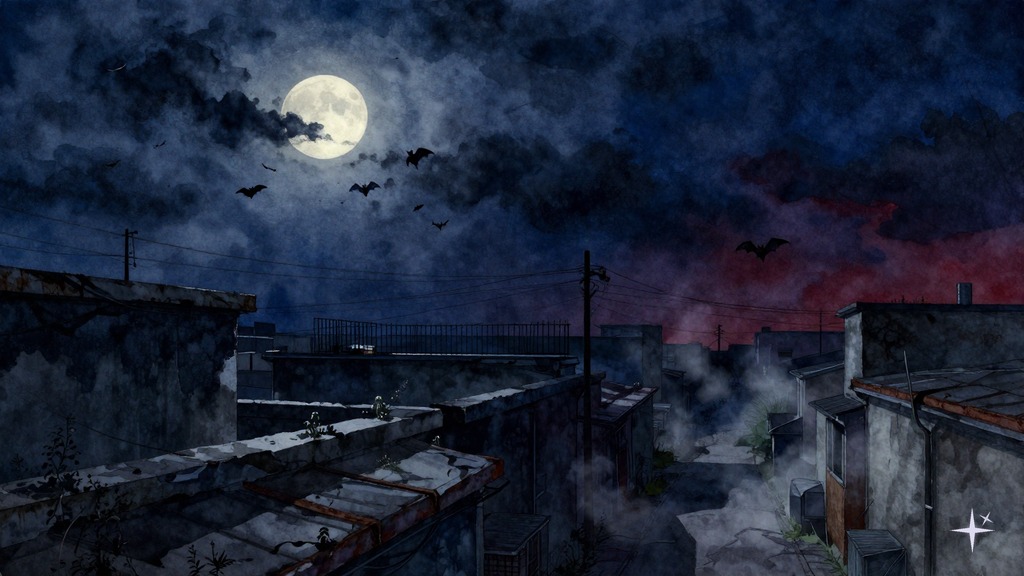
If you’ve been eyeing Call of the Night (よふかしのうた, the Japanese title) and wondering how many Call of the Night manga volumes exist, what you’re getting into, and how to start collecting — you’re in the right place. This is a finished series, which means no waiting around for the next release. You can read the whole thing start to finish right now.
Let’s break down the full 20-volume run.
Call of the Night Manga: All 20 Volumes at a Glance
Here’s the headline: Call of the Night is complete at 20 volumes and 200 chapters. Every single volume has been published in English by VIZ Media (the largest manga publisher in North America), so there’s nothing left untranslated or stuck in limbo. The series is done.
Written and illustrated by Kotoyama, the manga was originally published chapter by chapter in Weekly Shonen Sunday, a popular Japanese manga magazine (published by Shogakukan in Japan), from August 2019 through January 2024 (the final compiled volume, Volume 20, was released in March 2024). It had a clean, well-paced run — one brief hiatus aside (the author took a single week off in September 2022 due to illness) — with no abrupt cancellation. Kotoyama told the story they wanted to tell and wrapped it up.
A complete collection right now means 20 standard paperback volumes sitting on your shelf. There are no omnibus editions (multiple volumes collected into one larger book), no deluxe hardcovers — just 20 clean, consistent paperbacks.
So what’s the series actually about?
Call of the Night follows Kou Yamori, a middle school student dealing with insomnia and a creeping dissatisfaction with everyday life. One sleepless night he wanders outside and meets Nazuna Nanakusa, a vampire who lives in the margins of the city after dark. The premise sounds almost romantic, and it partly is — but there’s a persistent undercurrent of horror running through the whole thing. Nazuna’s world is seductive, but what Kou is really flirting with is the permanent loss of his humanity. Becoming a vampire means giving up everything about being human, and the series treats that choice with genuine weight.
It’s vampire fiction that leans into psychological tension and nocturnal atmosphere rather than gore. The horror isn’t in what you see — it’s in what Kou might choose to become.
The Easiest Way to Collect the Full Series
All 20 volumes are available individually from VIZ Media in their standard English paperback format. VIZ also offers a manga set collecting Volumes 1–12 for readers who want to grab the first stretch in one purchase. There are no omnibus editions, deluxe hardcovers, or full 20-volume box set as of this writing.
Start Small Before Going All In
Twenty volumes is a real commitment, both in shelf space and budget. The smartest approach is to grab the first two or three volumes and see if the series clicks with you before buying the rest. Volume 1 gives you the premise and the central dynamic between Kou and Nazuna. By Volume 3 you’ll have a strong sense of the pacing and tone. If you’re hooked by then, you’ll want the rest — and if not, you’ve only invested in a few books.
The final volume, Volume 20, brings Kou’s story to its conclusion and is a satisfying finish to the collection.
Call of the Night
What Does the Full Set Cost?
Each volume carries a typical retail price in the range you’d expect for a standard manga paperback. For 20 volumes, the full set at list price adds up — so buying a few at a time rather than all at once is easier on the wallet. Keep an eye out during seasonal sales at major retailers, where manga volumes are frequently discounted. Picking up a handful of volumes during promotions can make the total cost much more manageable.
Digital vs. Physical for a 20-Volume Series
For a completed series of this length, digital has some real practical advantages. No shelf space concerns, instant access to every volume, and you can often buy volumes during sales on various digital platforms. VIZ Media’s releases are available digitally through multiple storefronts.
That said, Kotoyama’s art — especially the nighttime cityscapes and the way darkness is rendered on the page — looks fantastic in physical form. The paperback volumes have a nice, consistent spine design that looks great lined up together. If you’re a collector or someone who likes to display their manga, the physical set is worth it.
Some readers take a hybrid approach: read digitally, then pick up physical copies of the volumes that meant the most to them.
Key Volumes Worth Knowing About
Call of the Night is a series that genuinely rewards reading every volume in order. There aren’t storylines you can skip — every section of the story feeds into what comes next. But if you want to know where the big moments land — either to pace your reading or just to know what’s ahead — here are the volumes that stand out.
Volume 1 — The Hook
This is where everything starts: Kou’s insomnia, his aimless late-night wandering, and his first encounter with Nazuna. The premise is established quickly and effectively. Vampirism here isn’t presented as a new threat every chapter — it’s framed as an escape, a seductive alternative to the crushing mundanity of Kou’s daytime life. By the end of Volume 1, you understand the central question the series will spend 19 more volumes exploring: will Kou choose to become a vampire, and what would it cost him?
Kotoyama’s art immediately sets the mood. The night feels alive, full of possibility and danger in equal measure. If Volume 1 doesn’t grab you, the series probably isn’t for you — but most readers find it pulls them right in.
Volume 4 — The World Expands
The early volumes are intimate — mostly Kou and Nazuna in the quiet nighttime city. Volume 4 is where the wider vampire world starts to open up. New vampire characters enter the picture, each with their own relationships to humans and their own philosophies about what it means to feed, to turn someone, to live forever. The supernatural stakes rise significantly here, and the series starts to feel bigger and more dangerous.
This is the volume where readers who were on the fence often become fully committed. The mythology has real depth to it.
Volume 10 — The Midpoint Escalation
Right at the halfway mark, Volume 10 pushes the central question harder than ever. Kou’s flirtation with vampirism stops feeling abstract and starts feeling urgent. The consequences of his choices — and the choices of the vampires around him — become much more tangible. There’s a tension that settles in around this point and doesn’t really let go for the rest of the series.
If Volumes 1-9 are the gradual build, Volume 10 is where the flame gets uncomfortably close.
Volume 15 — The Darkest Stretch Begins
The series enters its most psychologically intense phase here. As the endgame approaches, the tone shifts noticeably darker. The romantic and atmospheric elements that defined the earlier volumes are still present, but they’re now shadowed by a real sense of dread. Characters are forced into corners. Choices that seemed distant become immediate.
For horror manga readers specifically, Volume 15 onward is where Call of the Night most clearly earns its place in the genre. The horror isn’t loud — it’s the creeping realization that there might not be a clean answer to Kou’s dilemma.
Volume 20 — The Finale
The final volume. Kou’s choice. The resolution of the vampire mythology Kotoyama built across 200 chapters. Without spoiling anything, Volume 20 delivers on the emotional and thematic promises the series has been making since page one. It’s a conclusion that feels earned rather than rushed.
Whether you find the ending satisfying will depend partly on what you wanted for Kou — but it’s a thoughtful, deliberately crafted finale that gives the story real closure.
A note: These are selected highlights. The volumes between these milestones contain character development, world-building (the gradual expansion of the series’ rules and setting), and smaller storylines that make the big moments land. Read sequentially. The series is built for it.
Reading Order and Format Notes
Good news: the reading order for Call of the Night is about as simple as it gets.
Volume 1 Through Volume 20 — That’s It
There are no alternate timelines or branching reading paths — the main story is entirely contained in Volumes 1–20. One spin-off exists: *Call of the Night: Paradise Arc*, a short story series collected in a single volume (released September 2025 in Japan; VIZ Media’s English edition is scheduled for Q4 2026). It’s separate from the main run and optional. You start at Volume 1 and read straight through to Volume 20. The chapters are numbered 1 through 200, and VIZ Media’s English volumes follow the same structure as the Japanese release. No chapters are rearranged or omitted.
For a 20-volume series, this simplicity is a gift. You never have to check a reading order guide or worry about missing supplementary material.
Coming from the Anime?
Call of the Night received a two-season anime adaptation. The first season aired in 2022, and a second season aired from July to September 2025. Together they cover a significant portion of the manga.
If you watched the anime and want to continue in the manga, where you pick up depends on how far you got. The first season covers roughly through Volume 7 of the manga, though the adaptation adjusted the pacing of certain storylines, so some scenes may land differently on the page. If you’ve watched through the second season, you’ll want to pick up around Volume 9.
That said, many readers recommend starting from Volume 1 even if you’ve seen both seasons. Kotoyama’s artwork and the manga’s pacing have a different feel from the animated version. Internal thoughts and atmospheric page compositions that define the manga experience don’t always translate one-to-one to animation. Starting from the beginning doesn’t feel redundant — it feels like getting the full version of something you already enjoyed.
No Complicated Format Choices
Since there’s only one English edition (VIZ Media’s standard paperback), you don’t have to compare different formats or editions. Every volume is the same size, the same format, the same publisher. Your shelf will look consistent from Volume 1 to Volume 20.
Who Call of the Night Is For — and Who Should Skip It
You’ll Love This If…
- You want vampire fiction that treats vampirism as a genuine moral and existential dilemma rather than just a power fantasy
- You’re drawn to atmospheric, mood-driven storytelling — nighttime cityscapes, quiet conversations with menacing undertones, tension that builds steadily across many volumes
- You enjoy coming-of-age stories with a dark twist — Kou’s journey is fundamentally about adolescence, identity, and the terrifying freedom of choosing who you want to become
- You appreciate art that makes darkness beautiful — Kotoyama’s rendering of the night world is a huge part of the series’ appeal
- You like your horror psychological rather than visceral — the dread here comes from the implications of what characters choose, not from graphic violence
For horror manga readers looking for comparison points, Call of the Night sits closer in mood to something like Happiness by Shuzo Oshimi — a melancholic, character-driven vampire manga where a teenager’s encounter with a vampire leads to slow emotional dread rather than action spectacle. The night is seductive and dangerous in equal measure.
This Might Not Be for You If…
- You want action-heavy vampire battles with escalating combat and set pieces — this series has moments of conflict, but it’s not structured around fights
- You’re looking for explicit body horror or splatter — the series is relatively restrained in its depiction of violence. The horror lives in atmosphere and implication, not in graphic imagery
- You prefer fast-paced plots that move quickly from storyline to storyline — Call of the Night is deliberately paced, and some stretches are contemplative rather than eventful
- You want something closer to Hellsing (a high-action, gun-blazing vampire manga) or similar action-oriented vampire stories — different subgenre entirely
None of these are criticisms of the series. It’s just a matter of knowing what you’re picking up. Call of the Night does what it does extremely well — but what it does is atmospheric, character-driven supernatural fiction, not action horror.
The Bottom Line
Twenty volumes. Two hundred chapters. One complete story about a boy, a vampire, and the seductive terror of choosing to stop being human. Kotoyama built something genuinely special with this series — it’s moody, it’s beautiful, it’s unsettling in ways that sneak up on you, and it has an ending.
Grab Volume 1. Read it at night with the lights low. You’ll know pretty quickly whether this series is going to keep you up past your bedtime for 19 more volumes.