How many D.Gray-man manga volumes are there? The short answer: 29 volumes in Japanese and 28 volumes currently available in English. The series is ongoing, but it publishes on a very irregular schedule — sometimes with gaps of a year or more between chapters. Katsura Hoshino’s gothic horror saga has been running since 2004, shifting between magazines, weathering long hiatuses, and quietly building one of the most atmospheric dark fantasy stories in manga.
If you’re just discovering it now — or coming back after a break — the volume situation can be confusing. Why did it take so long between releases? Is it finished? And where should you even start buying?
This guide breaks it all down.
D.Gray-man Manga Volumes — The Full Picture
For anyone unfamiliar with how manga works: most manga series are first published chapter by chapter in Japanese magazines, then collected into book-format volumes. That’s the context you need to make sense of D.Gray-man’s publication history.
Created by Katsura Hoshino (星野桂), D.Gray-man launched in 2004. The first collected volume hit shelves in Japan on October 9, 2004, published by Shueisha (集英社). The English edition is published by VIZ Media. In the two decades since its debut, the series has moved through an unusual number of magazines: it started in Weekly Shonen Jump — the biggest weekly manga magazine in Japan — then appeared in Akamaru Jump, Jump Square, Jump SQ.CROWN, and Jump SQ.RISE. Each of these is a different publication with its own schedule and format.
Those magazine moves are the main reason the series has taken so long to reach 29 volumes. Each transition brought scheduling changes and extended breaks. If you’re looking at the volume count and thinking “only 29 volumes in over 20 years?” — that’s why. The manga wasn’t cancelled or forgotten. It’s just had one of the most unusual publication histories in modern manga aimed at younger male readers.
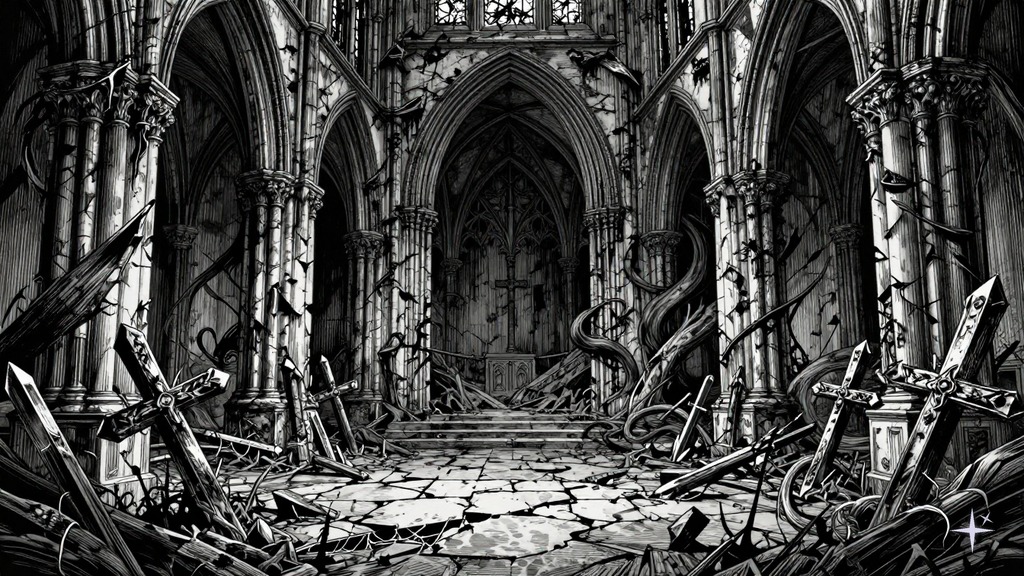
As for what the series actually is: D.Gray-man follows Allen Walker, a young Exorcist who wields a weapon called Innocence in a war against the Millennium Earl and his army of demons called Akuma. The tone is distinctly gothic — think 19th-century European settings with fog-choked streets and crumbling cathedrals, dark religious imagery, disturbing physical transformations, and a creeping sense of psychological dread that only gets heavier as the story progresses. It sits at the intersection of supernatural action and horror in a way that few other manga series attempt.
Vol. 1 is a compelling and self-contained introduction regardless of how far you ultimately go. It’s not a light read, but it’s a deeply rewarding one.
How the Series Is Structured — Story Phases and Reading Flow
D.Gray-man doesn’t label its story sections the way some manga do — you won’t find a “Noah Saga” or “Black Order Arc” printed on the spine. (In manga, an “arc” is simply a stretch of the story focused on a particular conflict or set of events.) But the narrative does divide into clear phases that make it easier to understand the reading flow.
The introductory phase covers Allen Walker’s arrival at the Black Order — the organization of Exorcists fighting against the Millennium Earl. These early chapters establish the world: what Akuma are, how Innocence works, and the dark atmosphere that defines the series. Allen takes on missions, encounters other Exorcists, and the reader gets a feel for the blend of action and horror that makes D.Gray-man unique.
The longer middle stretch is where things escalate significantly. The Noah Family — a group of powerful, ancient antagonists — steps into the spotlight, and the conflict becomes much larger in scope. Major battles erupt, character backstories deepen, and the story starts asking harder questions about its own mythology. This is the section where many readers go from “this is good” to “this is something special.”
The later volumes reflect the series’ shift away from weekly publication. The release pace slows dramatically, but the storytelling becomes more psychologically complex. Hoshino uses the extra time to craft denser, more introspective chapters. The horror elements lean more internal — less standalone monster encounters and more existential dread.
One important note for new readers: the irregular publication schedule in the later volumes is normal for this series. If you reach the more recent books and notice they came out years apart, that’s just how D.Gray-man works now. The story is still ongoing. Hoshino is still creating it. The gaps between volumes are a feature of this manga’s history, not a sign that it was abandoned.
Volume Breakdown by Story Phase
Early Volumes — Allen Walker and the Black Order
The opening stretch of D.Gray-man is where Hoshino builds the foundation. Allen Walker arrives at the Black Order headquarters with his cursed left eye — which lets him see the souls trapped inside Akuma — and his anti-Akuma weapon arm. From there, the series moves through a series of missions that introduce the core cast and the rules of this world.
What hits you first is the atmosphere. The settings feel pulled from Victorian-era Europe — gas-lit streets, towering churches, fog rolling through graveyards. The character designs mix period fashion with supernatural elements, and the Akuma themselves — demons wearing human skin that transform in grotesque ways — set the horror tone immediately. Hoshino’s art style is detailed and moody, with heavy inks and intricate costume work that give every page a distinctive look.
The early volumes also establish the emotional core of the series: Allen’s compassion for the souls trapped inside Akuma. He doesn’t just fight demons — he mourns them. That tension between action and empathy is what gives D.Gray-man its identity, and it’s there from the very first volume.
These opening books are a good test for whether the series is for you. If the combination of dark atmosphere, supernatural action, and emotional weight clicks, the story only goes deeper from here. If the tone feels too heavy or the pacing too deliberate, you’ll know early.
Middle Volumes — The Noah Family Conflict Escalates
This is where D.Gray-man shifts gears. The Noah Family — descendants of Noah who serve the Millennium Earl — move from background threat to central antagonists. The scale of the conflict widens dramatically, with larger battles, higher stakes, and some genuinely shocking character revelations.
The psychological elements grow stronger here. Characters face questions about identity, loyalty, and the nature of the war they’re fighting. Allen’s own past and the mysteries surrounding his connection to certain enemies become major plot threads. The story stops being purely about good versus evil and starts exploring the gray areas — which is fitting for a series with “Gray” in the title.
This stretch is also where D.Gray-man most clearly separates itself from typical battle manga. The fights are intense, but they’re driven by emotional and thematic weight rather than characters simply gaining new powers to outmatch each other. Characters don’t just get stronger — they get broken down, rebuilt, and forced to confront things about themselves and their world that they’d rather not face.
For horror fans specifically, the middle volumes deliver some of the series’ most memorable imagery of disturbing physical transformation and its most unsettling villain moments. The Noah Family members each have distinct, eerie abilities, and Hoshino doesn’t shy away from showing the physical and psychological toll of the conflict.
Later Volumes — Irregular Publication Era
After D.Gray-man moved away from Weekly Shonen Jump and through its various successor magazines, the release schedule became much less predictable. Volumes in this later period sometimes arrived with significant gaps between them — a reality that tested fans’ patience but also reflected a shift in the storytelling itself.
The later volumes are denser and more internal. Where the early series was mission-driven and the middle section was battle-driven, this phase is more psychological. The horror elements become less about external monsters and more about internal crises — questions of identity, memory, and what it means to be human when the lines between Exorcist and enemy start to blur.
The most recent Japanese volume is Vol. 29. In English, 28 volumes are currently available. The gap between Japanese and English publication is typical for ongoing manga, and new English volumes tend to follow at a predictable interval after the Japanese release.
For readers approaching the series for the first time: knowing about the irregular schedule in advance actually makes the reading experience smoother. You won’t hit a sudden gap and wonder what happened. The story is still being told. It just moves at its own pace now.
Which Edition Should You Buy?
The English edition of D.Gray-man is published by VIZ Media and available in standard single-volume paperback format — individual books that each collect several chapters of the story into one volume.
VIZ Media has also published a 3-in-1 omnibus edition series for D.Gray-man — at least 9 volumes as of late 2024, with the most recent omnibus (Vol. 9, covering manga vols. 25–27) released in December 2024. These are widely available on Amazon US and the VIZ store, and represent a cost-effective alternative to buying individual volumes. No deluxe hardcovers or box sets are currently available in English.
Individual volumes are typically priced around the standard retail price for manga paperbacks. With 28 English volumes currently out, this is a substantial series to collect. Here are some practical thoughts on building your collection:
- Start with the first few volumes before committing to the whole run. D.Gray-man’s tone is distinctive, and you’ll know within the first two or three books whether it’s for you. Vol. 1 works as a satisfying introduction on its own.
- Buy in batches rather than all at once. Spreading your purchases across a few orders makes the cost more manageable for a longer series.
- Keep an eye on bundle deals from retailers — when a series has this many volumes, stores occasionally offer multi-volume discounts.
- Check both physical and digital availability. Some earlier volumes can occasionally be harder to find in print, but digital editions tend to stay consistently available.
The latest English release is Vol. 28, which you can find at major retailers.
D.Gray-man
The paper quality and print sizing in the English edition are standard for VIZ Media’s manga releases. Hoshino’s detailed art — all those intricate costumes and dark architecture — reproduces well in the standard format, though fans of the art style may wish for a larger-format edition someday.
Where to Buy D.Gray-man in English
D.Gray-man is widely available through major book retailers. Here’s a quick rundown of your options:
Amazon carries individual volumes of D.Gray-man, including the latest release, Vol. 28. For a series this long, Amazon’s inventory is useful because you can usually find both recent and older volumes in stock. Availability of very early volumes can fluctuate, so if you spot one you need, it’s worth grabbing.
Barnes & Noble and other large bookstore chains typically stock D.Gray-man, though in-store selection may focus on more recent volumes. Online ordering through these retailers gives you access to the full range.
Anime and manga specialty retailers — both online shops and local stores — are worth checking, especially for older volumes that might be harder to find through mainstream channels. Shops like RightStuf (now part of Crunchyroll’s store) sometimes carry used copies in good condition as well, which can help fill gaps in a collection.
Digital editions are available through major e-book platforms. For readers who prefer digital, this solves the shelf space problem of a 28-volume series entirely. Digital also means you won’t run into availability gaps — when a physical volume temporarily goes out of stock or out of print (meaning the publisher isn’t currently producing new copies), digital copies remain available.
A note on earlier volumes: D.Gray-man has been publishing in English for a long time. Most volumes stay in print, but specific early volumes occasionally go through periods of limited availability. If you’re building the full physical collection, patience and regular checking of multiple retailers is the way to go. Used book marketplaces like eBay or ThriftBooks can also be a good resource for filling in missing volumes at reasonable prices.
Frequently Asked Questions
How many D.Gray-man volumes are there?
There are 29 volumes published in Japanese and 28 volumes currently available in English. The English edition typically trails the Japanese release by some months.
Is D.Gray-man good for someone new to manga?
It can be, with a caveat. The storytelling is clear and the early volumes do a strong job of introducing the world — Vol. 1 stands on its own as a compelling starting point. But the tone is darker than many popular entry-point manga, and the later volumes become quite complex. If you’re drawn to dark fantasy, horror atmosphere, or stories with strong mood and setting, D.Gray-man is a fantastic pick regardless of how much manga you’ve read before. Just know that it gets heavier — not lighter — as it goes.
Is D.Gray-man finished?
No. D.Gray-man is an ongoing series, but it publishes on a very irregular schedule. New chapters come out infrequently, and the gaps between volume releases can be lengthy. The series has not been cancelled — it’s still actively being created by Katsura Hoshino.
Why are there such long gaps between volumes?
The main reason is that D.Gray-man has moved between multiple magazines over its run. It originally ran in Weekly Shonen Jump, then moved through Akamaru Jump, Jump Square, Jump SQ.CROWN, and Jump SQ.RISE. Each transition brought changes to the publication schedule, and the series has been published on an irregular basis for many years now. Hoshino has also dealt with health challenges that have affected the schedule — this is well-known among fans and has been discussed publicly. The combination of magazine transitions and health-related breaks accounts for the long gaps.
Is there an anime adaptation?
Yes. D.Gray-man has two anime series: the original D.Gray-man (2006–2008, 103 episodes) and D.Gray-man Hallow (2016, 13 episodes). If you’re coming to the manga from one of these, you’ll find that the manga continues well beyond where the anime adaptations leave off. The later manga volumes cover significant story material that hasn’t been animated, which is a strong incentive to pick up the books.
Is D.Gray-man a horror manga?
It occupies an interesting space. D.Gray-man is primarily a dark fantasy and supernatural action series that ran in magazines aimed at younger male readers. But it has significant horror elements — disturbing physical transformations, dark atmosphere, psychological dread, and some genuinely unsettling imagery and themes. It’s not a pure horror manga the way some series are, but horror fans will find plenty to appreciate here. The genre blend is actually one of its biggest strengths: it delivers action and emotional character drama alongside moments that are genuinely unnerving.
What order should I read D.Gray-man in?
Straight through, Vol. 1 to Vol. 28 (in English). There are no spinoff volumes, alternate timelines, or complicated reading orders to worry about. D.Gray-man is a single continuous story. Just start at the beginning and read forward. That’s it.