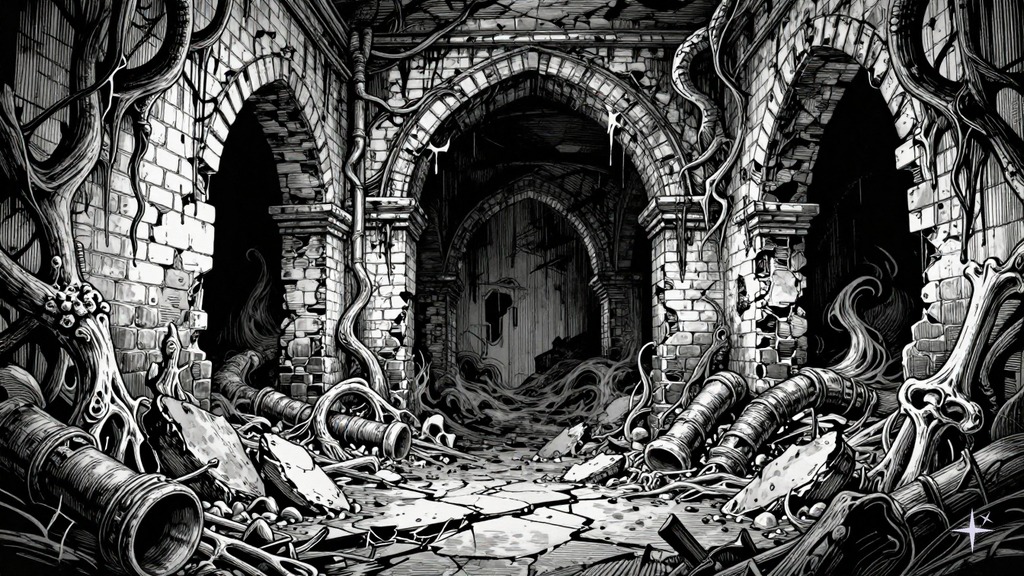
If you’re searching for a breakdown of the Dorohedoro manga volumes, here’s the short answer up front: the series is 23 volumes long, it’s complete, and every volume is available in English right now. A man with a lizard head, a world split between sorcerers and their victims, gyoza, and more body horror than you can shake a cleaver at — Dorohedoro is wild, violent, weirdly hilarious, and unlike anything else in manga.
Now let’s get into the full breakdown before you start collecting.
How Many Dorohedoro Manga Volumes Are There?
Dorohedoro has 23 volumes, all published in English by VIZ Media. VIZ Media is the company that licenses and translates manga for English-speaking readers — if you’re buying Dorohedoro in English, their editions are what you’ll find on shelves. The series is complete, so there’s no waiting for new chapters or unresolved cliffhangers. You can read the whole thing from start to finish right now.
The manga contains 167 chapters plus special chapters (bonus side stories and extra content) spread across those 23 volumes. It was originally published chapter by chapter in Japanese manga magazines — a process called serialization — from November 2000 to September 2018, an 18-year run. During that time, the series moved between four magazines: Spirits Zōkan Ikki (a special edition of Big Comic Spirits that later rebranded as Monthly IKKI), Monthly IKKI, Hibana, and Gessan (Monthly Shōnen Sunday), all published by the Japanese company Shogakukan. Manga magazines are anthology publications that carry multiple series at once, releasing new chapters on a regular schedule. Hopping between magazines is unusual and speaks to the kind of series Dorohedoro is: offbeat, fiercely independent, and not easily categorized.
So what kind of manga is it? Dorohedoro sits at the crossroads of dark fantasy and horror. The setting is a grimy, rain-soaked district called the Hole, where ordinary humans live under constant threat from sorcerers who cross over from their own dimension to use people as test subjects for their magic. The result is rampant body horror — people twisted, transformed, and discarded. Into this nightmare walks Caiman, a man whose head has been transformed into a reptilian shape by a sorcerer’s curse. He can’t remember who he is or who did this to him, and there’s a mysterious face living inside his mouth that bites down on sorcerers’ heads to identify the culprit.
Yeah. It’s that kind of series. And it’s incredible.
Dorohedoro Story Arcs and Series Structure
One thing worth knowing before you start: Dorohedoro doesn’t follow a traditional story arc structure. A story arc is a self-contained narrative phase within a longer series — many manga have clearly numbered arcs with defined beginnings and endings. Dorohedoro doesn’t work that way. Instead, the storytelling is deliberately chaotic and nonlinear (meaning events don’t always unfold in strict chronological order), shifting perspectives between characters in the Hole and the sorcerer world, layering mysteries on top of mysteries, and occasionally veering into slice-of-life comedy about cooking gyoza and celebrating holidays.
If that sounds disorienting, don’t worry — it’s supposed to feel that way early on, and it comes together as you read. The tonal shifts between horror and humor are intentional and become one of the series’ greatest strengths. Here’s a rough map of how the story progresses:
Early Volumes (Roughly Volumes 1–5)
The opening stretch establishes everything: the Hole, the sorcerer dimension, Caiman’s lizard-head curse, and his partnership with Nikaido (who runs a gyoza shop and is also terrifyingly good in a fight). You meet the sorcerers who will become major players — particularly the powerful crime boss En and his sprawling organization. The tone is set here: gritty, violent, darkly funny, and surprisingly warm underneath all the gore.
Middle Volumes (Roughly Volumes 6–14)
This is where the scope expands dramatically. The conflict between Caiman’s search for answers and En’s organization intensifies. New characters pile in, alliances shift, and the fictional world gets richer and stranger as the rules governing the Hole and the sorcerer dimension become clearer. The series starts pulling at threads that will eventually unravel into major revelations about who Caiman really is. Expect escalating chaos — both in terms of plot and the sheer amount of magical violence on display.
Later Volumes (Roughly Volumes 15–20)
Major identity reveals land here. Everything you thought you understood about Caiman, the curse, and the relationship between worlds gets complicated and then complicated again. The storytelling becomes more intense and the stakes shoot up. Characters you’ve grown attached to face real consequences.
Final Volumes (Volumes 21–23)
The climax and resolution of the central mystery. Without spoiling anything: the series commits to answering its biggest questions and delivers a conclusion that feels earned after 23 volumes of buildup. The ending is satisfying in a way that matches the series’ tone — messy, human, and strangely beautiful.
A quick note: the boundaries above are approximate. Part of what makes Dorohedoro special is that it resists neat categorization. The story loops back on itself, jumps between timelines, and trusts you to keep up. If the early volumes feel disorienting, that’s intentional — and the payoff for sticking with it is substantial.
Complete Volume Breakdown
All 23 volumes are available in English from VIZ Media in standard single-volume format — meaning each volume is one paperback book collecting roughly 7–8 chapters (167 chapters across 23 volumes). This is the standard way manga is sold in English: individual collected volumes rather than single magazine chapters.
Below is a walkthrough of every volume, grouped by story phase, with specific detail on six key volumes that introduce the series and mark major turning points.
Volumes 1–3 — Welcome to the Hole
Volume 1 is where it all begins. You meet Caiman, the amnesiac lizard-headed man hunting sorcerers in the Hole. You meet Nikaido, his best friend and partner. You get your first taste of the sorcerer world and the casual brutality of their experiments on humans. The art style is intentionally rough and grimy — Q Hayashida uses scratchy, detailed line art (the drawn lines that make up the illustrations) to create a visual texture that matches the decayed, dangerous setting. This volume sets up the core mystery: who cursed Caiman, and what’s the deal with the face inside his mouth?
Volume 2 pulls back the curtain on the sorcerer side of things. You start spending time with the sorcerers as characters rather than just villains, and key antagonists from En’s organization get proper introductions. The world starts feeling bigger and more complex.
Volume 3 deepens the connection between the Hole and the sorcerer dimension. The rules (and the lack of rules) governing how these two worlds interact start becoming clearer. If Volume 1 hooks you and Volume 2 intrigues you, Volume 3 is usually where the commitment happens.
Volumes 4–7 — Expanding the World
These volumes build on the foundation of the first three. The cast grows significantly as more sorcerers and Hole residents come into focus. En’s organization becomes a more central threat, and the comedic side of the series — holiday celebrations, cooking competitions, and character dynamics — develops alongside the horror. You also get deeper into the lore of how sorcery works and what the connection between the two worlds really means. These are transition volumes, but they’re packed with character development that pays off later.
Volumes 8–12 — The Story Shifts Gears
Volume 8 represents a major escalation in the central conflict. Without spoiling specifics, events here push the story past the point of no return. Characters are forced into positions they can’t walk back from, and the consequences ripple through everything that follows. If the early volumes are about setup and exploration, Volume 8 is where Dorohedoro shifts into a higher gear.
Volumes 9 through 12 continue that momentum. Alliances fracture and reform, the mystery of Caiman’s identity gets more tangled, and the body horror reaches new levels of inventiveness. The storytelling becomes denser, rewarding readers who have been paying close attention to earlier details.
Volumes 13–20 — Revelations and Escalation
Volume 13 is where central identity reveals begin. The mystery of who Caiman is — and was — starts getting real answers, and those answers are stranger and more unsettling than you might expect. This is the volume where a lot of readers report the series going from “really good” to “all-time favorite.”
Volumes 14 through 20 build relentlessly on those reveals. The scope of the conflict widens, the supernatural elements intensify, and the emotional stakes for the core cast reach their peak. These volumes are dense and fast-moving — once you hit this stretch, most readers find it difficult to stop.
Volumes 21–23 — The Finale
Volume 23 is the final volume. The series conclusion resolves Caiman’s story and the larger conflicts that have been building across all 23 volumes. It’s a payoff that rewards patient readers. The special chapters included across the series also add texture and humor that round out the experience. Volumes 21 and 22 set up the final confrontation and bring all the narrative threads together before the conclusion lands.
Which Edition Should You Buy?
This one’s straightforward: VIZ Media publishes Dorohedoro in standard single-volume format. That means 23 individual paperback books, each collecting roughly 7–8 chapters.
As of this writing, VIZ Media has not published an official omnibus edition (a larger book that collects multiple volumes into one) or deluxe edition for the English release. No publisher-issued box set exists either, though bundle sets of individual volumes are available through retailers like Amazon. If that changes in the future, it would be worth keeping an eye out — for now, single volumes are the standard format.
Here’s the good news: the single-volume format actually works well for this series. Because Dorohedoro’s storytelling is so dense and layered, reading it in smaller chunks lets you absorb the fictional world and catch details you might miss in longer reading sessions. The art is packed with background details, visual callbacks to earlier chapters, and subtle foreshadowing that rewards careful reading.
For pricing context: each volume carries a typical retail price in line with standard VIZ Media manga volumes. At 23 volumes, a complete collection represents a meaningful investment, so buying in batches of a few volumes at a time is a practical approach.
A recommendation for newcomers: commit to at least the first three volumes before deciding whether the series is for you. The art and tone are intentionally rough in the early going. The world is grimy, and the storytelling can feel disorienting at first. This is all by design. By Volume 3, the style either clicks with you completely or you know it’s not your thing. Most people who push through those first few volumes end up reading all 23.
Where to Buy Dorohedoro in English
Dorohedoro is published by VIZ Media and widely distributed, so finding copies is generally straightforward. The series is available in both print and digital formats through major retailers.
Since single volumes are the standard format, buying in small batches is practical. You don’t need to commit to all 23 volumes upfront — grab the first few, see how you feel, and go from there. This is a completed series, so there’s no rush. Everything is already out there waiting for you.
For your starting point, Volume 1 is the natural entry. It introduces Caiman, Nikaido, the Hole, and the central mystery in a way that’s immediately gripping even if the full picture takes time to develop.
Dorohedoro
A practical tip: because this is a completed series that’s been in print for years, availability for individual volumes can occasionally fluctuate. If you find a volume you need in stock, it’s worth picking it up rather than assuming it’ll be there later. VIZ keeps popular series in print, but specific volumes sometimes go through brief periods of lower availability.
Frequently Asked Questions
How many volumes of Dorohedoro are there?
23 volumes, all available in English from VIZ Media. The series is complete.
Is Dorohedoro finished?
Yes. The manga completed its original chapter-by-chapter magazine run in September 2018 (final chapter: September 12, 2018) after running since November 2000. The final collected volume shipped November 2018. All 23 volumes have been published in English. You can read the entire story from beginning to end with no gaps or ongoing wait.
Who is the author?
The author is Q Hayashida (written in Japanese as 林田球). Dorohedoro is their signature work and ran for 18 years across multiple magazines.
Is there an anime adaptation?
Yes. MAPPA, a Japanese animation studio, has produced two seasons so far: Season 1 (12 episodes, 2020) and Season 2 (11 episodes, April–May 2026), with a third season announced. The show brings the manga’s gritty, chaotic world to screen using a heavily CGI-driven visual style that blends 3D computer-generated animation with traditional 2D hand-drawn elements — a visual approach that divides fans but captures the series’ strange atmosphere. Even with two seasons aired, the anime has adapted only a portion of the 23-volume manga, so the full story still lives on the page.
Is Dorohedoro horror?
It’s best described as dark fantasy with heavy horror elements. The series features extensive body horror, gore, and a nightmarish setting where sorcerers routinely mutilate and transform humans. There’s also violence that can be quite graphic. But it’s balanced by genuine warmth between characters, absurd comedy, and a love of food (especially gyoza) that keeps it from being relentlessly bleak. The horror serves the story rather than existing for shock value alone.
What order should I read Dorohedoro in?
Publication order, Volume 1 through Volume 23. There are no spin-offs (separate series set in the same world) or prequels (stories set before the main series) to worry about. Just start at the beginning and go straight through. The storytelling is already nonlinear enough on its own — reading in order is the way the author intended you to experience it, and it works.
Is Dorohedoro good for manga beginners?
It can be, but it depends on what you’re comfortable with. The art style is unconventional, the storytelling can be deliberately confusing early on, and the violence is intense. If you’re a horror fan or you enjoy dark fantasy, Dorohedoro is a compelling read regardless of how much manga experience you have — plenty of people read this as one of their first manga series and loved it. The key is committing to at least three volumes before judging, because the early disorientation is intentional and the story rewards patience. If you want a slightly gentler on-ramp to manga before tackling Dorohedoro, that’s a valid choice too, but there’s no wrong time to start this series.