Stone Ocean Runs 9 Hardcover Volumes in English — Here’s the Full Breakdown
If you came here with one question — how many volumes does Stone Ocean have? — here’s the answer: Viz Media’s English release of JoJo’s Bizarre Adventure: Part 6–Stone Ocean collects the complete story in 9 oversized hardcover volumes (the original Japanese run was 17 standard volumes), and the entire run is complete. No waiting for future releases. You can read the whole story right now.
If that’s all you needed, the buying section below has everything you need to start your purchase. But if you want the full picture — editions, reading order, how the manga compares to the anime, and why horror fans should care — keep reading.
Stone Ocean is Part 6 of Hirohiko Araki’s long-running JoJo’s Bizarre Adventure series. JoJo’s is structured in numbered “Parts,” each following a different member of the Joestar family across generations. Part 6 follows Jolyne Cujoh, daughter of Part 3’s hero Jotaro Kujo, after she’s framed for a crime and sent to Green Dolphin Street Prison in Florida. What begins as a prison survival story spirals into something far stranger and more dangerous — involving Stands (supernatural combat abilities that manifest as ghostly figures linked to their user), an old enemy’s influence, and a finale that reshapes the entire JoJo universe.
So why is a JoJo article on a horror manga site? Because Stone Ocean earns its place here. The Stand abilities in Part 6 lean heavily into body horror — we’re talking abilities that turn flesh inside out, dissolve people into snails, and warp human bodies in ways that are genuinely unsettling on the page. The prison setting creates a persistent feeling of claustrophobia and paranoia. And as the story builds toward its climax, there’s a sense of escalating cosmic dread that horror fans will recognize and appreciate. Araki has always drawn from horror — Part 6 is where that influence runs deepest.
The series originally ran in Japan’s Weekly Shōnen Jump (a major manga magazine aimed at younger male readers) from 1999 to 2003, spanning 158 chapters. In Japan, those chapters were collected into 17 standard collected volumes; Viz Media’s English edition repackages that same story into 9 oversized hardcover volumes, collecting approximately two of the Japanese originals apiece, though the exact contents per book vary.
Every Edition Available in English
Viz Media’s Standard Single-Volume Releases
The primary way to read Stone Ocean in English is through Viz Media’s oversized hardcover editions. These are premium-format hardcovers, larger than standard manga paperbacks, together collecting the full 158-chapter run — per-volume contents vary, so don’t expect a fixed chapter count per book.
The translation quality is solid throughout. Viz’s JoJo releases do contain some renamed Stand abilities — certain names that reference real musicians and songs are altered in the official English edition — a long-standing localization practice across JoJo releases; VIZ has never published its official reasoning. The changes aren’t universal, either — “Stone Free” keeps its name, for example, while some other Stands get tweaked. This is consistent across all official English JoJo releases, and most readers adjust quickly.
These volumes use a right-to-left reading format, matching the original Japanese page layout. If you’ve never read manga before, this means you open the book from what would normally be the “back” cover and read panels from right to left. There’s usually a guide on the last page showing you how it works — you’ll get the hang of it within a few pages.
Are There Hardcover or Deluxe Editions?
JoJo fans may know about the JoJonium editions — oversized, premium hardcovers with revised artwork and color pages that were released for earlier Parts of the series. In English, JoJonium branding only covers Parts 1 through 3 — but Stone Ocean doesn’t need it, because Viz’s standard English release of Part 6 is already an oversized hardcover format, in line with how Viz has released the later Parts.
That means the Viz hardcovers are your one physical option — and they’re well-made, premium-feeling books that hold up to rereading.
Digital Editions
Stone Ocean is also available digitally through the Viz Manga app and through Kindle/ComiXology (Amazon’s digital comics platform), as well as Apple Books and Google Play Books. Digital editions are identical in content to the print versions. For readers who want instant access or prefer reading on a tablet, digital is a solid way to experience the series — and Araki’s detailed artwork holds up well on high-resolution screens. Among these options, the Viz Manga app tends to offer the most frequent sales on Viz-published manga, so it’s worth checking there first if price matters to you.
Which Edition Should You Buy?
For most readers, the Viz hardcover volumes are the way to go — and since they’re the only physical English edition, the choice is straightforward. They’re stocked broadly (availability varies by store), and the oversized hardcover format makes for a premium reading experience at the standard price point. If shelf space is a concern or you want to start reading immediately, digital works great too.
Reading Order — Do You Need Earlier Parts First?
This is one of the most common questions new JoJo readers have, and it’s a fair one. JoJo’s Bizarre Adventure is divided into Parts that each follow a different protagonist in the Joestar family — a lineage that stretches across generations and continents, with each heir inheriting a connection to supernatural conflict. Stone Ocean is Part 6. So do you really need to read five previous Parts first?
The Short Answer
You can technically start with Stone Ocean and follow the plot. Araki provides enough context within the story for basic comprehension. But — and this is a significant “but” — key emotional payoffs in Stone Ocean depend heavily on your knowledge of earlier Parts, especially Part 3: Stardust Crusaders.
The central villain’s plan in Stone Ocean is directly tied to Dio Brando, a vampire and the main antagonist of Parts 1 and 3 who has haunted the Joestar family for over a century. Jolyne’s complicated relationship with her father Jotaro only hits hard if you’ve spent time with Jotaro across his own journey. And the ending — which is one of the most discussed conclusions in all of manga — lands with far more weight when you understand what came before.
The Recommended Reading Path
For the best experience, read the Parts in order. The good news: the first two Parts are short and move fast.
- Part 1: Phantom Blood (3 volumes) — Establishes the Joestar-Dio conflict; a quick read you can finish in an afternoon
- Part 2: Battle Tendency (4 volumes) — Expands the world and introduces new power systems; also a fast-paced read
- Part 3: Stardust Crusaders (10 volumes) — Introduces Stands (the supernatural abilities that define the rest of the series) and Jotaro Kujo; essential for Stone Ocean
- Part 4: Diamond Is Unbreakable (9 volumes) — Stand battles in a small town; features a serial killer storyline that’s genuinely chilling
- Part 5: Golden Wind (9 volumes) — Italian mafia with Stands; less directly connected to Part 6 but still rewarding
- Part 6: Stone Ocean (9 hardcover volumes in English) — Jolyne’s story
That’s 35 volumes before you reach Stone Ocean, which sounds like a lot — but Parts 1 and 2 together are only 7 slim volumes that read quickly, and most JoJo readers find the series accelerates once Stands enter the picture in Part 3. If you absolutely must shortcut, Parts 1 and 3 are the minimum for understanding Stone Ocean’s story. But the whole journey is worth it if you have the time.
One Helpful Detail
Each Part’s English volumes restart their numbering at Volume 1, so there’s no confusing “Volume 47” situation. When you pick up Stone Ocean Volume 1, that’s where the Part 6 story begins. Clean and simple.
What the Manga Covers Beyond the Anime
Stone Ocean received a Netflix anime adaptation produced by David Production. The anime covers the full story from the manga, so there’s no “unfinished adaptation” problem here. Whether you’ve watched the anime already or you’re coming to Stone Ocean completely fresh, the manga gives you the complete story either way.
If you’ve seen the anime and you’re wondering whether the manga is worth reading too — or if you’ve never watched it and want to know what the manga offers on its own — here’s what makes the original format worth your time.
Araki’s Artwork Rewards Slow Reading
The biggest reason is Araki’s linework. His art style during the Stone Ocean era is dense, expressive, and frequently grotesque in ways that the anime — which has to keep things moving at broadcast pace — can’t fully replicate. Stand battles in the manga unfold across carefully composed two-page layouts where you can study every detail of the body horror. The snail transformation sequence, the sky-raining-frogs scene, the sheer physicality of Jolyne using her Stand ability Stone Free — all of these hit differently when you control the pace.
Araki draws human anatomy in this exaggerated, fashion-forward style that somehow makes the horror more disturbing. When a body gets warped or broken by a Stand ability, the contrast between his beautiful figure work and the grotesque damage creates an unsettling dissonance that’s unique to the manga format.
Stand Encounters That Shine on the Page
Several Stand battles in Stone Ocean are more effective as manga than as anime. The complexity of Stands like Bohemian Rhapsody (which brings fictional characters to life in the real world) and Heavy Weather (which has one of the most bizarre and disturbing abilities in all of JoJo) benefit from the reader being able to pause and process what’s happening panel by panel. The anime has to keep rolling, but the manga lets you sit with the weirdness.
The Ending
Without spoiling anything, Stone Ocean’s ending is a lot. It’s one of the most ambitious and emotionally intense conclusions in manga history. In the manga, Araki’s panel composition during the final chapters creates a specific rhythm — moments of chaos followed by quiet, devastating still images — that the anime interprets but can’t perfectly replicate. If you’re the kind of reader who wants to experience a story in its original, intended form, the manga ending is worth reading even if you’ve already watched it animated.
Where to Buy Stone Ocean Manga Volumes in English
Physical Copies
All 9 volumes of Stone Ocean are available through major online retailers and bookstores. The full run has been complete since March 2025, when Volume 9 arrived. Manga occasionally goes through cycles where certain volumes temporarily sell out and take time to restock, but Stone Ocean doesn’t currently have significant availability problems.
One shopping note: VIZ’s catalog has no official Stone Ocean box set — the line is the nine individual hardcovers, full stop. If you see a “complete Stone Ocean set” listed somewhere, that’s a retailer bundling the nine singles (or an unofficial product), not a VIZ release. Buying the whole run simply means picking up the nine hardcovers, and Volume 9 — labeled Final Volume, released March 25, 2025 — caps it off.
JoJo's Bizarre Adventure: Part 6 — Stone Ocean, Vol. 9 (final volume)
Volume 9 is the natural bookend if you’re committed to reading all of Part 6. And since there’s no official box set, assembling the nine hardcovers one by one — watching for per-volume discounts as you go — simply is how the full set gets built.
Digital Options
If you prefer digital, Stone Ocean manga volumes are available through:
- Viz Manga app — Viz’s own reading platform; tends to have the most frequent sales on their titles
- Kindle / ComiXology — Amazon’s digital comics platform; convenient if you already read Kindle books
- Apple Books — Good option for iOS and Mac users
- Google Play Books — Works well on Android devices
Digital volumes go on sale periodically across these platforms, so if you’re patient, you can often pick them up below list price.
Tips for Buying Smart
- Check multiple retailers before purchasing — prices for physical manga can vary between shops
- If you’re buying the full set, compare per-volume prices across retailers — with nine hardcovers, small differences add up
- For digital readers, consider which platform you already use for other manga — keeping your library in one place is convenient
- Individual volumes have a standard manga retail price; multiply that by 9 and you’ll know your total investment for the full series
Is Stone Ocean Worth Reading for Horror Manga Fans?
Yes. Absolutely yes.
Stone Ocean might carry the JoJo name — which most people associate with flamboyant poses and memorable moments — but Part 6 is genuinely one of the most horror-forward entries in the entire franchise. Here’s why horror manga readers should pay attention:
The Body Horror Is Relentless
Stand abilities in Stone Ocean are designed to be viscerally upsetting. Without getting into graphic detail, the series features abilities that manipulate human flesh, transform people against their will, and create scenarios that feel pulled straight from body horror filmmaking — think Cronenberg-style transformations rendered in Araki’s meticulous ink. Araki has cited horror films and artists as influences throughout his career, and Part 6 is where those influences feel most present.
The Prison Setting Creates Constant Dread
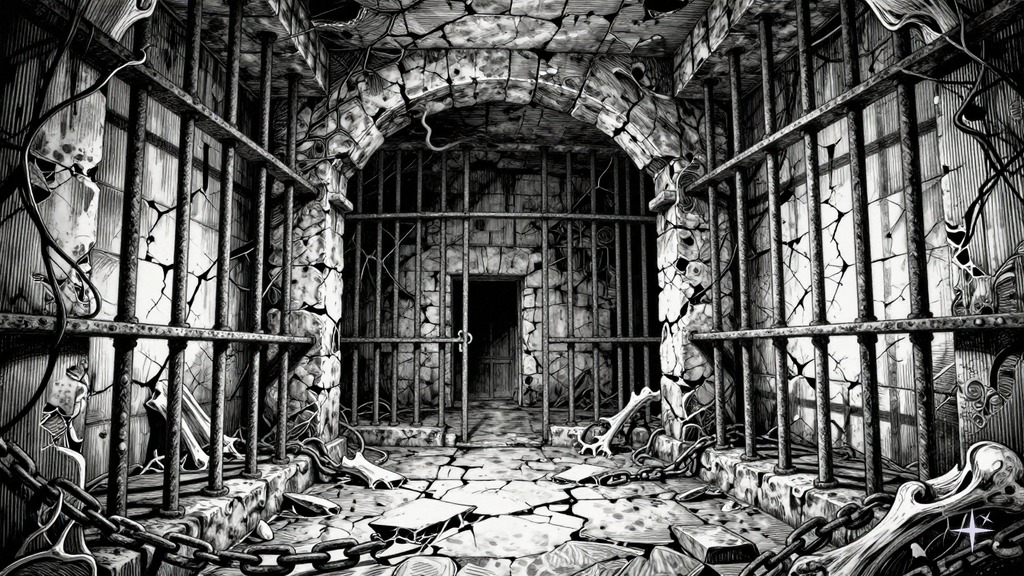
Green Dolphin Street Prison isn’t just a backdrop — it’s a horror setting in its own right. Jolyne can’t leave. She’s surrounded by potential enemies, watched at all times, and the Stand users who come after her can attack from anywhere within the facility. That claustrophobic, no-escape atmosphere is something horror manga fans will find very familiar. It’s essentially a survival horror setup with superpowers.
The Cosmic Horror Escalation
As Stone Ocean approaches its finale, the stakes shift from personal survival to something much larger and more existential. The final antagonist’s goal involves rewriting the fundamental nature of reality — and Araki portrays this with imagery and themes that edge into cosmic horror territory. The sense of inevitability, the scale of what’s at stake, and the way the ending unfolds all create a feeling of profound unease that goes beyond typical battle manga.
How It Compares to Other JoJo Parts
Part 1 (Phantom Blood) has gothic horror roots. Part 4 (Diamond Is Unbreakable) features a serial killer storyline that’s genuinely chilling. But Stone Ocean combines body horror, psychological horror, and cosmic horror in a way that no other Part does. It’s the most consistently dark and unsettling stretch of JoJo.
Who Should Read It
Great for you if:
- You enjoy horror manga and want to see how a long-running battle series handles dark themes
- You’ve watched the anime and want to experience Araki’s horror-infused artwork firsthand
- You like stories with female protagonists who are fierce, flawed, and determined
- You’re drawn to prison settings, body horror, or cosmic dread in your fiction
Maybe hold off if:
- You haven’t read any JoJo before — you can start with Stone Ocean and follow the plot, but you’ll get much more out of it by reading at least Parts 1 and 3 first (13 volumes total for those two, and they’re fast reads)
- You prefer horror manga that’s purely horror without action and battle elements
- You want a shorter commitment — 9 volumes is a solid investment of time and money
Stone Ocean is a wild, dark, beautiful ride. Jolyne Cujoh is one of the best protagonists in the JoJo lineup, and her story goes places that most manga wouldn’t dare attempt. If you’re a horror manga fan who’s been JoJo-curious, Part 6 is the Part that speaks your language. Grab Volume 1 and see for yourself.