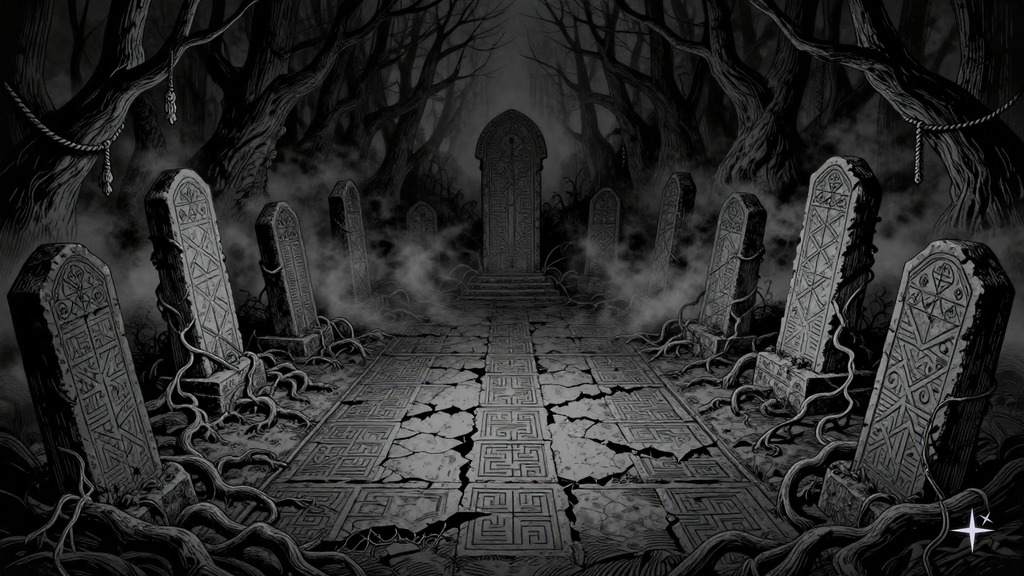
So you’ve heard about Kekkaishi — maybe through the anime, maybe through a recommendation, maybe you spotted a volume at a bookstore and the cover art pulled you in. All 35 kekkaishi manga volumes are available in English, the series is fully complete, and you can read the whole thing start to finish right now. Here’s what to weigh before you commit.
Kekkaishi Manga Volumes at a Glance — 35 Books of Supernatural Demon-Hunting Action
Here’s what you need to know up front:
Kekkaishi (結界師 — the Japanese title written in its original characters) is a completed manga series by Yellow Tanabe (田辺イエロウ). It ran in Weekly Shonen Sunday — a popular Japanese manga magazine that publishes chapters weekly — from 2003 to 2011, published by Shogakukan in Japan. The English edition comes from VIZ Media, the North American publisher behind many well-known manga series. The entire run has been published in English — all 35 volumes, matching the Japanese release count exactly.
A quick note on genre: “shonen” (sometimes spelled “shounen”) simply means the series was originally aimed at a young male readership in Japan, though readers of all backgrounds enjoy shonen series. It tells you something about the pacing and tone — expect action, growth, and escalating stakes.
The premise is straightforward and hooks you fast. Yoshimori Sumimura is a young barrier master — a “kekkaishi,” which literally translates to “barrier master” — tasked with protecting a cursed site called Karasumori from demons known as ayakashi (supernatural creatures from Japanese folklore). Karasumori sits on the grounds of his school, and the land itself amplifies the power of any supernatural being that sets foot on it. That makes it a magnet for trouble.
What starts as a boy fighting monsters at night while trying to stay awake in class during the day turns into something much bigger. The series blends supernatural horror with action, and as the story unfolds, the threats get darker, the conspiracies get deeper, and the stakes climb far beyond one kid protecting one piece of land.
The series built a loyal readership across its Weekly Shonen Sunday run in Japan and maintains a steady following in English-speaking markets. It’s one of those series that doesn’t always get mentioned alongside the biggest names, but the people who’ve read it tend to remember it fondly and recommend it enthusiastically.
If you watched the anime: The anime adaptation covers roughly the first portion of the manga’s story. If you finished the anime and want to continue, you’ll want to pick up the manga where the anime left off and read through to volume 35 for the complete story — the manga goes much further and much darker than the anime ever did.
For readers who enjoy supernatural action with genuine horror undertones — cursed lands, shadowy organizations, demons that aren’t just mindless monsters — Kekkaishi delivers. And since it’s complete, you can read the whole thing without waiting for new chapters.
Age suitability: VIZ Media rates the series T (Teen), and it ran in a magazine aimed at teen readers in Japan. It contains supernatural violence and some darker themes in later volumes — demon battles, betrayal, and mature emotional stakes — but nothing excessively graphic. Parents buying for younger teens should be comfortable with the content, especially in the early volumes.
How the Story Is Structured — Major Story Arcs Across 35 Volumes
One of the best things about Kekkaishi is how it evolves. The series doesn’t stay in one mode. It grows with its characters and its world, and the tone shifts noticeably as you move through the 35 volumes.
A note on terminology: in manga, an “arc” is a stretch of connected chapters that tell one portion of the larger story — like a season of a TV show within the full series. Kekkaishi has several major arcs that flow into each other.
Early Volumes (Roughly Volumes 1–8): Learning the Craft
The opening stretch of Kekkaishi establishes the world and the rules. You meet Yoshimori, his rival and neighbor Tokine Yukimura (who comes from a competing kekkaishi family), and the demon dog Madarao who helps patrol Karasumori. These early volumes have a standalone-adventure feel — an ayakashi appears at Karasumori, Yoshimori and Tokine deal with it, and you learn a little more about how barrier techniques work and why this particular site is so dangerous. Each chapter largely resolves its own threat before moving to the next.
But even in these early chapters, Yellow Tanabe is laying groundwork. The dynamic between Yoshimori and Tokine isn’t just friendly competition — there’s a history there involving a childhood injury that drives Yoshimori’s determination to get stronger. And the ayakashi aren’t all mindless beasts. Some are sympathetic. Some are terrifying. The variety keeps things interesting even during the more formulaic early structure.
This stretch is important for new readers because it builds the foundation you’ll need later. The barrier techniques, the family rivalries, and the nature of Karasumori itself all become critical once the story opens up.
Middle Stretch: The Shadow Organization and Expanding World
This is where Kekkaishi transforms from a good supernatural action manga into a genuinely compelling one. The story moves beyond Karasumori and introduces the Shadow Organization — a secretive group of powerful supernatural beings and practitioners who have their own interests in the site and in the kekkaishi families.
The introduction of the Shadow Organization changes everything. Suddenly Yoshimori isn’t just fighting random demons — he’s caught up in political maneuvering, power struggles, and conflicts between factions that have been operating in the shadows for generations. New characters arrive with their own agendas, and not all of them fall neatly into “good” or “bad” categories. The antagonists in this stretch occupy a moral middle ground — you understand their motivations even when you disagree with their methods — and they’re some of the series’ strongest characters.
The background mythology about Karasumori deepens significantly here too. You start learning why the land has so much power, what happened there in the past, and why multiple organizations are willing to go to extreme lengths to control it. The mysteries stack up in a satisfying way — Tanabe is clearly building toward something, and each revelation opens new questions.
Later Volumes: Escalation and Betrayal
The later portion of the series ramps up the tension considerably. Betrayals within the Shadow Organization fracture alliances, and the true scope of the threats facing Yoshimori becomes clear. Characters you thought you understood reveal hidden motivations. The supernatural threats become more dangerous and more personal.
This section of the manga also explores the darker implications of the kekkaishi legacy. The barrier master families carry burdens and secrets that go back generations, and Yoshimori has to reckon with what it means to inherit that responsibility — especially when the people and institutions he’s supposed to trust turn out to be compromised.
The horror elements peak during this stretch. The series deals with themes of corruption, sacrifice, and the cost of power in ways that feel genuinely unsettling rather than gratuitous.
Final Arc: The Truth About Karasumori
The climactic arc brings everything together. The true nature of Karasumori is finally revealed, and the confrontation that follows draws on everything the series has built across 35 volumes. Without spoiling specifics, the ending ties up the major threads — the mystery of the land, the conflict between organizations, and Yoshimori’s personal growth — in a way that feels earned.
Importantly, Kekkaishi reaches a real conclusion rather than trailing off — the major threads are resolved on the page across the final volumes. Whether every beat landed exactly as first planned is something only the author could say, but as a reading experience the ending feels built toward, not bolted on.
A quick note on arc-to-volume mapping: The exact volume breakdowns for each arc can vary depending on how you define the transitions. The series flows fairly organically from one phase to the next rather than having sharp cutoff points. If you’re reading for the first time, you’ll feel the shifts naturally as they happen.
Key Volumes Where the Story Peaks
Not every volume in a 35-book series hits with the same intensity, and that’s fine. Here are some guideposts for where Kekkaishi really shines — without spoiling the specifics.
The Early Hook
Volume 1 does solid work establishing the premise, the characters, and the tone. It’s a good litmus test — if you enjoy the dynamic between Yoshimori and Tokine, and the concept of barrier techniques used against demons appeals to you, the series only gets better from there.
That said, the first few volumes are the most conventional part of the series. If you find the early standalone adventures a little predictable, stick with it through roughly the first eight volumes. The payoff for investing in the setup is real, and you won’t have to wait long before the story starts revealing its bigger ambitions.
First Major Escalation
The earliest moments where Kekkaishi reveals it has bigger ambitions come when Yoshimori encounters ayakashi that are genuinely beyond his current abilities. These encounters — where routine barrier work fails and real danger sets in — signal that the story isn’t going to stay small. You’ll know it when you hit it, because the stakes jump noticeably.
The Shadow Organization Shift
When the Shadow Organization enters the picture, the manga undergoes its most significant change in tone and direction. This is the stretch that converts casual readers into dedicated fans. The introduction of antagonists with understandable motivations and the expansion of the supernatural world give the series a narrative depth that wasn’t fully visible in the early going.
Late-Series Revelations
The final third of the series contains the most intense supernatural horror and the biggest emotional moments. The revelations about Karasumori and the climactic battles bring everything full circle. If you’ve been reading from volume 1, these later volumes are incredibly satisfying because they pay off mysteries that were planted dozens of volumes earlier.
Where to Start If You’re Unsure
If you’re on the fence about committing to all 35 volumes, keep the stakes low: one copy of Volume 1 — digital, used, or borrowed — is all the test requires, with no prior knowledge needed. The writing and art both improve as the series progresses, so if Volume 1 works for you even a little, you’re in for a treat as things escalate.
Which Edition Should You Buy
Kekkaishi keeps things simple when it comes to editions — which is actually a relief compared to some manga series that have three or four different formats to choose from.
Standard Individual Volumes
The English edition of Kekkaishi is published by VIZ Media under their Shonen Sunday imprint (an imprint is simply a branded label within a larger publisher). All 35 volumes are available as standard paperback books — the typical manga size you’ll find on most bookstore shelves.
These are straightforward, no-frills editions. Standard paper quality, standard trim size. Like most manga published in English, they read right-to-left — meaning you open the book from what would be the “back” of a Western book and read panels from right to left across each page. If you’re new to manga, this feels strange for about five pages and then becomes completely natural. Most volumes include a note on the first page explaining the reading direction. As books, these editions are unfussy and get the job done well.
Omnibus, Deluxe, or Box Set Editions
VIZ Media did publish a Kekkaishi 3-in-1 Edition — an omnibus format collecting three standard volumes per book — but the line only ran for three books, covering original volumes 1–9 (3-in-1 Vol. 1 collects volumes 1–3). It dates back to 2011 and no longer appears in VIZ’s current catalog, so it can’t carry you through the full series.
If you spot the three omnibus books secondhand at a good price, they’re a legitimate way to cover the first nine volumes before switching to the individual editions. Just verify exactly which books a listing includes — from volume 10 onward, the standard singles are the only physical route.
As of this writing, no deluxe or box set editions of Kekkaishi have been confirmed in English. The individual volumes are the format you’ll find in current catalogs; the 3-in-1 line exists only as those three early books. Either way, a full set represents a meaningful investment — plan on budgeting accordingly. Some readers prefer to buy a few volumes at a time, while others hunt for deals on larger lots.
Availability Notes
Because Kekkaishi is a completed series that wrapped up its English publication some time ago, certain individual volumes can occasionally be harder to find in new condition. Most volumes remain available through major retailers, but if you run into gaps in your collection, checking multiple sources — including used and secondhand markets — is a practical approach.
Digital editions offer an alternative if physical availability becomes an issue (more on that below).
Where to Buy Kekkaishi in English
You’ve got several good options for picking up Kekkaishi volumes, whether you prefer physical books or digital reading.
Physical Copies
Amazon carries Kekkaishi volumes and is one of the most convenient places to find them. Volume 35, the final book in the series, remains in VIZ’s catalog — the card below links to its Amazon listing.
Kekkaishi
Other major retailers worth checking include Barnes & Noble and the Crunchyroll Store (formerly Right Stuf). Since availability for individual volumes of completed series can fluctuate, checking multiple retailers gives you the best chance of finding specific books you need.
For volumes that prove difficult to track down in new condition, the used and secondhand market is your friend. Online marketplaces, local used bookstores, and online communities where manga readers buy, sell, and trade with each other can all be good sources for filling gaps in a collection. Just check the condition carefully when buying secondhand — manga that’s been well-read can show significant wear.
Digital Options
If shelf space is a concern — or if certain physical volumes are tough to find — digital is a great way to read Kekkaishi. VIZ.com offers digital manga, and the series is also available through Kindle. Just confirm the specific volumes you need are listed on your platform of choice before committing to a digital set.
Building a Complete Set — A Practical Starting Point
With 35 volumes to collect, patience can save you money. Rather than buying everything at once at full list price, many readers build their collections over time, picking up volumes when they find good availability and reasonable pricing. Start small — Volume 1 as the litmus test, a few more if it clicks — then expand from there. Keeping an eye on multiple retailers and checking back periodically is a solid strategy for a series of this length.
Frequently Asked Questions
How many volumes of Kekkaishi are there?
35 volumes in both the original Japanese edition and the English edition from VIZ Media. The series is fully complete — no missing volumes or untranslated content to worry about.
Is Kekkaishi still ongoing?
No. Kekkaishi is a completed series. It was originally published chapter by chapter in the magazine Weekly Shonen Sunday from 2003 to 2011, then collected into the 35 volumes available today. The story has a definitive ending, so you can read the whole thing without worrying about an unfinished narrative.
Who publishes Kekkaishi in English?
VIZ Media publishes the English edition under their Shonen Sunday imprint. All 35 volumes have been released in English.
Is there an omnibus or box set edition?
Partially — VIZ Media published a Kekkaishi 3-in-1 Edition in 2011, but only three omnibus books were released, covering original volumes 1–9 (Vol. 1 collects volumes 1–3). The line stopped there and doesn’t appear in VIZ’s current catalog. No box set edition has been confirmed in English, so past volume 9 the individual volumes are the way to collect the series.
Is Kekkaishi a horror manga?
Here’s the direct answer: Kekkaishi is not a pure horror manga, but it has substantial horror elements that grow stronger as the series progresses. If you’re coming from a horror manga background, the early volumes will feel more like supernatural action. But the second half of the series — with its themes of corruption, sacrifice, cursed lands, and betrayal — delivers genuinely unsettling horror atmosphere that goes well beyond typical action manga. If you enjoy horror-adjacent supernatural series where the darkness escalates over time, Kekkaishi will reward your patience. If you’re looking for wall-to-wall dread from chapter one, this isn’t that — but the horror elements are real and they hit hard when they arrive.
Is it worth reading all 35 volumes?
For fans of supernatural action, absolutely. The series rewards long-term investment because the mysteries and character arcs build across the full run. The early volumes set the stage, the middle stretch expands the world in compelling ways, and the ending brings it all together. If you enjoy the first few volumes, you’ll almost certainly want to see it through to the end.