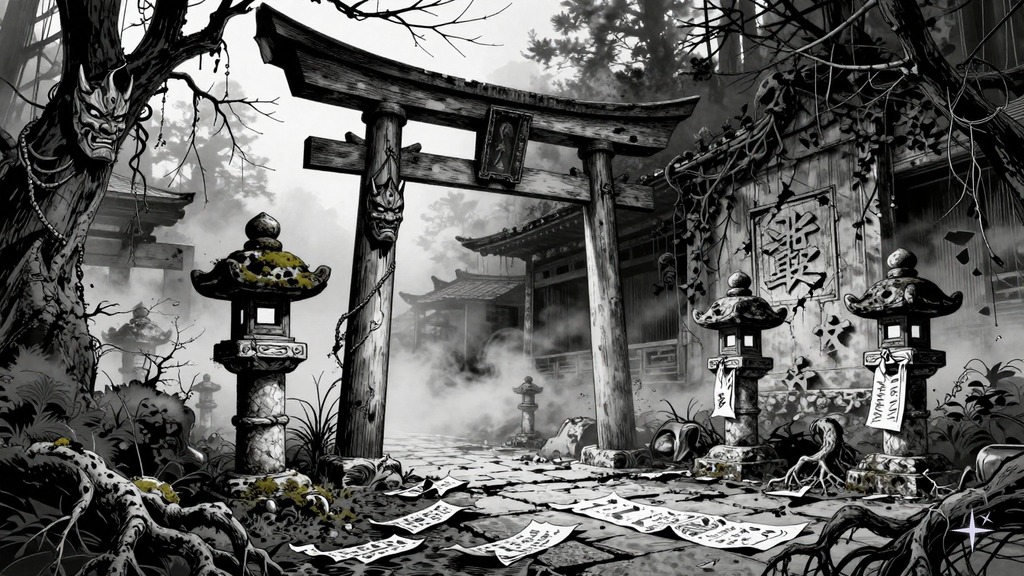
If you’ve been eyeing the Nura manga volumes and wondering how many you’d need to track down, you’re in the right place. There are 25 volumes total. This supernatural series — aimed at a younger male audience in the category Japanese publishers call shōnen — was created by Hiroshi Shiibashi and has a devoted fanbase, a distinct yokai-folklore flavor, and some genuinely creepy imagery. Better yet, it’s a completed series, which means you can plan your collection from start to finish without worrying about an open-ended commitment.
Let’s break down the volumes, the best arcs, and how to actually get your hands on the full run.
How Many Nura Manga Volumes Are There?
Nura: Rise of the Yokai Clan was serialized in Weekly Shōnen Jump — Japan’s biggest manga magazine, where chapters are published weekly before being collected into book form. The series ran for its complete course and was collected into 25 tankōbon volumes (tankōbon is simply the Japanese term for the standard collected paperback editions you see on shelves). The English edition, published by Viz Media — the primary English-language manga publisher in North America — mirrors that count with 25 volumes as well. The full series is available in English, and nothing was cut or left untranslated.
That makes this a mid-length series. Compared to franchises that run 70, 80, or 100+ volumes, 25 is very manageable. You’re looking at a complete story with a definitive beginning, middle, and end — no indefinite hiatuses, no “the manga is still going” uncertainty.
The story follows Rikuo Nura, a quarter-yokai boy who’s next in line to lead the powerful Nura Clan of supernatural creatures. The tension between his ordinary human daytime life and his terrifying yokai nighttime form drives the series forward, pulling him into increasingly dangerous conflicts rooted in Japanese mythology and folklore.
Because the series is fully complete in both languages, you can read at your own pace without waiting for new releases — a genuine luxury when collecting manga.
The Most Affordable Way to Collect the Full Series
Here’s the practical side: how do you actually collect all 25 volumes without spending more than you need to?
Viz Media Single Volumes
The standard English release consists of 25 individual volumes published by Viz Media. These are the same paperback editions you’d expect from any Viz release. Viz volumes typically carry a list price in the range of other standard manga paperbacks — for a full 25-volume set at cover price, the total adds up, but since this is a completed older series, you have options.
There is no official English box set or omnibus edition for Nura. An omnibus is when a publisher combines multiple volumes into a single thicker book (Viz does this as a 3-in-1 format for some of their more popular titles), but Nura never received that treatment. That means single volumes are your only physical format option in English.
Nura: Rise of the Yokai Clan
Digital: The Budget-Friendly Path
If cost is your primary concern, digital editions are the way to go. The series is available digitally through platforms like Kindle and the Viz catalog. Digital volumes are typically priced below their physical counterparts at retail, and they never go out of print — which matters for this series, as we’ll discuss in the availability section below.
Used Physical Copies
Because Nura has been complete for years, the secondhand market has a steady supply of used copies. Online marketplaces, used bookstores, and manga resale communities often have volumes available. The condition varies, but for a 25-volume series that isn’t in extremely high demand compared to giants like Naruto or One Piece, you can often find decent deals by buying in bulk lots.
The overall cost to collect Nura is significantly more approachable than longer-running supernatural series. Twenty-five volumes is a manageable target whether you’re buying new, used, or digital.
Key Volumes Worth Prioritizing
Not every volume in a 25-volume series hits with the same impact. If you’re trying to decide whether Nura is for you, or if you want to know which stretches of the story are the most compelling, here’s where to focus. An arc is a self-contained storyline within the larger series — think of it as a chapter in a novel, except it spans multiple volumes.
Note that the story is meant to be read in order from Volume 1, and later arcs build on earlier ones. These aren’t standalone entry points, but they are the highlights that reward the reading journey.
Volume 1: Where It All Starts
This is your entry point into the Nura Clan’s world. Volume 1 introduces Rikuo Nura, his yokai grandfather Nurarihyon — the Supreme Commander of the Nura Clan, and a figure from Japanese folklore traditionally depicted as a mysterious old man who slips into homes uninvited — and the sprawling hierarchy of supernatural creatures that make up the clan. The setup is essential: Rikuo’s dual nature as a human boy who transforms into a commanding yokai lord at night is the emotional and narrative engine of the entire series. You’ll know quickly whether the yokai-politics angle appeals to you.
The Gyūki Confrontation (Volumes 2–3)
One of the first arcs that shows Nura’s teeth is the Gyūki arc, arriving in Volumes 2–3. This is where Shiibashi demonstrates that the yokai world isn’t just colorful folklore — it’s dangerous and full of betrayal. The confrontation with Gyūki, a powerful member of the Nura Clan with his own agenda, gives you the first real taste of supernatural horror atmosphere. The art gets darker, the stakes get personal, and you start to see what the series is capable of beyond its lighthearted school-life comedy scenes.
The Shikoku Yokai Arc (Volumes 4–8)
The Shikoku arc, spanning roughly Volumes 4–8, marks a major escalation. An entire rival yokai faction from Shikoku declares war on the Nura Clan, and the story shifts into full-blown yokai clan warfare. The tone gets noticeably darker here — the enemies are more grotesque, the violence more intense, and the stakes move beyond personal grudges into territorial survival. If you enjoy supernatural action manga with genuine menace, this is where Nura starts delivering consistently.
The Kyōto Arc: The Series at Its Peak (Volumes 10–20)
Ask fans which part of Nura is the best, and the answer is almost universally the Kyōto Arc, spanning approximately Volumes 10–20. This is where Shiibashi’s art, storytelling, and horror-tinged imagery all reach their highest point. The arc takes Rikuo and his Night Parade to Kyōto to confront the powerful Hagoromo Gitsune — a fearsome fox spirit and one of the series’ most memorable antagonists — and her faction, tying into centuries of yokai history and grudges.
The supernatural designs here are genuinely unsettling — Shiibashi draws yokai that feel pulled straight from traditional Japanese art, all teeth and shadow and wrong proportions. There are elements of body horror (disturbing physical transformations and unnatural anatomy) that go beyond typical action-manga fare. The tension stays high across multiple volumes, and the emotional payoff is real.
If you only read one extended arc of Nura, make it this one. But you’ll get much more out of it with the earlier volumes as context.
The Final Arc: Seimei and the Gokadoin Conflict (Volumes 21–25)
The series wraps up with a climactic arc centered on the overarching Seimei conflict — Seimei being a long-foreshadowed antagonist whose mother Hagoromo Gitsune has carried a centuries-old grudge against the Nura Clan — and the Gokadoin House, tying together threads that have been building since the beginning. Volumes 21–25 resolve Rikuo’s journey and the fate of the Nura Clan. It’s satisfying as a conclusion, though some readers feel the storytelling in the very last volumes moves slightly faster than the Kyōto Arc’s more expansive approach. Still, it’s a proper ending — no cliffhangers, no ambiguity about whether the story is finished.
The Short Version
- Volume 1: Essential starting point
- Volumes 2–3 (Gyūki arc): First real horror atmosphere
- Volumes 4–8 (Shikoku arc): War escalation, darker tone
- Volumes 10–20 (Kyōto arc): The peak — best art, best tension, best yokai designs
- Volumes 21–25 (Final arc): Satisfying wrap-up of the full story
If you want to read every page, all 25 volumes tell a cohesive story and none are truly skippable. But if you’re sampling, the Kyōto Arc is the showcase.
Out-of-Print Volumes and Availability Pitfalls
Here’s where collecting Nura gets a little tricky. As a completed Viz series that doesn’t have the massive mainstream name recognition of something like Bleach or My Hero Academia, some volumes — particularly later ones — can be harder to find at their original retail price.
What to Watch For
Later volumes in completed Viz series frequently go through periods where physical stock dries up. This isn’t unique to Nura — it’s a common pattern with completed titles that have smaller fanbases. A volume might be technically “in print” but not actively stocked by major retailers, meaning third-party sellers set the price. When that happens, you can see individual volumes jump to well above list price on the secondhand market.
The early volumes (roughly the first half of the series) tend to be the easiest to find, since they had the highest initial print runs and the most copies in circulation. The later volumes, especially those covering the final arc (Volumes 21–25), are often the ones that command premiums.
Digital as Your Safety Net
This is where digital editions become genuinely valuable beyond just saving money. If a specific physical volume is temporarily unavailable or priced absurdly high, the digital version is always there at its standard retail price. You’re never locked out of reading the story just because a particular volume is scarce in print.
For collectors who want the full physical set on their shelf, patience is often the best strategy. Viz does reprint volumes periodically, and availability fluctuates. A volume that costs well above its cover price today might be back at normal retail in a few months. There’s no reliable way to predict reprint schedules, but completed Viz titles do get restocked from time to time.
Should You Wait or Start Collecting Now?
If you find the full set at reasonable prices — meaning close to the standard Viz list price per volume — buy it. Complete sets of Nura in good condition are the most cost-effective way to collect, and they don’t always stay available. If you’re missing a few volumes and they’re priced well above cover price, grab the digital versions and keep an eye out for physical restocks. There’s no urgency that justifies paying extreme markups unless you’re a dedicated collector who needs the physical copy immediately.
Is Nura: Rise of the Yokai Clan Worth Collecting?
Let’s be straightforward about what this series is and who it’s for.
Who Will Love It
Nura: Rise of the Yokai Clan is built for readers who are fascinated by Japanese yokai folklore. If you love the idea of creatures from myth and legend — shape-shifting fox spirits, mountain demons, snow women, bird-like tengu, water-dwelling kappa, and dozens of other supernatural beings — rendered in detailed manga art, and you want to see them organized into warring clans with centuries of grudges, this is your series.
The yokai designs are a genuine highlight. Shiibashi draws from deep folklore wells, and his character designs range from elegantly eerie to outright grotesque. The Night Parade of a Hundred Demons (Hyakki Yakō) — a concept from Japanese folklore describing a procession of supernatural creatures marching through the night — is central to the story. When Rikuo leads his parade into battle, the visual spectacle is impressive.
The horror angle is real but measured. Nura isn’t a pure horror manga — it’s a supernatural action series with horror-flavored set pieces. The Kyōto Arc in particular has imagery that leans into genuine dread: monstrous transformations, disturbing yokai designs, and an atmosphere of supernatural menace that goes beyond typical action fare. But between those moments, you’ll also get comedy, friendship dynamics, and structured battles. Think of it as a supernatural action series that occasionally gets genuinely creepy rather than a horror series with action elements.
The Anime Option
If you want to sample the story before committing to collecting the manga, there’s an anime adaptation — two seasons totaling 48 episodes. The first season (24 episodes) covers the early arcs through the Shikoku conflict, and the second season (24 episodes) adapts the Kyōto Arc. It gives you a good sense of the art style, tone, and story. If the anime grabs you, the manga goes further and deeper — the final arc is manga-only, and the art in the manga, particularly during the Kyōto Arc, surpasses what the anime was able to achieve.
Who Should Skip It
If you’re looking for unrelenting, pure horror manga — the kind that keeps you anxious on every page — Nura probably isn’t the right pick. It has horror elements, but it’s fundamentally an action series with supernatural trappings. The school-life comedy segments in the early volumes may test the patience of readers who came specifically for darkness and dread.
Similarly, if you’re not interested in Japanese folklore and mythology, a lot of what makes Nura special won’t land. The series assumes you’ll find yokai inherently cool and worth exploring — and if you do, it rewards that interest generously. If you don’t, the clan-politics storylines may feel unfamiliar and dense.
The Bottom Line
At 25 volumes, Nura: Rise of the Yokai Clan is a complete, self-contained supernatural story with some of the best yokai art in modern manga. It’s affordable to collect compared to longer series, the Kyōto Arc alone justifies the investment, and the completed status means you can read the whole thing at your own pace. For yokai fans and readers who like their action manga with a darker edge, it’s well worth picking up.