Platinum End runs 14 manga volumes, the series is fully complete, and all 14 books are available in English right now. Whether you’re picking up Volume 1 today or buying the entire set at once, there’s nothing left to wait for — every chapter has been published.
The series comes from writer Tsugumi Ohba and artist Takeshi Obata, the creative team behind Death Note (a cat-and-mouse psychological thriller about a notebook that kills) and Bakuman (a story about two friends trying to break into the manga industry). Platinum End is their darkest collaboration, a supernatural survival competition wrapped around questions about whether life is worth living and whether humanity even deserves a god. It’s heavy stuff, and it’s not for everyone.
A content note before we go further: This series deals directly with suicide, depression, murder, and existential despair from its very first chapter. These are treated as serious narrative themes rather than shock value, but if those topics are difficult for you, it’s worth knowing before you read any further or pick up Volume 1.
If you’re drawn to dark psychological thrillers with gorgeous artwork, Platinum End delivers something genuinely unique. This guide walks you through every volume — what the story covers, which books hit the hardest, what editions exist, and how to get your hands on them.
All 14 Platinum End Manga Volumes at a Glance
Here’s what you need to know before anything else:
- Title: Platinum End (プラチナエンド)
- Writer: Tsugumi Ohba
- Artist: Takeshi Obata
- Volumes: 14 (both Japanese and English editions)
- Chapters: 58 total
- Status: Completed
- Japanese Publisher: Shueisha (a major Japanese publishing house), originally published chapter by chapter in Jump Square, a monthly Japanese manga magazine, from 2015 to 2021
- English Publisher: VIZ Media (the largest publisher of translated manga in North America)
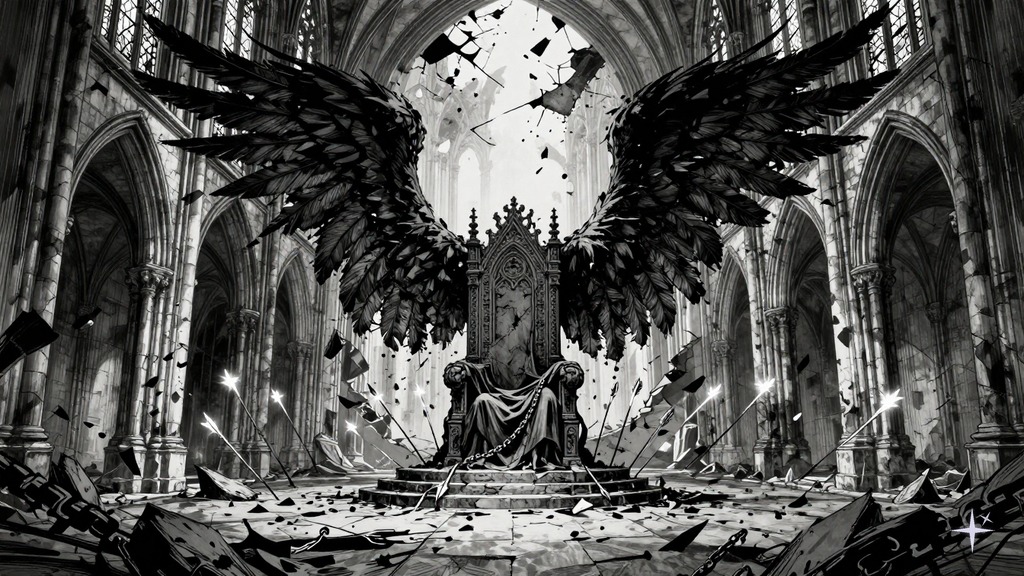
The story centers on Mirai Kakehashi, a student on the day of his middle school graduation who has lost every reason to live. After attempting suicide, he’s saved by an angel named Nasse, who reveals that Mirai has been selected as a God candidate — one of thirteen humans chosen to compete for the right to become the next God. Each candidate receives supernatural abilities from their assigned angel: wings that grant flight, arrows that can force others to love them, or both. The last candidate standing (or the one chosen within a strict time limit) ascends to godhood.
If that sounds like a standard competition setup — think a last-one-standing tournament where candidates fight or outmaneuver each other to win — the execution is anything but typical. Platinum End uses its survival-game framework to wrestle with genuinely uncomfortable questions: the morality of suicide, whether divine authority can be earned or deserved, and what happens when someone who doesn’t want to live is handed ultimate power. The tone is closer to a psychological thriller than an action manga, though it has plenty of action when the candidates start clashing.
How the Story Is Structured — Three Major Phases
Platinum End’s 14 volumes break down into three distinct phases. Understanding this structure helps you know what you’re getting into — because the series changes gears significantly as it progresses.
Phase 1 — God Candidate Introduction (Volumes 1–4)
The opening stretch establishes everything. Mirai’s rescue by Nasse, the rules of the God selection, and the first encounters with rival candidates all happen here. The pacing is deliberate — Ohba takes time to build out the mechanics of wings and arrows, the hierarchy of angels, and the psychological profiles of the early candidates.
The biggest presence in these volumes is Metropoliman, a God candidate who publicly reveals himself as a costumed figure and begins hunting the other candidates on live television. He’s terrifying not because of raw power (though he has plenty) but because of his complete willingness to kill publicly and theatrically. Metropoliman turns the God selection from a secretive chess match into a spectacle, and the tension ratchets up fast.
These four volumes also establish the emotional core of the series: Mirai doesn’t want to become God. He barely wants to be alive. Watching a protagonist who fundamentally doesn’t want to participate in the game he’s been drafted into creates a very different energy from a typical action-manga hero.
Phase 2 — The Metropoliman Storyline and Escalation (Volumes 5–9)
This is the most action-driven stretch of Platinum End. The conflict with Metropoliman reaches its peak, alliances form between candidates who want to survive without killing, and the body count climbs. Obata’s art hits its stride here — the aerial combat sequences between candidates with wings are genuinely stunning, and the way he arranges images across full two-page layouts (where a single illustration stretches across both the left and right pages) during key confrontations ranks among his best work.
But even during the most intense fights, Ohba keeps layering in moral complexity. Candidates who seem villainous get backstories that complicate your feelings about them. Candidates who seem heroic make choices that blur ethical lines. The question of who “deserves” to become God gets muddier with every chapter.
By the end of Volume 9, the physical conflict has largely resolved, and the series pivots hard — which brings us to the third phase.
Phase 3 — The Final Selection and Philosophical Endgame (Volumes 10–14)
Here’s where Platinum End becomes its most divisive. The surviving candidates shift from fighting each other to debating each other. The question is no longer “who can kill the others?” but “should anyone become God at all?” The manga transitions from a supernatural thriller into something closer to a philosophical dialogue, with long stretches of characters arguing about the nature of divinity, free will, and human meaning.
Some readers find this final stretch brilliant — a logical conclusion to a story that was always more interested in ideas than punching. Others find it frustrating, feeling the pacing slows dramatically and the resolution prioritizes thematic statement over satisfying narrative closure. The ending in particular has been polarizing since it first published in Japan.
Whether you love or dislike the conclusion, it’s undeniably bold. Ohba and Obata commit fully to a finale that refuses easy answers.
Key Volumes Worth Highlighting
Not every volume in a 14-book series hits with the same impact. Here are the four that stand out — whether because they’re turning points, peak moments, or essential context for the bigger picture.
Volume 1 — Where It All Begins
The very first scene sets the tone: Mirai’s attempted suicide and his last-second rescue by the angel Nasse. Within the first chapter, you know this isn’t a typical competition story. The series wears its darkness openly, and Volume 1 doesn’t soften anything about Mirai’s despair or the violent stakes of the God selection.
This is also where you get your first taste of Obata’s artwork, and it’s predictably gorgeous. His character designs for the angels alone — ethereal, unsettling, distinctly non-human despite their beauty — are worth the cover price. If Volume 1 grabs you, the series will hold you. If its tone feels like too much, you’ll know early. The card below shows Vol. 14, the final volume — from its product page you can reach Volume 1 and the rest of the series:
Platinum End
Volume 5 — The Metropoliman Confrontation
The central antagonist of the first half reaches a critical turning point here, and the results are intense. Without spoiling specifics, this volume contains arguably the series’ most visceral action sequence — a multi-candidate clash where the stakes are immediately, physically lethal. Obata’s ability to choreograph aerial combat across full-page and double-page illustrations is on full display.
Volume 5 is also the point where Platinum End’s moral ambiguity deepens significantly. What looks like a clear hero-vs-villain narrative starts fracturing, and the motivations behind Metropoliman’s actions get more complicated than “he’s the bad guy.” This is the volume that convinced a lot of readers the series was something special beyond its creators’ earlier work.
Volume 10 — The Philosophical Pivot
If Volumes 1–9 are about survival, Volume 10 is where the series starts asking what survival is even for. The transition from physical battles to ideological warfare happens here, and it’s dramatic. Characters who defined themselves through action are suddenly forced to define themselves through argument.
This is the volume that splits the readership most cleanly. If you’re invested in the philosophical questions the series has been building toward — about the nature of God, the purpose of suffering, the value of hope versus despair — Volume 10 is where those threads start pulling tight. If you were primarily reading for the supernatural action, this is where you might start feeling the shift.
Volume 14 — The Divisive Finale
The final volume. 58 chapters of buildup come down to this, and Ohba delivers a conclusion that prioritizes bold thematic statement over conventional resolution. The ending doesn’t wrap things up neatly. It doesn’t give you a triumphant hero’s victory. It gives you an answer to the philosophical questions the series has been asking — and that answer is going to sit differently with every reader.
Volume 14 is the kind of ending you’ll want to discuss with someone afterward. Whether that discussion is “that was incredible” or “what did I just read” depends on your relationship with the themes, but either way, it’s not forgettable.
Editions Available in English
Platinum End’s English release from VIZ Media is straightforward:
Standard single volumes — 14 individual paperback volumes, standard manga size, collecting all 58 chapters. This is currently the only widely available English edition format.
| Format | Volumes | Publisher |
|---|---|---|
| Standard Paperback Singles | 14 | VIZ Media |
No omnibus edition (multiple volumes collected into one larger book), deluxe hardcover, or box set has been widely released for Platinum End in English. If you’re hoping for a collected format similar to VIZ’s deluxe editions for other series, singles are your path for now.
Each volume is a standard VIZ manga paperback at their typical retail price point. At 14 volumes, the full series is a manageable commitment — both in terms of shelf space and budget — compared to longer-running series that stretch into 30+ books.
Where to Buy Platinum End Manga Volumes
Since the series is complete, all 14 volumes are currently in print and readily available. No waiting for future releases, no hunting down books that are no longer being manufactured. You can buy the whole set today or start with Volume 1 and go from there.
Physical copies are available through major retailers — Amazon, Barnes & Noble, Books-A-Million, and independent bookstores that stock VIZ titles. Your local comic shop may carry them as well, especially if they have a manga section.
Digital editions are available through VIZ’s own platform and other digital manga storefronts. If you prefer reading on a tablet or phone, the digital versions are a convenient way to start — and Obata’s artwork holds up beautifully on high-resolution screens.
A practical tip: If you’re not sure whether Platinum End is for you, starting with Volume 1 is a low-risk way to test the waters. The first book gives you a clear sense of the tone, the art style, and the themes — enough to know whether you want to continue. From there, you can pick up subsequent volumes at whatever pace suits you, or grab the remaining 13 all at once if you’re hooked.
Frequently Asked Questions
How many volumes of Platinum End are there?
14 volumes in both the Japanese and English editions, collecting all 58 chapters of the story. The Japanese edition was published by Shueisha, and the English edition by VIZ Media.
Is Platinum End finished?
Yes, completely finished. The manga’s final volume was published in Japan in early 2021, and all 14 English volumes are available now. You can read the entire story from start to finish without waiting for anything.
Is there a Platinum End anime?
Yes. A television anime adaptation (an animated series based on the manga) was produced by Signal.MD, covering the full story across 24 episodes. If you’ve watched the anime and want to experience the original manga — which has significantly more detail in both the art and the characters’ inner thoughts — the volumes are a great way to revisit the story with deeper context.
Who created Platinum End?
Tsugumi Ohba (writer) and Takeshi Obata (artist). They’re the same creative team behind Death Note and Bakuman. If you’ve read either of those series, you’ll recognize Ohba’s intricate plotting and morally gray characters, along with Obata’s clean, detailed art style — though Platinum End pushes both creators into darker territory than their previous collaborations.
Is Platinum End a horror manga?
It occupies a space between several genres. The most accurate description is a dark psychological thriller with supernatural and survival-game elements. Suicide, murder, and existential dread are core themes throughout the series. There are moments of genuine horror — particularly in the Metropoliman storyline — but it’s not horror in the traditional sense of monsters or gore. The scariest things in Platinum End are the choices people make and the questions the series forces you to sit with.
If you enjoy manga that blends suspense, moral ambiguity, and supernatural stakes — series like Death Note (a battle of wits between a killer and a detective) or Future Diary (another survival game with supernatural elements) — Platinum End will feel like familiar territory. Just be prepared for a series that’s more interested in making you think than making you flinch.