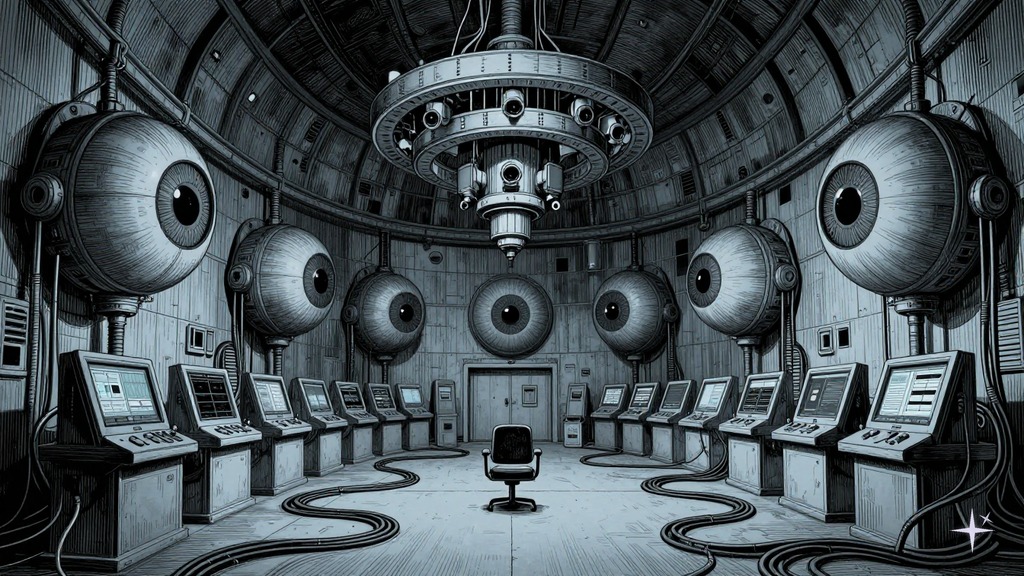
If you came here wondering how many Psycho-Pass Inspector Akane Tsunemori manga volumes exist, whether the series is finished, and if it’s worth picking up — good news, the answers are straightforward. Inspector Akane Tsunemori (監視官常守朱) is a completed manga series with 6 volumes and 25 chapters total. No waiting for new releases, no ongoing publication limbo. The whole story is done.
Before going further, a quick note if you’re new to manga: manga are Japanese comics, typically printed in black and white. A manga “volume” is a collected book — usually around 180–200 pages — that gathers several individual “chapters” that were originally published one at a time in a magazine. So when this series has 25 chapters across 6 volumes, that means roughly four chapters per book. An “anime” is an animated TV show or film, often based on (or serving as the basis for) a manga.
This manga retells the story of the Psycho-Pass anime (Japanese animated TV series) in comic form, illustrated by Hikaru Miyoshi (三好輝) with the story credited to the Psycho-Pass Production Committee (サイコパス製作委員会) and character designs by Akira Amano (天野明), a manga artist known for the action-comedy series Reborn!. The series was originally published chapter by chapter in Jump Square, a monthly manga magazine in Japan, and collected into volumes by Shueisha, a major Japanese manga publisher, between February 2013 and January 2015. Foreign-language editions exist — French (published by Kana) and German (published by KAZÉ Manga) — but no English edition has been released.
Below you’ll find a breakdown of every volume, reading order guidance, how the manga compares to the anime, and current information on edition availability.
Psycho-Pass Inspector Akane Tsunemori Has 6 Volumes — A Complete Series
Here’s the quick-reference overview:
| Detail | Info |
|---|---|
| Full title | Inspector Akane Tsunemori (監視官常守朱) |
| Artist | Hikaru Miyoshi (三好輝) |
| Story | Psycho-Pass Production Committee |
| Character designs | Akira Amano (天野明) |
| Magazine | Jump Square |
| JP Publisher | Shueisha (集英社) |
| FR Publisher | Kana |
| Total volumes | 6 (Japanese; no English edition) |
| Total chapters | 25 |
| Volume publication | Feb 2013 – Jan 2015 |
| Status | Completed |
The series ran for almost exactly two years in Japan. At 25 chapters across 6 volumes, it’s a tight, focused retelling — no padding, no unnecessary detours. For readers who like knowing exactly what they’re getting into before committing, this is about as clean as it gets. Six volumes, one complete story, done.
The French and German editions mirror the Japanese release with the same 6-volume structure, preserving the full story without any content being combined or split differently.
What Each Volume Covers
Here’s a volume-by-volume look at the series. Since this manga retells the Psycho-Pass storyline — a dark thriller set in a future society where citizens’ mental states are constantly monitored and quantified by a computer network called the Sibyl System — expect escalating psychological tension throughout. A “dystopian” story, for those unfamiliar with the term, is one set in a society that appears orderly or ideal on the surface but is actually oppressive and controlling underneath. Psycho-Pass fits that description perfectly.
A content note: The Psycho-Pass universe deals with heavy themes including state surveillance, systemic violence, dehumanizing criminal profiling, and moral ambiguity around justice. The manga reflects all of this. It’s dark material handled seriously, not gratuitously, but readers should know what they’re walking into.
Volume 1 (JP Release: February 2013)
The story opens with Akane Tsunemori joining the Public Safety Bureau’s Criminal Investigation Division as a newly assigned Inspector. This volume establishes the core premise: in this future society, the Sibyl System measures every citizen’s psychological state and assigns them a Crime Coefficient — a number that determines whether they’re considered a potential criminal. If someone’s number crosses a threshold, they’re flagged as a threat. Inspectors like Akane are law enforcement officers who work alongside Enforcers — individuals whose own Crime Coefficients are dangerously high, meaning the system has labeled them as latent criminals. The government essentially channels these people into police work, using them as tools to hunt down others.
Volume 1 does the crucial work of showing you this world through Akane’s fresh eyes. She’s idealistic, smart, and immediately uncomfortable with how the system reduces human beings to numbers. You get your first look at the Dominators — special firearms issued to officers that can only fire on targets the Sibyl System has deemed threats. The volume introduces the Bureau’s team dynamics and the creeping unease that something about Sibyl isn’t right. Miyoshi’s art establishes a cold, clinical visual tone that suits the material perfectly.
Volume 2 (JP Release: June 2013)
Cases escalate. Akane and her team handle investigations that push her further into moral gray areas — situations where the Sibyl System’s judgment doesn’t align with what she feels is just. The tension between following orders and trusting her own conscience starts to build.
This volume deepens the relationships between Akane and her team, particularly with Enforcer Shinya Kogami, whose own complicated history with the system becomes increasingly relevant. The pacing picks up noticeably here as the series moves past its setup phase.
Volume 3 (JP Release: November 2013)
The central antagonist and the primary threat driving the story come into sharper focus. The psychological stakes deepen considerably — this isn’t just about catching criminals anymore. The manga starts asking harder questions about what happens when the system designed to protect society becomes the thing threatening it.
Volume 3 is where the series shifts from “interesting premise” to “genuinely gripping thriller.” The philosophical dimensions of the story — free will versus predetermined judgment, safety versus freedom — get real weight.
Volume 4 (JP Release: April 2014)
Moral conflicts intensify. Akane is forced to confront the darker implications of the Sibyl System head-on, and the choices she faces become genuinely painful. The antagonist’s philosophy challenges not just Akane but the reader’s assumptions about the world the story has built.
This is the volume where the series earns its label as psychological horror — a genre where the fear comes not from monsters or graphic violence, but from disturbing ideas, paranoia, and the slow unraveling of things you thought were safe. The horror here is the dawning realization of what a society built on computer-driven judgment actually does to the people living in it. Miyoshi’s art captures the claustrophobic tension effectively, with page layouts that feel increasingly oppressive as the stakes rise.
Volume 5 (JP Release: August 2014)
Climactic confrontations and major revelations. Without spoiling specifics, the threads woven through the first four volumes start converging. The action intensifies, but the story never loses sight of its core question: can one person’s moral conviction stand against an entire system?
This is the most action-heavy volume in the series, but the emotional and philosophical weight keeps it grounded. If you’ve been invested in Akane’s journey, Volume 5 delivers on that investment.
Volume 6 (JP Release: January 2015)
The conclusion. The series wraps up its central conflict and brings Akane’s arc — meaning her personal journey and growth across the story — to a close. All 25 chapters are accounted for across these 6 volumes, so there are no missing story beats or abrupt cutoffs.
Without spoiling the ending — it’s a conclusion that fits the tone of the series. Psycho-Pass has never been about easy answers, and the manga’s ending reflects that.
Reading Order and Where to Start
This one is simple: start with Volume 1. There are no prequels, no companion stories you need first, no complicated reading order. Volume 1 through Volume 6, straight through. That’s it.
Do I Need to Watch the Anime First?
No. The manga tells a self-contained story. If you’ve never seen a single episode of Psycho-Pass, Volume 1 introduces everything you need — the world, the characters, the system, the stakes. You won’t be lost.
That said, if you have seen the anime, you’ll recognize the story and characters. The manga follows the same narrative, so it functions both as a standalone read and as a companion piece.
What About Other Psycho-Pass Manga?
Other manga titles exist within the Psycho-Pass franchise. This particular series — Inspector Akane Tsunemori — stands completely on its own. You don’t need to read any other Psycho-Pass manga before, during, or after this one to get the full story. If you want to explore more of the franchise afterward, that’s a bonus, not a requirement.
Psycho-Pass Manga vs. Anime — What the Volumes Offer
Since Inspector Akane Tsunemori retells the Psycho-Pass anime storyline, the natural question is: why read it if the anime exists?
A Different Way to Experience the Story
Manga and anime are fundamentally different experiences, even when they tell the same story. Reading the manga means absorbing the surveillance themes and psychological tension at your own pace. You can linger on a page, re-read a crucial scene, sit with a character’s expression. Anime moves at the pace the director sets. Manga moves at yours.
Hikaru Miyoshi’s art brings a distinct visual interpretation to the Psycho-Pass world. The character designs originate from Akira Amano, and Miyoshi’s rendering of those designs on the page gives the series its own visual identity separate from the anime’s animation style.
The Psychological Horror on the Page
The themes that make Psycho-Pass compelling — dehumanizing criminal profiling, the violence inherent in reducing people to numerical scores, the moral weight of enforcing a system you don’t fully trust — translate powerfully to manga. There’s something about reading these ideas in black and white, in the stillness of a printed page, that hits differently than watching them animated with a soundtrack.
The manga format also means no unnecessary episodes or pacing slowdowns that sometimes affect anime. Twenty-five chapters, six volumes, focused and complete.
Who Is This Best For?
- Psycho-Pass anime fans who want the story in a format they can hold in their hands and revisit easily
- Manga readers drawn to dark sci-fi, oppressive future settings, or psychological thrillers who haven’t encountered Psycho-Pass before
- Anyone who prefers reading to watching and wants a compact, complete series with serious thematic depth
Is There an English Edition to Buy?
Here’s the straight answer, because it matters more for this series than most: there is no official English edition of Psycho-Pass: Inspector Akane Tsunemori. The manga exists in Japanese, plus French (Kana) and German (KAZÉ Manga) editions — but no US or UK publisher has licensed it in English.
What This Means for Buyers
- English-only readers currently can’t read this adaptation in their language. Marketplace listings that surface for it are Japanese or European-language copies, so check the language line carefully before buying anything
- If you read Japanese (or French or German), the complete 6-volume set can be tracked down through import retailers, though stock can be inconsistent
- If this series ever gets an English license, it would be genuine news — worth an occasional check of manga news outlets if you’re invested in the franchise
The closest English-language alternative on the manga shelf is *Psycho-Pass: Inspector Shinya Kogami* — a 6-volume prequel spinoff published in English by Dark Horse, completed in 2023. And of course, the anime this manga adapts is fully available in English.
Practical Notes for Collecting the Full Set
Since this is a completed 6-volume series from a European publisher, here are some practical considerations:
- Check stock for all 6 volumes before committing — there’s nothing more frustrating than buying volumes 1–4 and finding volume 5 is unavailable indefinitely
- Third-party marketplace sellers (independent sellers listing on the same Amazon product page) may list the volumes at variable prices, so compare listings carefully
- If you’re comfortable reading digitally, check whether digital editions are available as an alternative to physical imports
Is Inspector Akane Tsunemori Worth Reading?
Let’s be straightforward about what this series is and who it’s for.
The case for reading it: It’s a compact, complete psychological thriller set in one of the most compelling oppressive future settings in manga and anime. At 6 volumes, the time and money commitment is minimal compared to longer-running series. The themes are genuinely thought-provoking — surveillance states, computer-driven justice, the ethics of predicting crime before it happens. These ideas feel more relevant now than when the manga was first published in 2013.
Hikaru Miyoshi’s artwork serves the story well, and the tight 25-chapter structure means nothing overstays its welcome. You get a full beginning, middle, and end without any of the bloat that can come with longer manga series.
The practical considerations: No English-language edition exists as of this writing. The series is available in French (Kana) and German (KAZÉ Manga), but English-only readers currently have no way to read this manga in their language. If you read French or German, tracking down all 6 volumes from a European publisher may require some patience.
Who will love this: Fans of Psycho-Pass who want the manga experience. Readers who enjoy dark sci-fi manga with oppressive settings and psychological weight — series that ask uncomfortable questions about society and technology rather than relying on action alone. Anyone looking for a short, self-contained series that wraps up cleanly.
Who might want to skip it: If you’ve already watched the anime and don’t feel the need to revisit the story in a different format, this may not add enough new material to justify the purchase. It retells the same narrative rather than offering a substantially different story.
In the end, 6 volumes is barely a commitment at all. If the premise appeals to you even a little, Volume 1 will tell you whether the rest of the series is for you.
Note: the link below is for the German-language edition from KAZÉ Manga.
Inspector Akane Tsunemori (Psycho-Pass) 01 (German edition, KAZÉ)