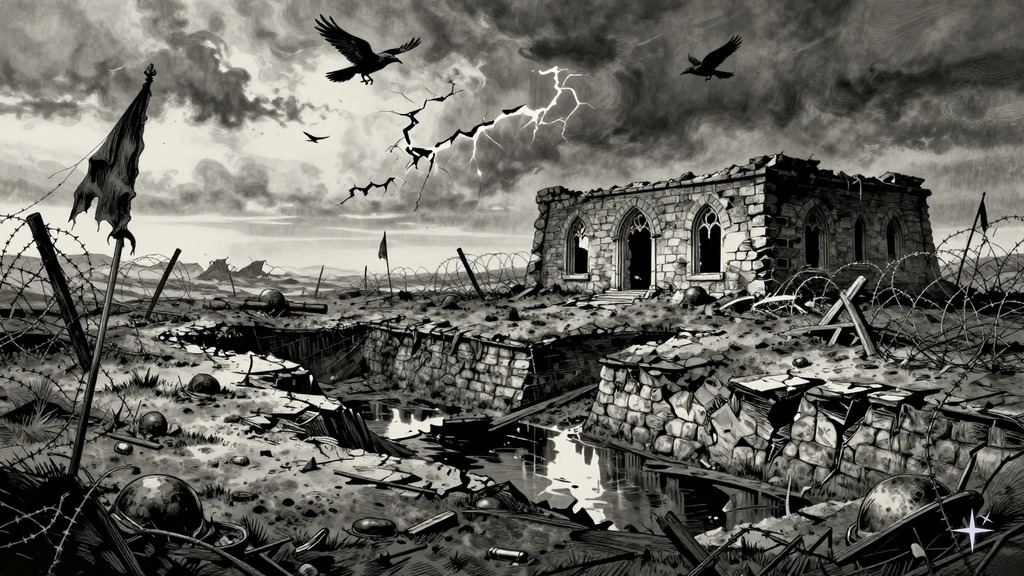
If you’ve heard about a tiny blonde girl commanding battalions in an alternate World War and wondered what that’s all about — welcome. The Saga of Tanya the Evil manga volumes now number 34 in Japan and 28 in English, making it one of the longest-running military isekai series available today. “Isekai” means “another world” — it’s a genre where a character from our world is reborn or transported into a different one. In this case, the result is a blend of cold strategic warfare with deeply uncomfortable psychological horror. Figuring out where things stand with the volume count, what’s available in English, and how to start collecting can be genuinely confusing.
This guide breaks it all down.
How Many Volumes of The Saga of Tanya the Evil Are There?
Here’s the quick answer:
- Japanese volumes: 34 (Vol. 35’s release date has not been officially announced yet)
- English volumes: 28 currently available
- Status: Ongoing — the manga is still being serialized
- English publisher: Yen Press
The manga is written by Carlo Zen with art by Chika Tojo, based on Carlo Zen’s original light novel series. Light novels are a Japanese publishing format — short, illustrated novels typically aimed at young adult readers, distinct from both standard novels and manga. Character designs originated from Shinobu Shinotsuki, who illustrated the novels. (In Japanese media, it’s common for the manga, light novels, and anime to each involve different creative teams working from the same source material.)
The series has been serialized — meaning chapters are published individually in a magazine before being collected into book-form volumes — in Monthly Comp Ace, a Japanese manga magazine published by KADOKAWA, since 2016. The first collected volume hit shelves in December of that year.
For English readers, the gap between the Japanese and English releases currently sits at about six volumes. New English volumes come out on a regular schedule, so collectors can expect steady progress toward catching up — though with the Japanese side still ongoing, the finish line keeps moving.
What Kind of Story Is This?
You might be wondering how a military series fits on a horror-focused site. Fair question. The Saga of Tanya the Evil isn’t horror in the traditional sense — there are no monsters lurking in hallways or curses spreading through villages. Instead, the horror here is structural and psychological. You’re following a protagonist who is, by most moral frameworks, genuinely terrible. Tanya Degurechaff is a salaryman — a Japanese white-collar office worker — reincarnated into the body of a young girl in a world resembling early 20th-century Europe, locked in an adversarial relationship with a godlike entity known as Being X. This entity claims to be God and has engineered Tanya’s reincarnation specifically to force her into faith through suffering. Her response to this situation is to climb the military hierarchy with ruthless efficiency, treating human lives as expendable resources.
The series doesn’t flinch from the ugliness of war. It’s bleak, it’s cold, and the protagonist’s worldview is deliberately disturbing. If you enjoy stories where the real horror is what people choose to do to each other — and where the “hero” might be the scariest person on the battlefield — this manga delivers.
How the Story Is Structured — Arcs and Phases
Unlike many manga that break neatly into named story arcs — self-contained narrative sections with clear beginnings and endings — The Saga of Tanya the Evil builds more like a continuous escalation. Think of it less like distinct storylines and more like phases of a war that keeps expanding.
Early Volumes — The Foundation
The opening stretch covers Tanya’s reincarnation, her forced entry into the military as a mage soldier — a soldier who uses magical abilities channeled through military equipment — and her early deployments. These volumes establish the core tension: Tanya wants a comfortable, safe life, but Being X keeps engineering circumstances that push her deeper into danger. You also get the foundational worldbuilding here — the alternate-Europe setting (a fictional continent modeled on early 20th-century Europe and its great wars), the magic system tied to military hardware, and the political landscape of an empire on the brink of war on multiple fronts.
These early volumes are critical for understanding Tanya’s character. She’s not a reluctant hero being dragged into conflict. She’s a calculating, amoral strategist who views warfare through the lens of corporate efficiency — a direct product of her past life as a ruthless office worker. The dissonance between her child-like appearance and her cold adult reasoning is one of the series’ defining unsettling qualities, and it’s the first hint that the horror in this manga is about what’s happening inside a person’s head, not what’s lurking in the dark.
Middle Volumes — Expansion and Escalation
As the series progresses, the scope widens dramatically. Large-scale military campaigns become the focus, with Tanya maneuvering through increasingly complex political and tactical situations. The wars grow in scale. Alliances shift. The body count climbs.
What keeps these volumes from becoming dry military fiction is the psychological layer — and this is where The Saga of Tanya the Evil earns its place alongside darker manga. Tanya’s relationship with Being X deepens, and the question of whether she’s truly in control — or being manipulated into serving a purpose she can’t see — creates genuine unease. The people around her begin to see her as either a miraculous weapon or something fundamentally wrong, and neither perspective is entirely inaccurate. The dread builds not from jump scares but from slowly watching a person become something less than human in pursuit of survival.
Later Volumes — Consequences Mount
The most recent volumes push into territory where the accumulated weight of Tanya’s choices starts pressing back. The scope of the conflict expands further, the psychological tension tightens, and the series leans harder into the moral darkness that makes it compelling. The horror that was established in Volume 1 — a person trapped by a god and responding by becoming a monster — reaches its fullest expression in these later chapters.
Keep in mind that because the manga is still ongoing, we don’t yet know where this all lands. But the trajectory has been consistently toward darker and more complex territory — the kind of story that rewards readers who’ve invested in the full journey.
A Note on Narrative Flow
If you’re used to manga where you can say “this storyline runs from volumes 5 to 8” — this series doesn’t work that way. The narrative flows continuously, with campaigns and political developments bleeding into each other. That’s actually one of its strengths: it feels more like reading a war chronicle than a standard manga plot structure.
English Volume Highlights
There are currently 28 English volumes of The Saga of Tanya the Evil manga available, published by Yen Press. Rather than listing all 28, here’s a representative look at the series, highlighting volumes that give you a sense of the journey:
Volume 1 — Where It All Begins
The first volume sets up everything: the reincarnation premise, Being X, Tanya’s worldview, and the military-magic system. It’s a strong test of whether the series is for you — if the combination of a child soldier protagonist and cold military pragmatism hooks you, the series only intensifies from here. If it repels you, that’s a legitimate response too. The series knows what it is from page one.
Volume 5 — The War Machine Accelerates
By this point, the initial setup has fully given way to active warfare. Tanya’s battalion of mage soldiers is operational, and The Saga of Tanya the Evil hits its stride as both military thriller and character study. The tactical complexity ramps up, and Chika Tojo — the series’ manga artist — does impressive work conveying large-scale battle sequences.
Volume 10 — Midpoint Intensity
Around the middle of the English run, the series has built enough political and military scaffolding that individual battles carry real strategic weight. You’re deep enough in to be invested in the broader conflict, and Tanya’s competence has become both her greatest asset and something increasingly frightening to the people around her.
Volume 15 — Deep Into the Conflict
The war has expanded across multiple fronts, and the narrative complexity of The Saga of Tanya the Evil reflects that. These volumes reward careful reading — there’s a lot happening politically and militarily, and Tanya’s position within the power structure continues to evolve in ways that feel truly unpredictable.
Volume 20 — Escalation Continues
By volume 20, the series has been building tension for a long time, and the storytelling reflects that accumulated weight. The moral ambiguity that defines the series is at full strength here, and readers who’ve come this far are generally deeply invested.
Volume 28 — The Current English Frontier
The most recently released English volume represents the current edge of what’s available to English-language readers. With six more Japanese volumes already published and Vol. 35 on the way, there’s plenty of story still to come in English.
The Saga of Tanya the Evil, Vol. 28
Release Schedule
The English release has maintained a fairly consistent publishing cadence, with roughly four new volumes per year. For collectors planning to stay current, that means budgeting accordingly. The series is ongoing on both the Japanese and English sides, so this is a commitment that will continue growing for the foreseeable future.
Key Volumes That Define the Series
If you’re trying to decide whether this series is for you, or you want to know which volumes represent the manga at its strongest, here are the moments and stretches that define what The Saga of Tanya the Evil does best.
Volume 1 — The Premise That Hooks (or Repels)
The reincarnation sequence and Tanya’s confrontation with Being X in the first volume is the series’ mission statement. It establishes that this isn’t a power fantasy where the protagonist saves the world — it’s a story about someone trying to game a system that might be rigged against them by a literal god. The horror isn’t supernatural in the traditional sense; it’s existential. Tanya is trapped in a situation where the only path to survival runs through warfare, and she embraces that path with disturbing enthusiasm.
The First Major Deployment
When Tanya’s mage battalion sees its first real combat, the series shifts from setup to execution. The violence isn’t gratuitous, but it’s unflinching — this is war manga that takes war seriously. Tanya’s tactical brilliance makes her effective, and her complete emotional detachment makes her terrifying. The contrast between how the audience sees her and how the characters around her perceive this small, seemingly innocent child is one of the series’ most effective horror elements.
The Expanding War
As the conflict grows from a single front to a continent-spanning war, The Saga of Tanya the Evil finds its richest storytelling territory. The volumes covering the multi-front expansion are where the military strategy becomes properly engaging and where Tanya’s limitations start becoming visible. She can win battles, but controlling the direction of an entire war is beyond any single person — and watching her grapple with that reality while Being X continues to manipulate events creates sustained tension.
Psychological Turning Points
Several volumes feature moments where Tanya’s carefully maintained rational facade cracks, or where the people around her begin to understand what they’re really dealing with. These psychological peaks are some of the series’ finest work, blending character study with the slow-building dread that makes the manga feel genuinely dark rather than simply violent.
The Most Recent Stretch
The latest available English volumes represent the series operating with years of accumulated narrative momentum. Long-running plot threads converge, and the stakes feel high because the series has earned them through patient, detailed storytelling. For readers who’ve followed from the beginning, these volumes deliver on promises made much earlier in the run.
Are They Worth Reading in Order?
Absolutely. This isn’t a series where you can skip around. The continuous narrative structure means each volume builds directly on what came before. Starting from Volume 1 and reading straight through is the way to experience this story.
Which Edition Should You Buy?
Standard Single Volumes
The primary English release from Yen Press consists of standard single-volume manga — individual books, each collecting several chapters from the magazine serialization into one volume. This is currently the only confirmed English format for the manga.
No Omnibus or Box Set Editions
As of now, there are no confirmed omnibus editions (larger books that combine multiple volumes into one), deluxe editions, or box sets for the English release. For a series with 28 volumes and counting, that’s a notable gap — omnibus editions would make catching up significantly more affordable. But for the time being, single volumes are your only option.
This could change in the future, especially as the series continues to grow in length. Longer-running manga frequently get collected into larger format editions eventually. But there’s nothing to wait for right now — if you want to read the series, single volumes are the way to go.
Digital vs. Physical
For a series this long, the digital vs. physical question is worth thinking about seriously:
- Physical volumes look great on a shelf and are easier to resell if you decide the series isn’t for you. But 28+ volumes take up real space, and the cost adds up.
- Digital volumes are often available at a lower list price, take up zero shelf space, and are available instantly. The trade-off is that you don’t truly own them in the same way, and reading experience depends on your device.
A practical compromise that many collectors use: buy physical for your favorite volumes and digital for the rest. Or go all-digital until you’re sure the series is a keeper, then start collecting physical copies of the volumes you love most.
Budget Planning for an Ongoing Series
With 28 volumes already out and more on the way, this is not a cheap collecting commitment at full list price. Physical single volumes typically carry a list price in the range of other standard manga volumes from Yen Press. A few things to keep in mind:
- The series is ongoing, so budget for future volumes too
- Buying in batches rather than all at once can spread the cost
- Digital editions typically have a lower list price than physical
- Keep an eye out for general sale periods at major retailers — long series like this benefit significantly from any per-volume savings
Where to Buy The Saga of Tanya the Evil in English
Major Online Retailers
The series is widely available through major online book retailers. Amazon carries both physical and digital (Kindle) editions. Other online options include Barnes & Noble, Books-A-Million, and Crunchyroll’s online store.
Digital Storefronts
For digital readers, the manga is available through multiple platforms including Kindle, Kobo, Apple Books, and other digital manga storefronts. Digital purchases are typically available immediately, which is a significant advantage when you’re 28 volumes into a binge and it’s 2 AM.
Tips for Cost-Effective Collecting
Building a complete set of a long-running manga series is a marathon, not a sprint. Some approaches that work well:
- Watch for general sale events at major retailers — long series benefit enormously from even small per-volume savings multiplied across many books
- Check in on the volumes you’re watching every so often — prices move around more than you’d expect
- Check your local library system — many libraries carry manga, and reading the first several volumes for free is a great way to confirm the series is for you before committing money
- Buy the first few volumes, then pace yourself — there’s no rush. The series isn’t going anywhere, and spreading purchases over time is much easier on your wallet than buying everything at once
Frequently Asked Questions
How many English volumes of The Saga of Tanya the Evil exist?
There are currently 28 English volumes available, published by Yen Press. The Japanese release is ahead at 34 volumes, and the English release is ongoing with new volumes publishing on a regular schedule.
Is the manga finished?
No. The Saga of Tanya the Evil manga is still ongoing. The latest Japanese volume (Vol. 34) was released in March 2026, and the series continues to be serialized in Monthly Comp Ace. Vol. 35’s release date has not been officially announced yet. There’s no announced end date, so expect more volumes for the foreseeable future.
Do I need to read the light novel or watch the anime first?
No. The manga stands on its own as a complete adaptation — a retelling in manga format — of Carlo Zen’s light novel series. You can start with Volume 1 of the manga and follow the entire story without any outside reading or viewing.
That said, if you watched the anime and enjoyed it, the manga is a natural next step — it goes significantly further than the anime covers and includes much more detail. And the light novels offer additional depth beyond even the manga — more internal monologue, more detailed strategic reasoning, more worldbuilding. Both are excellent companions to the manga, but neither is a prerequisite.
Is there an omnibus or box set?
There are no confirmed omnibus, deluxe, or box set editions for the English manga release at this time. (An omnibus is a larger-format book that collects multiple standard volumes into one.) The standard single-volume format from Yen Press is the only option currently available. Given the series’ length and continued publication, collected editions may appear in the future, but nothing has been announced.
How does the manga compare to the anime?
The anime adaptation covers only a portion of the manga’s story. The manga goes significantly further and includes much more detail in its military campaigns and political maneuvering. If you watched the anime and wanted more — or if renewed anime interest brought you here — the manga has a lot more to give. Season 2 (Saga of Tanya the Evil II) premiered July 8, 2026, and the manga goes well beyond what either season covers. Starting from Volume 1 is recommended even if you’ve seen the anime, since the manga includes material the show condensed or skipped.
Is this series appropriate for younger readers?
This is a war manga with mature themes. It deals with military violence, moral ambiguity, the dehumanization of warfare, and a protagonist whose worldview is deliberately disturbing. It’s not excessively graphic compared to some horror manga, but the themes are heavy. It’s best suited for older teens and adults who are comfortable with dark, morally complex storytelling.
—
The Saga of Tanya the Evil is a long, rewarding commitment for readers who want their military fiction laced with psychological darkness and genuine moral discomfort. Twenty-eight English volumes in and still going, it’s a series that builds patiently and pays off for readers willing to follow Tanya’s unsettling march through its alternate-world war. Grab Volume 1, see if the premise grabs you, and go from there.