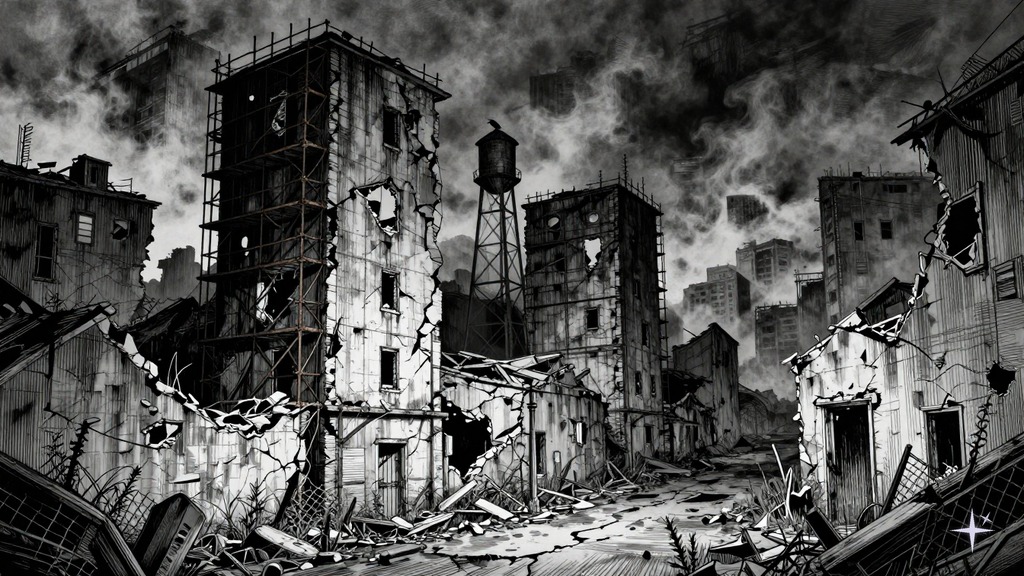
If you’ve been eyeing the Tekkonkinkreet: Black & White manga and wondering whether you’re about to step into a completed story or an unfinished one, the answer is simple: yes, it’s finished. The manga has a definitive ending, and you can read the whole thing in a single English-language book. No waiting for new chapters, no long publishing gaps to worry about, no ambiguous endings that leave you hanging.
Let’s break down exactly what that means for you as a reader.
Yes — the Tekkonkinkreet: Black & White Manga Is Finished (Complete in 3 Volumes)
Tekkonkinkreet: Black & White is a completed manga created by Taiyō Matsumoto. It is not ongoing, not on pause, and not canceled — the story ran its full course and ended on the author’s terms.
The series was originally published chapter by chapter in Big Comic Spirits, a manga magazine put out by the Japanese publisher Shogakukan. This is how most manga works: individual chapters appear in a magazine first, and then those chapters are collected into book-length installments called volumes — think of each volume as a chunk of the larger story bound together in one book. The Japanese edition was collected into 3 volumes, with the first volume releasing on February 7, 1994 and the third on May 30, 1994. That tight release window tells you something important: this is a focused, self-contained story. There’s no decade-long saga to piece together.
For English-speaking readers, the situation is even simpler. VIZ Media — one of the largest companies that publishes manga in English — released the entire series as a single all-in-one volume that collects all 3 Japanese volumes into one book. One purchase, one book, one complete story from beginning to end.
That makes Tekkonkinkreet one of the most accessible entry points for readers who want a finished manga they can experience in a weekend without committing to a sprawling multi-volume series. You pick it up, you read it, and you get the full story — no loose threads, no sequel-baiting, no “to be continued.”
How the Story Concludes (Spoiler-Free)
Without giving away the ending, here’s what you’re getting into.
Tekkonkinkreet follows Black and White, two orphan boys surviving on the streets of Treasure Town — a sprawling, chaotic city under threat from yakuza (Japanese organized crime) enforcers and corporate developers trying to reshape it. Black is fierce, violent, and protective. White is gentle, strange, and seemingly fragile. Together they form something greater than either could be alone.
The manga is fundamentally about innocence, violence, and the ways people depend on each other — sometimes in healthy ways, sometimes in destructive ones. As Treasure Town transforms around them, both boys are forced to confront what they’re willing to become in order to survive.
A Real Ending, Not a Fade-Out
The psychological and emotional arc of the story reaches a clear resolution by the final pages. The central tension between Black and White — their relationship, their conflicting natures, what they mean to each other — gets addressed head-on. The themes the manga raises about childhood, brutality, and connection are fully explored and brought to a close.
This isn’t a manga that just stops. It lands. Readers who finish the final chapter will feel the weight of a story that was carefully structured from beginning to end. Whether you find the conclusion hopeful, bittersweet, or devastating will depend on your reading — but it won’t feel incomplete.
For anyone who’s been burned by manga that stall out mid-story or end abruptly, Tekkonkinkreet is a refreshing change. It knows what it wants to say and says it within the space it needs.
Does the Tekkonkinkreet Anime Film Cover the Full Story?
There is an anime film adaptation also titled Tekkonkinkreet. If you’ve seen the movie and you’re wondering whether the manga offers anything beyond it — or if you’ve read the manga and are curious about the film — it’s worth knowing how the two relate.
The film adapts the manga’s core narrative: Black, White, Treasure Town, and the central conflict threatening all three. It covers the manga’s story from beginning to end, though as with any adaptation, some details and quieter moments from the source material are condensed or reshaped to fit a feature-length runtime. You can watch the film and get the broad strokes of the complete story, but the manga offers the full, unabridged version as Matsumoto originally told it.
Is the Manga Still Worth Reading After the Film?
Absolutely. Matsumoto’s art style on the page is distinct from the film’s animation, and the reading experience hits differently than watching. The pacing, the way individual panels are composed on the page, and the way the story unfolds give you space to sit with moments that the film necessarily compresses. Character thoughts and quieter beats often come through more clearly in the original manga format.
If you loved the film, the manga is where it all started — and it rewards close, careful reading. If you haven’t seen the film, you can read the manga first and get the complete story on its own terms. Either order works.
Where to Buy or Read Tekkonkinkreet: Black & White
Here’s the good news: buying Tekkonkinkreet in English is about as straightforward as it gets.
VIZ Media publishes the English edition as a single all-in-one volume that contains the entire 3-volume Japanese series. That means there’s no hunting down individual books, no worrying about whether volume 2 is out of print, no checking release schedules. One book. Complete story.
The English edition is available in both print and digital formats. The digital version can be found through major digital manga retailers and reading apps, so if you want to start reading tonight on a tablet or phone, that’s an option. The print edition is a substantial book — you’re getting three volumes’ worth of manga in one package — and it looks great on a shelf.
VIZ rates the series Teen Plus, which is VIZ Media’s own content rating indicating the book is aimed at older teens and adults. That rating is well-earned — the manga deals with violence, psychological darkness, and mature themes throughout. More on that in the FAQ below.
If you’ve been meaning to read this one, the single-volume format makes it easy to just grab it and go. No complicated buying decisions, no box sets to track down. One book, complete story, done.
tekkonkinkreet black white, Vol. 3 (final volume)
FAQ
How many volumes is Tekkonkinkreet?
The Japanese edition is 3 volumes. The English edition published by VIZ Media collects all 3 Japanese volumes into 1 single all-in-one book. So if you’re buying it in English, you only need one book to get the complete series.
Is there a sequel to Tekkonkinkreet?
No. Tekkonkinkreet: Black & White is a self-contained work — meaning it tells one complete story with a beginning, middle, and end, with no continuation planned or needed. There is no sequel, no spin-off manga, and no continuation. The story is complete as-is, and it was designed to be a standalone experience.
Is Tekkonkinkreet appropriate for younger readers?
VIZ Media rates it Teen Plus, and that rating reflects the content accurately. The manga features violent imagery, dark psychological themes, and mature subject matter including organized crime, child endangerment, and intense emotional distress. It’s not gratuitous, but it is unflinching. Parents and guardians should be aware that this is a story about street kids surviving in a brutal world, and it doesn’t soften that reality.
For readers who are comfortable with dark, thematically rich storytelling, it’s a rewarding read. For younger readers, it may be worth holding off until they’re ready for heavier material.
Is the manga different from the anime film?
The anime film adapts the manga’s story, but the two are distinct experiences. The manga’s visual style, pacing, and narrative structure give it a different feel from the film. The film covers the core story but condenses certain elements to fit its runtime, while the manga gives those moments more room to breathe. Fans of one will likely appreciate the other, and reading the manga after watching the film (or vice versa) still feels worthwhile rather than redundant.
Where was Tekkonkinkreet originally published?
The manga was published chapter by chapter in Big Comic Spirits, a manga magazine put out by Shogakukan in Japan. The collected volumes — the book-format editions that gather those chapters together — were released in 1994.
Who created Tekkonkinkreet?
Tekkonkinkreet: Black & White was created by Taiyō Matsumoto, a manga artist known for a distinctive art style and stories that blend gritty realism with surreal, dreamlike imagery. If you connect with his work here, it can serve as a starting point for exploring the rest of his catalog.