Looking for the Danganronpa: The Animation manga reading order? Here it is: it’s a completed 4-volume series, and you read it in numerical order — Volume 1 through Volume 4. That’s the whole reading order. But if you’re new to manga (Japanese comics, typically read right-to-left in their original format), there’s more worth covering — like where this series fits in the larger Danganronpa franchise (the connected collection of games, anime, and manga set in the same world), whether you need to play the games first, and what related manga exist. Let’s get into all of it.
Danganronpa: The Animation — Complete Reading Order (Volumes 1–4)
Here’s the short version: Danganronpa: The Animation is a 4-volume manga series published in English by Dark Horse Comics. The series is complete — all four volumes are out, and there’s nothing else to wait for.
The reading order is exactly what you’d expect:
- Volume 1
- Volume 2
- Volume 3
- Volume 4
That’s it. No special editions, no “.5” volumes, no side volumes you need to slot in between. Just straight through from 1 to 4.
The manga is an adaptation — a retelling in comic form — of the story from the first Danganronpa game, a visual novel (a type of story-driven video game where you read text and make choices) originally by Spike Chunsoft. The anime of the same name also covers this story. The artwork is by Takashi Tsukimi, who translates the game’s distinctive character designs and tense courtroom sequences into manga panels (the individual frames that make up each page).
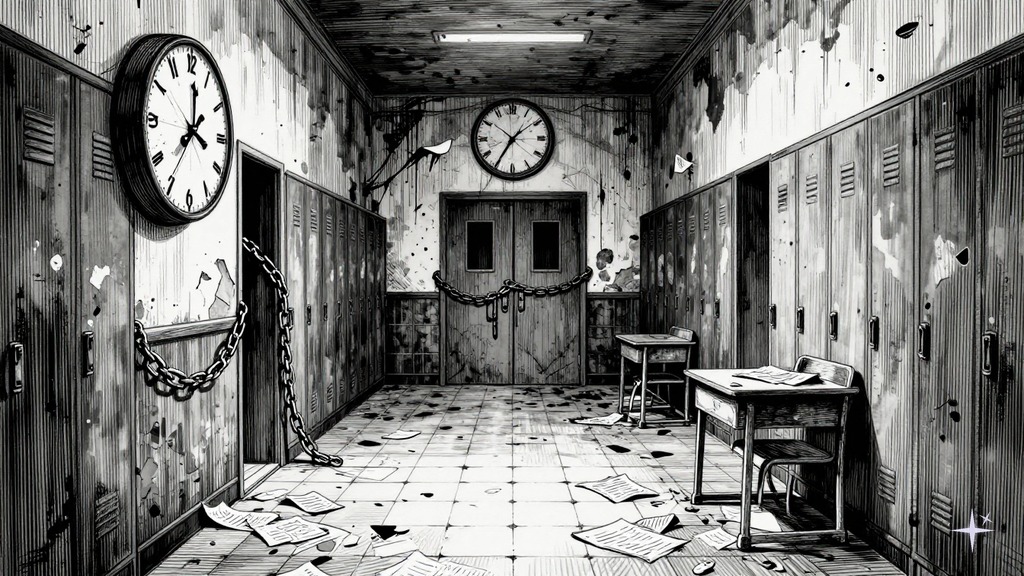
The story follows Makoto Naegi, an average student who gets accepted into the elite Hope’s Peak Academy — a school where every student is the “Ultimate” in their field. Things go sideways fast when the students find themselves trapped inside the school by Monokuma, a sinister black-and-white bear who forces them into a deadly killing game. The rules: kill a classmate, then survive a class trial — a group hearing where the remaining students debate evidence and vote on who they think the killer is. Guess wrong, and everyone except the real killer is executed. Guess right, and only the killer faces punishment. It’s a locked-room death-game mystery with strong horror elements — murders, executions, and constant psychological tension — and the manga follows it from the first killing all the way to the final confrontation with the hidden figure behind everything.
If you already know the story from the game or the anime, the manga is still worth picking up. Tsukimi’s artwork reinterprets key scenes in ways that feel distinct from both the game’s visual novel format and the anime’s animation. The pacing hits differently on the page, and seeing familiar moments through a different artist’s eye gives them fresh weight — especially the trial sequences and the more visually intense moments.
Why Order Matters — What Each Volume Covers
You might think with only four volumes, reading order wouldn’t matter much. But Danganronpa’s entire appeal is built on mystery — and that mystery structure is ruthlessly sequential.
Each volume covers a stretch of the killing game that includes new murders, investigations, and class trials. The identity of each killer, the method behind each crime, and the fates of specific characters are all major reveals. Picking up Volume 3 before reading Volumes 1 and 2 doesn’t just spoil plot points — it wrecks the core experience, because the tension of figuring out “who did it” alongside Makoto is what makes the story work.
The narrative escalates in a deliberate way. Early volumes establish the cast, the rules, and the claustrophobic atmosphere of being locked inside Hope’s Peak Academy. As the body count rises, trust between the survivors erodes, alliances shift, and the mysteries behind the killing game itself start to surface. By the final volume, the story reaches its climax with the revelation of who has been orchestrating everything — and why. That payoff only lands if you’ve been following the breadcrumbs from the beginning.
The manga also adapts the investigation and trial sequences from the game. In the visual novel, these play out as interactive gameplay segments where you actively search for clues and challenge testimony. In manga form, Tsukimi converts them into visual storytelling — page layouts that guide your eye through evidence, testimony, and those signature “debate” moments where contradictions get exposed. Reading out of order turns these carefully constructed reveals into meaningless noise.
So yes — Volume 1, then 2, then 3, then 4. No shortcuts.
Starting Point for Beginners
If you’ve never touched anything Danganronpa before — no games, no anime, nothing — this manga is a perfectly fine place to start.
Volume 1 sets up everything you need to know. You meet the cast of Ultimate students (Ultimate Baseball Star, Ultimate Programmer, Ultimate Fashionista, and so on), learn the locked-school premise, and get the full rundown of Monokuma’s killing game rules. The manga doesn’t assume you’ve played the source material. It tells the first game’s story from the beginning, introducing characters and concepts as they appear naturally in the plot.
At only 4 volumes, this is also one of the most accessible ways to experience the first Danganronpa story. The game (fully titled Danganronpa: Trigger Happy Havoc) takes dozens of hours to complete. The anime condenses things significantly but still runs a full season. The manga hits a middle ground — it gives you the complete story in a format you can read in a few sittings, with artwork that captures the visual style of the series.
That said, it’s worth knowing that this is an adaptation. The original game has more dialogue, more character interaction, and more room to breathe between major plot beats. Some fans feel the manga necessarily trims certain details to fit into four volumes. But as an introduction to the world, the characters, and the central mystery? It works. If the manga hooks you, the games and anime are right there waiting to give you a deeper version of the same story — plus the sequels that continue the larger Danganronpa narrative.
No prerequisites. No homework. Just grab Volume 1 and go.
Danganronpa: The Animation Volume 1
Related Danganronpa Manga and Where They Fit
The Animation manga covers only the first game’s storyline. The Danganronpa franchise is bigger than that, and there are other manga out there. Here’s how to think about them.
Danganronpa Gaiden: Killer Killer
Killer Killer is a spin-off manga — a separate story set in the same world — with its own original storyline. It’s darker and more violent than The Animation, following characters caught up in bizarre murder cases. It connects to the broader Danganronpa backstory in ways that become clearer as the story progresses, but it tells its own self-contained story. Important for English-language readers: Killer Killer has not been officially licensed or released in English as of this writing. It was published in Japan by Kodansha (3 volumes, 2016–2017) and remains Japan-only. There is no official English edition available to purchase.
Anthology and 4-Koma Collections
Several anthology manga (collections of short, unconnected stories by various artists) and 4-koma collections exist for Danganronpa. 4-koma are four-panel comic strips — a format traditionally used in Japan for quick comedy sketches and character gags. These Danganronpa collections feature alternate scenarios and lighthearted takes on the cast. They’re fun for fans who already love the characters, but they’re not part of the main plot and aren’t required reading. Think of them as bonus material.
The Bigger Picture
The Danganronpa story extends well beyond what The Animation covers. The franchise includes multiple games (Danganronpa 2: Goodbye Despair, Danganronpa V3: Killing Harmony, and others) plus anime that continues and expands the narrative. The Animation manga is specifically the first chapter of that larger story. If you finish all four volumes and want more, the games and anime are the main paths forward — the other manga are supplementary, not the next step in the main storyline.
Recommended approach: Read The Animation Volumes 1–4 first. Then decide whether you want to continue via the games, the anime, or both. Spin-off manga like Killer Killer exist but have not been officially released in English, so the games and anime are the most accessible next steps for English-language readers.
Where to Buy in English
All four volumes of Danganronpa: The Animation are published in English by Dark Horse Comics in paperback format. Digital editions have been offered in the past; check current storefronts for up-to-date availability. The series is complete, so you can buy and read the whole thing without waiting for future releases.
The English edition carries a 14+ age rating from the publisher, which makes sense given the death-game premise — there are murders, executions, and psychological tension throughout, but the content is handled in a way that’s appropriate for teens and up.
You can find the individual volumes through major book retailers. Since there are only four, collecting the full set is relatively painless compared to longer-running series.
Volume 4 wraps up the entire story — the final class trial, the reveal of who’s been pulling the strings, and the conclusion of Makoto’s time in Hope’s Peak Academy. If you’ve been reading along and want to see how it all ends, that last volume is where everything comes together.
Frequently Asked Questions
Do I need to play the games before reading this manga?
No. The Animation manga retells the story of the first Danganronpa game from the beginning. It’s designed to work as a standalone reading experience. You don’t need any prior knowledge of the games, the anime, or anything else in the franchise.
Is The Animation manga the same as the anime?
Both adapt the same source material — the first Danganronpa game (Danganronpa: Trigger Happy Havoc by Spike Chunsoft). The anime and the manga tell the same core story but in different formats with different pacing. The manga is drawn by Takashi Tsukimi and published by Dark Horse Comics in English; the anime is a separate TV adaptation. You can enjoy either one independently, and they cover the same ground.
How many volumes are there?
Four volumes total, and the series is complete. No additional volumes are planned or expected — the story wraps up fully in Volume 4.
Is this manga horror?
Yes — it’s a death-game mystery with strong horror elements. The premise is built on dread: students trapped in a school are forced to murder each other, and each killing leads to an investigation and a class trial where the wrong verdict means execution for everyone except the killer. There are murders, corpse discoveries, and elaborately cruel executions throughout the series. The psychological tension of not knowing who to trust adds to the horror atmosphere. It fits most naturally in the mystery genre, but the horror is baked into every chapter. If you’re comfortable with dark mystery stories that involve death and violence in a stylized setting, you’ll be fine here. The 14+ age rating gives you a sense of the content level.