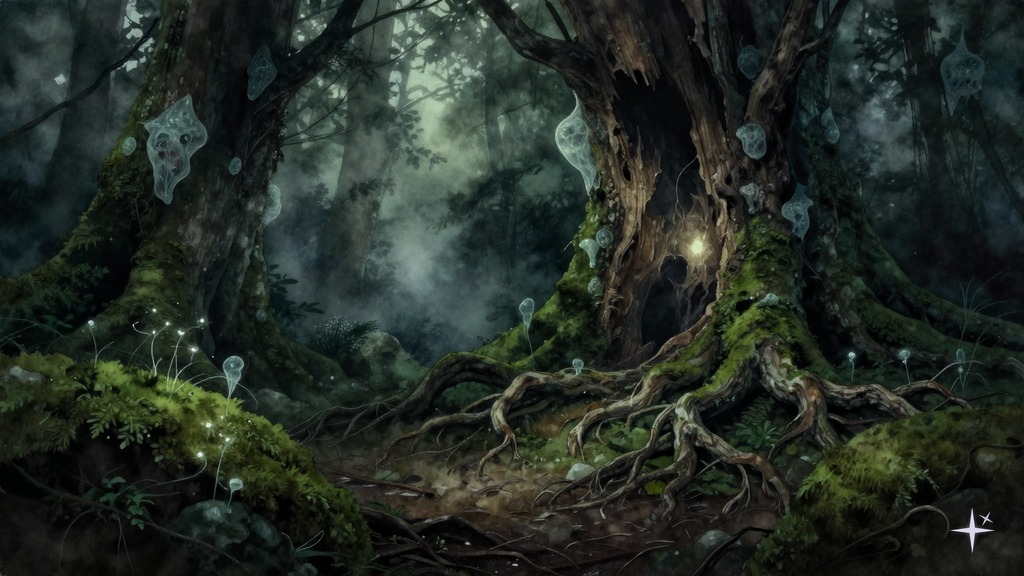
If you’ve been wondering “is Mushishi manga finished?” and whether it’s safe to start without risking an abandoned storyline or an endless wait for new volumes — good news. Mushishi is completely finished. The manga reached a natural, satisfying conclusion, and the full main story is available in English.
Below you’ll find the details: how the series wraps up (spoiler-free), how the anime relates to the manga, and the best way to actually get your hands on the books right now.
Is Mushishi Manga Finished? Yes — Completely Done
Mushishi is done. Fully, properly, no-asterisks done.
Written and illustrated by Yuki Urushibara, the manga ran for 10 main volumes plus 1 special volume in Japan. The final main volume was published in November 2008. A deluxe reprint edition — called an “aizouban” in Japanese, meaning a premium collected version — was also completed, with its last volume released in July 2014. The series is published by Kodansha.
In English, the Mushishi manga is likewise finished — no cliffhangers, no cancellation, no “the publisher dropped it halfway through” situations. Mushishi simply told its story and ended. That’s a genuinely rare thing to be able to say about a manga, and it makes the series a fantastic pick for readers who want a finished experience from volume one.
At 10 main volumes, this is also a very manageable commitment. You’re not signing up for a sprawling multi-decade run — this is a series you can realistically read from start to finish in a few weeks of casual reading, which makes it an easy recommendation for anyone who’s been burned by long-running series before.
How Mushishi Ends Without Spoilers
One of the things that makes Mushishi unique is its structure. Rather than building a single escalating plot toward a final confrontation, the series is told in standalone chapters — each one is its own self-contained story. This approach (sometimes called “episodic” storytelling) means you’re getting a new tale each chapter rather than following one continuous narrative thread.
Every chapter follows Ginko, a wandering specialist known as a “mushi-shi.” That term is also where the series gets its name — a mushi-shi is someone who studies and deals with mysterious, ancient creatures called mushi. These are not monsters in the traditional sense. They’re something older and stranger: organisms that exist at the boundary between life and non-life, often invisible to ordinary people.
Ginko travels through a vaguely historical Japanese countryside, encountering people whose lives have been touched — often unsettlingly — by mushi. Some stories are melancholy. Some are eerie and skin-crawling. Some are quietly beautiful. The mushi themselves range from fascinating to deeply creepy: organisms that burrow into the human body, alter perception, consume memories, or blur the line between life and death.
Because of this standalone-chapter structure, the series doesn’t build to a single dramatic climax. It reaches a quiet, contemplative conclusion that fits its atmospheric tone perfectly. If you love the feeling of the early chapters, the ending won’t betray that. It stays true to what Mushishi is.
While you could technically dip into individual volumes out of order and still follow what’s happening — since each chapter tells its own complete story — reading from volume one is still recommended. Certain details about Ginko’s background and the nature of mushi build gradually across the series, and you’ll get more from later stories if you have that foundation.
The special volume (volume 11) provides additional stories set in the same world, so readers who finish volume 10 and want just a little more time with Ginko have that option waiting for them.
For anyone drawn specifically to Mushishi’s darker side — the way parasitic mushi affect the human body in deeply unsettling ways, the existential dread of creatures that exist beyond human comprehension, the psychological weight of stories where there isn’t always a happy ending — the final chapters maintain that haunting quality right through to the last page. This is a series that deals in blindness, physical transformation, memory loss, and encounters with forces that are indifferent to human survival. It never flinches from that, even at the end.
Does the Mushishi Anime Cover the Full Manga?
Mushishi has one of the most well-regarded anime adaptations around. Two TV seasons were produced: the original series (which began airing in October 2005) and a second season titled Zoku Shou (which began in January 2014). A theatrical film, Suzu no Shizuku, followed in May 2015.
To be clear on the structure: Zoku Shou is a direct continuation of the first season — it’s the same show adapting more chapters from the manga, not a spin-off or a different story. The film is a standalone feature that adapts additional material from the manga as well.
The anime is known for faithfully capturing the manga’s tone, atmosphere, and storytelling approach. The pacing, the quietness, the way each episode feels like its own self-contained world — it’s all there. The anime’s atmospheric soundtrack and visual direction complement Urushibara’s art in a way that feels like a genuine creative partnership between the two versions rather than a rushed adaptation.
Between the two seasons and the film, the anime covers a substantial portion of the manga’s standalone stories. That said, not every single chapter from the manga was adapted, so manga readers will still find material the anime didn’t touch. Both are good places to start — watching first and then reading (or the reverse) both work well, and each version offers something the other can’t quite replicate.
If you’re unsure which to try first: the anime is a slightly gentler entry point thanks to its soundtrack and pacing, while the manga gives you the complete set of stories and Urushibara’s original artwork. You genuinely can’t go wrong either way, and many fans end up experiencing both.
If you’ve only seen the anime and are wondering whether the manga has “more” — yes, it does. And if you’ve only read the manga, the anime is absolutely worth your time for what it adds through sound and motion.
Where to Buy the Complete Mushishi Manga in English
There are two English editions to be aware of — the original from Del Rey Manga and the Collector’s Edition from Kodansha Comics:
Original English Edition — This is the first English release, consisting of 8 books that cover the complete main story — the 10 core Japanese volumes. (The volume count differs from Japan’s 10 main volumes because the English books package more chapters per volume.) The special volume (vol. 11, “Hihamukage”), published in Japan in 2014 after this edition’s run ended, is not included in these 8 books; the Collector’s Edition will include it in its fifth and final volume. The 8 original books were published some time ago, and finding them at standard retail can be tricky since they’re largely out of print. Your best bet for tracking them down is checking secondhand listings on sites like eBay or Amazon Marketplace, or specialty manga retailers. If you spot them at a reasonable price, they’re worth grabbing.
Mushishi 8/9/10 (Del Rey omnibus, final)
Collector’s Edition — A newer hardcover edition that collects multiple volumes into one larger book (sometimes called an “omnibus” format — meaning several original volumes bound together). As of this writing, 3 volumes of the Collector’s Edition have been released, with more to come. This is currently the easiest in-print option for new readers who want physical copies without hunting through secondhand markets.
Mushishi Collector's Edition 1
The series carries a 16+ age rating in English, which feels appropriate — Mushishi isn’t gratuitously violent, but its supernatural elements, the way mushi affect the human body, and some of its darker story outcomes aren’t aimed at younger readers.
For readers who want the complete main story right now: tracking down the 8-book original edition is your path, though it may require some patience and price flexibility given its out-of-print status. If you’re willing to collect the series over time as volumes release, the Collector’s Edition is a beautiful way to build the set gradually — just be aware that the full set isn’t available yet, so you’ll be waiting for future releases to complete the collection.
Frequently Asked Questions
How many volumes of Mushishi are there?
In Japan, Mushishi consists of 10 main volumes plus 1 special volume (11 total). In English, the original edition covered the complete main story — the 10 core volumes — across 8 books; the lower count is because more chapters were packaged into each English volume. The special volume (vol. 11) content is not included in the original 8-book edition. A newer Collector’s Edition in hardcover omnibus format is ongoing, with 3 volumes released so far.
Is Mushishi a horror manga?
Mushishi isn’t traditional horror in the way that something drenched in gore and jump scares would be. But it absolutely has a place among dark and supernatural manga. The series deals with mushi — ancient, often parasitic creatures that can affect the human body in deeply unsettling ways. Stories involve blindness, memory loss, physical transformation, and encounters with forces that don’t care about human survival. The atmosphere is eerie and psychologically heavy. If you enjoy supernatural fiction that creeps under your skin rather than startling you, Mushishi fits that description perfectly. The genre term for some of what Mushishi does is “body horror” — stories where the fear comes from something happening to or inside the human body — and it handles that territory with more restraint and atmosphere than most.
Who created Mushishi?
Yuki Urushibara is both the writer and artist of the entire series. The manga is entirely her work from start to finish — story, art, and the distinctive atmospheric tone that defines the series.
Is the Mushishi manga finished in English?
Yes. The Mushishi manga’s core story is fully available in English. The original 8-book English edition covers the complete main story — the 10 core volumes — and has been available for years. The one exception is the special volume, “Hihamukage,” which isn’t in those 8 books; it will reach English readers in the Collector’s Edition’s fifth and final volume, scheduled for June 2027.