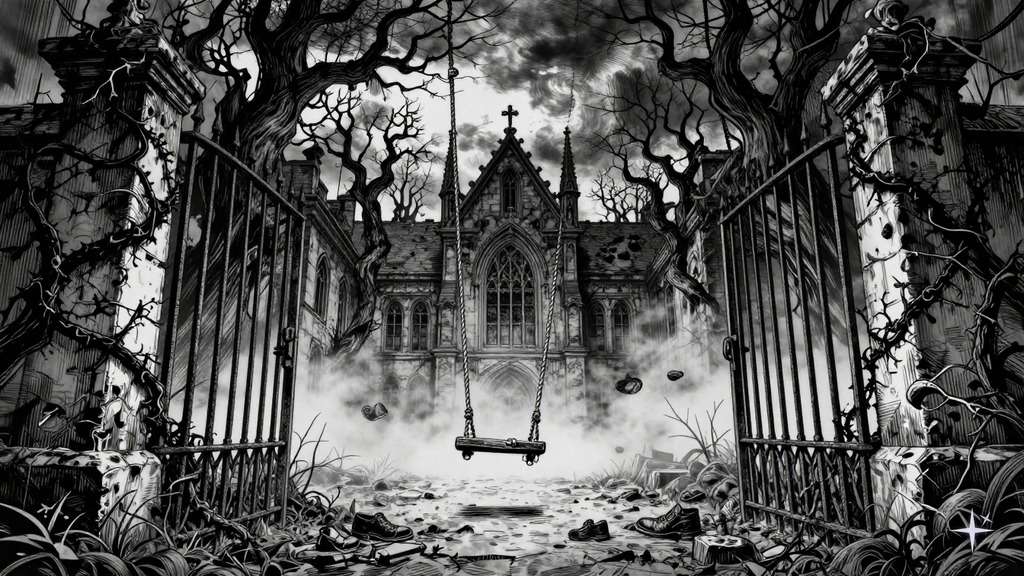
If you’re staring at The Promised Neverland manga wondering whether you’ll be left hanging on a cliffhanger with no resolution — good news. The series is finished, the whole thing is available in English, and you can read it from start to finish right now. Here’s everything worth knowing before you pick it up.
Yes, The Promised Neverland Manga Is Finished
The Promised Neverland is complete. The manga ran for 181 chapters across 20 volumes, telling a full story with a definitive ending.
If you’re new to manga, here’s how that structure works: manga stories are published as short chapters (typically around 15–20 pages each) in Japanese magazines, then collected into book-sized volumes you can buy off the shelf. So when you see “20 volumes,” that’s 20 physical books — each one containing roughly nine or ten chapters of the story.
Written by Kaiu Shirai with art by Posuka Demizu, the series was originally published chapter-by-chapter in Weekly Shonen Jump, a major Japanese manga magazine run by publisher Shueisha. The final Japanese volume hit shelves on October 2, 2020. For English readers, VIZ Media — one of the largest manga publishers in North America — released all 20 volumes in paperback, with the final English volume arriving on August 3, 2021.
So whether you’re thinking about starting or you dropped it partway through and want to know if there’s a real conclusion waiting — there is. No long publishing breaks, no “to be continued in a sequel.” The story is wrapped up.
How The Promised Neverland Ends — And Why It Divided Readers
Without getting into heavy spoilers just yet, here’s the broad picture: the manga’s central conflict — the children versus the demon world and the systems that exploit them — does reach a resolution. Emma, Norman, and Ray all get conclusions to their stories, and the larger questions about the world’s structure are answered.
What’s worth knowing upfront is that the series undergoes a significant tonal shift over its run. The early chapters are tight, claustrophobic psychological horror — meaning the scares come from paranoia, manipulation, and the slow realization of terrible truths rather than from graphic violence. It’s a cat-and-mouse game, where clever characters try to outmaneuver each other through deception and strategy, set in a single location where every conversation carries lethal stakes. As the story expands beyond that initial setting, it gradually moves toward broader action-adventure territory. The scope gets bigger. The tone gets lighter in places. The horror becomes less intimate.
This shift is where reader opinions start to split. Some fans embraced the expanded world and found the later story segments exciting and emotionally satisfying. Others felt that the series lost something essential when it moved away from the suffocating tension of those early chapters. The ending itself lands in a way that many readers describe as bittersweet — thematically appropriate, but delivered at a pace that left some wanting more room to breathe.
Full Ending Spoilers (Clearly Marked)
⚠️ MAJOR SPOILERS AHEAD — Skip this subsection entirely if you haven’t finished the manga. ⚠️
The story’s climax hinges on the promise Emma makes to stop the cycle that keeps children trapped as livestock for demons. To achieve a world where the children can live freely in the human world and the demons can survive without eating humans, Emma strikes a deal that carries an enormous personal cost: she loses all her memories of the family she fought so hard to protect.
The final chapter shows Emma alive but alone, her past erased. She doesn’t recognize Ray, Norman, or the other children when they eventually find her. It’s a gut-punch of a conclusion — Emma saved everyone, but the price was everything that made her life meaningful to her. The other children refuse to give up on her, and the manga’s last pages carry a fragile, hopeful note that she might rebuild those connections even without her memories.
It’s the kind of ending that hurts in a way that feels earned. Emma’s selflessness was always her defining trait, and the story follows that trait to its logical, painful extreme. Whether it feels satisfying depends a lot on how you relate to bittersweet conclusions. For some readers, the emotional weight is devastating and perfect. For others, the rushed pacing leading up to this moment undercuts what could have been a more powerful landing.
Was The Promised Neverland’s Ending Rushed?
This is the question that follows the series around, and the honest answer is: kind of, yeah.
The manga’s quality trajectory is a common topic among fans, and there’s a fairly strong consensus that the early material — particularly the Grace Field House escape arc covering roughly the first several volumes — represents the series at its absolute peak. Grace Field House is the orphanage where the story begins, and this opening stretch follows the children as they uncover the horrifying truth about their “home” and plan their escape. Those chapters are masterfully paced. Every panel matters. The tension is nearly unbearable in the best way.
After that initial stretch, the story needed to expand. That’s natural — you can’t stay in one building forever. But as the world opened up, the pacing accelerated in ways that felt uneven. Story segments that seemed to deserve significant room were condensed. Plot threads that had been carefully established got resolved faster than expected. Characters who appeared to be set up for major roles moved through their storylines quickly.
At 181 chapters, The Promised Neverland isn’t an unusually short manga. Plenty of great series tell complete stories in fewer pages. The issue isn’t the total length — it’s the distribution. The back half of the series covers enormous narrative ground at a pace that feels compressed relative to what the story was trying to accomplish. If the first section is a slow-building thriller that takes its time ratcheting up dread, the final stretch sometimes feels like someone hit fast-forward.
That said, the emotional core holds up better than the structural pacing might suggest. Emma’s journey and the relationships between Emma, Norman, and Ray carry genuine weight all the way through. Many readers who acknowledge the pacing problems still find themselves moved by the ending. The foundation built in those early chapters is strong enough that even a rushed conclusion can’t entirely undo it.
If you’re the kind of reader who values the journey over the destination, The Promised Neverland still delivers. If a perfect, meticulously paced ending is your top priority, go in with adjusted expectations — but go in anyway. The highs are too high to skip.
Series Details at a Glance
| Detail | Info |
|---|---|
| Volumes | 20 (both Japanese and English) |
| Chapters | 181 |
| Story | Kaiu Shirai |
| Art | Posuka Demizu |
| English Publisher | VIZ Media |
| English Format | Paperback |
| Age Rating (EN) | Teen Plus |
| Genre | Dark fantasy, suspense, psychological horror, survival thriller |
| Status | Complete |
A note on the age rating: VIZ Media’s “Teen Plus” rating means the content is recommended for ages 16 and up. In practice, The Promised Neverland leans heavily on psychological dread and disturbing concepts rather than explicit gore. There is violence and some intense imagery — this is a story about children in mortal danger — but the horror works primarily through implication and tension rather than graphic depictions. If you’re considering this for a younger reader, the themes (captivity, exploitation, sacrifice) are more likely to be intense than the visuals.
An anime adaptation was also produced. Many fans recommend the manga as the definitive way to experience the story, particularly for the material beyond the first season, where the anime made significant changes from the source material.
Where to Buy the Complete Series
All 20 English volumes are published by VIZ Media in paperback and are readily available. This isn’t a situation where you’ll need to hunt down rare out-of-print copies or pay collector prices — the entire run is in print and easy to find at major retailers.
If you prefer reading on a screen, you can also read the series digitally through the VIZ Manga app or the Shonen Jump digital subscription service, among other platforms. The digital route is a particularly good option if you want to sample the first few chapters before committing to physical copies.
For physical copies, the standard paperback editions are the way most readers collect the series. A quick note if you’ve never held a manga volume before: they’re smaller than a typical Western novel, read right-to-left (the “back” cover of a Western book is the front of a manga), and the interior art is black-and-white. It takes about a page to get used to the reading direction, and then it becomes second nature. The volumes look great lined up on a shelf.
If you want to start with Volume 1 to see whether the series hooks you — and it almost certainly will — you can grab it and be reading within a few days. The first volume covers the opening of the Grace Field House story, which is genuinely one of the strongest opening volumes in horror manga. It sets up the premise with devastating efficiency: a group of orphans discovers the terrible truth about the “home” they’ve been raised in, and the escape planning begins immediately.
The Promised Neverland, Vol. 1 (VIZ Media)
One nice thing about picking up a completed series: no waiting between volumes. If the first book grabs you (and it will grab you), the next nineteen are all right there waiting.
Who Should Still Read The Promised Neverland Today
Even with the pacing criticisms, The Promised Neverland remains one of the most compelling horror manga for readers who are new to manga or looking for something that combines intelligence with dread.
If you love psychological horror and strategic mind games, the opening stretch alone justifies reading the series. Psychological horror — as opposed to slasher or gore-driven horror — builds its scares from paranoia, secrets, and the dawning awareness that something is deeply wrong. The mind games between the children and their caretaker, Isabella, are brilliantly constructed. Every smile hides something. Every kind word carries a second meaning. It’s the kind of horror that gets under your skin through implication rather than shock.
If you’re new to manga and come from a background of horror novels or thriller fiction, this is one of the best entry points available. The storytelling is immediately accessible, the art is expressive and easy to follow, and the page-turning momentum rivals any thriller novel. You don’t need any prior manga knowledge to get swept up in it.
If you love dark survival stories and intellectual thrillers, there’s a lot here for you. The series draws comparisons to works that pit clever protagonists against systems designed to destroy them, and the strategic thinking on display — especially early on — is genuinely satisfying to watch unfold.
If you need a perfect ending to enjoy a series, temper your expectations a bit. The conclusion is emotionally resonant but arrives faster than the story’s ambitions really warranted. That’s a real flaw, and pretending otherwise wouldn’t be fair to you.
But here’s the thing about flawed endings attached to brilliant beginnings: the brilliant parts don’t stop being brilliant. The Grace Field House chapters are some of the finest horror storytelling in manga, period. The middle sections have genuinely thrilling moments. And even the rushed finale carries an emotional punch that lands because the characters were built so well from the start.
The Promised Neverland is finished, it’s all available, and the opening volumes are good enough to make you forget everything else you were planning to read. That’s a pretty strong recommendation for picking up Volume 1 and seeing where it takes you.