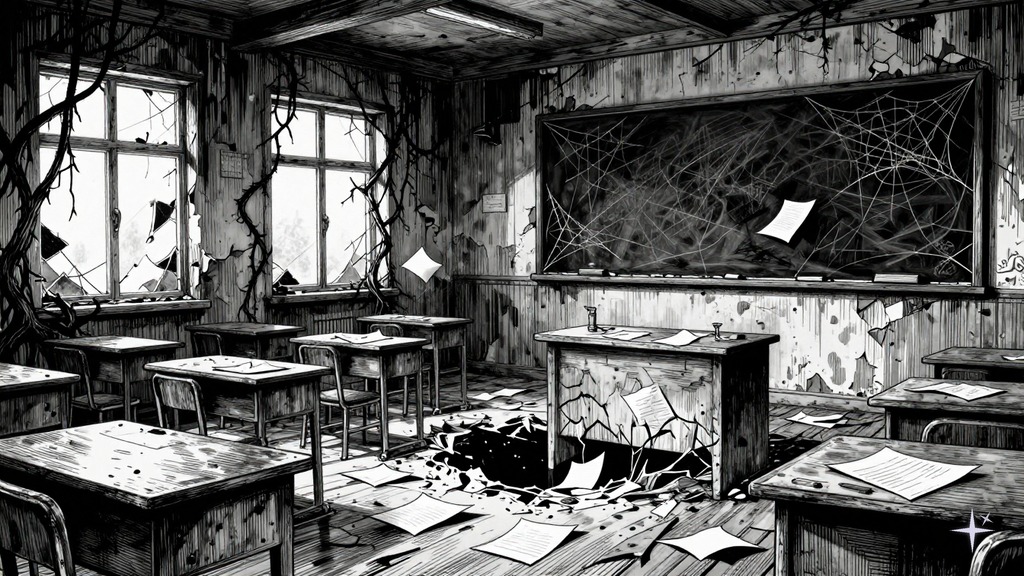
If you’re wondering whether the Sayonara, Zetsubou-Sensei manga is finished, the short answer is yes — completely finished. Maybe you discovered the series through the anime, or maybe someone mentioned its infamous ending and you want to know what the fuss is about. Either way, there’s more to unpack here than just the completion status, especially if you’re an English-speaking reader hoping to experience the whole story.
Yes — Sayonara, Zetsubou-Sensei Is Finished at 30 Volumes
Sayonara, Zetsubou-Sensei is a completed manga by Koji Kumeta. It ran in Weekly Shonen Magazine — a weekly manga anthology published by Kodansha, one of Japan’s largest manga publishers — starting in 2005 and wrapped up with its final volume releasing on August 17, 2012. The full series spans 30 volumes and 301 chapters. (For context, chapters are the individual installments that ran in the magazine, and volumes are the collected book editions that bundle multiple chapters together.)
On the surface, the series presents itself as a satirical comedy — meaning it uses humor to criticize and mock real-world targets — about Nozomu Itoshiki, a teacher so consumed by pessimism that he finds despair in absolutely everything. His students, each defined by an exaggerated quirk or psychological hang-up, fuel standalone joke-driven stories that skewer Japanese society, pop culture, and human nature in general. It’s sharp, weird, and very funny.
But beneath that comedic surface runs something much darker. The manga deals extensively with themes of despair, suicide, and psychological dysfunction. Kumeta uses the comedy as a vehicle to explore genuinely disturbing territory, and this becomes unmistakable as the series approaches its conclusion. The final stretch of connected chapters — what manga readers call the “final arc,” meaning the last storyline that builds to the ending — is notorious among readers for pulling the rug out from under everything that came before. What seemed like a joke-driven comedy manga transforms into something deeply unsettling.
For readers who gravitate toward dark manga, psychological stories, or series with endings that fundamentally change how you view the entire work, this one has earned a reputation for good reason.
How the Series Wraps Up (Spoiler-Free)
The ending of Sayonara, Zetsubou-Sensei is one of those manga conclusions that people still discuss years after the fact — and for good reason. Without getting into specifics, the final arc takes a dramatic tonal shift away from the standalone satirical episodes that define most of the series.
What happens in those closing chapters casts the entire preceding story in a new light. Details, gags, and character behaviors that seemed like throwaway comedy suddenly take on a very different meaning. The shift moves the manga firmly out of comedy and into genuinely unsettling psychological territory.
If you’re someone who appreciates dark twists — the kind where the foundation of a story cracks open to reveal something hidden underneath — the conclusion of this series is memorable. It’s the kind of ending that hits differently depending on your tolerance for bleakness: some readers find it brilliantly bold, while others find it genuinely upsetting. Many fans consider it one of the most daring final arcs in manga, precisely because it doesn’t play it safe.
For horror and dark manga fans specifically: even though this isn’t a horror series in the traditional sense, the psychological weight of that ending hits hard. It’s worth knowing going in — not the details, but the fact that this series goes somewhere genuinely dark by the end.
Does the Anime Cover the Full Story?
Sayonara, Zetsubou-Sensei received three TV anime seasons (airing in 2007, 2008, and 2009) plus two OVA series (OVA stands for Original Video Animation — anime episodes released directly for home video rather than broadcast on TV). The anime adaptation is well-regarded for its distinctive visual style and rapid-fire comedy.
However — and this is the important part — the anime does not cover the manga’s complete story. The dark final arc that redefines the entire series is not adapted in the anime. The TV seasons and OVAs cover material from the earlier, more comedic portions of the manga, but they stop well short of the conclusion.
This means the manga is the only way to experience the full story, including the psychological ending that the series is famous for. If you’ve only watched the anime and wondered why people talk about Sayonara, Zetsubou-Sensei as a dark or disturbing series, it’s because the part that earns that reputation exists exclusively in the manga’s later volumes.
The anime is still a great companion piece — it brings the comedy to life in a way that’s worth watching on its own merits. But if you want the complete picture, especially that ending, you need the manga.
Where to Read Sayonara, Zetsubou-Sensei in English
The English availability of this series comes with good news and bad news — but the good news comes first.
The series was first licensed in English by Del Rey Manga, which published volumes 1 through 8. Kodansha USA (also known as Kodansha Comics) then picked up the series and released volumes 9 through 14 — bringing the English total to 14 volumes in both print and digital formats. The series carries a 16+ age rating, which is appropriate given the themes of suicide and despair that run throughout even the comedic early volumes. As of 2026, these volumes remain available through major retailers.
The bad news: the English release covers only the first 14 of 30 Japanese volumes. The English translation was discontinued, and volumes 15 through 30 have not been translated. This means the later volumes — including the entire dark ending arc that the series is famous for — are not available in English.
This understandably raises a question: is it worth reading the first 14 volumes knowing you can’t finish the series in English? For many readers, the answer is genuinely yes. Those 14 volumes contain the strongest comedic stretch of the manga, and they work well as a self-contained experience of Kumeta’s satirical voice. You’ll get a complete picture of the series’ tone, humor, and characters — you just won’t get the psychological gut-punch of the ending. If you enjoy dark comedy and social satire (humor that uses irony and exaggeration to criticize society), the first half of the series delivers that in abundance and is satisfying on those terms.
Volume 1 is a solid starting point if you want to see whether Kumeta’s style works for you. The humor is very reference-heavy and distinctly Japanese — expect jokes about Japanese politics, media culture, and social norms that may be unfamiliar. The learning curve is real but manageable, because the English release includes translation notes (explanatory pages at the back of each volume) that break down the cultural references and wordplay you’d otherwise miss.
Sayonara, Zetsubou-Sensei 1: The Power of Negative Thinking
For the untranslated volumes (15–30), the Japanese editions remain available. If you read Japanese or are studying the language, the original Kodansha releases are an option. Otherwise, the reality is that English-speaking readers are currently limited to the first half of the story — and there’s no announced plan to complete the English release.
FAQ
How many volumes of Sayonara, Zetsubou-Sensei are there?
The complete series is 30 volumes containing 301 chapters in Japanese. In English, only 14 volumes were published — first by Del Rey Manga, then by Kodansha USA — before the translation was discontinued.
Is the English translation complete?
No. The series was licensed first by Del Rey Manga (volumes 1–8) and then by Kodansha USA/Kodansha Comics (volumes 9–14), for a combined total of 14 English volumes out of the full 30-volume run. The remaining 16 volumes — including the final arc — have not been translated into English. As of 2026, there is no announced plan to resume or complete the English release.
Is Sayonara, Zetsubou-Sensei a horror manga?
Not in the traditional sense. It’s primarily a dark comedy — meaning humor that deals with morbid or disturbing subjects — about a hopelessly pessimistic teacher and his eccentric students. The series deals heavily with themes of despair, suicide, and psychological darkness throughout, but it frames these through satire and absurd humor for most of its run.
That said, the ending ventures into genuinely dark psychological territory that goes well beyond comedy. Readers who enjoy psychological horror, unsettling twists, and stories that subvert expectations will find a lot to appreciate here — especially in the final arc. It occupies a space between dark comedy and psychological manga (stories focused on characters’ mental states and inner turmoil) that appeals to horror fans even though “horror” isn’t its primary genre label.