Bottom Line — Is Junji Ito’s Remina Worth Reading?
Let’s cut straight to it: this Junji Ito Remina review exists because the book inspires strong opinions. Remina is a gorgeous, flawed, and genuinely unsettling piece of cosmic horror manga — that is, horror manga (Japanese comic books) dealing with vast, incomprehensible, universe-scale threats. It’s not Junji Ito’s best work, but it contains some of his most ambitious and terrifying imagery.
Here’s the quick version:
- The planet itself is one of Ito’s most memorable monster designs. A living, world-devouring entity that gets under your skin in a way few manga creatures can.
- The mob mentality storyline hits hard. Watching humanity turn on an innocent girl while an unstoppable cosmic threat approaches is deeply disturbing — and uncomfortably relevant.
- But the characters are thin, and the ending feels abrupt. This is widely considered mid-tier Ito, and those criticisms are fair.
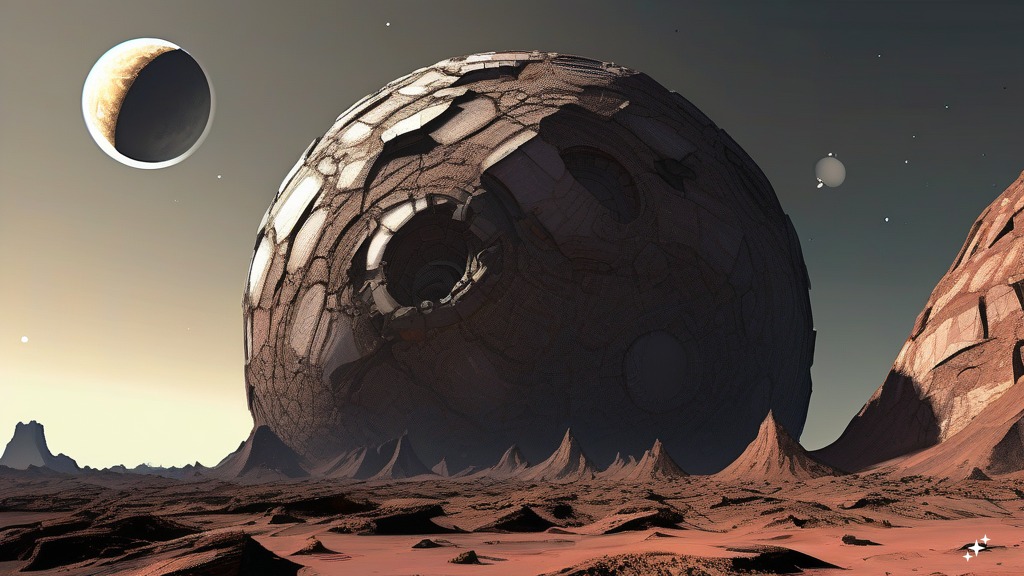
The premise is wild: a rogue planet is eating its way through the solar system toward Earth, and the public turns its rage on the young woman who shares the planet’s name. It’s cosmic dread meets human cruelty, all rendered in Ito’s unforgettable style.
Rating context: Remina sits at roughly a 7.2 on MyAnimeList (MAL) — a popular community database where users rate anime and manga on a 1–10 scale. For comparison, Ito’s Uzumaki scores an 8.6 and Tomie scores a 7.9. A 7.2 means readers generally like it but consider it a step below his strongest work.
If you’ve already read Uzumaki and loved it, you’re exactly who this book is for. Remina is a satisfying next step into Ito’s catalog that shows you a completely different side of his horror.
Best for: Readers who have already enjoyed Uzumaki (Ito’s masterpiece about a town consumed by spiral-shaped obsession) or Tomie (his long-running series about a supernaturally beautiful girl who inspires obsession and violence) and want more. Fans of cosmic horror in any medium. Anyone who wants a complete story in a single volume.
Quick specs: Single hardcover volume, 256 pages, published by VIZ Media. No multi-volume commitment — you get the whole story in one book.
Content heads-up: Remina contains intense mob violence, scapegoating of an innocent young woman, and scenes with implied sexual threat. Standard fare for Ito’s darker works, but worth knowing if you’re sensitive to those themes or buying this as a gift.
What Remina Is About (Spoiler-Free)
Professor Oguro, an astronomer, discovers something impossible: a planet that appears to have emerged from another dimension entirely. In a moment of paternal affection, he names it after his teenage daughter, Remina.
The discovery makes both father and daughter overnight celebrities. Remina the girl becomes a massively famous public figure — think the kind of obsessive fandom where strangers declare undying loyalty to someone they’ve never met — adored by millions simply for sharing a name with the most extraordinary astronomical event in human history.
Then things go wrong. Fast.
The planet begins devouring everything in its path — other planets in the solar system, consumed one by one as the entity hurtles toward Earth. And as fear overtakes wonder, the public’s adoration of Remina the girl curdles into something monstrous. They decide she’s connected to the planet. That she’s the cause. That destroying her might save them.
What follows is a relentless nightmare on two fronts: the cosmic horror of an unstoppable planet-eating entity approaching Earth, and the intimate horror of mob violence as an innocent girl is hunted by the very people who once worshipped her.
The tone is relentless escalation with almost no breathing room. Once the downward spiral begins, Ito barely lets you come up for air. It’s less of a slow burn (horror that builds gradually over time) and more of a controlled avalanche.
One important note: Remina is completely self-contained. Unlike many manga that span dozens of volumes, this is a single book with a beginning, middle, and end. You don’t need to have read any other Junji Ito manga to pick this up.
The Art — Where Remina Shines Brightest
Even Ito’s harshest critics tend to agree on one thing: the art in Remina is spectacular.
If you’re not familiar with Ito’s visual style, he’s known for incredibly detailed black-and-white linework — dense, intricate illustrations that reward close examination and make horror imagery feel almost tactile. Remina showcases that style at full force, applied to some of his most ambitious imagery. Where many of his stories focus on town-level or body-level horror, Remina goes cosmic — and the art rises to meet that scale.
The planet itself is the star of the show. It’s a living, grotesque entity with a tongue-like surface, an eye that seems to stare directly at Earth, and a presence that feels genuinely alien in a way that’s hard to pull off on a manga page. It’s one of Ito’s most iconic creature designs, and for good reason. The thing looks like it crawled out of a dimension that doesn’t follow any rules you’d recognize.
What makes the art really work is the contrast in scale. Ito switches between vast, awe-inspiring panels of planetary destruction — the kind of cosmic imagery that makes you feel tiny — and tight, claustrophobic sequences of human-scale mob violence. A two-page spread of a planet being consumed, followed immediately by panels of terrified faces in a crushing crowd. The whiplash is intentional, and it’s effective.
The panel composition deserves specific praise:
- Wide establishing shots capture the terrifying beauty of cosmic-scale destruction
- Claustrophobic chase panels put you right in the middle of the mob, feeling the press of bodies and the panic
- Detail work on the planet’s surface rewards close examination — there’s always something unsettling hiding in Ito’s linework if you look carefully enough
Even if you end up feeling lukewarm about the story (and plenty of readers do), the art alone makes Remina worth experiencing. This is Junji Ito’s illustration at its most ambitious — the kind of work that reminds you why he’s considered one of horror manga’s greatest visual storytellers.
Story Strengths — Mob Mentality and Cosmic Dread
While the art carries Remina, the story has genuine strengths that shouldn’t be overlooked. Two themes in particular elevate this beyond a simple monster-attacks-Earth disaster story.
The Mob Mentality Theme
This is Remina’s strongest narrative element, and it’s the part that tends to stick with readers long after they finish the book.
The speed at which public adoration transforms into murderous rage is genuinely chilling. Remina the girl goes from beloved celebrity to hunted scapegoat in what feels like a heartbeat. Fans who declared their undying love for her become the same people forming torch-wielding mobs. The logic doesn’t matter to the mob — they just need someone to blame, and the girl who shares the planet’s name is the most convenient target.
It’s eerily relevant social commentary. The way Ito depicts crowd psychology — how fear makes people abandon reason, how groupthink accelerates cruelty, how the desire for a simple explanation overrides basic humanity — feels like it could have been written about any number of real-world events. The manga was originally published chapter by chapter in a Japanese magazine during 2004–2005, but the themes haven’t aged a day.
Cosmic-Scale Horror
Most Junji Ito stories operate on a relatively intimate scale. A town plagued by spirals. A girl who keeps coming back. A neighborhood dealing with strange fish. Remina goes much bigger.
The threat here is planetary — literally an entity that devours worlds. This is the kind of horror where the threat is so vast and incomprehensible that human beings can’t even begin to fight it, only react in terror. The sense of inevitable doom is effectively oppressive. You know, from very early on, that there’s no realistic way to stop this thing. It’s not a puzzle to be solved or a curse to be broken. It’s an unstoppable force bearing down on everything, and all anyone can do is watch, panic, and turn on each other.
The pacing reinforces this. Once the planet begins its approach, the story barely pauses. Each chapter ratchets the tension higher. It’s the horror manga equivalent of a disaster movie that opens at a sprint and never slows down. That relentlessness is a deliberate choice, and when it works, it creates a reading experience that feels genuinely suffocating in the best way.
Where Remina Stumbles
Honesty matters more than hype, and Remina has real weaknesses that are worth knowing about before you buy.
Thin Characterization
This is the most common and most valid criticism. Remina herself is largely passive — she spends much of the manga being chased, captured, rescued, and chased again. She’s more of a victim the story happens to than an active protagonist driving events forward. You feel for her situation, but you don’t really get to know her as a person.
The supporting characters fare even worse. The mob members blur together with little individual identity. There’s a group of people who try to protect Remina, but they’re defined more by their function in the plot than by any real personality. You won’t find the kind of memorable character work that makes Tomie’s various stories so compelling, or the slowly-developed residents of Uzumaki’s fictional town.
Asking a Lot of the Reader
Every horror story asks you to accept some impossible premises. That’s fine. But Remina asks for a lot of logical leaps, even by horror manga standards. Some plot developments feel driven by what would create the most dramatic image rather than what makes narrative sense. If you’re the type of reader who needs internal story logic to hold together, parts of Remina may test your patience.
Repetitive Middle Section
The story’s middle act falls into a noticeable cycle: chase, capture, escape, chase again. The escalating danger keeps the tension from completely flattening out, but the structural repetition becomes apparent on a first read. It’s one area where the relentless pacing works against the story — there’s no variation in rhythm, which means the intensity paradoxically starts to feel monotonous.
The Ending
Without spoiling specifics, the ending arrives abruptly. After chapters of relentless escalation, the resolution comes suddenly and leaves many readers feeling unsatisfied. It’s the kind of ending that feels less like a deliberate artistic choice and more like the story ran out of room. Your mileage may vary — some readers find it appropriate given the chaotic tone — but “the ending felt rushed” is one of the most consistent pieces of feedback you’ll find about this manga.
Less Psychological Depth
Compared to Ito’s strongest works, Remina is more spectacle-driven than psychologically rich. Uzumaki gets inside your head with its creeping obsession and slow transformation. Tomie explores the darkest corners of desire and jealousy. Remina is more interested in overwhelming you with scale and velocity than in burrowing into your psychology. That’s not inherently worse — it’s just a different kind of horror, and one that Ito’s longer storytelling format is less suited to.
How Junji Ito’s Remina Compares to His Other Works
If you’re exploring Ito’s catalog, it helps to know where Remina fits relative to his other major works. If you haven’t read any of these yet, here’s a quick orientation.
Remina vs. Uzumaki
Uzumaki is Ito’s most acclaimed work — a three-volume story (available in a single collected edition) about a small town that becomes obsessed with spirals, which slowly consume everything. It has a tighter thematic focus — everything revolves around spirals, and each chapter explores that obsession from a different angle. The result is a more cohesive, more psychologically unsettling work. Remina aims for blockbuster-scale spectacle, and while it achieves that visually, the storytelling is less refined. Uzumaki is widely considered Ito’s masterpiece for a reason.
Remina vs. Tomie
Tomie is a series of interconnected stories about a beautiful, supernaturally regenerating girl who drives everyone around her to obsession and violence. It takes the opposite approach from Remina in almost every way. It’s a series of character studies built around obsession, vanity, and the horror of desire. Each story is relatively small in scale but deeply unsettling in its psychology. Remina trades all of that character depth for cosmic scope. If Tomie is a series of sharp short stories, Remina is a summer blockbuster.
Remina vs. Gyo
Gyo is another of Ito’s longer works, about a sea-creature invasion with a memorably disgusting biological mechanism. These two actually share quite a bit of DNA. Both have a relentless disaster-movie pace. Both face similar criticisms — thin characters, wild escalation, plots that prioritize spectacle over logic. Most readers find Remina’s premise more compelling, and it’s generally considered the stronger of the two, though neither represents Ito at his peak.
Remina vs. Short Story Collections
Here’s something that comes up frequently in discussions about Ito: the short story format often suits his storytelling better than full-length narratives. His short story collections — books that gather multiple self-contained horror tales, each running 20–40 pages — deliver a complete concept with setup, escalation, and horrifying payoff, all with no filler. Remina’s longer format exposes pacing issues that simply don’t exist when Ito is working at shorter lengths. If you haven’t tried his story collections yet, they’re arguably a better showcase of what makes him special.
Where Remina Ranks Overall
The general consensus places Remina in the middle of Ito’s catalog:
- His strongest work: Uzumaki, Tomie, his best short story collections
- Solid but not his best: Remina, Gyo, No Longer Human (his manga adaptation of Osamu Dazai’s classic novel)
- Worth reading but minor: Various shorter standalone works
That “solid but not his best” designation is important context. A mid-range Junji Ito title is still more interesting than the vast majority of horror manga out there. It’s just not the best introduction to what makes him great.
Who Should Read Remina (and Who Should Skip It)
Grab Remina If You:
- Already love Junji Ito and want to go deeper into his catalog — this is a great second or third Ito read
- Enjoy cosmic horror — horror built around vast, incomprehensible forces that dwarf humanity. Think H.P. Lovecraft’s fiction (stories about ancient, alien entities beyond human understanding) translated into manga form. The planet design and existential dread scratch that itch perfectly
- Want a complete story in one volume — no waiting for sequels, no multi-volume investment
- Appreciate horror manga art at its finest — even critics of the story agree the illustrations are incredible
- Like disaster-movie pacing — this is a fast, intense read that doesn’t slow down
Maybe Skip Remina If You:
- You’re brand new to horror manga — start with Uzumaki instead, it’s a much better introduction to both Ito and the genre
- You need strong character development — Remina’s cast is thin and the protagonist is largely passive
- You prefer horror that builds gradually and gets inside your head — this is more spectacle than psychology
- You’re looking for Ito’s absolute best work — there are several titles that showcase his talents better
The bottom line on recommendations: Remina is a fantastic “I loved Uzumaki, what’s next?” manga. It’s not where you start, but it’s a satisfying place to continue. The art alone justifies the price of admission, and the mob mentality theme gives it genuine substance beyond the cosmic spectacle.
Edition and Purchase Details
The English edition of Remina is published by VIZ Media under their VIZ Signature line — VIZ’s label for manga aimed at older readers, featuring higher-quality hardcover editions. Here are the specifics:
- Format: Single hardcover volume
- Pages: 256
- Release date: December 15, 2020
- Status: Complete — this is the entire story in one book
- Bonus content: Includes a bonus short story called “Earthbound,” a separate tale about a story about people who become physically anchored to specific locations (often described as feeling the pull of the earth). It’s unrelated to Remina’s plot but solid Ito — a nice extra that adds value to the package.
- Previous title: If you see older references to “Hellstar Remina,” that’s the same story under its original English title. The VIZ hardcover edition simply uses “Remina.”
The hardcover production quality is consistent with VIZ’s other Junji Ito releases — sturdy binding, good paper quality, and artwork reproduction that does justice to Ito’s detailed linework.
One thing worth noting: at 256 pages for a single-volume complete story, Remina offers a self-contained reading experience with zero commitment beyond the one book. You’ll know within an hour or two whether you love it, and you won’t be left hanging waiting for a volume 2 that never comes.
If You’re Building a Junji Ito Collection
For readers looking to explore more of Ito’s work, here are some natural companions to Remina:
- Uzumaki (3-in-1 Deluxe Edition) — If you haven’t read this yet, it’s the place to start. Ito’s masterpiece about a town slowly consumed by spiral-shaped obsession, collected in a single gorgeous hardcover. This is the book that made him a legend.
- Junji Ito Story Collection 3 Books Set (Lovesickness, Deserter, Fragments of Horror) — A great way to experience Ito’s short story format, which many readers consider his strongest mode. Three collections in one set gives you a wide sampling of his range — from psychological dread to grotesque body horror to eerie supernatural tales.
Uzumaki (3-in-1 Deluxe Edition)
Note: this is a multi-book set put together by a third-party seller, not an official publisher box set.
Junji Ito Story Collection 3 books set: Lovesickness, Deserter, Fragments of Horror
Both pair well with Remina — Uzumaki as the gold standard to compare against, and the short story collections as proof of what Ito can do when he’s working at the length that suits him best.
Final Verdict
Remina is a flawed but genuinely compelling horror manga from one of the genre’s greatest artists. The planet design is unforgettable. The mob mentality theme cuts deep. The art is among Ito’s absolute best. The characters are thin, the plot logic is wobbly, and the ending comes too fast — but the overall experience is worth having.
It’s not the manga that will make you fall in love with Junji Ito. But if you’ve already fallen, it’s a satisfying next step that shows you a different side of what he can do. You’ll love the cosmic imagery, you’ll feel genuinely unsettled by the mob scenes, and you’ll finish it in a single sitting because the pacing simply won’t let you stop.