What Is The Unwanted Undead Adventurer Manga About?
Rentt Faina has spent ten years as a Bronze-class adventurer — the lowest tier in a ranking system that determines what jobs a fighter can take. He’s not talented. He’s not powerful. But he’s persistent, making a modest living clearing low-level dungeons in the city of Maalt.
One day, Rentt wanders deeper into a dungeon than he should and encounters a dragon. It kills him instantly.
That would normally be the end of the story. Instead, Rentt wakes up — as a skeleton. No flesh, no face, no identity. Just bones and whatever consciousness survived his death. He’s now a monster, the kind of thing adventurers are paid to destroy.
But Rentt doesn’t give up. He discovers that by defeating other monsters, he can evolve through undead forms — skeleton to ghoul, ghoul to something more — gradually clawing his way back toward a human appearance. All while hiding what he’s become from the Adventurers Guild (the organization that registers fighters and assigns dungeon jobs), his friends, and a world that would destroy him on sight.
The series is based on the light novel by Yu Okano — a light novel being a short illustrated prose novel, distinct from manga’s comic format — with manga art by Haiji Nakasone. The English manga is published digitally by J-Novel Club, a digital storefront and app specializing in translated Japanese manga and light novels. As of now, there are 14 volumes in Japanese and 10 English volumes available.
It sits in a unique space: not pure horror, not a standard power fantasy where the hero is whisked away to a game-like world. The undead body-transformation premise, the constant threat of discovery, and the genuinely creepy dungeon atmosphere give it strong crossover appeal for horror manga readers — even though its heart is really in dark fantasy adventure.
Rentt’s Undead Evolution — The Core Hook
The thing that sets this manga undead adventurer story apart from dozens of other fantasy series is its monster evolution system. Rentt doesn’t power up through training montages or magical artifacts. He evolves through undead forms, each one bringing him closer to looking human again — but also deeper into dangerous territory.
The Evolution Chain
Here’s the progression Rentt goes through:
Skeleton → Ghoul → Thrall → Lesser Vampire
Each form is a step up in power but also a step up in risk:
- Skeleton: Rentt at his lowest. No flesh, no speech, no way to interact with human society. He’s indistinguishable from any dungeon monster. The tension here is pure survival — he has to fight other monsters just to exist, and any adventurer who spots him would attack without hesitation.
- Ghoul: Rentt gains some flesh back, but he’s still monstrous. He can move faster and hit harder, but he’s hardly presentable. The body horror in this phase is genuinely uncomfortable — half-formed features, exposed muscle, the uncanny valley of something that’s almost human but very much isn’t.
- Thrall: Getting closer. More human appearance, more cognitive function, more power. But Rentt is now strong enough that higher-level adventurers might take special interest in him — as a threat.
- Lesser Vampire: Finally, Rentt can pass for human under the right conditions. But vampires are feared and hunted. He’s regained his appearance but traded one set of dangers for another.
Why This Works So Well
This evolution system solves a problem that plagues a lot of fantasy manga: repetition. Instead of the same fight-level-up-fight cycle, each story section fundamentally changes what Rentt is, what he can do, and what threatens him. The stakes shift with every transformation.
There’s also a smart subversion happening. In most fantasy manga, the protagonist starts weak and gets stronger in a straightforward upward line. Rentt starts by getting killed and reduced to the weakest possible state. His journey back to humanity is a power progression, sure — but it’s driven by desperation, not ambition. He’s not trying to become the strongest. He’s trying to become himself again.
The body horror angle deserves special attention for horror fans. Rentt’s early skeleton and ghoul phases involve some genuinely unsettling imagery. Haiji Nakasone’s art doesn’t shy away from the grotesque reality of what Rentt has become. There’s a specific kind of dread in watching a character look at their own hands and see only bone — and the manga communicates that effectively through its visual storytelling.
Manga vs. Light Novel vs. Anime — Which Version to Start With
The Unwanted Undead Adventurer exists across three formats, and each has strengths. If you’re new to manga and Japanese media, here’s a quick primer: manga is a Japanese comic (read right to left), a light novel is a short illustrated prose novel, and anime is the animated TV adaptation. Each is produced separately, sometimes with differences in pacing and detail. Here’s an honest breakdown to help you pick.
The Manga (Art by Haiji Nakasone)
| Detail | Info |
|---|---|
| Volumes (Japanese) | 13 |
| Volumes (English) | 10 |
| Publisher (English) | J-Novel Club (website and app) |
| Format | Digital only (no physical English edition) |
| Price per volume | Approximately $7–$9 |
The manga is the version this guide focuses on, and for good reason. Haiji Nakasone’s art brings the dungeon environments and monster designs to life in a way that really enhances the story. The atmosphere of Rentt’s early skeleton phase — alone in dark dungeon corridors, surrounded by creatures that used to be beneath him — hits harder in visual form.
The pacing is solid. The manga doesn’t rush through Rentt’s evolution stages, giving each form enough time to breathe and build tension before moving to the next. If you want a visual experience that balances atmosphere with story progression, start here.
Pick up Volume 1 and you’ll know within the first few chapters whether this series is for you. You can purchase individual volumes directly from J-Novel Club’s website or app.
The Light Novel (Written by Yu Okano)
| Detail | Info |
|---|---|
| Volumes (Japanese) | 13 |
| Volumes (English) | 12 |
| Publisher (English) | J-Novel Club (website and app) |
| Format | Digital only |
The light novel is the original source material and is the furthest ahead in the story. It also provides significantly more inner monologue from Rentt, which adds depth to his emotional experience of being undead. Worldbuilding details about Maalt, the Adventurers Guild, and the dungeon system get more room to develop.
If you’re a reader who values internal character perspective and detailed world mechanics, the light novel might be the better starting point. It’s also digital-only through J-Novel Club.
The Anime (2024, Studio Connect)
| Detail | Info |
|---|---|
| Episodes | 12 |
| Coverage | Approx. light novel volumes 1–3 / manga volumes 1–5 |
| Studio | Connect |
| Season 2 | Announced |
The anime premiered in 2024 and covers the opening portion of the story. It’s a decent adaptation — the animation captures the dungeon atmosphere reasonably well, and the voice acting adds personality to Rentt and the supporting cast.
That said, there are some pacing complaints. Certain episodes feel stretched, and the adaptation compresses some worldbuilding that the manga and light novel handle more naturally. It’s not a bad way to sample the story, but the manga delivers the same material with better atmosphere and at your own pace.
Season 2 has been announced. If you watch the anime and want to continue, you’ll need to switch to a reading format.
Quick Comparison
| Factor | Manga | Light Novel | Anime |
|---|---|---|---|
| Visual atmosphere | Strong (Nakasone’s art) | N/A | Decent |
| Story progress | 10 English vols | 12 English vols (furthest) | ~5 manga vols covered |
| Inner monologue depth | Moderate | Highest | Moderate |
| Format | Digital only | Digital only | Streaming |
| Pacing | Good | Author-controlled | Some stretching |
Reading Order and Where to Buy the Manga Undead Adventurer Series
Getting into this series is straightforward, but there are a few things worth knowing depending on where you’re starting from.
Starting Fresh (No Prior Experience)
Start with manga Volume 1 if you prefer visual storytelling, or light novel Volume 1 if you prefer prose. Both are available digitally through J-Novel Club.
The manga is the recommendation for most readers coming from a horror or dark fantasy background. The art adds a lot to the dungeon atmosphere and monster designs, and the pacing is well-calibrated for the story being told.
Coming From the Anime
If you’ve watched the 12-episode anime and want to continue, here’s where to pick up. Anime adaptations typically cover a set number of source material volumes, so you can jump into the manga or light novel roughly where the anime left off:
- Manga: Pick up at Volume 6. The anime covers approximately the first 5 volumes of the manga.
- Light Novel: Pick up at Volume 4. The anime covers approximately the first 3 volumes of the light novel.
A small note: there’s always some variance in how closely an adaptation tracks. If you want to avoid any gaps, you could start one volume earlier (manga Volume 5 or light novel Volume 3) to overlap with the anime’s final episodes. It’s not strictly necessary, but it ensures you don’t miss any details the anime may have trimmed.
Where to Buy
All English volumes — both manga and light novel — are available through J-Novel Club digitally. J-Novel Club is a website and app where you can browse, purchase, and read translated Japanese manga and light novels on your phone, tablet, or computer. There are two ways to access the series:
- Buy individual volumes: Purchase completed volumes one at a time, typically $7–$9 each. No subscription required.
- J-Novel Club membership: For a monthly fee (plans start around $5/month), members get access to pre-publication chapters — translated chapters released as they’re completed, before being compiled into a full volume. This is a nice option if you’re already reading multiple J-Novel Club series and want to read ahead, but it’s not necessary just to buy and read Volume 1.
There are no physical English editions for either the manga or the light novel. This is a digital-only series in English. If that’s a dealbreaker for you, it’s better to know now.
Who Will Enjoy This (and Who Won’t)
Not every manga is for everyone, and being upfront about that saves time. Here’s an honest look at who this series clicks with.
Great For
- Dark fantasy fans: The tone is atmospheric and grounded. This isn’t a flashy, over-the-top power fantasy. It’s a slow burn about survival, identity, and persistence in a world that would kill the protagonist on sight.
- Dungeon-crawling manga readers: The dungeon environments are detailed and feel dangerous. If you enjoy the exploration-and-combat loop of dungeon-focused stories, Rentt’s adventures scratch that itch.
- Monster/undead protagonist fans: If the idea of following a non-human main character appeals to you — seeing the fantasy world through the eyes of something monstrous — this is in your lane. Rentt’s undead perspective is handled with more emotional weight than most entries in this subgenre.
- Slow power progression enthusiasts: Rentt’s growth is gradual, earned, and tied to real narrative stakes. Each evolution changes the story, not just the power level.
- Horror-curious readers: While this isn’t a horror manga, it has genuine body horror elements, an atmosphere of dread and isolation (especially early on), and themes about losing your humanity that resonate with horror fans. It’s a good bridge series if you’re interested in dark themes but aren’t ready for full-on horror manga.
Probably Not For
- Fast-paced action seekers: The Unwanted Undead Adventurer takes its time. If you want rapid fight sequences and constant escalation, the pacing here will feel slow.
- Traditional horror fans looking for scares: Despite the undead premise, this is not a series designed to frighten you. The horror elements are atmospheric and thematic, not visceral or shock-driven. If you’re looking for the kind of deeply disturbing, nightmare-inducing horror that creators like Junji Ito — the legendary manga artist behind Uzumaki and dozens of other horror classics — are known for, this series won’t scratch that itch.
Uzumaki (3-in-1 Deluxe Edition)
The Horror Angle — A Closer Look
Since this is Horror Manga Guide, let’s be specific about what horror elements this series actually offers:
- Body horror: Rentt’s transformation from skeleton through increasingly human undead forms involves genuinely unsettling imagery. Body horror focuses on disturbing changes to the human body — grotesque transformations, loss of physical integrity, the wrongness of a body that no longer works the way it should. The early chapters where Rentt exists as nothing but bones, trying to function in a body that’s fundamentally wrong, tap into deep-seated discomfort about bodily integrity.
- Existential dread: Is Rentt still himself? At what point does the undead transformation change not just his body but his mind? The series explores this question with more seriousness than you might expect from a fantasy adventure manga.
- Isolation and paranoia: Rentt can’t tell anyone what he is. Every interaction with friends, guild members, and other adventurers carries the tension of potential discovery. This is social horror — the fear of being found out, of being seen as a monster by people who knew you as human.
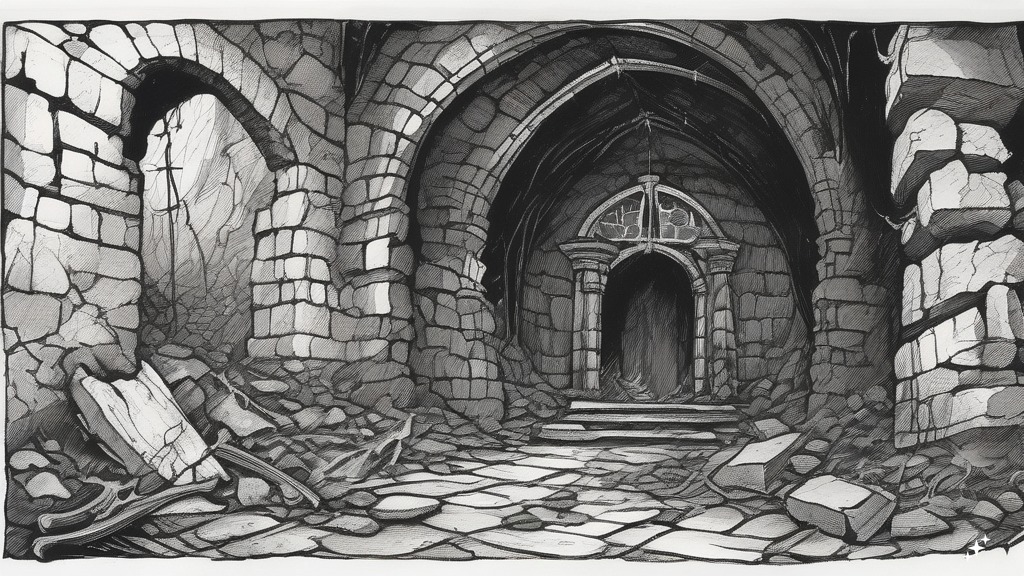
- Monster-filled environments: The dungeon sequences are atmospheric and dark. Nakasone draws these environments with genuine menace, and there are moments of real tension when Rentt faces creatures that outclass him.
It’s not horror manga. But it’s manga with horror in its bones — literally.
Similar Manga Worth Reading
If The Unwanted Undead Adventurer clicks with you (or if you’ve already read it and want more), here are five series with overlapping appeal. Brief descriptions are included for each, so don’t worry if you haven’t heard of them.
Overlord (Manga Adaptation)
The heavyweight of the undead-protagonist subgenre. Ainz Ooal Gown is a salaryman who gets trapped inside a fantasy game world (a premise known in manga circles as “isekai,” meaning the character is transported to another world). He’s stuck in the body of his game character — a max-level skeletal overlord ruling an army of monsters. Where Rentt is a scrappy underdog trying to regain his humanity, Ainz is an overpowered ruler trying to maintain it internally while being terrifyingly inhuman externally.
The tone is darker and more morally ambiguous. Ainz does genuinely awful things, and the series doesn’t always frame them as wrong. If you want the undead protagonist concept pushed to its most extreme, this is it.
Overlap: Undead protagonist, fantasy world, identity themes
Difference: Much darker tone, overpowered protagonist, morally gray to outright villainous actions
Skeleton Knight in Another World
A lighter take on the “wake up as a skeleton” premise. Arc is a protagonist transported into a fantasy game world in his game character’s body — which happens to be a skeleton in full plate armor. Unlike Rentt’s desperate struggle for survival, Arc’s journey is more of a breezy adventure with comedic elements.
This is a good palate cleanser if you enjoy the skeleton protagonist concept but want something less heavy. The art is solid and the action is fun, even if the emotional stakes don’t reach the same depths.
Overlap: Skeleton protagonist, fantasy adventure, hiding one’s true nature
Difference: Much lighter tone, transported-to-another-world setup, less body horror
Re:Monster
Rou is reincarnated as a goblin and gains power by eating other creatures, evolving through increasingly powerful monster forms. The evolution system here is faster and more aggressive than Rentt’s — Rou is a power-scaling machine who rapidly becomes overpowered.
The series gets dark in places (content warnings for graphic violence and disturbing content in some later volumes), and the tone is quite different from The Unwanted Undead Adventurer. But if the monster evolution mechanic is what hooked you, Re:Monster runs with that concept further than almost any other manga.
Overlap: Monster evolution, fantasy world, non-human protagonist
Difference: Faster power scaling, more violent, less character introspection
The Executed Sage Who Was Reincarnated as a Lich and Started an All-Out War
Long title, interesting premise. The Demon Lord who helped the Hero save the world is executed by the kingdom he protected — and comes back as a lich to wage war against humanity’s corruption. It’s an undead protagonist story with a political and military focus rather than a dungeon-crawling one.
If the “undead trying to find purpose” theme resonates with you more than the dungeon exploration, this might be your next read.
Overlap: Undead protagonist, dark fantasy, themes of betrayal and identity
Difference: Military/political focus, no dungeon crawling, more antagonistic protagonist
Delicious in Dungeon (also known by its Japanese title Dungeon Meshi)
This might seem like an odd recommendation on a horror manga guide, but hear me out. Delicious in Dungeon is a dungeon-crawling manga where the party cooks and eats the monsters they fight. It sounds comedic — and it is, often — but the deeper you get into the series, the more it explores genuinely dark themes about desire, obsession, and what it means to be a monster.
The dungeon environments are richly detailed, the monster ecology is fascinating, and the tonal shifts between comedy and darkness mirror the way The Unwanted Undead Adventurer balances adventure with horror elements. If you love the dungeon-crawling atmosphere of Rentt’s story, Delicious in Dungeon is a must-read — and it’s complete, which is a nice bonus.
Overlap: Dungeon crawling, detailed monster ecology, tonal range from light to dark
Difference: Primarily comedy/adventure, party-based rather than solo, completed series
Quick Comparison Table
| Series | Protagonist | Tone | Evolution/Power System | Horror Elements |
|---|---|---|---|---|
| Unwanted Undead Adventurer | Undead (evolving) | Dark fantasy | Undead form evolution | Body horror, existential dread |
| Overlord | Undead (overpowered) | Dark, morally gray | Max level from start | Psychological, moral horror |
| Skeleton Knight | Skeleton (transported to another world) | Light adventure | Standard RPG leveling | Minimal |
| Re:Monster | Goblin (evolving) | Dark action | Eat-to-evolve | Violence, disturbing content |
| Executed Sage / Lich | Lich | Military dark fantasy | Lich magic system | Existential, political |
| Delicious in Dungeon | Human party | Comedy → dark fantasy | Cooking-based buffs | Creeping darkness in later volumes |
Final Thoughts
The Unwanted Undead Adventurer occupies a really satisfying niche. It’s not trying to be the most action-packed fantasy manga or the scariest horror manga. Instead, it tells a compelling story about a guy who refuses to stop being an adventurer just because he’s technically dead.
The undead evolution system keeps the story fresh, the dungeon atmosphere is strong, and Rentt is an easy protagonist to root for. The body horror elements and themes of identity loss give it genuine crossover appeal for horror readers, even if it’s fundamentally a dark fantasy adventure.
If anything here sounds interesting, grab Volume 1 from J-Novel Club and give it a few chapters. You’ll know pretty quickly whether Rentt’s journey back to humanity is one you want to follow.
And if you’ve already read it? Check out the similar series above — there’s a whole world of undead protagonists, monster evolution stories, and dungeon-crawling manga waiting for you.