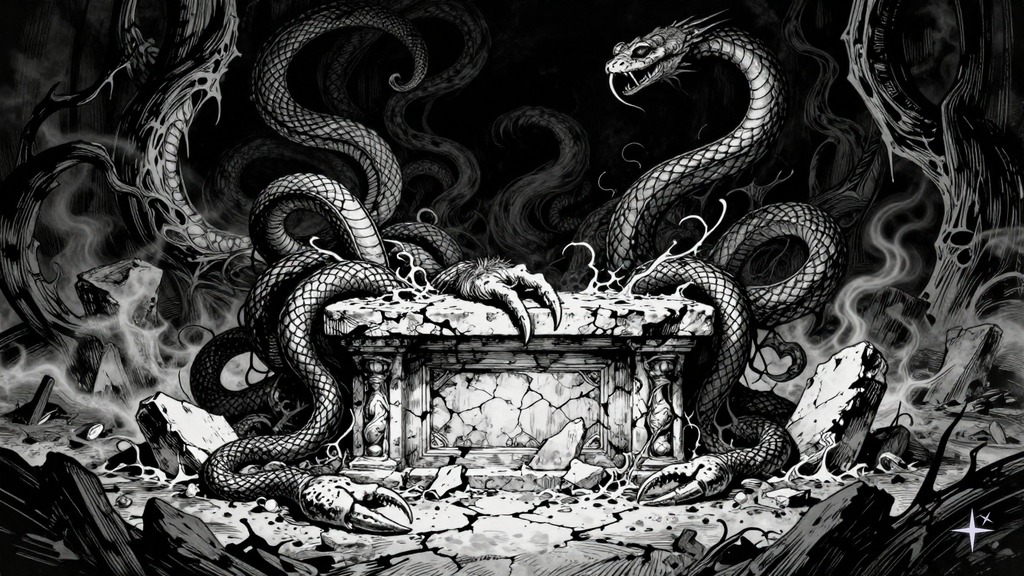
Looking up how many Bakemonogatari manga volumes there are? Good news — the series is finished, and you won’t be left hanging. Here’s a guide to the full 22-volume run, from what each arc covers to where you can grab the books in English.
Bakemonogatari Manga Has 22 Volumes — Complete Series
The Bakemonogatari manga is a completed series with 22 volumes, published in both Japanese and English. No more waiting for releases — the whole story is out there ready to read.
The manga is written by NISIOISIN (西尾維新), the creator behind the entire Monogatari Series — a large, interconnected franchise of novels, anime adaptations, and now this manga. The art is by Oh!Great (大暮維人), an artist known for incredibly detailed, dynamic artwork that brings supernatural action to life in ways few other manga artists can match. If you’ve read his earlier series like Air Gear or Tenjho Tenge, you’ll recognize his style immediately — but no prior familiarity is needed.
In Japan, the series was published by Kodansha in Weekly Shonen Magazine, running from March 2018 through March 2023 (with the final collected volume published in May 2023). The English edition is published by Vertical Comics (a manga-focused label under Kodansha’s U.S. publishing arm), and all 22 volumes are available now.
What makes this manga special is what it adapts. The original Bakemonogatari novel is the first entry in NISIOISIN’s sprawling Monogatari Series — a franchise built on wordplay, supernatural encounters, and deeply layered character drama. Oh!Great takes that foundation and transforms it into something visually spectacular, expanding the supernatural horror imagery far beyond what the novel’s prose could describe on its own.
What Each Volume Covers
The 22 Bakemonogatari manga volumes primarily adapt the five story arcs from the original Bakemonogatari novel, while also incorporating material from the prequel novel Kizumonogatari between the later arcs. Each arc centers on protagonist Koyomi Araragi helping a different person deal with a supernatural aberration — the series’ term for a creature or entity born from intense emotional or psychological pain. These aren’t standard monsters; think of them as curses that take physical form, shaped by whatever trauma created them. An aberration might look like an animal, a spirit, or something stranger, but each one is tied directly to a character’s inner suffering.
Here’s how the arcs break down across the volumes:
Hitagi Crab (Volumes 1–3)
The series opens with Araragi catching his classmate Hitagi Senjougahara as she falls down a staircase — and discovering she weighs almost nothing. Her weight was stolen by a crab aberration, and Araragi sets out to help her get it back. This arc establishes the manga’s core dynamic: sharp dialogue, complicated characters, and supernatural threats that are deeply tied to personal trauma. Oh!Great’s art turns the crab aberration into something genuinely unsettling, setting the visual tone for everything that follows.
Mayoi Snail
Araragi encounters Mayoi Hachikuji, a young girl with a backpack who seems hopelessly lost. She’s connected to a snail aberration that traps people in an endless loop, preventing them from reaching their destination. This arc is more melancholy than the first, exploring themes of grief and letting go. The supernatural elements here are subtle and creepy — less about monster fights, more about an uneasy atmosphere that builds slowly across the volumes.
Suruga Monkey
Suruga Kanbaru, a junior athlete and devoted fan of Senjougahara, approaches Araragi — and it turns out she’s made a deal with a monkey’s paw aberration. The “monkey’s paw” is a classic horror concept: a cursed object that grants wishes, but twists them so the consequences are horrific. In Kanbaru’s case, the paw manifests physically, and the resulting confrontations are visceral and intense. Oh!Great really flexes here — the action sequences are among the manga’s best. The horror comes from watching a character lose control of something they thought they wanted.
Nadeko Snake (Volumes 11–13)
Nadeko Sengoku, a quiet middle school girl Araragi knew as a child, is being slowly constricted by a snake curse. This arc leans heavily into the supernatural horror side of things — the visual depiction of the snake aberration wrapping around Nadeko is disturbing and effective. It’s one of the more straightforward arcs in terms of plot, but Oh!Great’s artwork elevates it into something genuinely memorable.
Tsubasa Cat (Volumes 14–22)
The final arc centers on Tsubasa Hanekawa, Araragi’s classmate who carries the burden of being everyone’s reliable, responsible presence — even when her own life is falling apart. She is being possessed by a cat aberration that brings out a repressed, volatile side of her personality. This is the longest and most emotionally complex arc, building to the story’s climax. The volumes covering this arc deliver some of the manga’s most striking visual sequences — supernatural transformations, intense confrontations, and a resolution that ties together threads from all the previous arcs.
Across all five arcs, one thing stands out: Oh!Great significantly expands the action sequences and supernatural horror imagery beyond what the original novel described. Scenes that were a few paragraphs of prose become multi-page visual spectacles. If you’re coming to this manga for the art, you won’t be disappointed.
Reading Order and Where to Start
This is refreshingly simple. The Bakemonogatari manga is a straight Volume 1 through Volume 22 read. There are no spin-off volumes, no side stories, no “.5” chapters, no alternate editions you need to track down. Just pick up Volume 1 and go.
The standard single volumes published by Vertical Comics are the English format available for this series. Each volume is a standard manga paperback that you’ll find shelved in the usual manga section at any bookstore.
If you’ve never encountered the Monogatari franchise before, the manga is a perfectly fine place to start. It tells a complete supernatural story from beginning to end — you don’t need to have watched the anime or read the novels first. Araragi, Senjougahara, and every other character are properly introduced within the manga itself. You won’t feel lost.
A note on content: Oh!Great’s depictions of the aberrations are detailed and often intense. The series contains supernatural horror imagery, violence, and some mature themes. It’s aimed at a teen-and-up audience, so keep that in mind if you’re buying for a younger reader or are sensitive to horror content.
If you watched the anime first, the manga offers a genuinely different experience. Same story, same characters, same arcs — but Oh!Great’s visual interpretation is dramatically different from what the anime production studio created. Here’s how they compare:
| Feature | Anime (Studio Shaft, 2009) | Manga (Oh!Great, 2018–2023) |
|---|---|---|
| Visual style | Abstract, symbolic, heavily stylized | Detailed, realistic, hyper-rendered |
| Aberrations | Often implied or briefly shown | Fully depicted in visceral detail |
| Action scenes | Brief, stylized | Extended, choreographed across multiple pages |
| Dialogue | Central focus, carried by voice acting | Present but balanced with visual storytelling |
| Horror tone | Psychological, atmospheric | More explicit supernatural horror imagery |
| Length | 15 episodes | 22 volumes |
How the Manga Connects to the Wider Monogatari Series
Here’s the important context: the Bakemonogatari manga primarily adapts the first novel in the Monogatari Series, but it also incorporates material from Kizumonogatari — the prequel novel exploring how Araragi first encountered vampires. Oh!Great inserted this Kizumonogatari content between the Nadeko Snake and Tsubasa Cat arcs with NISIOISIN’s permission, because the prequel backstory deepens the emotional stakes of the final arc.
The wider franchise includes many more story arcs beyond what this manga covers — Nisemonogatari (focusing on Araragi’s sisters), Nekomonogatari (expanding Hanekawa’s backstory), and others. When you finish Volume 22, that’s the end of this particular story. It wraps up satisfyingly on its own terms, but if you find yourself wanting more of Araragi’s world (and you probably will), you’ll need to continue with either the light novels — short, illustrated Japanese novels, also published in English by Vertical — or the anime adaptations produced by Studio Shaft (a Japanese animation studio known for its distinctive, highly stylized visual approach).
Think of the manga as one beautiful, self-contained window into a much larger franchise. It’s a complete experience by itself, but it’s also an excellent gateway if you want to explore further.
Manga vs. Anime — What the Volumes Add
If you’ve seen the Bakemonogatari anime (2009), you might wonder what the manga does differently. The answer: a lot, actually.
The anime is famous for its abstract, heavily stylized visual approach. The adaptation uses stark color fields, rapid text cuts, unusual camera angles, and minimalist backgrounds to create atmosphere and mood rather than literal depiction. The aberrations are often suggested rather than shown — fleeting images, symbolic representations, visual metaphors.
Oh!Great’s manga takes the opposite approach. The aberrations are drawn in full, terrifying detail. The crab, the snake, the cat — you see them rendered with the kind of meticulous, hyper-detailed artwork Oh!Great is known for. Where the anime left things to your imagination, the manga puts it right on the page.
Fight scenes and physical confrontations are significantly expanded in the manga. Moments that lasted seconds in the anime become multi-chapter sequences with dynamic page compositions and detailed action. The Suruga Monkey arc in particular benefits from this treatment — Oh!Great’s ability to draw action is world-class, and the monkey’s paw confrontation is a highlight of the entire series.
The anime, on the other hand, leans harder into the dialogue-heavy nature of NISIOISIN’s writing. Long conversations play out with minimal movement, carried by voice acting and visual wit. The manga rebalances this — dialogue is still present and important, but Oh!Great finds ways to add visual storytelling that keeps pages turning even during conversation-heavy scenes.
Neither version is “better.” They’re genuinely different artistic interpretations of the same source material. But if you loved the anime and want to experience the story through a completely different lens — one that emphasizes horror, action, and detailed supernatural imagery — the manga is absolutely worth your time.
Where to Buy Bakemonogatari Manga in English
All 22 volumes are available in English from Vertical Comics (Kodansha USA). Since the series is complete, you can buy the whole run right now without worrying about future releases.
Here’s where to find them:
- Amazon — All volumes are available, and this is often the easiest option for getting specific volumes shipped to your door. Volume 22, the final volume in the series, wraps up the Tsubasa Cat arc and brings Araragi’s story to its conclusion. It’s a satisfying ending to a visually stunning series, and it’s the one you’ll be most eager to reach once you start reading.
BAKEMONOGATARI (manga), Vol. 22 (final volume)
- Barnes & Noble — Available both in-store and online. A good option if you like browsing physical shelves or want to check the print quality before committing to the full run.
- Local comic and manga shops — Independent shops can usually order any volume for you, and buying local supports smaller retailers that keep manga on shelves in your community.
- Digital editions — Available through Kindle, Kobo, and other digital platforms. A solid choice if you’re short on shelf space, though Oh!Great’s detailed artwork really does shine in physical format where you can appreciate the detail up close.
A note on collecting the full series: 22 volumes is a meaningful shelf commitment. If you want to test the waters before going all-in, start with the first three volumes — they cover the complete Hitagi Crab arc. By the end of that arc, you’ll know whether Oh!Great’s visual approach to the Monogatari story works for you. If it does, you can continue at whatever pace you like without cliffhanger anxiety, since the entire series is already out.
Is the Bakemonogatari Manga Worth Reading?
Best for: readers who want the Monogatari franchise’s supernatural horror brought to life by one of manga’s most talented artists. If you love detailed, dynamic artwork and supernatural stories rooted in character psychology, this series was made for you.
Oh!Great’s art is the reason this adaptation exists as its own thing. NISIOISIN’s story is compelling, witty, and emotionally rich — but the reason to read this manga specifically, rather than just watching the anime or reading the novel, is to see what Oh!Great does with the material. His depictions of the aberrations, his action sequences, his ability to convey supernatural dread through detailed artwork and page composition — every volume has pages that make you stop and just look.
The potential limitation is scope. Because the manga primarily covers the Bakemonogatari story with some Kizumonogatari material incorporated, readers who are hoping for the full Monogatari experience — including the sequel arcs and deeper character backstories — will need to continue with other media after finishing. The manga doesn’t leave you on a cliffhanger, but it does leave you in a world with many more stories to tell.
If having more great content waiting sounds appealing rather than limiting, then picking up Volume 1 is an easy call. Oh!Great and NISIOISIN created something special with this adaptation, and all 22 Bakemonogatari manga volumes are available right now waiting for you.