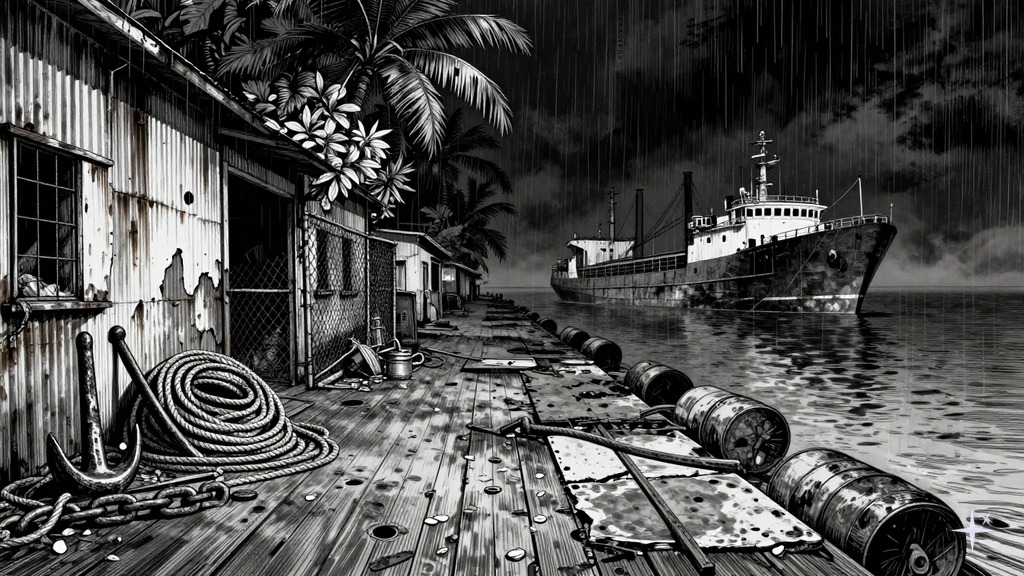
Black Lagoon is one of the grittiest crime-action manga you’ll find. If you’re searching for information on the Black Lagoon manga volumes — how many there are, what order to read them in, and whether the manga goes beyond the anime — here’s the short version: there are 13 volumes, the series is still ongoing, and yes, the manga continues past where the anime ends.
Now let’s break it all down.
How Many Black Lagoon Manga Volumes Are There?
The short answer: Black Lagoon has 13 volumes in both Japanese and English as of the latest release.
The series is written and illustrated by Rei Hiroe (広江礼威) and has been serialized — meaning individual chapters are published on a regular schedule in a magazine, then collected into book-form volumes — in Monthly Sunday GX (月刊サンデージェネックス), a monthly manga magazine published by Shogakukan, since its debut. The first Japanese volume came out in January 2003, which means this series has been running for over two decades.
Here’s the important part: Black Lagoon is ongoing, not completed. The serialization has been notoriously intermittent, with Hiroe taking extended breaks between chapters — sometimes disappearing for months or even years before new material appears. That means more volumes could still follow, but nobody can predict when.
For anyone unfamiliar with the premise: Black Lagoon follows a former Japanese office worker — a “salaryman,” in Japanese terms — known as “Rock” after he’s effectively kidnapped by a crew of mercenary pirates called the Lagoon Company. The setting is Roanapur, a fictional Thai port city controlled by competing criminal organizations — the Russian mafia, Chinese triads (organized crime syndicates), Colombian cartels, and more. The series deals heavily in organized crime, graphic violence, human trafficking, and the psychological toll of living in a world where morality is a luxury nobody can afford. It’s dark. It earns that darkness.
What Each Volume Covers
Rather than walking through all 13 volumes page by page, here’s a look at the major story arcs — self-contained storylines that span multiple chapters — and how they map to the volume numbers. This should help you know what you’re getting into and where the series hits its hardest.
Vol 1: Welcome to Roanapur
The series opens with Rock, an ordinary Japanese businessman, being taken hostage by the Lagoon Company during a job gone sideways. Instead of returning to his corporate life, Rock makes the fateful decision to stay with the crew. Volume 1 establishes the world, the characters, and the moral landscape of Roanapur. It’s a strong starting point that sets the tone without overwhelming you.
Vol 2: The Submarine Arc
Things escalate quickly. Volume 2 features an extended chase sequence involving a sunken submarine and raises the stakes for Rock’s involvement with the crew. You start to see Rock making compromises — small ones at first — that pull him deeper into a life he can’t easily walk away from. The action choreography here is sharp, and Hiroe’s talent for drawing gunfights in tight spaces really comes through.
Vol 3–4: The Vampire Twins Arc
This is one of the series’ darkest storylines among both long-time fans and critics, and it’s the point where Black Lagoon reveals exactly how far it’s willing to go. The arc involves twin child soldiers from Romania with deeply traumatic backgrounds. The content is brutal — it deals with the exploitation and psychological destruction of children by organized crime — and it’s presented without sentimentality or easy resolution.
This is the arc that tells you what kind of series Black Lagoon is. If the subject matter here is too much for you, the series continues to explore similarly heavy ground going forward, so it’s worth knowing that before you invest further.
Vol 5–6: Fujiyama Gangsta Paradise (The Japan Arc)
The Japan arc sends Rock back to his home country alongside Revy — the Lagoon Company’s trigger-happy gunslinger and the series’ female lead — and Balalaika, the scarred, calculating leader of Roanapur’s Russian crime syndicate. The storyline involves Yakuza (Japanese organized crime) politics. This is where the series really digs into Rock’s identity crisis — the collision between the ordinary life he abandoned and the violent world he’s chosen. It’s a fan-favorite arc for good reason: the character writing here is some of the best in the series, and watching Rock navigate between two worlds he doesn’t fully belong to anymore is genuinely compelling.
Vol 7–9: Roberta’s Blood Trail and El Baile de la Muerte
Roberta is a former FARC (Fuerzas Armadas Revolucionarias de Colombia) guerrilla turned maid for a wealthy Venezuelan family — and one of the most dangerous fighters in the entire series. When tragedy strikes her employer’s family, she goes on a single-minded, blood-soaked pursuit of vengeance that pulls in American special forces, Roanapur’s criminal factions, and the Lagoon Company itself. This arc stretches across several volumes and is the longest sustained storyline in the series. It’s also where Rock begins actively manipulating events behind the scenes rather than just reacting, marking a significant and unsettling shift in his character.
Vol 10–13: The Wired Red Wild Card Arc and Beyond
The later volumes move into new territory with story developments centered on Roanapur’s shifting power dynamics, including new players entering the city’s criminal ecosystem. Rock’s transformation deepens — the gap between who he was and who he’s becoming grows wider, and his relationship with Revy becomes more complicated as a result. These volumes are slower-paced than the earlier action-heavy arcs, leaning more into character psychology and political maneuvering within Roanapur’s underworld. The story is still unfolding as of Volume 13, with no resolution in sight yet.
The Hiatus Pattern
After the earlier arcs, the release schedule becomes increasingly irregular. Here’s how the gaps between Japanese volumes have looked:
- Vol 9: October 2009
- Vol 10: May 2014 (nearly 5 years later)
- Vol 11: November 2018 (about 4.5 years)
- Vol 12: August 2021 (roughly 3 years)
These gaps reflect Hiroe’s extended breaks from serialization. This is something to be aware of before you start: the story is not finished, and the waits between new material can be long.
Reading Order and Where to Start
Good news: Black Lagoon’s reading order is completely straightforward.
Read Volume 1 through Volume 13, in order. That’s it.
Two spin-off manga set in the same universe do exist — Black Lagoon: Sōjiya Sawyer – Kaitai! Gore Gore Musume (2019) and Black Lagoon Eda: Initial Stage (2022) — but neither is required reading for the main series. The main run itself has no alternate timelines, no prequel series, and no branching storylines to track. Hiroe has kept the main narrative contained within a single serialization, so you just read the volumes sequentially and you’re caught up.
Start with Volume 1. The series builds its world and introduces its cast from the very first chapter. Rock’s journey from bewildered hostage to willing participant in Roanapur’s underworld is the emotional spine of the entire story, and it only works if you see where he began.
A note on tone: the series gets progressively darker as it goes. Volume 1 is violent but relatively contained in scope. By the Vampire Twins arc in Volumes 3–4, the series has shown you that it will go to very dark places. The psychological weight compounds as Rock gets pulled deeper into the criminal world, especially in the later volumes where his moral compromises become harder to justify — even to himself.
Manga vs. Anime — What the Volumes Cover Beyond the Show
If you’re coming to Black Lagoon from the anime, here’s what you need to know.
The anime consists of two TV seasons (24 episodes total) plus the Roberta’s Blood Trail OVA — an “Original Video Animation,” meaning episodes released directly to home video rather than broadcast on television — which runs 5 episodes. Together, these adaptations cover roughly the material found in the first nine volumes of the manga. The anime is well-regarded — the English dub (a version where the original Japanese voice acting is replaced with English-language performances) in particular has a strong reputation among fans — and it’s a faithful adaptation of the material it covers.
However, from approximately Volume 10 onward, the manga contains story material that has never been adapted into anime. If you’ve only watched the show, there’s more story waiting for you on the page.
Beyond just plot continuation, the manga pushes further into the psychological deterioration of its characters — particularly Rock. The anime hints at his moral descent, but the manga goes deeper into how living in Roanapur reshapes his thinking, his relationships, and his sense of self. Revy’s backstory and emotional landscape also get more room to breathe on the page.
For anime-only viewers, starting from Volume 1 is still recommended rather than trying to pick up where the anime left off. The manga includes details, character moments, and small scenes that the anime condensed or cut entirely. Reading from the beginning gives you the full picture.
Where to Buy Black Lagoon Manga Volumes in English
All 13 volumes of Black Lagoon are available in English in single-volume paperback format. A box set collecting Vols 1–12 is also available on Amazon for readers who want to acquire the backlist in one purchase. No omnibus editions (which rebind multiple volumes into a single thicker book) or deluxe hardcover editions appear to be available at this time.
If you’re starting from the beginning, Volume 1 is available through major retailers including Amazon:
The most recent release, Volume 13, is also available:
Black Lagoon, Vol. 13
For the volumes in between (2–12), check major online retailers and digital manga platforms such as Amazon, Barnes & Noble, BookWalker, or the Viz Media website for availability. Some older volumes may occasionally go out of stock in physical format, so digital editions can be a reliable backup if you’re having trouble finding a specific volume in print.
Since there are only 13 volumes, collecting the complete set so far is a manageable commitment compared to longer-running series. You’re not looking at dozens of volumes or multiple box sets — just 13 books that fit comfortably on a single shelf.
Is Black Lagoon Worth Reading?
Yes — with a few caveats worth understanding before you commit.
Black Lagoon’s strengths are real and substantial. The action choreography is exceptional — Hiroe draws gunfights and chase sequences with a sense of motion and physical space that makes every shootout feel distinct. You always know where the characters are, where the bullets are going, and what’s at stake, which keeps the action grounded rather than chaotic. The dialogue is sharp, often darkly funny, and the characters talk like people who’ve lived hard lives rather than like stock characters delivering catchphrases.
The antagonists are properly threatening. Black Lagoon doesn’t do disposable villains — even the enemies who appear for a single storyline feel like people with their own histories and motivations, which makes the violence land harder. And the core cast — Rock, Revy (the foul-mouthed gunslinger), Dutch (the Lagoon Company’s level-headed leader), Benny (the crew’s tech and intel specialist), Balalaika, and the rotating ensemble of Roanapur’s criminals — is one of the most compelling collections of morally compromised characters in manga. These aren’t good people. They’re fascinating people.
The series depicts organized crime with an unflinching eye. Trafficking, exploitation, child abuse, and psychological trauma are not background details — they’re central to the story. Hiroe doesn’t glamorize this world. He shows you its cost. That’s what makes Black Lagoon feel more honest than most action manga, but it also means the content can be genuinely difficult to sit with.
The main caveat: the series is ongoing, and the history of extended breaks means there’s no guarantee of a timely conclusion. If unfinished stories frustrate you, that’s worth knowing upfront. What exists across 13 volumes is substantial and satisfying on its own terms, but the narrative is not wrapped up.
If you want visceral crime fiction with real psychological weight — the kind of manga where the action hits hard but the character writing hits harder — Black Lagoon delivers. Grab Volume 1 and see for yourself.