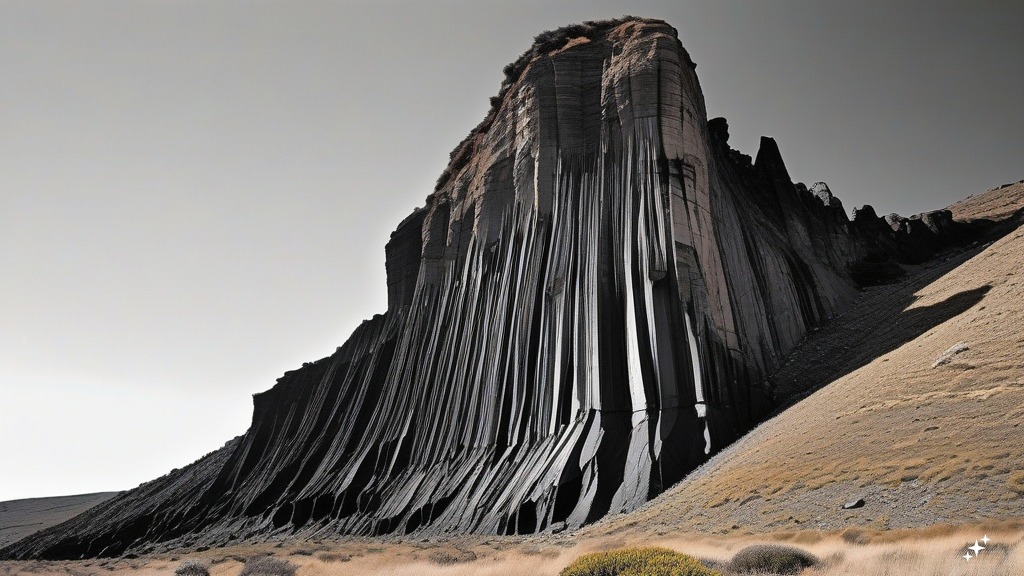
The Enigma of Amigara Fault — Junji Ito’s Mystery of Amigara Fault Explained
If you’ve spent any time online looking at horror manga (Japanese comics), you may have already seen it — the panel (a single framed image on a manga page) of a person standing in front of a human-shaped hole in a mountainside, declaring: “This is my hole! It was made for me!”
That image comes from The Enigma of Amigara Fault, a 31-page short story by Junji Ito. You might also know it as the Junji Ito Mystery of Amigara Fault — the title has been translated both ways over the years, and both names refer to the same story. We’ll explain the naming difference below. Regardless of what you call it, it’s one of the most widely shared horror manga stories on the internet, and for good reason: the concept is so simple and so deeply unsettling that it burrows into your brain and stays there.
Whether you found this story through a meme, a friend’s recommendation, or just the intriguing title, here’s the important thing to know right away: this story has never been published as a standalone book. It appears as a bonus story in two different collections from Viz Media (the main English-language manga publisher in North America):
- Gyo (2-in-1 Deluxe Edition) — where it was originally included as a bonus story at the back of Gyo’s second volume when it was first collected in Japan in 2002. The story was originally published in Spirits Special IKKI (a special edition of Big Comic Spirits, a Japanese manga anthology magazine) in 2000.
- Venus in the Blind Spot — a short story collection that includes the Amigara Fault story with exclusive color panels (full-color illustrated pages) not found in the Gyo edition.
Both are hardcover editions from Viz Media and readily available in English. We’ll cover which one to buy later — but first, let’s talk about what actually happens in this story and why it has haunted readers for over two decades.
What Is the Junji Ito Mystery of Amigara Fault About?
The Setup (No Spoilers)
A massive earthquake strikes Japan, and the resulting geological shift exposes something impossible on the surface of a mountain called Amigara Fault: thousands of human-shaped holes, each one a perfect silhouette carved deep into the rock face.
Scientists and onlookers arrive at the site. And then something strange starts happening. Individual people begin recognizing specific holes — their holes. Each hole is a precise match for one person’s body shape. And the people who find their matching hole feel an overwhelming, irrational compulsion to enter it.
They know it makes no sense. They know they should be afraid. But the pull is too strong.
The horror builds from one devastatingly simple question: what happens to the people who go in?
The Ending Explained (Full Spoilers Below)
⚠️ Spoilers ahead. If you haven’t read the story yet, seriously consider reading it first — it’s only 31 pages and the impact of the final reveal is much stronger when you experience it cold. Skip to the next section if you want to stay unspoiled.
Throughout the story, we follow Owaki and Yoshida, two strangers who meet at the Amigara Fault site. Both are disturbed by what they see — people walking calmly toward the mountain, finding their hole, and stepping inside with a kind of eerie, peaceful resignation. The holes are human-shaped on the entry side, but no one knows where they lead or how deep they go.
Owaki discovers a historical detail that makes things worse: ancient carvings suggest that criminals were once forced into the holes as punishment. This wasn’t a natural formation — it was something intentional, something ancient, and something deeply wrong. Owaki himself also finds a hole that matches his body — and while he tries to resist the pull throughout the story, the compulsion weighs on him just as heavily as it does on everyone else.
As the story progresses, the compulsion spreads. More people arrive. More people enter. Yoshida fights the urge to enter her own hole but ultimately cannot resist. Owaki watches in horror as she walks toward the mountainside, strips away anything that won’t fit, and slides inside.
The final pages show the other side of the mountain. Workers have discovered exit holes — but these holes are no longer human-shaped. They are elongated, twisted, distorted shapes, stretched and warped into something barely recognizable as having once been a person. And from these exit holes, the shapes are slowly, impossibly emerging.
That final image — the grotesque, stretched silhouettes coming out the other side — is one of the most disturbing pages in manga history. The story frequently appears on lists of the scariest manga ever created. Ito never explains what force inside the mountain does this. He never explains why the holes exist or what intelligence designed them. The horror is in the not-knowing, and in the sickening certainty that whatever happened inside that tunnel took a very, very long time.
Why This Story Became a Viral Phenomenon
A lot of horror manga is excellent. Most of it doesn’t become an internet-wide meme. So what makes The Enigma of Amigara Fault different?
The Concept Needs Zero Context
Many great horror stories rely on cultural knowledge, genre familiarity, or long narrative buildup. Amigara Fault does not. The premise — there is a hole in the mountain shaped exactly like you, and you cannot stop yourself from entering it — is immediately, universally terrifying. You don’t need to know anything about manga, Japan, or Junji Ito to feel the dread.
This is why the story spreads so easily online. Someone sees the concept, feels their skin crawl, and shares it. It works on everyone.
It Hits Multiple Primal Fears at Once
What makes the story so effective is how many different types of horror it layers together in just 31 pages:
- Claustrophobia — the idea of squeezing into a tight stone tunnel with no way to back out
- Loss of free will — knowing you shouldn’t enter, but being unable to stop yourself
- Body horror — a type of horror focused on the human body being transformed or violated. The final reveal of what happens to people inside the mountain is a stomach-dropping example.
- The unknown — Ito never explains the mechanism, the origin, or the purpose. There is no answer. There is only the hole.
- Inevitability — the slow, calm certainty with which each person walks toward their hole is somehow more frightening than any chase scene or jump scare
It’s the Perfect Length to Share
At 31 pages, you can read The Enigma of Amigara Fault in about 10–15 minutes. That’s short enough to send to a friend and say “read this right now.” It’s short enough that people actually follow through. And it’s short enough that the pacing never lets up — there’s no filler, no wasted panel, just a steady escalation from curiosity to dread to that unforgettable final page.
“This Is My Hole” Became Iconic
The line “This is my hole! It was made for me!” — spoken by a character who has found their matching hole and is about to enter it — became one of the most recognized horror manga quotes on the internet. It’s been referenced, parodied, and memed endlessly. But the original context is genuinely horrifying: a person who knows something is wrong, whose face shows fear even as their body moves forward, claiming ownership of the very thing that will destroy them.
The meme brought millions of people to the story. The story itself is what made them stay.
Where to Read The Enigma of Amigara Fault
You have two main options in English, and both are published by Viz Media. Here’s how they compare:
| Detail | Gyo (2-in-1 Deluxe Edition) | Venus in the Blind Spot |
|---|---|---|
| Format | Hardcover deluxe | Hardcover deluxe |
| Main content | Gyo (full-length manga about mechanical fish — 400+ pages) | 10 short stories by Junji Ito, including The Enigma of Amigara Fault |
| Amigara Fault placement | Bonus story at the end | Included as one of the main stories |
| Color panels | No — black and white only | Yes — exclusive color panels |
| Best for | Readers who also want to read Gyo | Readers who mainly want Amigara Fault + other short stories |
If You Only Want The Enigma of Amigara Fault
Venus in the Blind Spot is the better buy. You get the Amigara Fault story with its exclusive color panels, plus nine other Junji Ito short stories — including The Human Chair, an adaptation of a famous tale by Edogawa Ranpo (a foundational Japanese mystery and horror author, sometimes called the Edgar Allan Poe of Japan). It’s a short story collection, so every piece is designed to be read on its own in a single sitting.
The Gyo Deluxe Edition is a fantastic book, but Gyo itself is a very different kind of story (a full-length narrative about mechanical fish terrorizing Japan — it’s wild). The Enigma of Amigara Fault was originally included there as a bonus story at the back of the book. If you’re interested in both Gyo and Amigara Fault, it’s great value. But if you came here specifically for the mountain-with-the-holes story, Venus in the Blind Spot gives you more of what you’re looking for.
Venus in the Blind Spot (Junji Ito)
If You Want Gyo Too
The Gyo 2-in-1 Deluxe Edition collects both volumes of Gyo plus The Enigma of Amigara Fault as a bonus story at the end. It’s a beautiful hardcover and excellent value if you’re building a Junji Ito collection. Just know that you’ll be getting the black-and-white version of Amigara Fault — no color panels.
Gyo (2-in-1 Deluxe Edition) by Junji Ito
Digital Options
Both books are also available digitally through the VIZ Manga app, a free app for phones and tablets where you can purchase and read manga. The digital editions tend to be cheaper than physical copies. Note that the story is sold as part of the full book (either Gyo or Venus in the Blind Spot) — you can’t purchase just the Amigara Fault chapter on its own.
Unofficial fan translations (community-made translations that circulated online before or alongside official releases) of the story have been widely shared over the years, and you may be able to find them with a quick search. However, the official Viz editions are the most accurate translations and the best way to support the creator.
Frequently Asked Questions
Is The Enigma of Amigara Fault a full manga series?
No — it’s a standalone short story, only 31 pages long. There are no sequels, no prequels, and no expanded versions. The story is complete as-is, and honestly, that’s part of what makes it work so well. It doesn’t overstay its welcome or try to explain the unexplainable.
Do I need to read Gyo first?
Not at all. The Enigma of Amigara Fault has nothing to do with Gyo’s story — it was simply included as a bonus in the same book. You can read it completely on its own with zero context needed.
Is it too scary for someone new to horror manga?
It’s genuinely creepy — the final page in particular stays with you. But it’s not gory or gratuitously violent. The horror is almost entirely psychological and conceptual. If anything, it’s one of the best possible entry points into horror manga because it shows what the form can do with pure atmosphere and a single terrifying idea. The dread comes from imagination, not from graphic images.
Why do people search for “Junji Ito Mystery of Amigara Fault” instead of “Enigma”?
The original Japanese title is 「阿弥殻断層の怪」(Amigara Dansō no Kai). The word 怪 can be translated as “mystery,” “enigma,” “strangeness,” or “the uncanny.” Unofficial fan translations used different English words over the years, and “mystery” became common in many of them. The official Viz Media English title uses “The Enigma of Amigara Fault,” but both names refer to the same story. If you searched for “Junji Ito mystery of Amigara Fault,” you’re in the right place.
What other Junji Ito stories are similar?
If you love the short, self-contained dread of Amigara Fault, check out the rest of Venus in the Blind Spot — it’s a whole collection of stories in that same mode. Beyond that, Uzumaki (spirals consuming a town) and Tomie (an unkillable girl who drives people to madness) are Ito’s other most famous works, though both are longer series rather than single short stories.