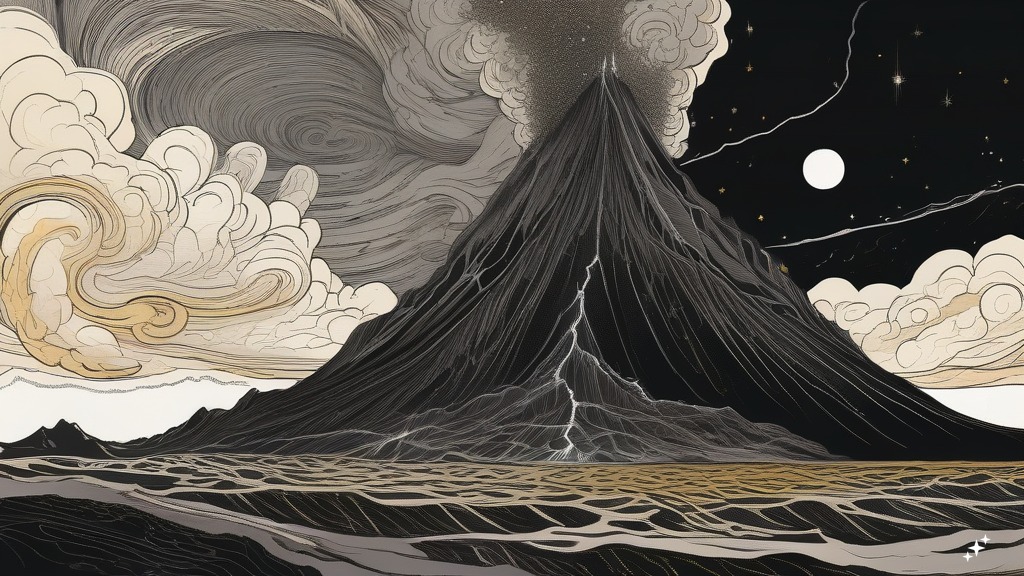
Sensor Is a One-Volume Cosmic Horror Manga — 240 Pages, 7 Chapters
If you’ve been looking into Junji Ito’s work and spotted the Sensor manga, here’s the short version: it’s a single-volume, self-contained story that blends cosmic horror with mystery. Cosmic horror, for the unfamiliar, is a specific tradition of horror focused on vast, incomprehensible forces that make human existence feel insignificant — think dread aimed at the universe itself rather than at a monster in a hallway. Sensor is not a collection of short stories like Ito’s Shiver or Fragments of Horror — it’s one continuous narrative across seven chapters.
The English edition was published by Viz Media on August 17, 2021, in hardcover format. It runs approximately 240 pages, making it a comfortable one-sitting read. The original Japanese version was serialized — meaning published chapter by chapter in a magazine before being collected — in Nemuki+ from August 2018 to August 2019, then released as a single collected volume on November 7, 2019.
Here’s a quick breakdown of the basics:
| Detail | Info |
|---|---|
| Author / Artist | Junji Ito |
| Volumes | 1 (complete — standalone story) |
| Chapters | 7 |
| Page Count | ~240 pages |
| Genre | Cosmic horror / mystery horror |
| English Publisher | Viz Media |
| Format | Hardcover |
| ISBN | 978-1974718900 |
One thing worth noting right away: Sensor is sometimes listed under its Japanese alternate title, Travelogue of the Succubus. That title is a somewhat loose translation and can be misleading — there are no succubi in this manga. The story has nothing to do with that kind of folklore. If you see that name floating around, it’s the same book.
Sensor by Junji Ito (Hardcover)
What Sensor Is About (Spoiler-Light)
The story opens with a woman named Kyoko Byakuya walking through a remote mountain village. The landscape is otherworldly — golden volcanic glass fibers, sometimes called “angel hair,” blanket the ground and drape across the trees. The villagers have been performing sky-gazing rituals for generations, watching for unidentified objects in the heavens. Something vast and unknowable is connected to this place.
Then a volcanic eruption destroys the village. Kyoko is the sole survivor.
From there, the perspective shifts. A journalist named Wataru Tsuchiyado becomes obsessed with finding Kyoko. He spends years tracking her, and as he digs deeper, the story spirals outward from a missing-person mystery into something far larger and stranger.
Each of the seven chapters functions almost like a connected short story. One chapter might follow the journalist’s investigation; the next might jump to a completely different setting where Kyoko has appeared. But they all build toward a single cosmic revelation. The structure is closer to an anthology — a collection of separate stories under one cover — with a connecting thread running through them, rather than a conventional start-to-finish narrative. That structure is intentional on Ito’s part, though it’s also the thing that divides readers most (more on that below).
Without spoiling the ending: Sensor is ultimately about the terrifying insignificance of human perception when confronted with forces that operate on a scale we can’t comprehend. The golden threads, the sky-watching, the eruption — they’re all pieces of something much bigger. Whether Ito pulls off that reveal satisfyingly is genuinely debatable.
What Makes This Different from Typical Junji Ito
If you’re coming to Sensor expecting the body horror of Uzumaki — horror built around graphic, disturbing transformations of the human body — or the relentless dread of Tomie, adjust your expectations. This manga leans heavily into mystery and atmosphere. The horror is more about existential dread (the fear of meaninglessness and human insignificance) than physical revulsion. There are disturbing images — Ito is still Ito — but the emphasis is on the unsettling feeling of something incomprehensible slowly coming into focus, rather than on grotesque transformations or shocking reveals.
Think less “I can’t look away from this horrifying image” and more “I don’t understand what’s happening and that itself is frightening.”
How the Junji Ito Sensor Manga Compares to His Other Works
Placing Sensor within Ito’s published work helps clarify what kind of reading experience to expect. Here’s an honest comparison with a few of his other well-known titles:
| Title | Horror Style | Pacing | Story Structure |
|---|---|---|---|
| Sensor | Cosmic / existential dread | Slow, atmospheric | Connected chapters building to one revelation |
| Uzumaki | Body horror / escalating dread | Escalating, relentless | Self-contained chapters with a linear arc |
| Tomie | Psychological / body horror | Varies by chapter | Loosely connected stories sharing one character |
| Remina | Cosmic / disaster | Fast, chaotic | Single continuous narrative |
The closest comparison is Remina (also known as Hellstar Remina). Both deal with cosmic-scale threats that dwarf human understanding. But where Remina is frantic and action-driven — a planet literally eating its way toward Earth — Sensor takes a much slower, more contemplative approach. The cosmic horror in Sensor creeps in gradually through atmosphere and implication rather than through spectacle.
The Art: Ito Experimenting with New Techniques
Sensor shows Ito trying things he doesn’t do often. There are panels with deliberately blurred or distorted faces, pages where the linework shifts from his signature hyper-detailed style into something more abstract. The sequences involving the golden threads are particularly striking — Ito renders them with a delicacy that’s genuinely beautiful, which creates an interesting tension with the horror elements.
Whether you find these experiments successful or distracting will depend on what you value in Ito’s art. If you love his work primarily for those iconic detailed grotesque images, Sensor delivers fewer of those moments. If you appreciate his compositional skill and willingness to push his own boundaries, there’s a lot to look at here.
Mixed Reception — and Why That’s Worth Understanding
Let’s be straightforward: Sensor is one of Ito’s more divisive works. The criticism tends to cluster around a few specific points:
- The ending feels abrupt. Seven chapters isn’t a lot of space to build a cosmic mystery AND deliver a satisfying resolution. Many readers feel the buildup is compelling but the payoff doesn’t land.
- The horror takes a back seat. Readers who pick this up expecting scares comparable to Uzumaki or Ito’s other more visceral work often come away disappointed. The horror here is subtle and thought-based rather than physically shocking.
- The chapter-to-chapter structure creates gaps. Because each chapter shifts perspective and setting, some readers feel the narrative momentum stalls repeatedly.
On the other hand, readers who enjoy the book tend to praise:
- The mystery itself. The question of who Kyoko Byakuya is and what she experienced is genuinely compelling.
- The atmosphere. The opening village sequences, with golden fibers draped across a volcanic landscape, are among the most visually stunning pages Ito has ever drawn.
- The ambition. Even if it doesn’t entirely succeed, Sensor is clearly Ito reaching for something different, and that’s interesting in itself.
This is a manga where going in with the right expectations makes a real difference. It’s not trying to be Uzumaki. It’s trying to be something quieter and stranger.
Should You Read Sensor?
Here’s the honest take: Sensor is probably not the right starting point if you’re new to Junji Ito. His major works — Uzumaki, Tomie, Shiver — are better introductions because they showcase what makes him distinctive in a more immediately gripping way.
Sensor is best for:
- Readers who’ve already enjoyed several Ito books and want to see a different side of his work
- Cosmic horror fans who appreciate themes of incomprehensible scale — the golden threads, the sky-watching rituals, the volcanic obliteration are all in that territory
- Readers working through Ito’s full body of published work who want to see everything he’s done
- Anyone who liked Remina and wants to see Ito explore similar cosmic themes with a completely different tone and pace
If that describes you — honestly, just grab it and see for yourself. At 240 pages, you’ll know within an hour whether it’s clicking for you.
If You Liked Remina, Sensor Is a Natural Next Read
These two books pair well. Remina gives you Ito’s cosmic horror at full throttle — apocalyptic, loud, chaotic. Sensor gives you the same thematic space explored through mystery and quiet dread. Reading them back to back is a great way to see the range of what Ito can do with the same core idea.
Remina by Junji Ito (Hardcover)
Where to Read Junji Ito’s Sensor Manga Online and in Print
The English edition of Sensor is available as a physical hardcover and as a digital purchase. For reading online, the Viz Manga app carries it digitally — handy if you want to try the first few pages before committing to a physical copy. The hardcover edition is the same high-quality format Viz uses for all of Ito’s recent English releases: solid binding, good paper stock, and a larger physical size that does justice to his detailed artwork.
If you’re searching for Sensor on MangaDex or other free manga reading sites: it isn’t available there legally. Sensor is licensed exclusively by Viz Media in English, and any uploads on unofficial sites are pirated copies. The manga is a single volume — typically priced in the $15–$20 range for the hardcover — and buying it directly supports both Ito and future English-language horror manga releases.
Quick Verdict
Sensor is a fascinating, flawed, and genuinely unique entry in Junji Ito’s body of work. It won’t scare you the way Uzumaki does. It won’t disturb you the way Tomie does. What it will do is show you an artist reaching beyond his comfort zone to tell a story about cosmic forces that dwarf human understanding — wrapped in some of the most beautiful pages he’s ever drawn.
It’s a one-sitting read. It’s a single volume. And if you go in knowing it’s a mystery-horror hybrid rather than pure horror, you’ll be in the right headspace to appreciate what it’s doing.
For readers who already know they enjoy Ito’s work and want to see him try something different, Sensor is well worth picking up.