Venus in the Blind Spot: What This Junji Ito Story Collection Contains
Venus in the Blind Spot is a 10-story horror manga collection by Junji Ito, published in English by VIZ Media. If you’re not familiar with the term, manga refers to Japanese comics — they’re read right-to-left and have a distinct visual style from Western comics and graphic novels. A story collection like this one gathers shorter, standalone stories into a single book — each story is complete on its own, and you can read them in any order. This collection arrived in English on August 18, 2020, as a 272-page hardcover — compact compared to Ito’s other collections, but packed with some of his most iconic work.
Here’s what you’re getting at a glance:
- 10 stories spanning decades of Ito’s career — from surreal body horror (horror that distorts or transforms the human body) to quiet supernatural dread
- The Enigma of Amigara Fault — one of the most famous horror manga stories ever made, and this is one of very few places to read it in print
- Two literary adaptations — stories originally written as prose fiction by other authors, reimagined by Ito in manga form
- Special color pages featuring artwork from Ito’s manga adaptation of No Longer Human, a classic Japanese novel by Osamu Dazai about alienation and self-destruction
- One non-fiction essay — the only autobiographical piece in any Ito collection
The MSRP is $22.99 for the hardcover. It’s a beautiful physical book — the color pages and sturdy binding make it feel like more than just another manga volume sitting on your shelf.
A note before you read: This is horror manga, and Ito doesn’t hold back. Several stories contain disturbing imagery including body horror, gore, and unsettling transformations. If you’re sensitive to graphic content, be aware that the artwork is detailed and the horror is visual by design. The story descriptions below are spoiler-free, but the book itself is intense.
Venus in the Blind Spot by Junji Ito (Hardcover)
Complete Story List and What Each One Is About
One of the most common questions about this collection: what stories are actually in it? Here’s the full list, in order, with a spoiler-free sense of what each one delivers.
1. Billions Alone (Army of One)
This story has appeared under different titles across various editions — you may see it listed as either “Billions Alone” or “Army of One” depending on the translation. If your copy uses one title and you see the other referenced online, they’re the same story. Strangers are being found stitched together — literally sewn to one another — all over the city. Nobody knows who’s doing it or why. The story builds a creeping paranoia around the simple act of being near other people. It’s unsettling in a way that sticks with you longer than you’d expect.
2. The Human Chair
This is Ito’s manga adaptation of a short story by Edogawa Ranpo, one of Japan’s most important mystery and horror writers from the early twentieth century — think of him as Japan’s answer to Edgar Allan Poe. A man hides himself inside a piece of furniture — and the story unfolds from there in a direction that’s equal parts disturbing and weirdly intimate. If you’ve never heard of Ranpo before, this is a striking introduction to his work filtered through Ito’s visual sensibility.
3. An Unearthly Love
A supernatural romance that goes cosmically wrong. This one leans more into Ito’s sci-fi tendencies — the horror comes not from gore but from scale, from the realization that something vast and incomprehensible is at work. It’s a quieter story, but the final pages hit hard.
4. Venus in the Blind Spot (Title Story)
A man becomes obsessed with a woman who seems to exist in his literal blind spot — she’s always just outside the edge of perception. The concept is brilliantly simple: what if something terrifying was always right there, and your own eyes couldn’t show it to you? Ito turns a quirk of human biology into pure dread.
5. The Licking Woman
Exactly what it sounds like. A stranger appears at night and licks people. It’s one of the more straightforwardly creepy entries — the kind of story where the premise alone is enough to make your skin crawl, and Ito’s artwork amplifies it into something genuinely nightmarish.
6. Umezz Kazuo and Me
This is the odd one out — it’s not horror at all. It’s a short autobiographical essay in manga form about Ito’s admiration for Kazuo Umezz, a pioneering horror manga artist from an earlier generation whose work directly inspired Ito to start drawing horror. Think of Umezz as one of the founders of the horror manga genre in Japan. This essay is sweet, funny, and genuinely touching. You get a rare glimpse of Ito as a fan rather than a creator. This is the only non-fiction piece in any of his English-language collections.
7. How Love Came to Professor Kirida
Ito’s adaptation of a story by Robert Hichens, a British author who wrote supernatural fiction in the late 1800s and early 1900s. A professor who has never experienced love finds himself haunted — or perhaps cursed — by the emotion itself. It’s gothic in a classic literary sense — slow-building, atmospheric, and more focused on creeping unease than shock. The source material gives it a different texture from Ito’s original work.
8. The Enigma of Amigara Fault
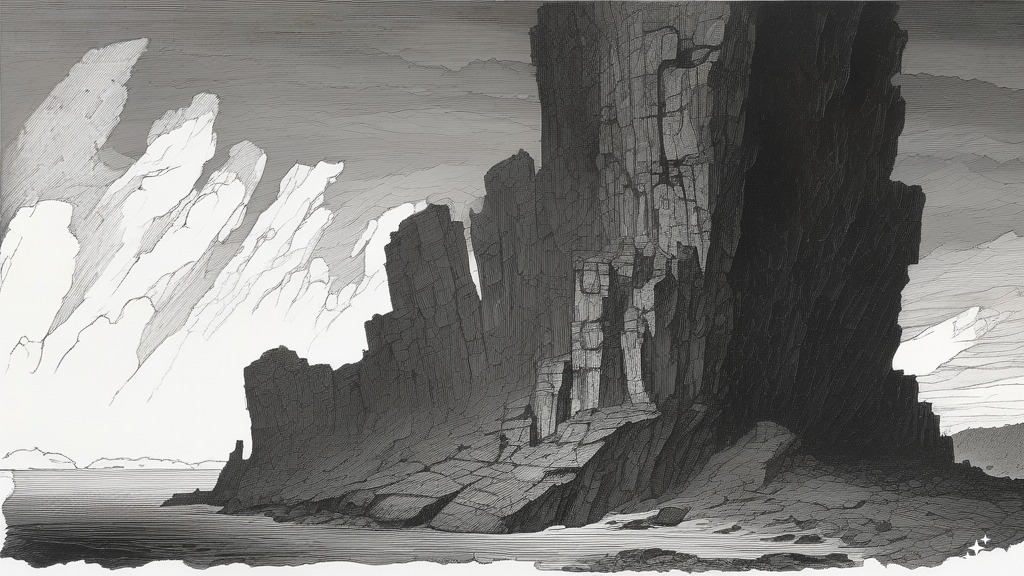
This is the one. If you’ve ever seen memes about human-shaped holes in a mountainside, this is where they come from.
After an earthquake exposes a cliff face, people discover that the rock is riddled with holes — each one a perfect silhouette of a specific person. And those people feel compelled to enter their hole. The concept is so primal and so perfectly executed that it’s become one of the most widely shared horror manga stories on the internet.
The Enigma of Amigara Fault was originally published as a bonus story at the end of Gyo Vol. 2 — Gyo is a separate Ito horror manga about mechanical fish, and Amigara Fault was included as an extra with no connection to that story. It also appears in the later Gyo 2-in-1 Deluxe Edition. Venus in the Blind Spot gives it a proper home in a collection where it fits thematically. For many readers, this story alone justifies the purchase.
9. The Sad Tale of the Principal Post
A structural beam in a house carries a terrible history. Ito finds horror in architecture itself — the idea that buildings can absorb and transmit suffering. It draws on folk horror traditions, where the dread comes from old customs and rural superstitions rather than monsters or gore.
10. Keepsake
An inheritance comes with unexpected conditions. This closing story is compact and mean in the best way — a sharp little nightmare about what the dead leave behind for the living.
Why This Junji Ito Story Collection Stands Out
Junji Ito has several story collections available in English. Venus in the Blind Spot isn’t the longest or the most packed, but it has a few things that make it genuinely unique in his catalog.
The Enigma of Amigara Fault is reason enough. This is one of the most famous horror manga stories ever created — and for years, the only way to read it in print was to buy Gyo Vol. 2 or the Gyo Deluxe Edition, where it was tucked in as an unrelated bonus. Venus in the Blind Spot gives it proper billing. If someone asks you “what’s that manga with the holes in the mountain,” this is the book you hand them.
It’s the only Ito collection with literary adaptations. The Human Chair (adapted from Edogawa Ranpo, the influential Japanese mystery writer mentioned earlier in this article) and How Love Came to Professor Kirida (adapted from the British supernatural fiction author Robert Hichens) show a side of Ito you don’t see elsewhere — his ability to interpret other writers’ visions through his own artistic lens. These aren’t just redrawn prose stories; they’re fully reimagined as Ito manga.
The autobiographical essay is one of a kind. Umezz Kazuo and Me — Ito’s tribute to Kazuo Umezz, the pioneering horror manga artist who inspired his career — is the only autobiographical, non-fiction essay in any of Ito’s English collections. If you’re interested in Ito as a person and not just as a horror machine, this piece is a small treasure.
The color pages are a genuine bonus. Featuring artwork from Ito’s manga adaptation of No Longer Human — a landmark Japanese novel by Osamu Dazai — these pages show his work in a dimension that black-and-white can’t capture. The hardcover format does them justice.
The range is remarkable. In 10 stories you get: body horror, cosmic dread (horror drawn from the vast and incomprehensible), literary adaptation, autobiography, folk horror (horror rooted in old customs and rural traditions), supernatural romance, and pure skin-crawling creepiness. It’s a cross-section of everything Ito does well.
Venus in the Blind Spot vs Other Junji Ito Story Collections
If you’re trying to decide which Junji Ito collection to grab first — or next — here’s how Venus in the Blind Spot compares to the other major short story collections available in English.
| Feature | Venus in the Blind Spot | Shiver | Smashed |
|---|---|---|---|
| Stories | 10 | 9 | 13 |
| Pages | 272 | 400 | 416 |
| Format | Hardcover with color pages | Hardcover with author commentary | Hardcover |
| Standout feature | The Enigma of Amigara Fault; literary adaptations; color pages | Ito’s own commentary on each story, giving insight into his creative process | Most stories of any collection; strong variety |
| Best for | Readers who want Amigara Fault in print; fans of literary horror | Readers who want Ito’s perspective on his own work | Readers who want the most stories per book |
If you can only pick one: Venus in the Blind Spot is the strongest single-story collection thanks to Amigara Fault, and the literary adaptations give it a flavor the others don’t have. But if you want more sheer volume of horror, Smashed gives you 13 stories across 416 pages. Shiver is the best pick if you want Ito’s own thoughts alongside the stories.
Honestly, you can’t go wrong with any of them. They’re all different enough that you’ll eventually want all three.
Where to Buy or Read Venus in the Blind Spot
Venus in the Blind Spot is widely available in both physical and digital formats. Here’s where to find it.
Physical (Hardcover)
- Amazon — Widely stocked with multiple shipping options
- Barnes & Noble — Available in-store and online
- VIZ Media shop — Direct from the publisher
- Local bookstores — Most can order it if they don’t stock it
Digital
If you want to start reading right away without waiting for shipping, digital editions are available through:
- Kindle (Amazon) — read on any Kindle device or the Kindle app
- Apple Books
- VIZ Manga app — VIZ Media’s own reading app, free to download with individual manga purchases inside the app
Bundle Options
Junji Ito bundle sets from third-party sellers are available if you’re planning to dive deeper into Ito’s work. Bundle contents vary by seller and listing, so check the product description carefully to confirm which titles are included and whether Venus in the Blind Spot is part of the set before buying.
A note on free reading: There is no authorized free online source for this collection. The stories circulate widely on unofficial sites, but those are pirated copies. The only legal ways to read are through the options listed above.
Venus in the Blind Spot by Junji Ito (Hardcover)
Quick Verdict
Venus in the Blind Spot is the shortest of Junji Ito’s major English-language story collections, but it might be the most impactful page-for-page. The Enigma of Amigara Fault is a masterpiece of horror manga that earns the book a spot on any shelf by itself. The literary adaptations add a dimension no other Ito collection offers. The autobiographical essay shows a warmer, more human side of the artist. And the remaining original stories range from deeply creepy to outright nightmarish.
At 272 pages, it’s also the easiest entry point if you’ve never read an Ito collection before — you’ll know within the first story whether his style of horror works for you. And if it does, you’ll tear through the rest of the book in a single sitting.
This is a standalone book — there’s no sequel or second volume. What you see is what you get, and what you get is one of the best horror manga collections in print.