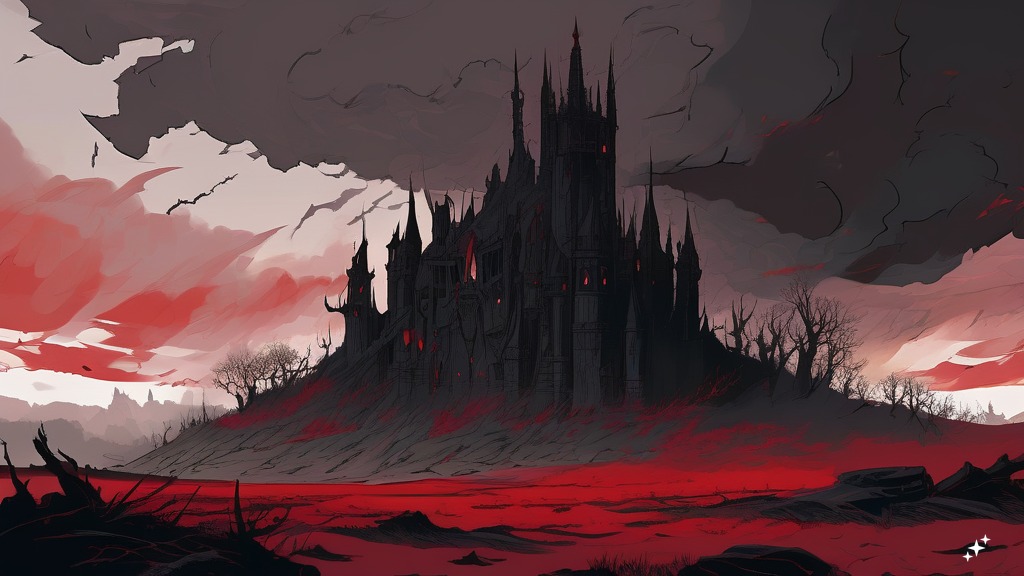
Berserk Manga Review at a Glance — Why It’s Ranked #1
Before we dig deeper, here are the key facts. A quick note for newer manga readers: MyAnimeList (often shortened to MAL) is the largest website where readers rate and track manga and anime — think of it as the Goodreads of Japanese comics.
| Detail | Info |
|---|---|
| Author | Kentaro Miura (continued by his assistant team Studio Gaga, supervised by his close friend Kouji Mori) |
| Volumes | 42 in English (43 in Japan; ongoing) |
| Chapters | 383+ |
| English Publisher | Dark Horse (a major American comics publisher) |
| MyAnimeList Score | ~9.47 (Ranked #1) |
| Genre | Dark fantasy, action, horror, seinen (manga aimed at adult men) |
| Status | Ongoing |
That #1 MAL ranking isn’t a fluke or a popularity contest. Berserk has held that position because readers who finish it tend to consider it the single greatest manga they’ve ever read. It’s earned that spot over decades.
The short version of this review: Berserk is extraordinary. The art is unmatched. The characters are among the best in fiction. The story will wreck you emotionally in the best possible way. But the content is genuinely extreme, and you deserve to know exactly what you’re getting into before you start.
What Is Berserk About?
Berserk follows Guts, a mercenary born from a corpse on a battlefield, who grows up knowing nothing but violence. After years of fighting alone, he joins the Band of the Hawk, a mercenary company led by the impossibly charismatic Griffith — a man with a dream of ruling his own kingdom.
The relationship between Guts and Griffith is the beating heart of Berserk. It’s a bond built on mutual respect, rivalry, ambition, and something deeper that neither of them fully understands. What happens to that relationship — and to everyone caught in its orbit — is the engine that drives the entire story.
Without spoiling anything: Berserk begins as a gritty medieval war story, transforms into something far more personal, and then explodes into dark fantasy on a cosmic scale. The tonal evolution is part of what makes it special. You think you know what kind of story you’re reading, and then the ground drops out from under you.
At its core, though, Berserk is about one thing: survival. Not just physical survival, but the struggle to hold onto your humanity when the world is actively trying to destroy it. Guts’ journey is brutal, but it’s also deeply hopeful in ways that might surprise you.
Arc-by-Arc Breakdown
Berserk is divided into five major story arcs. If you’re new to manga, an arc is a named section of the larger story — think of arcs like seasons of a TV show, each with its own beginning, middle, and end, but all part of the same overall narrative.
If you’re still deciding whether to start Berserk and want the quick version, here it is: the first three volumes are rough, the Golden Age Arc (Volumes 3–14) is where most readers fall in love, and everything after that builds on that foundation. You can skim the individual arc descriptions below and come back to them once you’re reading.
Black Swordsman Arc (Volumes 1–3)
This is where Berserk begins, and honestly? It’s the weakest part of the series. That’s worth saying upfront because a lot of people bounce off Berserk here and never come back.
The Black Swordsman Arc drops you into the story already in progress — Guts is already the scarred, one-eyed, iron-armed warrior hunting demons. You have no context for who he is, why he’s doing this, or what happened to him. The tone is relentlessly dark, the violence is extreme, and some early content feels gratuitous in ways that Miura would later handle with much more care.
Here’s the thing: this arc is a prologue. Miura was still finding his voice. If you push through these three volumes, you reach the Golden Age Arc, and everything changes.
Reading advice: Don’t judge Berserk by its first three volumes alone. Give it until Volume 4 at minimum.
Golden Age Arc (Volumes 3–14)
This is where Berserk becomes Berserk.
The Golden Age Arc is a flashback that tells the story of how Guts met Griffith, joined the Band of the Hawk, and experienced the closest thing to family and belonging he’d ever known. It’s also the story of how all of that was taken from him.
The character writing here is phenomenal. Griffith is one of the most complex antagonists in manga — charismatic, brilliant, and genuinely caring in ways that make what comes later even more devastating. Casca, the Band of the Hawk’s commander, gets a full arc that’s compelling on its own terms. And Guts’ slow transformation from a closed-off loner into someone capable of trust and love is handled with remarkable subtlety.
The Golden Age Arc builds and builds toward a climax that is, without exaggeration, one of the most harrowing events in manga history. If you’ve heard people talk about the Eclipse — a catastrophic supernatural event that changes everything — this is where it happens. It occurs at the end of Volume 13 and into Volume 14. It will stay with you. (See the content warning section below for specific details on what the Eclipse contains.)
Reading advice: This is the arc that hooks most readers for life. If you reach the end of Volume 14 and aren’t compelled to keep going, Berserk might not be for you — and that’s a perfectly valid conclusion.
Conviction Arc (Volumes 14–21)
After the Golden Age, Berserk shifts into a darker, more horror-focused mode. The Conviction Arc follows Guts as he wanders alone, hunting demons called Apostles — humans who sacrificed their humanity to gain monstrous power — while carrying the weight of everything that happened during the Eclipse.
This arc introduces some important new characters — most notably Farnese and Serpico — and deepens the world’s mythology significantly. The setting shifts to a plague-ravaged city under the control of a fanatical religious order, and the themes of faith, suffering, and what people do when they’re desperate are handled with real nuance.
The Conviction Arc is where Miura’s art starts reaching another level entirely. The horror imagery here is visceral and unforgettable.
Reading advice: This arc is darker than the Golden Age in some ways — more horror, more isolation. But it’s also where Berserk’s world starts to expand beyond Guts and Griffith, which pays off enormously later.
Millennium Falcon Arc (Volumes 22–35)
This is the longest arc and, for many readers, where Berserk reaches its peak. Guts forms a new traveling party — a group of unlikely companions that gives the series a warmth and camaraderie it hasn’t had since the Band of the Hawk days.
The Millennium Falcon Arc balances intense action with quieter character moments. Guts’ struggle against the Berserker Armor — a cursed suit that amplifies his fighting ability at the cost of his sanity and body — is one of the series’ most powerful storylines. The armor lets Guts fight beyond human limits, but it slowly destroys him in the process. It’s Berserk’s way of asking whether revenge is worth destroying yourself.
Griffith returns in this arc, reborn into the physical world, and watching his plans unfold while Guts can do nothing about it creates an agonizing tension that carries through to the end.
Reading advice: The pacing in this arc is deliberate. Some readers feel it slows down in the middle. Stick with it — the payoffs are worth the buildup.
Fantasia Arc (Volumes 35–42+)
The Fantasia Arc represents a major tonal shift. The worlds of fantasy and reality have merged, and Guts’ party journeys to the island of Skellig — home to elves and magic that might be able to help Casca. There’s genuine hope here, something Berserk has kept in short supply.
This arc contains some of Miura’s most breathtaking artwork — the Fantasia-era landscapes are beyond what most people think manga can look like.
It’s also the arc where Kentaro Miura passed away in May 2021. Chapter 364 was his final chapter. (For reference, each manga volume contains roughly 8–12 chapters, so this falls within Volume 41.) His close friend Kouji Mori and his assistant team at Studio Gaga took up the series afterward, working from notes and conversations Miura had shared about the story’s direction.
The continuation has been well-received. Studio Gaga’s art faithfully preserves Miura’s style, and Mori has been transparent about what comes from Miura’s plans versus new material. The Berserk fan community — including the large and active community on r/Berserk — has largely embraced the continuation as a respectful labor of love, and it shows.
As of 2025, Berserk is ongoing. The original ending Miura envisioned is lost, but the story continues in hands that clearly care about doing it justice.
Reading advice: Go in knowing the authorship changes after Chapter 364. Most readers find the transition handled with grace.
Kentaro Miura’s Art — Why Berserk Looks Like Nothing Else
Let’s talk about the art, because it’s impossible to discuss Berserk without it.
Kentaro Miura’s artwork is frequently compared to Renaissance engravings, and that comparison isn’t hyperbole. The level of detail in his pages — every strand of hair, every link of chain mail, every texture of stone and bark and flesh — is staggering. He drew with a level of obsessive precision that simply doesn’t exist in most manga, or most comics of any kind.
A few specific things that stand out:
- Double-page spreads that function as standalone illustrations. A double-page spread is when an artist uses two facing pages as a single large image — and Miura regularly produced spreads so detailed and compositionally complex that they could hang in a gallery. The Eclipse sequence and the Fantasia-era landscapes are particularly stunning.
- The evolution from Volume 1 to Volume 42. Early Berserk has a rougher, more conventional manga style. By the middle volumes, Miura’s art reaches a level of refinement that’s almost intimidating. Watching that progression across 42 volumes is part of the experience.
- Panel composition that serves the story. Miura didn’t just draw beautifully — he composed his pages to control pacing, emotion, and impact. Quiet moments use open, airy layouts. Action sequences use tightly packed, overlapping panels that create a sense of chaos. The big reveals get full pages or double spreads that hit like a punch.
This is also why no anime adaptation has fully done Berserk justice. The art is so dense and detailed that translating it to animation — especially at TV-anime budgets — has proven nearly impossible. More on the adaptations below, but the short answer is: the manga is the definitive way to experience Berserk’s visuals.
Content Warnings — Is Berserk Too Dark for You?
This section matters. Berserk contains content that is genuinely extreme, and you deserve specific information so you can make an informed choice.
What Berserk contains:
- Extreme graphic violence and dismemberment. This is a constant throughout the series. Combat is bloody, visceral, and often disturbing. Bodies are torn apart. There is no sanitizing of what swords do to people.
- Sexual violence. This is the content warning that matters most. The Eclipse sequence — which occurs at the end of Volume 13 and into Volume 14 — involves a deeply traumatic scene of sexual assault that is central to the plot and to Casca’s character arc. If you have triggers related to sexual assault, know that this is a major plot event and cannot be skipped without losing the core of the story. The early Black Swordsman Arc (Volumes 1–3) also contains sexual violence that feels more gratuitous than the later, more carefully handled material.
- Child abuse themes. Guts’ backstory involves childhood physical and sexual abuse. It’s not depicted for shock — it’s essential to understanding who he is — but it’s unflinching.
- Body horror. Apostle transformations and demonic imagery throughout the series range from disturbing to nightmarish.
Important context: Miura doesn’t use violence and darkness for cheap shock value — at least, not after the first few volumes. The brutality serves character and theme. Guts’ and Casca’s trauma is treated with real seriousness. The darkness exists to give the moments of hope, connection, and tenderness their weight. Berserk earns its darkness.
That said, the early volumes (1–3 especially) contain content that even devoted fans acknowledge feels gratuitous. This improves dramatically from the Golden Age Arc onward.
Who might want to skip Berserk:
- Readers with triggers around sexual assault — the Eclipse is a major plot point at the end of Volume 13/start of Volume 14 that cannot be skipped
- Anyone looking for light or casual entertainment
- Readers who are uncomfortable with sustained graphic violence
Who will likely love Berserk despite the darkness:
- Readers who value character-driven storytelling and can handle heavy material
- Fans of dark fantasy who want something with real emotional depth
- Anyone who’s ever been told “you have to read this” and wondered if the hype could possibly be justified (it can)
Which Edition Should You Buy? Standard vs. Deluxe
Berserk is available in two main English editions, and the choice between them matters more than usual because of the art.
Standard Single Volumes
- Format: 42 individual volumes, standard manga size
- Publisher: Dark Horse
- Price range: Roughly $15–$20 per volume
- Strengths: Most affordable entry point. Easy to test with just Volume 1 before committing. Portable.
- Drawbacks: Smaller page size means you lose some of the detail in Miura’s art. Double-page spreads don’t have the same impact.
Berserk Deluxe Edition
- Format: Oversized hardcover, each book collects approximately 3 standard volumes. 14 Deluxe volumes released as of 2025.
- Publisher: Dark Horse
- Price range: Roughly $35–$50 per volume
- Strengths: The larger pages showcase Miura’s art the way it deserves to be seen. The difference is dramatic — details you’d miss in standard size become clear. Hardcover binding is premium quality. These look gorgeous on a shelf.
- Drawbacks: Significantly more expensive overall. Heavy — these aren’t books you’ll read on a commute. Deluxe editions frequently sell out and go through reprints, so availability can be inconsistent.
Which One to Pick?
If your budget allows it, the Deluxe Edition is the way to go. Berserk’s art demands the larger format. Seeing Miura’s double-page spreads at oversized dimensions is a genuinely different experience from seeing them in standard manga size.
Berserk Deluxe Volume 5 and Berserk Deluxe Volume 10 are both available if you want to jump into the premium format. If you want to test the waters before investing in the Deluxe editions, grab a standard single volume or two. The story is the same regardless of format — you’re not missing anything narratively.
Berserk Deluxe Volume 5
Berserk Deluxe Volume 10
One practical note: keep an eye on Deluxe edition availability. They sell out regularly and reprint in waves. If you see the volumes you want in stock, don’t wait too long.
Berserk Anime Adaptations — Worth Watching?
Berserk has been adapted to anime multiple times, with wildly varying results. Here’s the honest rundown — and a note on reading order: if you’ve already seen the 1997 anime and are wondering whether the manga is worth reading too, the answer is absolutely yes. The anime covers only one arc of a much larger story, and the manga’s art adds an enormous amount that the animation can’t capture.
1997 TV Anime (25 Episodes)
Covers: The Golden Age Arc
This is the beloved one. The 1997 anime is atmospheric, emotionally devastating, and carried by a legendary soundtrack from Susumu Hirasawa that has become iconic among anime fans for its haunting, atmospheric quality.
The animation is dated by modern standards, and the series obviously couldn’t include everything from the manga. But it captures the feeling of the Golden Age Arc remarkably well. The final episodes, leading into and through the Eclipse, are genuinely harrowing television.
Verdict: Recommended as a companion to the manga, not a replacement. Watch it after reading the Golden Age Arc for the full emotional impact, or use it as motivation to start reading. But know that it only covers one arc — roughly Volumes 3–14.
Golden Age Arc Films (2012–2013)
Format: 3 movies retelling the Golden Age Arc
These films attempt to retell the same story as the 1997 anime with modern production values. The results are mixed. The CGI — computer-generated animation rather than traditional hand-drawn work — is inconsistent, sometimes looking impressive and sometimes feeling stiff and lifeless. The compressed runtime means character development suffers compared to both the manga and the 1997 anime.
Verdict: Watchable, but inferior to the 1997 anime in almost every way. If you’re only going to experience the Golden Age Arc in animated form, pick the 1997 series.
2016–2017 Anime (2 Seasons)
Covers: The Conviction Arc and early Millennium Falcon Arc
This is the painful one. The 2016–2017 anime was heavily criticized for its CGI animation, which most viewers found stiff, ugly, and completely unable to convey the intensity of Miura’s artwork. The direction and pacing were also widely considered poor.
Verdict: Most fans recommend skipping this entirely and reading the manga instead. The source material for these arcs is fantastic — the adaptation is not.
The Bottom Line on Adaptations
No anime adaptation does the Berserk manga full justice. The art is too detailed, the story too vast, and the tone too precise to survive the translation to animation at the budgets these adaptations received. The manga is the definitive way to experience Berserk. The 1997 anime is a lovely supplement, but it’s not a substitute.
How Does Berserk Compare to Other Dark Manga?
If you’re choosing between Berserk and other dark-toned series, here’s how they stack up:
| Series | Similarity to Berserk | Key Difference |
|---|---|---|
| Vinland Saga | Historical setting, themes of violence and redemption, complex protagonist | Less supernatural, less graphic, more focused on pacifism as a theme |
| Vagabond | Incredible art, lone-warrior protagonist, meditative tone | Grounded in real history (follows legendary Japanese swordsman Miyamoto Musashi), no fantasy elements |
| Tokyo Ghoul | Dark action, themes of identity and monstrosity, body horror | Modern setting, shorter and more accessible, less epic in scope — a strong entry point if Berserk feels too daunting |
| Chainsaw Man | Visceral action, unconventional protagonist, dark humor | Faster-paced, more surreal, tonally very different |
Vagabond Vol. 4 (VIZBIG Edition)
Tokyo Ghoul Complete Box Set (Vols. 1-14)
Berserk’s Unique Position
What sets Berserk apart from all of these is its scope and influence. This is the foundational dark-fantasy manga. The aesthetic of the lone swordsman fighting demons in a medieval world, the cursed brand, the demonic transformations, the cycle of violence and redemption — so much of what we now consider standard dark-fantasy vocabulary originated here or was refined here.
If you’ve played Dark Souls, Elden Ring, or Dragon’s Dogma, you’ve already experienced worlds that were directly shaped by Berserk. Reading the manga is like discovering the origin point for an entire genre.
That said, Berserk is also the longest commitment on this list. Vinland Saga and Tokyo Ghoul are complete. Chainsaw Man is much shorter. Vagabond, like Berserk, is an ongoing series from a legendary artist — though Vagabond has not published new chapters in years, with no confirmed return date. Choose based on how much time and emotional energy you’re ready to invest.
Final Verdict — Should You Read Berserk?
Yes. With caveats, and with full awareness of what you’re getting into — yes.
Berserk is ranked #1 on MyAnimeList for a reason. The character writing is phenomenal. The art is the best that manga has ever produced. The story builds across thousands of pages into something genuinely epic in the original sense of the word — a sweeping, mythic narrative about what it means to struggle against fate.
It’s also genuinely extreme in its content. The violence is graphic. The sexual violence during the Eclipse is difficult to read. The early volumes are rough around the edges. These aren’t small caveats, and they’re the reason Berserk isn’t for everyone.
Berserk is best for: Readers who want an epic, emotionally devastating story with art so detailed and ambitious that it sets the standard for everything else in the medium. Readers who value character depth over action spectacle (though Berserk delivers plenty of both). Readers who can handle heavy material and want a series that treats that material with seriousness and purpose.
Where to start: Pick up Volumes 1–3 in standard format, or a Berserk Deluxe Edition volume if you want the premium experience. Push through the Black Swordsman Arc and into the Golden Age. If the Golden Age hooks you — and it almost certainly will — you won’t stop.
The unfinished question: Kentaro Miura’s death in 2021 means his original ending is lost. That’s a real loss, and there’s no sugarcoating it. But Studio Gaga and Kouji Mori’s continuation has been respectful, faithful, and embraced by the fan community. The story goes on, carried forward by people who loved it as much as anyone.
One last thing: Berserk is often shelved with horror manga, and it contains plenty of horror. But at its core, Berserk is not a story about horror. It’s a story about surviving horror. It’s about a man who has every reason to give up and doesn’t. It’s about finding people worth protecting in a world that wants to destroy everything good. That’s what makes it extraordinary — not the darkness itself, but the light that persists in spite of it.
Honestly, just grab Volume 1 and see for yourself.