What Is Fire Punch About? (Spoiler-Free Premise)
The setup sounds deceptively simple.
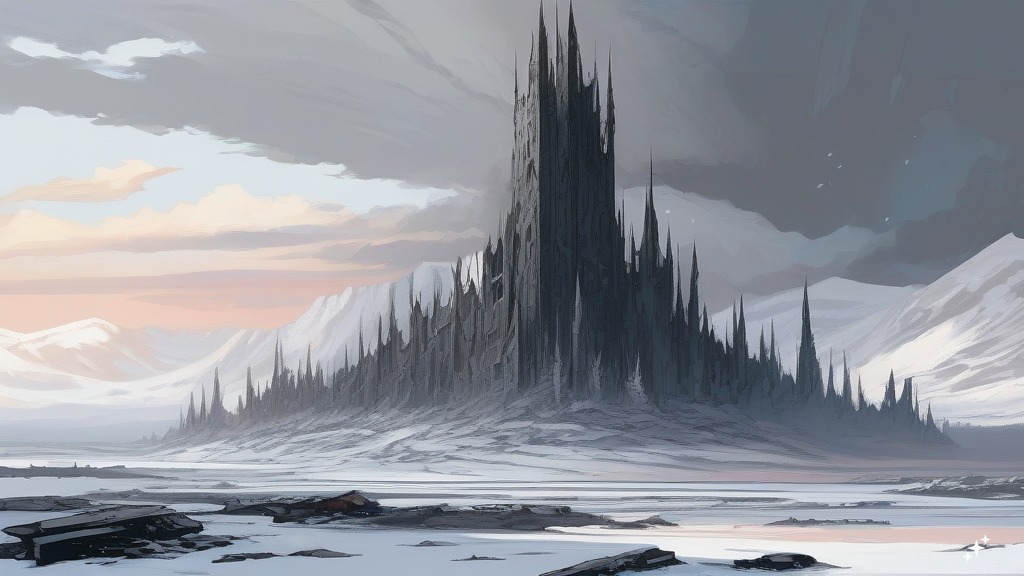
An Ice Witch has plunged the entire Earth into perpetual winter. Humanity clings to survival in scattered, desperate settlements. In this frozen world, some people are born Blessed — gifted with supernatural abilities that range from useful to terrifying.
Agni is one of the Blessed. His power is regeneration — his body heals from virtually any wound. He lives a quiet, miserable life with his sister in a starving village, trying to get by.
Then a man named Doma arrives. Doma is also Blessed — his ability creates flames that never go out. He burns Agni’s entire village to ash. He burns Agni’s sister alive. He burns Agni.
But Agni doesn’t die. His regeneration outpaces Doma’s undying fire. So Agni becomes something new: a man perpetually on fire, his flesh burning and regrowing in an endless cycle of agony. He can’t extinguish the flames. He can’t die. All he can do is walk forward with one goal — revenge.
That premise sounds like the start of a straightforward revenge thriller, right? A burning man crossing a frozen wasteland to kill the person who destroyed everything he loved?
Here’s the thing: Fujimoto deliberately demolishes that promise.
The revenge plot is a launch pad, not the destination. Over its 8 volumes, Fire Punch shifts genres in ways that are shocking — from revenge thriller to road movie to philosophical drama to cosmic horror to meta-fiction (a story that comments on the nature of stories themselves). If you go in expecting a linear revenge story, you will be confused and possibly frustrated. If you go in expecting Fujimoto to pull the rug out from under you repeatedly, you’ll have a much better time.
The Art — Raw, Violent, and Deliberately Unpolished
Let’s be upfront: Fire Punch’s art is rougher than Chainsaw Man’s. This is early-career Fujimoto, and it shows. There are anatomical inconsistencies, especially in the first couple of volumes. Backgrounds can be sparse. Character designs occasionally feel stiff.
But here’s what the raw art does incredibly well: the fire and body horror panels hit like a truck. Body horror — a style of horror focused on the distortion, mutation, or destruction of the human body — is central to Fire Punch’s visual identity. There’s a visceral, almost uncontrolled energy to the violence that a more polished style might actually undermine. When Agni’s body is mid-regeneration, half-melted and half-reformed, the slightly rough linework makes it feel uncomfortable in a way that hyper-detailed gore sometimes doesn’t.
Even at this early stage, you can see Fujimoto’s cinematic eye developing. He composes pages the way a director frames a film — wide establishing shots of the frozen landscape, silent sequences that let images do all the talking, and stretched-out action moments where a single beat unfolds across multiple pages. If you’ve read Chainsaw Man and noticed how it reads like a movie, Fire Punch is where that sensibility was born — just in a less refined form.
Berserk’s art improves noticeably across the 8 volumes. Comparing Vol. 1 to Vol. 8 side by side is striking. You’re watching a creator level up in real time, and there’s something exciting about that.
Fire Punch, Vol. 1
Fire Punch, Vol. 8
Gore level: Extreme. Dismemberment, immolation, and cannibalism are depicted on-page with very little restraint. This manga does not look away.
Fire Punch Manga Review — What Makes It Unique
The single most divisive quality of Fire Punch — the thing that makes people either love it or hate it — is that it refuses to stay in one genre.
Around Volumes 2-3, the revenge arc is deliberately interrupted. Not sidetracked, not delayed — interrupted. And it never returns to the trajectory you were expecting. Fujimoto isn’t interested in giving you the satisfying revenge fantasy the first volume seemed to promise. He’s interested in something weirder, sadder, and harder to pin down.
Togata and the Question of Story
One of the most important characters in the series is Togata — and Togata is, among other things, Fujimoto’s engine for commentary on storytelling itself.
Togata is obsessed with movies. Obsessed with narrative structure. Obsessed with the idea that life should follow the beats of a film. Through Togata, Fire Punch constantly forces you to confront how stories are “supposed” to work — and what happens when a story refuses to follow the script.
Here’s the reassuring part: you don’t need to engage with that layer to enjoy Fire Punch. The manga works as a raw, intense, emotionally charged experience even if you ignore the self-referential commentary entirely. The thematic depth is there if you want it, but the visceral storytelling carries on its own.
That said, this meta-layer is either going to fascinate you or annoy you. There’s no middle ground, and that’s by design.
Identity as a Central Theme
Fire Punch keeps asking one question in different ways: who is Agni?
Throughout the series, other characters tell Agni who he is. He’s a savior. He’s a villain. He’s a god. He’s an actor playing a role. Agni himself barely gets a say in the matter. The manga is deeply interested in whether identity is something you build for yourself or something that gets projected onto you by the people around you.
Cinema as motif runs through the entire series — film references, the concept of performing a role, the camera as witness. It’s not subtle, but it’s effective. Fujimoto is clearly working through ideas about fiction, narrative, and meaning that he would later refine in Chainsaw Man and the standalone short story Look Back.
The Chainsaw Man Connection
If you came to Fire Punch because you loved Chainsaw Man, here’s the honest truth: Fire Punch is the prototype. The DNA is the same — the sudden tonal shifts, the darkly absurd humor, the willingness to pivot from action to existential despair in a single chapter. But Fire Punch is rawer and less controlled. It’s the demo tape before the studio album — an earlier, rougher version of a sound that would later be polished into something massive.
That’s not a criticism. Demo tapes are exciting because they’re unpolished. You can feel the creator swinging for the fences on every page, not always connecting, but never playing it safe.
Content Warnings — What to Expect Before You Read
VIZ Media — the primary English-language publisher for manga in North America — rates Fire Punch M for Mature (18+), similar to an R-rated film or an M-rated video game. That rating is thoroughly earned. Here’s what you’re walking into:
- Graphic violence: Constant and extreme. Characters are burned alive, dismembered, and subjected to body horror throughout the series. This is not occasional — it is a persistent element.
- Sexual violence: Depicted on-page in the early chapters. This is the most common reason readers drop the series, and it’s completely understandable.
- Child death and suffering: Depicted explicitly and without softening.
- Cannibalism: Shown on-page as a survival mechanism in the frozen world.
- Themes of suicide and self-destruction: Woven into the narrative and explored in depth.
Here’s the honest take: none of this content is gratuitous in context. The world of Fire Punch is a nightmare, and Fujimoto depicts it as a nightmare. The violence and suffering serve the story’s themes about what happens to humanity when survival becomes the only value.
But “not gratuitous in context” doesn’t mean it’s easy to read. If any of the items listed above are hard limits for you, skip Fire Punch. There are plenty of other great manga. No single series is worth reading past your own boundaries.
Who Should Read Fire Punch (and Who Shouldn’t)
Pick it up if:
- You want a short, completed series — 8 volumes, no waiting, no padding. You can read the whole thing in a weekend.
- You loved Chainsaw Man and want to see where Fujimoto’s creative instincts started. This is the raw, unfiltered version.
- You’ve never read Chainsaw Man but want a dark, genre-defying story that doesn’t follow predictable beats.
- You enjoy manga that deliberately challenges genre expectations. If you liked the chaotic dark fantasy of Dorohedoro (a series set in a grimy world of sorcerers and body transformation), the apocalyptic mythology of Devilman (a classic horror manga about a human merging with a demon), or the violent, unpredictable sci-fi of Gantz (where dead people are forced into deadly alien hunts), Fire Punch is in that neighborhood.
- You appreciate stories that are more interested in asking questions than answering them.
Skip it if:
- You want a satisfying, conventional revenge arc. Fire Punch sets one up and then deliberately walks away from it.
- You want consistent tone. The genre shifts are the point, but if you find sudden mood changes frustrating rather than exciting, this will drive you up the wall.
- Any of the content warnings above are deal-breakers. No judgment — know your limits.
A Note for Chainsaw Man Fans Specifically
Fire Punch is messier and more experimental than Chainsaw Man. The art is rougher. The pacing is wilder. Some of the thematic ideas don’t fully land. If you go in expecting Chainsaw Man quality from page one, you’ll be disappointed.
But if you go in expecting to see a brilliant creator still figuring things out — taking huge risks, failing sometimes, succeeding spectacularly other times — it’s a thrilling read.
How to Buy Fire Punch in English
All 8 volumes are published in English by VIZ Media under their VIZ Signature line (VIZ’s label for mature-audience manga). The series is complete — no waiting for future releases.
Here’s what’s available:
| Format | Details |
|---|---|
| Individual volumes | Standard manga size, 8 volumes total (typically $12–$15 each) |
| Publisher box set | Not currently available from VIZ |
| Omnibus editions (multiple volumes collected into one book) | Not currently available |
| Digital | Available on VIZ.com and the Shonen Jump app (VIZ’s manga subscription service — one monthly fee for access to a large library of titles) |
If you want to start with just Vol. 1 to test the waters, that’s a perfectly reasonable approach. You’ll know by the end of the first volume whether Fire Punch’s tone and content level work for you.
If you already know you’re all in, seller-bundled complete sets that include all 8 individual volumes are sometimes available and can save you money compared to buying each one separately. Note that these are third-party bundles of the standard volumes, not an official publisher box set.
Fire Punch Series: Volume 1-8 Collection 8 Books Set
For digital readers, the Shonen Jump app subscription gives you access to Fire Punch along with a massive library of other titles, which is a great value if you read a lot of manga.
The Verdict
Fire Punch is not a comfortable read. It’s not a smooth read. It’s definitely not a read for everyone.
But it’s a truly original one. In a medium where so many series follow predictable formulas, Fire Punch careens from genre to genre with an energy that feels almost reckless. It’s the work of a creator who would rather crash spectacularly than play it safe — and more often than not, Fujimoto sticks the landing.
Reading tip: Fire Punch works best consumed in as few sittings as possible. The momentum and tonal shifts hit much harder when compressed. If you read one volume a week, the genre pivots can feel random. If you read three or four volumes in a row, they feel intentional. Because they are.
At just 8 volumes, the time and money investment is small. The story is complete. And whether you end up loving it or hating it, you will absolutely have an opinion.
Honestly, just grab Vol. 1 and see for yourself.