Where to Read Gantz Manga — Legal Options for Every Reader in 2025
Here’s what you need to know right away: Gantz is a completed series — 37 volumes (individual books that each contain several chapters of the story), 383 chapters, written and illustrated by Hiroya Oku. It’s published in English by Dark Horse Comics, and you can get it in both physical and digital formats.
Physical: Omnibus Editions
The current in-print physical format is the omnibus edition — that means three volumes collected into one thicker book. There are 12 omnibus volumes total, and they’re the most affordable way to read Gantz on paper. Omnibus volumes typically run around $15–$20 each, so you’re looking at roughly $180–$240 for the full set.
The original single-volume printings (all 37 of them) are largely out of print. If you spot them in the wild, expect collector prices on the resale market — meaning you’d be buying used copies from other collectors rather than from a bookstore. Unless you’re specifically building a single-volume collection, the omnibuses are the way to go.
Digital: Kindle
All 37 single volumes are available digitally through Kindle. Individual digital volumes typically range from $7–$13 each. This is honestly the fastest and most budget-friendly way to get the complete series right now. No waiting for shipping, no hunting for out-of-print volumes, and the pages look great on a tablet or phone.
If you want to start reading tonight, digital is your friend.
Library Access
Before you spend anything, check your local library system. Many libraries carry manga, and digital library apps like Hoopla and Libby (free apps that let you borrow ebooks and comics with a library card) sometimes have Dark Horse titles available. Availability varies by library system, and Gantz titles may be limited — but it’s worth a quick search.
A Note on Free Reader Sites
You’ll find sites that host Gantz chapters for free. These are piracy sites. They don’t pay Hiroya Oku or Dark Horse anything. There is no legal free web reader for Gantz — the options above are the legitimate ways to read the series.
Gantz Manga Reader Order — Main Series and Spinoffs
Gantz has a straightforward reading order. There’s one main series and two spinoffs. Here’s the cleanest path through all of it:
1. Gantz (Main Series) — Volumes 1–37
This is the core experience. Read it in order from Volume 1 to Volume 37. There are no skip points, no alternate routes, no “you can start at Volume 12” shortcuts. The story builds on itself constantly, and characters who seem minor early on become critical later.
2. Gantz:G — 3 Volumes
Gantz:G is a standalone spinoff set in the same universe but with a completely new cast. It was written by Hiroya Oku and Tomohito Ohsaki and drawn by Keita Iizuka (a different artist, which gives the spinoff a slightly different visual feel), and it’s published in English by Dark Horse.
You can technically read Gantz:G without reading the main series — it works as its own story. But you’ll get a lot more out of it if you’ve finished the main series first, since it plays with ideas and mechanics that the original establishes.
3. Gantz:E — 4 Volumes (Japan Only, No English Release Yet)
Gantz:E is a spinoff set in the Edo period (historical Japan, roughly 1600–1868) — same concept, historical setting. It was created by Hiroya Oku. As of 2025, it has 9 volumes out in Japan and is ongoing. No English release has been announced yet. Keep an eye on Dark Horse for updates, but don’t hold your breath waiting before you start the main series.
Recommended Reading Order
| Order | Title | Volumes | Status in English |
|---|---|---|---|
| 1st | Gantz (main series) | 37 vols | Available (omnibus + digital) |
| 2nd | Gantz:G | 3 vols | Available |
| 3rd | Gantz:E | 4 vols (ongoing) | Not yet available in English |
Simple. Main series first, then Gantz:G, then Gantz:E whenever it gets an English release.
Physical vs. Digital — Which Edition Should You Buy?
This comes down to how you like to read and how much you want to spend. Here’s a straightforward comparison:
| Factor | Omnibus (Physical) | Single Volumes (Physical) | Digital (Kindle) |
|---|---|---|---|
| Availability | In print, easy to find | Mostly out of print | All 37 volumes available |
| Cost | ~$15–$20 per omnibus | High (collector prices) | ~$7–$13 per volume |
| Format | 3-in-1 (thicker books) | Individual volumes | Single volumes on screen |
| Reading experience | Great on a shelf, hefty to hold | Classic manga feel | Great on tablet, works well on phone |
| Shelf presence | 12 spines | 37 spines | No shelf space needed |
| Immediate access | Shipping wait | Hard to find | Instant |
If You Want the Best Value
Go digital. The Kindle volumes are the cheapest way to read the complete series, and you can start immediately.
If You Want Physical Books
The omnibus editions are the practical choice. They’re in print, reasonably priced, and widely available. Starting with Gantz Omnibus Vol. 1 gets you through the first three volumes of the story — enough to know if this series is for you.
If You’re a Collector
Hunting down all 37 single volumes in good condition is a project. Prices on the resale market can get steep for certain volumes. It’s a cool collection to have, but go in with your eyes open about the cost.
What to Know Before You Start Reading
This section is important. Gantz is not for everyone, and it’s better to know what you’re getting into upfront.
Content Warnings
Gantz is rated Mature / 18+ and it earns that rating thoroughly. It falls into the seinen category, meaning it’s manga aimed at adult men — though people of all backgrounds read it. Here’s what to expect:
- Extreme graphic violence and gore — people die in incredibly detailed, visceral ways. Oku’s art is hyper-realistic, which makes the violence hit harder than in most manga.
- Sexual content and nudity — especially in the early volumes. It’s not subtle.
- Disturbing imagery — body horror, psychological cruelty, and scenes designed to make you deeply uncomfortable.
This is absolutely not a starter manga for younger readers or for anyone who’s sensitive to graphic content. If you’re looking for horror manga that’s more restrained, there are great options out there. But if you can handle extreme content, Gantz delivers an experience that’s hard to find anywhere else.
Tone and Pacing
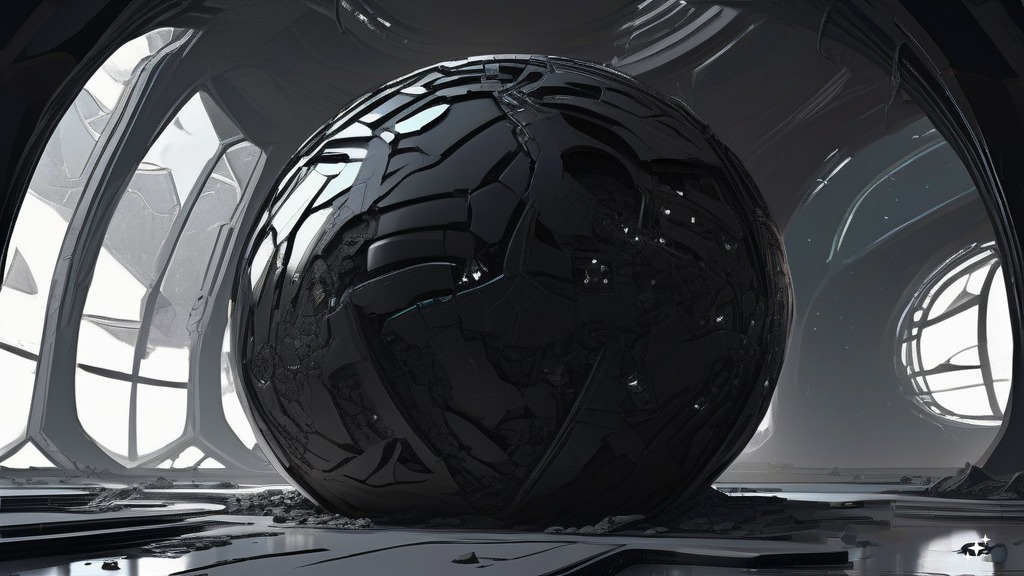
Gantz starts as a death-game thriller — a story where characters are forced into lethal competitions and can die permanently. A group of recently deceased people materialize in a Tokyo apartment with a mysterious black sphere (the Gantz) that sends them on missions to hunt aliens. It’s tense, violent, and immediately gripping.
The early volumes have a mission-of-the-week structure that can feel episodic. Stick with it. The overarching plot builds gradually, and by the midpoint of the series, the scope has expanded dramatically. By the final story arc (an “arc” is a self-contained storyline within the larger series — think of it like a season of a TV show), you’re dealing with cosmic-scale warfare that makes the early apartment missions feel like tutorials.
The Art
Hiroya Oku’s art style is distinctive. He uses 3D-modeled backgrounds — meaning environments are digitally constructed to look photorealistic, then integrated with hand-drawn characters. This gives Gantz a look unlike almost any other manga. The environments feel real, the action is spatially clear even when chaotic, and the aliens are designed with genuine creativity. The visual quality is a huge part of why this series works — the hyper-detailed art makes the impossible feel tangible.
Even by today’s standards, the art holds up remarkably well.
If You Watched the Anime — Where to Pick Up the Manga
This is a common question for any gantz manga reader who came from the adaptations, and the answer might not be what you want to hear. (For the uninitiated: anime is Japanese animation, and Gantz has both an animated TV series and a CGI film adaptation.)
The 2004 Anime (26 Episodes)
The Gantz anime from 2004 covers roughly the Onion Alien and Tanaka Alien arcs from the manga, then veers off into an ending created specifically for the anime that doesn’t happen in the manga. It diverges significantly from the source material — different plot points, different character fates, different tone in places.
The strong recommendation: start from Volume 1 even if you’ve watched the entire anime. The manga gives you a fundamentally different (and much more complete) experience. Characters, events, and details that the anime skipped or changed are important for everything that comes later.
If You Really Want to Skip Ahead
If you’re absolutely set on not re-reading content you feel you already know, the anime roughly corresponds to Volumes 10–11 of the manga. But be warned — there are enough differences that you’ll likely feel confused about certain characters and plot threads. It’s not a clean handoff.
Honestly? Just start from Volume 1. The manga reads fast, and you’ll be glad you did.
Gantz:O (2016 CGI Film)
Gantz:O is a computer-animated film that adapts the Osaka arc — approximately Volumes 22–28 of the manga. It’s a visually impressive standalone movie, and it’s actually a pretty fun watch on its own.
That said, the Osaka arc hits much harder when you’ve read everything leading up to it. Characters you’ve spent 20+ volumes with are thrown into the most dangerous mission yet, and that emotional weight doesn’t exist if you jump straight to the movie. Watch it after you’ve read through the manga — it’s a great companion piece.
Arc-by-Arc Overview for the Gantz Manga Reader (Spoiler-Free)
One of the best things about Gantz is how it escalates. Each arc — each self-contained storyline — raises the stakes, and the series transforms from a contained death game into something much, much bigger. Here’s a spoiler-free overview to help you gauge the pacing and know what’s ahead.
Early Missions (Volumes 1–10)
These volumes establish the rules of the game and introduce the core cast. The missions are dangerous but relatively contained — small groups of aliens in localized areas.
Onion Alien Arc — The very first mission. You’re learning the rules alongside the characters: how the suits work, how the weapons work, how the scoring works. It’s chaotic, terrifying, and sets the tone for everything to come.
Tanaka Alien Arc — The second mission raises the difficulty and introduces shape-shifting enemies that blur the line between human and alien. Stakes feel real because consequences are permanent.
Buddhist Temple Arc — A massive step up in enemy intelligence and firepower. The alien designs get more elaborate, the fights get longer, and the first hints emerge that there’s something bigger going on behind the missions.
These early volumes are where you’ll decide if Gantz is for you. If you’re hooked by Volume 3 or 4, you’re in for the long haul.
Mid-Game Escalation (Volumes 11–21)
This is where Gantz shifts gears. The missions become more dangerous, the aliens more powerful, and the character dynamics deepen considerably.
Shorty Alien Arc — A claustrophobic nightmare of a mission with one of the most unsettling alien designs in the series. Delivers some of the manga’s most memorable action sequences.
Kill Tae Kojima Arc — A different kind of challenge entirely. Instead of fighting aliens, the characters face a moral crisis that tests their humanity. It’s a turning point for the series’ themes and hits harder than most combat arcs.
Ring Alien Arc — Aliens that fight with terrifying coordination and overwhelming numbers. The fights here are intense and the consequences are severe.
Dinosaur Alien Arc — Exactly what it sounds like, and it’s as wild as you’d hope. Giant alien creatures, citywide chaos, and Oku’s detailed art really shines in the large-scale destruction sequences.
By the end of Volume 21, you’ll feel the story building toward something massive. And you’d be right.
Osaka and Beyond (Volumes 22–37)
This final stretch is where Gantz goes from “intense action manga” to “what is even happening right now” in the best possible way. The scope explodes.
Oni Alien / Osaka (Nurarihyon) Arc — The Osaka mission is widely considered one of the best arcs in the entire series. The Nurarihyon (a powerful shapeshifter from Japanese folklore) leads an overwhelming alien force against multiple Gantz teams converging on one city. The stakes feel genuinely apocalyptic. This is the arc that Gantz:O adapted, and it’s incredible on the page.
Italian Mission Arc — The scope goes international. New teams, new dynamics, and revelations about the nature of Gantz itself.
Katastrophe (Alien Invasion) Arc — The finale. The name uses German-influenced spelling, fitting the series’ tendency toward dramatic foreign-language titles. Everything builds to a full-scale alien invasion, and the series goes from city-level conflicts to a global — and then cosmic — scale. It’s ambitious, it’s wild, and it brings the story to a conclusion that readers are still debating.
Fair warning: the ending is polarizing. Some readers love it, some feel it’s rushed. But the journey to get there? Absolutely worth it.
Quick-Start Checklist
Ready to dive in? Here’s your action plan:
- Decide on format: Digital (Kindle) for speed and value, or Omnibus (physical) for shelf reading
- Start with Volume 1 — no matter what. Even if you’ve seen the anime
- Be prepared for extreme content — this is an 18+ series and it does not hold back
- Don’t look up spoilers — half the fun is not knowing who survives each mission
- Clear your schedule — manga reads faster than prose novels because it’s a visual medium, and Gantz in particular is hard to put down
Gantz is a wild, brutal, unforgettable ride. It’s not for everyone, but if it’s for you, you’ll know within the first few chapters. The fastest way to start is grabbing Volume 1 digitally on Kindle — or pick up the first omnibus if you want the physical experience. Either way, see for yourself.