Gantz Manga Wiki — Series Overview
Gantz is a sci-fi action horror manga created by Hiroya Oku. It ran in Weekly Young Jump (a Japanese manga magazine) from 2000 to 2013, spanning 383 chapters collected across 37 volumes. The series is now complete. The English edition is published by Dark Horse Comics, an American publisher that licenses and translates manga for Western readers.
Think of this page as your Gantz manga wiki — a single reference covering everything from characters and story arcs to adaptations and how to collect the series in English.
Quick Reference:
- Author/Artist: Hiroya Oku
- Genre: Sci-fi, action, horror, seinen (manga aimed at older teen and adult male readers)
- Serialized: 2000–2013 in Weekly Young Jump
- Volumes: 37 (complete)
- English Publisher: Dark Horse Comics
- Rating: Mature
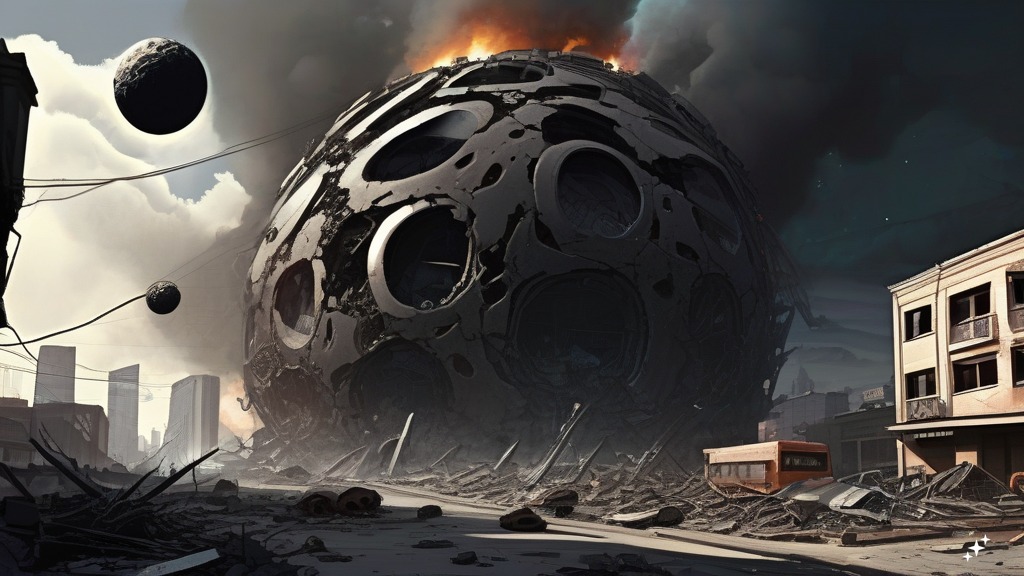
The premise is deceptively simple: people who die are transported to a room with a mysterious black sphere called Gantz. The sphere assigns them missions to hunt aliens hiding on Earth, equips them with futuristic suits and weapons, and awards points for kills. Earn 100 points and you get a choice — but surviving long enough to reach that total is another matter entirely.
What starts as a brutal, small-scale death game — a story where characters are forced to kill under threat of death — gradually expands into something much bigger. By the final arc, the scope has grown from hunting aliens in Tokyo neighborhoods to a full-scale war for Earth’s survival. That escalation — from street-level survival horror to cosmic-scale sci-fi — is one of the things that makes Gantz so memorable.
Fair warning before diving in: Gantz is rated Mature for good reason. It contains extreme graphic violence, nudity, and sexual content, especially in the early volumes. This isn’t a series that pulls its punches.
Plot Summary — Spoiler-Free
High school student Kei Kurono is an apathetic, self-centered teenager who gets killed in a subway accident alongside his childhood friend Masaru Kato. Instead of dying, they wake up in a Tokyo apartment with other recently deceased people and a large black sphere.
The sphere — Gantz — displays a target, provides weapons and skin-tight power suits, and teleports the group to hunt down aliens disguised among the human population. If they survive the mission, they’re returned to the apartment and scored on their performance. Die during a mission, and you’re dead for real this time.
Kurono begins the series as genuinely unlikeable — selfish, cowardly, and motivated almost entirely by self-interest. Watching him change over the course of 37 volumes is one of the core threads holding the story together. Whether you end up rooting for him or not, his character arc is anything but static.
The missions get harder. The aliens get stronger. The body count climbs. And eventually, the rules of the game itself start to unravel as the true nature of Gantz and the aliens is revealed.
Main Characters
Kei Kurono
The protagonist. Kurono starts the series as a thoroughly unsympathetic teenager — selfish, perverted, and reluctant to help anyone. Getting thrown into Gantz missions forces him to confront his own cowardice, and over the course of the series he undergoes one of the most dramatic character transformations in the manga. He’s an anti-hero in the truest sense — a main character you’re not supposed to admire at the start — who goes from someone who won’t lift a finger for a stranger to someone willing to sacrifice everything. It’s a slow burn, and there are plenty of moments where he backslides, but that messy progression is what makes his arc feel real.
Masaru Kato
Kurono’s childhood friend and moral opposite. Kato is brave, compassionate, and protective — especially of his younger brother Ayumu, who he’s been looking after. He serves as the story’s moral anchor, often putting himself in danger to save others even when it’s tactically stupid to do so. The tension between Kato’s idealism and the brutal reality of Gantz missions creates some of the series’ most powerful moments.
Other Key Players
- Kei Kishimoto — The early female lead who appears in the Gantz room after a suicide attempt. Her presence complicates Kurono’s motivations in ways that are sometimes uncomfortable to read but serve the story’s unflinching character work.
- Tae Kojima — A quiet, kind-hearted girl who becomes Kurono’s girlfriend as the series progresses. She represents something worth protecting in Kurono’s life outside the Gantz missions, and her role becomes central in one of the manga’s most emotionally intense arcs.
- Joichiro Nishi — A veteran Gantz player and ruthless strategist. Nishi has survived multiple missions and treats the whole system like a video game, viewing other players as expendable. He’s the character who first explains the rules to newcomers — and to the reader.
- Reika Shimohira — A famous idol who becomes a Gantz player and grows into a key figure in the later arcs. Her devotion to Kurono and her own growth as a fighter add emotional weight to the second half of the series.
- Yoshikazu Suzuki — An elderly man who joins the Gantz missions. He’s one of the most beloved side characters in the series, bringing unexpected warmth and dignity to a story that frequently strips both away from its cast.
Complete Arc Guide — All Three Phases
Gantz can be roughly divided into three phases. In manga, an “arc” is a self-contained story segment within the larger series — think of it like a season of a TV show. The boundaries between phases aren’t razor-sharp, but this breakdown covers the major story arcs and what to expect from each.
Phase 1 — The Hunts Begin (Volumes 1–16 approximately)
This is where the rules get established — and then broken, repeatedly.
- Onion Alien Mission — The introductory arc. The newly dead players are dropped into their first hunt with almost no explanation. The tone is chaotic, terrifying, and darkly funny. This arc establishes the core mechanics: the suits, the weapons, the time limit, and the very real possibility that anyone can die at any moment.
- Tanaka Alien Mission — The first major escalation. The aliens are stronger, the missions are longer, and the first genuinely devastating character deaths occur. This is where Gantz stops feeling like a game and starts feeling like a meat grinder.
- Buddhist Temple Alien Mission — A massive difficulty spike. The team faces enemies far beyond what their equipment can handle, resulting in catastrophic losses. This arc is often cited as one of the most intense in the entire series.
- Shorty Alien Mission — A shorter arc that keeps the pressure on between the larger set pieces.
- Kill Tae Kojima Mission — A unique mission that doesn’t involve hunting aliens at all. Instead, the target is a human — Kurono’s girlfriend Tae. This arc puts Kurono’s humanity to the test in a way that none of the alien hunts can, and it’s one of the most emotionally intense stretches of the manga.
- Ring Alien Mission — Wraps up Phase 1 and sets the stage for the broader world-building to come.
Phase 1 is the most tightly focused part of the series. The missions are self-contained, the stakes are personal, and the horror comes from the sheer randomness of who lives and who dies.
Phase 2 — Osaka and Beyond (Volumes 17–26 approximately)
Phase 2 blows the scope wide open.
- Dinosaur Alien Mission — This arc reveals that Gantz teams exist across Japan, not just in Tokyo. Suddenly the world of the series is much bigger than one apartment and one black sphere.
- Oni Alien Mission / Osaka Arc — The centerpiece of Phase 2 and arguably the most spectacular action sequence in the entire manga. Multiple Gantz teams converge on Osaka for a massive battle against incredibly powerful aliens. The scale is enormous — think building-sized enemies, entire city blocks destroyed, and a body count that makes previous arcs look restrained. This is the arc adapted by the Gantz:O CGI film, and for good reason. It’s Gantz at its most visually ambitious.
Phase 3 — Katastrophe (Volumes 27–37)
The final phase shifts the entire genre of the series.
- Italian Alien Mission — The setting moves to Italy, and for the first time, the story explores alien civilization and culture. The aliens aren’t just monsters to be hunted — they have societies, art, and motivations of their own.
- Invasion / Katastrophe Arc — A full-scale alien invasion of Earth. Everything Gantz has been building toward comes to a head in a massive final war. The scale is now planetary, the weapons are apocalyptic, and the survival rate is grim.
- The Ending — It’s worth being honest here: the ending of Gantz is divisive among fans. Some find it satisfying; others feel it doesn’t do justice to the buildup. Without spoiling anything, the resolution wraps things up but leaves some readers wanting more. It’s the kind of ending worth forming your own opinion about.
Anime, Films, and Other Adaptations
Gantz Anime (2004)
The anime adaptation was produced by Gonzo (a Japanese animation studio) and ran for 26 episodes, split into two 13-episode stages. It covers the Onion Alien arc through the Buddhist Temple arc, then diverges into an ending created specifically for the anime that doesn’t follow the manga’s storyline.
The anime only adapts a fraction of the manga’s story. If you watch the anime and enjoy the premise, reading the manga afterward is pretty much a given — there’s so much story left that the anime doesn’t touch.
The animation quality reflects the standards of early 2000s anime production. It gets the job done for the early arcs but can’t match the manga’s incredibly detailed artwork, especially during large-scale action sequences.
Gantz:O (2016 CGI Film)
This fully computer-animated film adapts the Osaka/Oni Alien arc. Unlike traditional hand-drawn animation, the entire film is rendered in 3D computer graphics, which brings Oku’s detailed character and alien designs to life with a level of visual fidelity that earlier adaptations couldn’t match. The Osaka arc’s massive battle scenes are a perfect fit for the format, and the film is widely regarded as the best Gantz adaptation by a comfortable margin.
Gantz:O is available on Netflix. You can watch it as a standalone film — it does enough setup that newcomers won’t be completely lost — but it hits much harder if you’ve read the manga up through the Osaka arc first.
Live-Action Films (2011)
Two live-action films were released in 2011:
- Gantz (January 2011)
- Gantz: Perfect Answer (April 2011)
Both star Kazunari Ninomiya and Ken’ichi Matsuyama. The films use an original storyline loosely based on the early arcs of the manga. They’re decent sci-fi action films on their own terms, but they take significant liberties with the source material.
Spinoff Manga — Gantz:G and Gantz:E
Gantz:G (3 Volumes, 2016)
Art by Keita Iizuka, story by Hiroya Oku. Gantz:G features a new new team of students of Gantz players operating within the same universe as the original series. At only 3 volumes, it’s a quick read that explores different character dynamics while keeping the core Gantz premise intact. Gantz:G is available in English from Dark Horse Comics in 3 volumes.
Gantz:E (ongoing in Japan, started January 2020)
Art by Jin Kagetsu, story by Hiroya Oku. This spinoff takes the Gantz concept and drops it into samurai-era Japan (the Edo period, roughly 1600–1868) — Gantz missions with katanas instead of sci-fi guns. It’s a fascinating “what if” premise that proves the Gantz formula works across different time periods. As of 2025, no official English-language license for Gantz:E has been confirmed.
Gantz/Minus (Novel)
A prose novel — not a manga but a traditional written book — by Masatoshi Kusakabe, published in 2010. It’s a side story set in the Gantz universe. This one is for completists who want every piece of Gantz lore they can get.
How to Read Gantz in English
Here’s what you need to know about collecting Gantz. If you’ve never bought manga before: a “volume” is a single physical book collecting several serialized chapters, and an “omnibus” combines multiple volumes into one larger, thicker book.
| Format | Details |
|---|---|
| Publisher | Dark Horse Comics |
| Single Volumes | 37 volumes (complete) |
| Omnibus Editions | Each collects 3 volumes into one book |
| Digital | Available for easier access |
| Rating | Mature (extreme violence, nudity, sexual content) |
Recommended reading order:
- Gantz main series (37 volumes)
- Gantz:G (3 volumes) — same universe, new characters (no official English release)
- Gantz:E (ongoing in Japan) — samurai-era spinoff (no English release confirmed as of 2025)
A practical note: many individual Gantz volumes are out of print, meaning the publisher is no longer producing new copies. Finding them requires shopping on resale platforms like eBay or Amazon Marketplace, where prices can be significantly inflated. The omnibus editions are generally easier to find and more affordable. Digital editions are the most accessible option if you just want to start reading without hunting for physical copies.
The omnibus format collects three volumes per book, making it a solid way to read through the series without needing to track down 37 separate books.
Content Warnings
This bears repeating for readers who may have skipped to this section: Gantz contains extreme graphic violence, nudity, and sexual content — including scenes of sexual violence, particularly in the early volumes. The series is rated Mature and earns that rating from the very first chapter. If these elements are dealbreakers for you, this may not be the right series.
Is Gantz Worth Reading?
Gantz is great for readers who enjoy:
- High-stakes survival games where nobody is safe
- Unpredictable character deaths that carry real weight
- Sci-fi stories that escalate from small-scale to cosmic
- Incredibly detailed, hyper-realistic artwork
- Protagonists who start deeply flawed and change over time
Common criticisms to be aware of:
- Gratuitous sexualized content and sexual violence, especially in the early volumes. This is the most frequent complaint about the series, and it’s a valid one. The early volumes in particular lean heavily on exploitative content that serves audience appeal more than the narrative.
- Divisive ending. Opinions split sharply on whether the conclusion delivers on the buildup.
- Pacing issues in the middle arcs. Some missions drag, and there are stretches where the momentum dips.
- Character writing can be uneven. Some side characters get incredible arcs; others feel like they were introduced just to die.
What Gantz does really well:
- Action choreography. Oku’s detailed artwork makes every fight scene feel weighty and brutal. The Osaka arc in particular is a masterclass in large-scale manga action.
- Genuinely shocking moments. Gantz is one of the few series that can still surprise you 30 volumes in. The willingness to kill established characters — and the unpredictable timing of those deaths — keeps real tension throughout.
- Fascinating escalation. The journey from “confused people hunting aliens in suburban Tokyo” to “humanity’s last stand against a galactic-scale invasion” is one of the most dramatic scope expansions in manga.
If You Like These, Try Gantz
| If you enjoy… | Why you’ll like Gantz |
|---|---|
| Berserk (dark fantasy manga) | Dark escalation, detailed art, a protagonist who transforms over the course of the story |
| Deadman Wonderland (action horror manga) | Death game premise, brutal stakes, morally gray characters |
| Ajin (sci-fi survival manga) | Sci-fi action with high-concept survival scenarios and a similar tone |
| Battle Royale (survival horror manga/novel) | Kill-or-be-killed survival, large cast where anyone can die |
| Inuyashiki (sci-fi manga by Hiroya Oku) | Same creator, similar themes of ordinary people given extraordinary power |
Gantz isn’t a series for everyone. The content is extreme, the early volumes can be a tough sell, and the ending doesn’t land for all readers. But if you’re looking for a manga that starts with a wild premise and spends 37 volumes pushing it to its absolute limit, Gantz delivers something genuinely unique. Pick up the first omnibus and see if the opening mission hooks you — you’ll know pretty quickly whether this series is for you.
Gantz Omnibus Vol.1
Note: this is a multi-book set put together by a third-party seller, not an official publisher box set.
Gantz Omnibus Vol. 1-5
Gantz Omnibus Volume 2