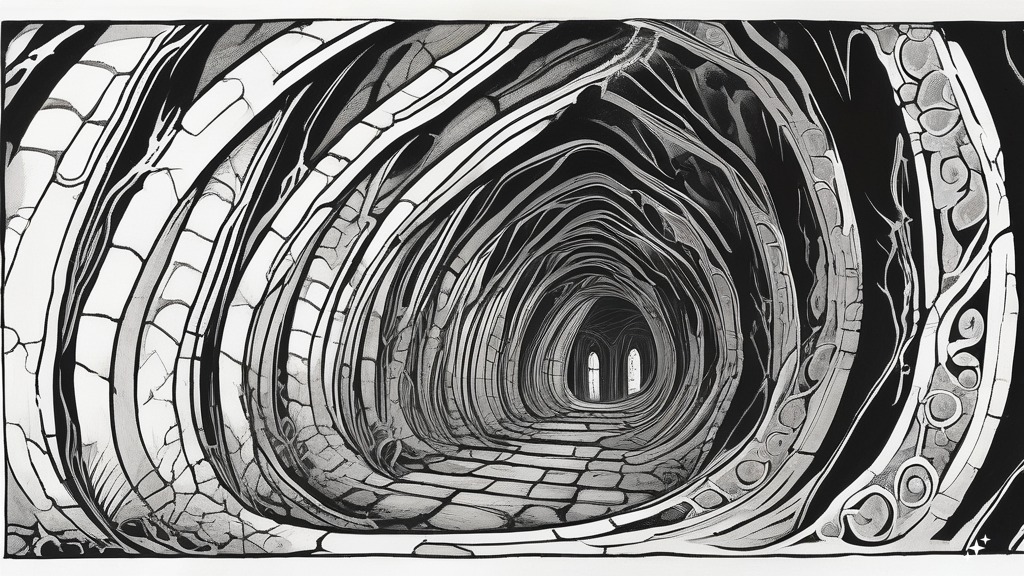
What Is Horror Manga?
Horror manga is exactly what it sounds like: Japanese comics designed to scare you, unsettle you, or make your skin crawl. But it’s a much broader category than most people expect. Some horror manga is about ghosts. Some is about monsters. Some is about the terrifying things ordinary people do to each other. And some creates dread from something as simple as spirals.
What ties it all together is the intent to evoke fear, disgust, anxiety, or existential unease — using the unique strengths of the manga medium to do it.
How Does Horror Manga Differ from Regular Manga?
Manga covers every genre imaginable — romance, comedy, sports, cooking, you name it. Horror manga specifically leans into dark themes, disturbing imagery, and tension-driven storytelling. The pacing tends to be more deliberate. Panels are often designed to make you hesitate before turning the page. And the art style frequently pushes into territory that other genres avoid: detailed gore, unsettling body transformations, and compositions that feel genuinely wrong.
That said, horror manga isn’t one monolithic thing. Some series are mostly action with horror flavor (like Chainsaw Man). Others are slow-burn psychological nightmares. The range is huge, which is part of what makes the genre so rewarding to explore.
How Does Horror Manga Differ from Western Horror Comics?
Western horror comics tend to lean into shock value, splatter, and short-form anthology storytelling. Horror manga shares some of that DNA, but it often takes a different approach.
Japanese horror manga frequently relies on atmosphere and dread over jump scares. The pacing can be slower and more suffocating. Body horror — the transformation and distortion of the human form — is a much bigger part of the tradition. And because manga is typically published chapter by chapter over time in magazines before being collected into book-length volumes, horror manga can build tension across hundreds of pages in a way that a single-issue Western comic rarely attempts.
There’s also a strong tradition of blending horror with other genres. You’ll find horror-comedy, horror-romance, horror-action, and horror-slice-of-life in manga. That kind of genre-mixing is rarer in Western horror comics.
A quick note on how manga is published: If you’re new to manga, you should know that individual chapters are first released in magazines or online, then collected into volumes — physical books of roughly 7 to 10 chapters each. When this guide refers to a series being “14 volumes,” that means 14 of these collected books. Omnibus editions bundle multiple volumes into a single, larger book, which usually saves you money. You’ll see both formats recommended throughout this guide.
Horror Manga Subgenres Explained
Horror manga isn’t just one flavor of scary. Here are the major subgenres you’ll encounter, with examples to help you figure out what appeals to you.
Body Horror
What it is: Horror centered on the transformation, mutation, or destruction of the human body. Expect grotesque imagery, unsettling physical changes, and a deep sense of violation.
Key examples: Uzumaki (people slowly transforming into spirals), Parasyte (alien parasites take over human bodies), Tomie (a girl whose body regenerates in disturbing ways)
What to expect: Body horror manga often has the most striking and memorable visuals in the genre. It can be stomach-turning, but the best body horror uses physical transformation to explore deeper fears — like losing your identity, losing control of your own body, or confronting how fragile being human really is.
Psychological Horror
What it is: Horror that targets the mind rather than the body. The fear comes from paranoia, manipulation, unreliable narration, and the slow realization that something is deeply wrong.
Key examples: Homunculus (a man who can see people’s psychological distortions), Blood on the Tracks (a mother’s love that curdles into something terrifying), Goodnight Punpun (not marketed as horror, but deeply disturbing in its depiction of depression and self-destruction)
What to expect: Less gore, more dread. Psychological horror manga tends to be a slow burn. The scares creep up on you rather than leaping out.
Cosmic Horror
What it is: Horror built around vast, unknowable forces that make humanity feel small and insignificant. The fear comes not from a specific monster, but from the realization that the universe contains things beyond human understanding — and those things don’t care about us at all.
Key examples: Uzumaki (an entire town consumed by a force no one can explain), Hellstar Remina (a living planet heading toward Earth)
What to expect: A lingering sense of dread and helplessness. Cosmic horror manga often leaves questions unanswered on purpose — the inability to understand the threat is part of what makes it frightening.
Supernatural / Ghost Stories
What it is: Horror involving ghosts, spirits, curses, and the paranormal. This is the subgenre closest to traditional Japanese horror films — sometimes called “J-horror” — like The Ring and The Grudge (known in Japan as Ju-On).
Key examples: Mieruko-chan (a girl who sees ghosts everywhere), PTSD Radio (fragmented, deeply unsettling ghost stories), Higurashi When They Cry (a village cursed by cycles of paranoia and violence)
What to expect: Atmosphere is everything here. The best supernatural horror manga creates a sense that the world itself is wrong — that something terrible lurks just behind what you can see.
Survival Horror
What it is: Characters trapped in a dangerous situation where death is a constant threat. Think escape rooms, death games, and hostile environments.
Key examples: Gantz (dead people forced to fight aliens in a lethal game), The Promised Neverland (children trying to escape a farm where they’re the livestock), The Drifting Classroom (a school transported to a hostile wasteland)
What to expect: High tension, fast pacing, and stakes that feel real because characters actually die. Survival horror manga often has the most gripping, can’t-stop-reading quality in the genre.
Dark Fantasy with Horror Elements
What it is: Fantasy worlds where the horror is baked into the setting. These series often have action and adventure alongside genuinely horrifying imagery and themes.
Key examples: Berserk (medieval dark fantasy with some of the most nightmarish imagery in all of manga), Dorohedoro (a grimy, violent world of sorcerers and mutants — this one also fits Horror Comedy, and that’s intentional; it defies easy categorization), Claymore (warriors fighting shape-shifting monsters called Yoma)
What to expect: Longer series with rich world-building. The horror isn’t constant — it coexists with action, character development, and sometimes even humor. But when the horror hits, it hits hard.
Horror Comedy
What it is: Series that blend genuine scares with comedy. The humor doesn’t cancel out the horror — the two work together.
Key examples: Mieruko-chan (horrifying monster designs played against the protagonist’s deadpan attempts to ignore them), Chainsaw Man (ultraviolent horror-action with a deeply absurd sense of humor), Dorohedoro (somehow both disgusting and hilarious)
What to expect: A tonal experience unlike anything in Western horror. Horror comedy manga can whiplash between making you laugh and making you deeply uncomfortable, sometimes in the same panel.
A Brief History — How Horror Manga Became Its Own Genre
Horror manga didn’t appear overnight. It grew from a handful of pioneering creators into one of the most recognized manga genres worldwide. If you want to get straight to the recommendations, feel free to skip ahead — but this context helps explain why certain creators and series show up on every horror manga list.
Kazuo Umezu and the Founding Era (1960s–1970s)
Kazuo Umezu is widely considered the godfather of horror manga. Active since 1955, Umezu created works like The Drifting Classroom and Orochi that established many of the genre’s core themes: ordinary people thrust into nightmarish situations, the vulnerability of children, and a willingness to depict truly disturbing imagery.
Before Umezu, horror elements existed in manga, but they weren’t really treated as a distinct genre. His work in the 1960s and 1970s proved that manga could sustain full-length horror narratives — and that readers had an appetite for them.
Junji Ito and the Modern Horror Era (1980s–2000s)
If Umezu built the foundation, Junji Ito built the house that most English-speaking readers know. Starting in the late 1980s, Ito created an astonishing body of work: Uzumaki , Tomie, Gyo, Hellstar Remina, and dozens of short story collections.
Uzumaki (3-in-1 Deluxe Edition)
Ito’s genius lies in taking a single, often absurd concept — a town obsessed with spirals, a girl who can’t stay dead, fish with mechanical legs — and following it to its most terrifying logical conclusion. His draftsmanship is meticulous, with incredibly detailed artwork that makes the horror feel visceral and real.
This era also saw other important creators pushing the genre forward, expanding horror manga’s range from pure supernatural terror into psychological horror, survival horror, and dark fantasy.
The New Wave (2010s–Present): Horror Goes Mainstream
Something shifted in the 2010s. Horror manga started crossing over into the mainstream in a big way. Series like Tokyo Ghoul, Chainsaw Man, The Promised Neverland, and Jujutsu Kaisen brought horror elements to massive audiences — including readers of shōnen manga (manga aimed at teen boys, published in magazines like Weekly Shōnen Jump). Suddenly, horror manga wasn’t a niche — it was some of the most popular manga being published.
At the same time, English-language publishers significantly expanded their horror catalogs. Series that might never have been translated a decade ago are now readily available. It’s a great time to be a horror manga reader.
15 Best Horror Manga Series to Read
Here are 15 standout horror manga series, covering a range of subgenres, lengths, and intensity levels. Each one is worth your time for different reasons.
1. Uzumaki by Junji Ito
Subgenre: Body Horror / Cosmic Horror
Length: Available in a single Deluxe Edition (3-in-1)
Status: Completed
The most famous horror manga for a reason. Uzumaki follows the residents of Kurouzu-cho, a coastal town that becomes infected by spirals. That sounds silly until you read it. The spiral obsession starts small — a man who can’t stop staring at snail shells — and escalates into full cosmic nightmare territory.
What makes Uzumaki special is how Ito takes one concept and relentlessly explores every possible way it can go wrong. Each chapter introduces a new spiral-related horror, and the artwork is stunningly detailed. The single-volume Deluxe Edition is the best way to read it — you get the entire story in one beautiful hardcover.
This is the horror manga most people recommend first, and honestly, that recommendation is well-earned. Grab the Deluxe Edition and see for yourself.
2. Tomie by Junji Ito
Subgenre: Body Horror / Psychological Horror
Length: 1 volume (collected edition)
Status: Completed
Tomie was Junji Ito’s debut work, and it’s still one of his most disturbing. Tomie is a beautiful girl who drives everyone around her to obsession and murder — and she cannot be killed. Cut her apart, and each piece regenerates into a new Tomie.
The series works as an anthology of interconnected stories, each exploring a different facet of Tomie’s curse. It’s a sharp commentary on obsession, beauty standards, and the male gaze, wrapped in genuinely unsettling horror.
3. Berserk by Kentaro Miura
Subgenre: Dark Fantasy with Horror Elements
Length: 42+ volumes
Status: Ongoing (continued by Miura’s assistants under the supervision of Kouji Mori, a close friend and fellow manga creator whom Miura entrusted with the story’s continuation, after Miura’s passing in 2021)
Berserk is a sprawling dark fantasy epic that contains some of the most horrifying imagery ever put to paper. The story follows Guts, a lone mercenary with a massive sword, through a medieval world filled with demonic entities called Apostles.
Fair warning: Berserk is long and it’s intense. The story contains some notoriously brutal sequences. But the reason Berserk endures is that the horror serves the story — it’s not gratuitous. The emotional core of the series is powerful, and Miura’s artwork is breathtaking.
No anime adaptation fully covers the manga, so reading it is really the way to experience Berserk. The Deluxe Editions from Dark Horse are gorgeous oversized hardcovers that showcase Miura’s art at its best.
4. Chainsaw Man by Tatsuki Fujimoto
Subgenre: Horror Comedy / Action Horror
Publisher: VIZ Media / Shonen Jump
Status: Ongoing (the story is divided into distinct parts — Part 1 is complete, and Part 2 is currently being published with a new main cast alongside returning characters)
Denji is a broke teenager who merges with his pet chainsaw devil to become Chainsaw Man — a devil hunter with chainsaws for arms and a head. The premise sounds like pure action schlock, and on one level it is. But Fujimoto is doing something much weirder and more interesting than that.
Chainsaw Man is funny, violent, emotionally devastating, and genuinely scary in turns. The horror escalates significantly as the series progresses, with some stretches of the story that are straight-up nightmare fuel. The animation studio MAPPA produced a gorgeous anime adaptation that covers the opening portion of the story, so you can start there if you want to test the waters.
5. Tokyo Ghoul by Sui Ishida
Subgenre: Psychological Horror / Dark Fantasy
Length: 14 volumes (original series), 16 volumes (the sequel series, titled Tokyo Ghoul:re)
Status: Completed
Ken Kaneki is a college student who survives an encounter with a ghoul — a creature that looks human but feeds on human flesh — and becomes a half-ghoul himself. What follows is a devastating exploration of identity, belonging, and what it means to be a monster.
Tokyo Ghoul starts relatively contained and escalates into something sprawling and emotionally overwhelming. Ishida’s art evolves dramatically across the series, becoming increasingly experimental and expressive.
A quick note: the anime adaptation is widely criticized for cutting significant content, especially in later seasons. The manga is the definitive way to experience this story. The Complete Box Set (volumes 1–14) is available and is great value if you want to commit.
Tokyo Ghoul Complete Box Set (Vols. 1-14)
6. Hellstar Remina by Junji Ito
Subgenre: Cosmic Horror
Length: 1 volume
Status: Completed
A planet-sized organism is heading toward Earth, and it’s alive, and it’s hungry. Meanwhile, the astronomer who discovered it named it after his daughter — and now a panicked mob blames her for its existence.
Hellstar Remina is Ito at his most apocalyptic. It’s cosmic horror in the most literal sense: the horror IS a cosmic body. It’s also a sharp satire of mob mentality and celebrity culture. At just one volume, it’s a quick, intense read.
7. Gantz by Hiroya Oku
Subgenre: Survival Horror / Sci-Fi Horror
Length: 37 volumes
Status: Completed
Rating: Rated M (Mature)
People who die in Tokyo are resurrected in an apartment with a mysterious black sphere called Gantz, which sends them on missions to kill aliens. If they survive enough missions, they earn their freedom. Most don’t survive.
Gantz is ultraviolent, sexually explicit, and deliberately provocative. It’s not for everyone, and it’s absolutely not for younger readers. But if you can stomach it, the survival horror tension is genuinely gripping, and the sci-fi elements become increasingly ambitious as the series progresses.
8. Parasyte by Hitoshi Iwaaki
Subgenre: Body Horror / Sci-Fi Horror
Length: 8 omnibus volumes (each omnibus collects multiple original volumes into one book)
Status: Completed
Publisher: Kodansha
Alien parasites fall to Earth and burrow into human brains, taking over their bodies. High school student Shinichi Izumi gets lucky — or unlucky — when a parasite fails to reach his brain and instead takes over his right hand. Now Shinichi and his parasite “Migi” must coexist while fighting other parasites who see humans as food.
Parasyte is a tight, focused story that doesn’t overstay its welcome. Eight omnibus volumes cover the entire series, and every chapter counts. The body horror is creative and unsettling, but the real hook is the philosophical questions: what makes something human? Where does the parasite end and the host begin?
The anime adaptation from the studio Madhouse is excellent — it’s a faithful, well-produced version of the story that covers the complete narrative. You can start with either format and have a great experience.
9. Dorohedoro by Q Hayashida
Subgenre: Dark Fantasy / Horror Comedy
Length: 23 volumes
Status: Completed
Publisher: VIZ Media
In a grimy world called “the Hole,” a man named Caiman has had his head transformed into a lizard shape by a sorcerer, and he has no memory of who he was. Together with his friend Nikaido, he hunts sorcerers — by biting their heads to see if the mysterious man living inside his throat recognizes them.
That description barely scratches the surface. Dorohedoro is one of the most wildly creative manga ever made. It’s violent, gross, funny, and strangely heartwarming. The world-building is dense and weird in the best way. Q Hayashida’s art style is raw and kinetic — it looks like nothing else in manga.
The animation studio MAPPA produced an anime adaptation that covers the early portion of the story. It’s a good introduction, but the manga goes much further and gets much stranger.
10. Blade of the Immortal by Hiroaki Samura
Subgenre: Dark Fantasy / Action Horror
Length: 30 volumes (or 10 Deluxe Edition omnibus volumes)
Status: Completed
Publisher: Dark Horse Comics (Deluxe Editions and all English editions)
Manji is a samurai cursed with immortality — his body is infested with “sacred bloodworms” that heal any wound. He agrees to serve as bodyguard to a young girl seeking revenge against the sword school that murdered her father.
Blade of the Immortal is a tightly plotted thriller with some of the best sword-fighting sequences in manga. The horror elements come from the body horror of Manji’s immortality (watching him get dismembered and reassemble is never not unsettling) and from the genuinely terrifying antagonists. Samura’s art is stunning — detailed, kinetic, and beautifully composed.
The Deluxe Editions from Dark Horse are a fantastic way to read this series. They’re oversized hardcovers that do justice to Samura’s artwork.
11. The Promised Neverland by Kaiu Shirai and Posuka Demizu
Subgenre: Survival Horror / Thriller
Length: 20 volumes
Status: Completed
Publisher: VIZ Media
Rating: Rated T (Teen)
Emma, Norman, and Ray are the smartest kids at Grace Field House, an idyllic orphanage where children live happily until they’re “adopted” at age twelve. Then they discover the truth: they’re livestock, being raised as food for demons.
The Promised Neverland is an incredible gateway for younger readers or anyone who wants horror with less gore and more tension. The first major stretch of the story — the escape from Grace Field House — is a masterpiece of cat-and-mouse thriller storytelling. The horror comes from the situation, from the paranoia of not knowing who to trust, and from the ticking clock of knowing what happens if they fail.
At 20 volumes and a T rating, this is one of the most accessible horror manga on this list. Highly recommend it as a starting point if you’re not sure how much horror you can handle.
12. Mieruko-chan by Tomoki Izumi
Subgenre: Horror Comedy / Supernatural
Length: 12+ volumes
Status: Ongoing
Publisher: Yen Press
Miko is an ordinary high school girl who wakes up one day able to see terrifying spirits and monsters everywhere — on the train, at school, standing behind her friends. Her survival strategy? Pretend she can’t see them. Because if they realize she can see them… bad things happen.
Mieruko-chan has no right being as scary as it is. The monster designs are genuinely nightmarish — detailed, grotesque, and creatively horrifying. But the comedy works just as well, because Miko’s deadpan determination to act normal while surrounded by monstrous horrors is both hilarious and oddly relatable.
The anime adaptation is solid and captures the visual contrast between the cute character designs and the horrifying spirits well. The manga goes deeper into the lore and gets increasingly intense.
13. Blood on the Tracks by Shuzo Oshimi
Subgenre: Psychological Horror
Length: 17 volumes
Status: Completed
Publisher: Vertical
Seiichi has a loving, attentive mother. Maybe too attentive. Blood on the Tracks is a slow-burn psychological horror about a mother-son relationship that is deeply, quietly wrong in ways that become more disturbing with every chapter.
Oshimi’s art is deceptively simple — clean lines, realistic character designs — but his ability to convey dread through facial expressions and body language is unmatched. There are panels in this series that will haunt you long after you close the book. No monsters, no gore — just the horror of a relationship you can’t escape.
14. Goodnight Punpun by Inio Asano
Subgenre: Psychological Horror / Drama
Length: 7 volumes (omnibus editions)
Status: Completed
Publisher: VIZ Media
Goodnight Punpun isn’t marketed as horror manga, and many readers wouldn’t categorize it that way. So why is it on this list? Because it is one of the most psychologically disturbing manga ever created, and the dread it generates is as powerful as anything in the genre.
Punpun Onodera is depicted as a simple bird doodle navigating a photorealistically drawn world. His life unfolds from childhood through adulthood, and it gets dark. Really dark. Depression, abuse, obsession, and self-destruction are explored with unflinching honesty.
This is the kind of horror that doesn’t rely on supernatural threats — it’s the horror of watching someone’s life fall apart and being unable to look away. It’s remarkable, but be prepared: this one stays with you.
15. Homunculus by Hideo Yamada
Subgenre: Psychological Horror
Length: Available in omnibus editions (Vols. 1-2 per omnibus)
Status: Completed
Publisher: Seven Seas Entertainment
Susumu Nakoshi is a homeless man living in his car between Shinjuku’s skyscrapers and its homeless encampment. He agrees to undergo trepanation — a surgical procedure where a hole is drilled into the skull — and afterward, he gains a disturbing ability: he begins seeing people’s inner psychological distortions as physical monstrosities.
Homunculus is cerebral, disturbing, and deeply weird. It’s not action-packed — it’s a slow exploration of trauma, identity, and perception. The “homunculi” Nakoshi sees are visualizations of people’s psychological damage, and they’re both creative and unsettling. If psychological horror is your thing, this is a standout.
How to Pick Your First Horror Manga
With so many options, here’s a simple framework to find your starting point.
Step 1: Decide Your Scare Tolerance
Not all horror manga is equally intense. Here’s a rough guide:
| Intensity Level | Series | What to Expect |
|---|---|---|
| Mild | Mieruko-chan, The Promised Neverland | Creepy and tense, but limited gore. Good for horror newcomers. |
| Medium | Tokyo Ghoul, Parasyte, Chainsaw Man | Significant violence and disturbing imagery, but balanced with action and character drama. |
| High | Uzumaki, Berserk, Blood on the Tracks | Intense body horror, graphic violence, or deeply disturbing psychological content. |
| Extreme | Gantz | Graphic violence, sexual content, and extreme imagery. For seasoned readers only. |
Be honest with yourself about where you are. There’s no shame in starting mild and working your way up.
Step 2: Choose Your Preferred Subgenre
Use the subgenre guide above to figure out what kind of horror appeals to you:
- Love creepy visuals? Start with body horror (Uzumaki, Parasyte)
- Prefer tension and mind games? Go for psychological horror (Blood on the Tracks, Homunculus)
- Want action with your horror? Try dark fantasy (Berserk, Chainsaw Man, Dorohedoro)
- Like a lighter tone? Horror comedy (Mieruko-chan, Dorohedoro)
- Enjoy survival scenarios? Survival horror (The Promised Neverland, Gantz)
Step 3: Consider Series Length
This matters more than people think, especially if you’re new to manga:
- Short (1 volume): Uzumaki (Deluxe Edition), Hellstar Remina — low commitment, complete stories
- Medium (8–20 volumes): Parasyte (8 omnibus volumes), The Promised Neverland (20 vols), Tokyo Ghoul (14 vols) — a solid investment without being overwhelming
- Long (30+ volumes): Berserk (42+ vols), Gantz (37 vols), Blade of the Immortal (30 vols) — for when you’re hooked on the genre and ready to commit
If you’ve never read horror manga before, starting with a short or medium-length completed series is a smart move.
Step 4: Check If an Anime Exists First
If you’re not sure about committing to a manga purchase, watching a few episodes of the anime adaptation can help you decide. Several series on this list have strong anime versions:
- Parasyte — the anime adaptation from studio Madhouse is excellent and covers the full story
- Chainsaw Man — the anime from studio MAPPA is visually stunning and covers the opening stretch of the story
- Mieruko-chan — the anime captures the visual humor and horror well
For Tokyo Ghoul, though, the manga is the way to go — the anime adaptation cuts significant content, especially in later seasons. And for Berserk, no anime fully covers the manga.
The Beginner Starter Pack
If you want a curated path into horror manga, here are three approaches based on your comfort level:
If you’re cautious about horror:
- The Promised Neverland (survival horror / thriller) — twenty volumes, completed, rated T for Teen, and genuinely scary without relying on gore
- Parasyte (body horror / sci-fi) — eight omnibus volumes, completed, tightly plotted
- Tokyo Ghoul (psychological horror / dark fantasy) — fourteen volumes, completed, emotionally rich
If you’re ready to jump in:
- Uzumaki (body horror / cosmic horror) — one volume, complete, iconic
- Parasyte (body horror / sci-fi) — eight omnibus volumes, complete, tightly plotted
- Tokyo Ghoul (psychological horror / dark fantasy) — fourteen volumes, complete, emotionally rich
Both paths cover different subgenres and are all completed series. By the time you finish all three, you’ll have a strong sense of what kind of horror manga you love — and you’ll know exactly where to go next.
Horror Manga vs. Horror Anime — Which Should You Try First?
This is a common question, especially for people who are more used to watching anime than reading manga. Here’s how they compare.
Manga Advantages
- The creator’s original vision. Manga is the source material. You’re seeing exactly what the artist intended.
- You control the pacing. You can linger on a horrifying panel or flip past it. Horror is deeply personal, and being able to set your own reading speed matters.
- More detailed horror imagery. Anime often censors gore or disturbing content for broadcast. Manga rarely pulls punches.
- Complete stories. Many horror anime adaptations only cover part of the manga, or they change the ending. The manga gives you the full narrative.
Anime Advantages
- Sound design and voice acting. Horror lives and dies by atmosphere, and a great soundtrack or voice performance can elevate the experience enormously.
- Animation brings horror to life. Seeing a monster move — hearing it breathe — creates a different kind of fear than a still image.
- Lower barrier to entry. If you’re not used to reading right-to-left (manga is read from right to left, the opposite of English books — it takes a few pages to get used to, but it becomes natural quickly) or navigating manga panel layouts, anime is immediately accessible.
Series Where the Manga is Clearly Better
- Tokyo Ghoul — the anime adaptation cuts content and rushes the story, especially in later seasons. The manga is the definitive experience.
- Berserk — no anime adaptation fully covers the manga. The 1997 anime covers only one section of the story, and the 2016–2017 adaptation was poorly received. The manga is irreplaceable.
Series Where the Anime is a Great Entry Point
- Parasyte — the 2014 adaptation from studio Madhouse is faithful, well-animated, and covers the entire story. You can watch the anime and feel like you got the full experience.
- Chainsaw Man — MAPPA’s (a well-known animation studio) production quality is outstanding. The anime is a great way to see if you connect with the series before buying the manga.
- Mieruko-chan — the anime nails the visual contrast between cute everyday life and horrifying spirits.
Bottom Line
Start with whichever format you’re more comfortable with. If you love it, cross over to the other format. There’s no wrong entry point — the goal is just to find stories that scare and thrill you.
Where to Buy Horror Manga in English
The English-language horror manga market is bigger and more accessible than ever. Here’s how to navigate it.
Major Publishers
Different publishers hold the rights to different series. Here’s a quick reference:
| Publisher | Notable Horror Series |
|---|---|
| VIZ Media | Uzumaki, Tokyo Ghoul, Chainsaw Man, Dorohedoro, Goodnight Punpun |
| Kodansha Comics | Parasyte, Blood on the Tracks, Attack on Titan |
| Dark Horse Comics | Berserk (Deluxe Editions), Blade of the Immortal (Deluxe Editions), H.P. Lovecraft manga adaptations |
| Yen Press | Mieruko-chan, Higurashi When They Cry |
| Seven Seas Entertainment | Homunculus |
Physical Copies
- Amazon — largest selection of box sets and omnibus editions
- Barnes & Noble — good in-store manga sections; B&N exclusive editions occasionally available
- Local bookstores — worth checking, especially stores with dedicated manga sections
- Right Stuf Anime — manga-focused retailer with frequent sales
Digital Options
- Shonen Jump app — a membership ($3.99/month) gives access to current series being published chapter by chapter — including Chainsaw Man — plus a large back catalog of completed series. (Shonen Jump, by the way, is the name of the famous manga magazine where many of these series were first published in Japan.)
- Kindle / Comixology — wide selection, read on any device
- BookWalker — Japanese-based digital platform with a strong manga catalog
- Kobo — another solid digital option, especially for readers outside the US
Free Legal Options
- MANGA Plus by Shueisha — first and latest three chapters of many series available completely free
Save Money with Box Sets and Omnibus Editions
For longer series, box sets and omnibus editions are significantly cheaper per volume than buying individual books:
- Tokyo Ghoul Complete Box Set (Vols. 1–14) — great value for the full original series
- Berserk Deluxe Editions — each hardcover collects three volumes; gorgeous presentation
- Blade of the Immortal Deluxe Editions — oversized hardcovers, ten volumes total
- Parasyte omnibus editions — eight omnibus volumes cover the complete series
- Goodnight Punpun omnibus editions — seven volumes collect the complete series
Tokyo Ghoul Complete Box Set (Vols. 1-14)
If you know you want to commit to a series, buying the box set or omnibus up front almost always saves money compared to individual volumes.
Frequently Asked Questions About Horror Manga
What is the scariest manga ever?
This is subjective — everyone’s fear triggers are different — but the titles most frequently cited as the scariest manga ever made are Uzumaki, Tomie, and The Drifting Classroom. All three are by creators who defined the genre (Junji Ito for the first two, Kazuo Umezu for the third).
That said, “scariest” depends on what scares you. If psychological horror gets under your skin more than body horror, something like Blood on the Tracks or Goodnight Punpun might disturb you more deeply than anything by Ito.
Is horror manga appropriate for teenagers?
It varies enormously by series. Always check the publisher’s age rating before buying for a younger reader.
- Rated T (Teen): The Promised Neverland — tense and scary, but limited graphic content
- Rated T+ (Older Teen): Tokyo Ghoul, Chainsaw Man — significant violence and dark themes
- Rated M (Mature): Gantz, Berserk — graphic violence, sexual content, and extreme imagery
The Promised Neverland is a particularly good pick for teen readers who want to try horror manga. It’s thrilling and genuinely scary without relying on gore.
What horror manga should I read if I like Stephen King / Lovecraft / slasher films?
Here’s a rough mapping of Western horror tastes to manga equivalents:
- Stephen King fans (small-town horror, psychological dread): Uzumaki, Blood on the Tracks
- H.P. Lovecraft fans (cosmic horror, unknowable entities): Hellstar Remina, the manga adaptations of Lovecraft’s works from Dark Horse (At the Mountains of Madness, The Call of Cthulhu, The Colour Out of Space)
- Slasher film fans (high body counts, creative kills): Gantz, Chainsaw Man
- Psychological thriller fans (Silence of the Lambs, Se7en): Tokyo Ghoul, Homunculus, Parasyte
- Dark fantasy fans (dark, atmospheric worlds with swords and monsters): Berserk, Claymore, Blade of the Immortal
Do I need to read horror manga in order?
It depends on the series:
- Standalone volumes like Uzumaki, Hellstar Remina, and Junji Ito’s story collections can be read in any order. Each is a complete work.
- Serialized series like Tokyo Ghoul, Berserk, and Chainsaw Man tell continuous stories and should be read from Volume 1.
- Most series on this list are self-contained — you don’t need to have read other manga to understand them. Jump in wherever your interest takes you.
What’s the difference between horror manga and ero-guro?
Ero-guro (short for “erotic-grotesque”) is a specific niche that blends eroticism with grotesque or disturbing imagery.
Not all horror manga is ero-guro — not even close. Most of the series on this list have no erotic content at all. Ero-guro is a distinct corner within the broader horror manga landscape. If you’re browsing horror manga through the publishers and platforms mentioned in this guide, you’re unlikely to accidentally encounter ero-guro content unless you specifically seek it out. But knowing the distinction exists is helpful as you explore the genre.
—
Horror manga is a genre with incredible range — from one-volume masterpieces you can read in an afternoon to sprawling epics that will keep you occupied for months. Whether you’re drawn to cosmic body horror, quiet psychological dread, or dark fantasy action, there’s something here for you.
Pick one that sounds interesting, check the intensity level that matches your comfort zone, and start reading. The genre rewards curiosity.