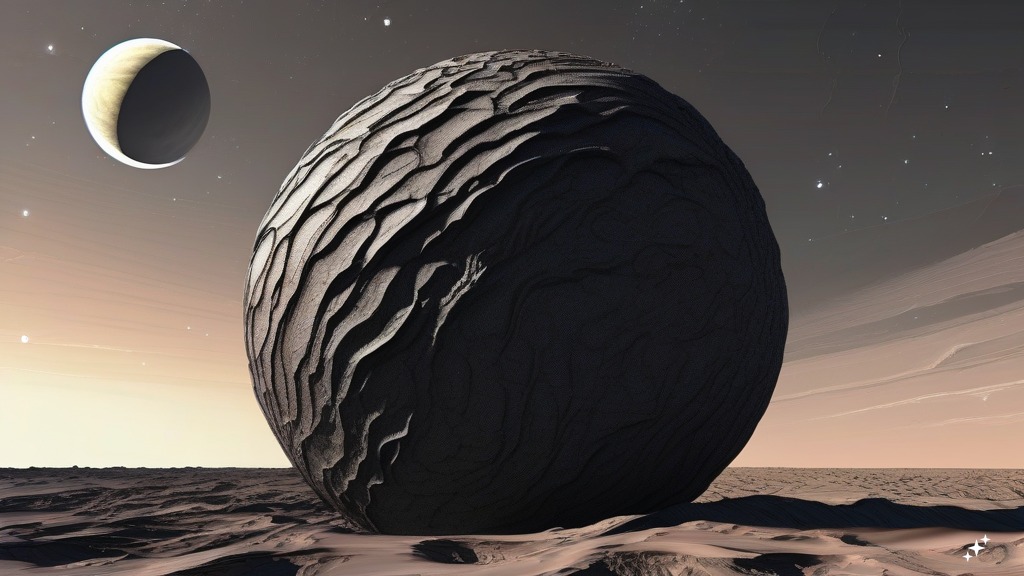
What Is the Junji Ito Hellstar Remina Manga About?
Hellstar Remina (published by VIZ Media, the primary English-language manga publisher in North America, under the shortened title Remina) is a single-volume cosmic horror manga by Junji Ito, one of the most well-known horror manga creators working today. It runs 7 chapters across 256 pages and tells a complete, self-contained story — no sequels, no spin-offs, no cliffhangers.
Before going further, a quick note on genre: cosmic horror is a type of horror fiction built around the idea that the universe contains forces so vast and indifferent that humanity is essentially meaningless. The genre traces back to the American author H.P. Lovecraft, who wrote stories in the early 1900s about ancient, incomprehensibly powerful beings that exist beyond human understanding. When you see the word “Lovecraftian,” it refers to that tradition. You don’t need to have read Lovecraft to appreciate Remina — but knowing the genre helps explain why the horror here feels so different from slashers or ghost stories.
The premise is deceptively simple:
A renowned astronomer, Dr. Oguro, discovers a new planet emerging from a wormhole (a theoretical tunnel through space) at the edge of the solar system. He names it Remina — after his teenage daughter. Overnight, the girl becomes a celebrity. The public adores her, treats her like an idol, showers her with attention.
Then the planet starts moving.
It consumes every star and celestial body in its path, and it’s heading straight for Earth. As panic sets in, public adoration of the girl Remina curdles into something much darker. The masses decide she’s somehow connected to the planet — that destroying her might stop it. What follows is a nightmarish escalation of mob violence, scapegoating, and cosmic terror on a scale unlike anything else in Ito’s catalog.
Quick Facts:
| Detail | Info |
|---|---|
| Creator | Junji Ito |
| Volumes | 1 (complete) |
| Chapters | 7 |
| Pages | 256 |
| Publisher (English) | VIZ Media |
| Format | Hardcover |
| Release Date (English) | December 15, 2020 |
| Genre | Cosmic horror, sci-fi horror (science fiction blended with horror) |
Ito layers the cosmic dread with a distinctly human horror: the way crowds turn into mobs, the way worship becomes violence, the way society looks for someone to blame when it can’t control what’s happening.
Think of it as a disaster movie crossed with a story about mob persecution, filtered through Ito’s unmistakable visual style — and set against a threat so enormous it makes every human effort feel pointless.
Chapter-by-Chapter Overview (Spoiler-Free)
One of the nice things about Hellstar Remina is that it’s built for a single reading session. Seven chapters, fast pacing, constant escalation. Here’s what each chapter feels like without ruining the story — and if you’d rather just get the overall vibe, the short version is that it starts with celebrity worship, escalates into mob violence, and ends with cosmic spectacle at an overwhelming scale.
Chapter 1: Remina
The setup. Dr. Oguro discovers the planet, names it after his daughter, and Remina the girl becomes a media sensation overnight. This chapter establishes the celebrity worship that makes everything later so horrifying. Pay attention to the men who orbit Remina — Mineishi, Mitsumura, and Goda — as they become important later.
Chapter 2: Falling of the Stars
The planet begins its journey through the solar system, and it’s not just moving — it’s feeding. Stars vanish. The astronomical community watches in disbelief. The dread starts building here, and Ito’s art begins to convey just how incomprehensibly large this threat is.
Chapter 3: People of the Earth
The public’s mood shifts. This is where the social horror kicks in. Watch how quickly admiration becomes suspicion. Ito has always been great at depicting crowds, and this chapter is a masterclass in showing collective fear turning toxic.
Chapter 4: Hell
Things get ugly. The persecution of Remina begins in earnest, and the mob violence escalates rapidly. This is probably the most disturbing chapter in the book — not because of the cosmic threat, but because of what ordinary people do to one another.
Chapter 5: The Tongue
The planet reveals more of its alien nature, and what Ito draws here is genuinely unsettling. The title refers to a specific visual that will stick with you. The scale of horror shifts back to cosmic, and the artwork becomes increasingly surreal.
Chapter 6: The Eye
A major reveal about the planet’s nature. This chapter is peak Ito — the kind of imagery that only works in manga, where a single full-page illustration can convey something that would look ridiculous in any other medium but here feels genuinely terrifying.
Chapter 7: Drifters
The climax and resolution. Without spoiling anything, this chapter brings both the cosmic and human threads together. The ending is unsettling and ambiguous — which is typical for Ito, who tends to close his stories with images and ideas that linger uncomfortably rather than wrapping everything up neatly.
A note on pacing: The whole book moves fast. There’s no filler, no side stories, no breathing room. Ito designed this as a sprint, and it reads like one. Most people finish it in 1–2 hours.
Themes and What Makes It Scary
Hellstar Remina works on multiple levels of horror simultaneously, which is part of what makes it so effective.
Cosmic Horror: The Universe Doesn’t Care About You
The planet Remina is not evil. It doesn’t hate humanity. It may not even be aware that Earth exists in any meaningful way. It’s a force of nature — or rather, a force beyond nature — that simply does what it does. Stars are food. Planets are food. Everything is food.
This is the core of cosmic horror as a genre: the realization that something exists in the universe that is so far beyond human comprehension that our entire civilization is less than an afterthought to it. Ito captures this brilliantly through scale. His drawings of the planet make you feel genuinely small.
Mob Mentality: The Real Monster
Here’s the thing about Hellstar Remina that hits hardest — the planet is terrifying, but the humans are worse.
The speed at which society turns on Remina Oguro is sickening and, uncomfortably, believable. She didn’t do anything. She has no connection to the planet beyond sharing its name. But people need someone to blame, someone to punish, someone whose suffering might make them feel like they have some control over an uncontrollable situation.
Ito draws crowds with an almost documentary eye. Individual faces in the mob are detailed and specific — these aren’t faceless villains, they’re ordinary people consumed by fear. That’s what makes the social horror land so hard.
Celebrity Culture and Idol Worship
Before the persecution, there’s the worship. Remina is treated as a celebrity idol — fans project their fantasies onto her, treat her as public property, feel entitled to her time and attention. In Japanese pop culture, “idol” culture involves intense public devotion to young performers, and that dynamic is exactly what Ito draws on here. The shift from worship to violence isn’t as large as it might seem. Both treat the person as an object rather than a human being.
This theme feels even more relevant now than when Ito originally wrote it. The way public figures are elevated and then torn down by the same audiences that created them is a very real, very modern horror.
Survival Against the Impossible
There’s no weapon that can stop a planet. There’s no plan that can redirect something that eats stars. The helplessness of the situation is absolute, and Ito leans into it. Characters try to survive, try to protect Remina, try to find shelter — but against a threat this vast, everything feels futile.
That futility is the point. It’s what separates cosmic horror from regular horror. The monster isn’t something you can outsmart or outfight. It simply is.
The Art
Ito’s artwork in Hellstar Remina is some of his most ambitious. The planet itself goes through visual stages — from a distant astronomical curiosity to something with recognizable, grotesque biological features. The tongue. The eye. The surface detail that suggests something alive and hungry.
The contrast between the detailed, almost mundane human characters and the impossible cosmic imagery creates a visual tension that keeps you off-balance throughout the entire book. One page shows a terrified girl running through a crowd. The next shows a planet-sized tongue reaching across space. Your brain has to keep recalibrating what kind of story it’s reading.
Where Hellstar Remina Fits in Junji Ito’s Work
If you’ve read other Junji Ito manga, the table below shows how Remina compares. And if Remina is your first Ito book, don’t worry — each title stands completely on its own, so this is just context for future reading.
A few quick genre terms that appear in the table: body horror is horror focused on disturbing transformations or violations of the human body. Slow-burn means the story builds tension gradually over a long stretch rather than hitting you with scares right away. Episodic means the story is told in mostly standalone installments rather than one continuous plot.
| Title | Type of Horror | Pacing | Character Depth | Scale |
|---|---|---|---|---|
| Uzumaki | Slow-burn town horror | Gradual escalation across 3 volumes | Deep — the two lead characters are well-developed | Town-level |
| Tomie | Supernatural stalker horror | Episodic (standalone chapters) | Moderate — Tomie is iconic but each chapter has different supporting characters | Personal |
| Gyo | Body horror, biological horror | Fast | Moderate | City to national |
| Hellstar Remina | Cosmic horror + social horror | Very fast | Thinner — characters serve the spectacle | Planetary, cosmic |
Remina is Ito’s most explicitly sci-fi work and his most apocalyptic. While Uzumaki destroys a town and Gyo spreads across Japan, Remina threatens the entire Earth and positions humanity against something genuinely incomprehensible.
It’s also his most direct engagement with the Lovecraftian cosmic horror tradition. Ito has cited H.P. Lovecraft as an influence on his work, and you can feel that influence throughout his catalog — but Remina is where he goes all-in on it. The planet is essentially something that exists on a scale that makes human concerns irrelevant, a being so far beyond our understanding that the concept of communication or negotiation is laughable.
Award recognition: Hellstar Remina won the Eisner Award in 2021 in the category of Best U.S. Edition of International Material — Asia. The Eisner Awards are the most prestigious honors in the American comics industry — think of them as the Oscars for comics. This win signals that the English edition’s translation and production quality were recognized alongside the best graphic novels published that year.
Common Criticism
The most frequent criticism of Hellstar Remina is that the characters are thinner than in Ito’s best work. Remina Oguro is more of a victim to be protected than a fully realized character. The men who try to save her — Mineishi, Mitsumura, and Goda — are defined more by their roles than their personalities.
This is a fair criticism. If you’re coming from Uzumaki, where the protagonist’s perspective and emotional journey are central to the story’s impact, Remina may feel a little more surface-level.
But there’s an argument that this is intentional. The story isn’t really about individuals — it’s about collective human behavior in the face of the incomprehensible. The characters are thin because the story’s focus is on the crowd, the mob, the species. And the planet doesn’t care about character development.
Whether that works for you is a matter of taste. Just go in knowing what kind of story this is.
Edition Details and How to Buy
Good news: buying Hellstar Remina is simple. It’s one volume — meaning one collected book with the complete story inside. No box sets to compare, no reading order to figure out, no deciding between single magazine-style issues or a larger collected edition.
The VIZ Media Hardcover
- Title: Remina (VIZ uses the shortened title)
- Format: Hardcover with dust jacket
- Pages: 256
- Release Date: December 15, 2020
- ISBN: 978-1-9747-1782-8
The hardcover is part of VIZ’s premium Junji Ito line, which has consistently high production quality. It matches the presentation of their other Ito hardcovers (Uzumaki Deluxe Edition, Tomie, Sensor, etc.), so it looks great on a shelf next to them.
A Note on the Title
You’ll see this manga referred to as both Hellstar Remina and simply Remina. The original Japanese title is Hellstar Remina, and that’s what most online discussions use. The official VIZ English edition shortened it to just Remina on the cover. Same manga, same story — just a naming difference to be aware of when searching.
Digital Options
Remina is available digitally on Kindle and other manga platforms if you prefer reading on a screen. Because the artwork is so detailed, a tablet gives you a better experience than a phone — but it’s readable either way.
Want More Junji Ito After Remina?
If Remina is your first Junji Ito manga and you want more, the Uzumaki (3-in-1 Deluxe Edition) is the natural next step. It’s widely considered Ito’s masterpiece — a three-volume story about a town consumed by spirals, collected in one gorgeous hardcover. It has the deeper character work that Remina trades away for spectacle, and it’s an incredible reading experience.
Uzumaki (3-in-1 Deluxe Edition)
For a broader sampling of Ito’s range, the Junji Ito Story Collection 3 Books Set (which includes Lovesickness, Deserter, and Fragments of Horror) gives you three different collections of shorter stories. Ito’s short-form horror is where a lot of his most iconic imagery comes from, and these collections are a great way to experience the variety of his work.
Note: this is a multi-book set put together by a third-party seller, not an official publisher box set.
Junji Ito Story Collection 3 books set: Lovesickness, Deserter, Fragments of Horror
Is Hellstar Remina Worth Reading?
Let’s break it down.
Hellstar Remina is great for you if:
- You love cosmic horror — stories about vast, indifferent forces beyond human understanding
- You want a complete story in one volume — no multi-volume commitment
- You’re drawn to stories about mob mentality and social horror
- You want to see Junji Ito working at his most visually ambitious scale
- You enjoy manga that you can read in one sitting (1–2 hours)
- You want something different from Ito’s usual body horror (stories focused on disturbing transformations of the human body)
It might not be for you if:
- Deep character development is your top priority in horror fiction
- You’re looking for a slow, gradually building, atmospheric experience (this one sprints)
- Graphic depictions of mob violence are a hard boundary for you
- You want something with a neat, tidy ending (Ito tends to close his stories with ambiguous, unsettling images that linger rather than resolving cleanly)
The Bottom Line
Hellstar Remina is a focused, fast-paced cosmic horror manga that showcases Junji Ito at his most ambitious in terms of sheer scale. A living planet heading for Earth is a premise that could easily collapse under its own weight, but Ito makes it work through his incredible artwork and the grounding element of the social horror — the mob turning on an innocent girl.
It’s not his deepest work. The characters don’t linger in your mind the way the protagonists of Uzumaki or the haunting figure of Tomie do. But the imagery? The sheer spectacle of a planet with an eye, a tongue, consuming everything in its path while humanity tears itself apart below? That stays with you.
For a 256-page, one-sitting reading experience, it delivers. At one volume, the commitment is small, but the impact is big.