Yes, the Deadman Wonderland manga is finished. The series is fully complete at 13 volumes, and you can read the entire story from beginning to end right now.
If you’re here, you probably watched the anime adaptation, hit that cliffhanger non-ending, and thought: “Wait, does the manga actually finish the story?” Or maybe you’ve heard about the series and want to know if it’s worth starting something that has a real conclusion. Either way, let’s get into exactly when it ended, how it wraps up, and whether it’s still worth picking up today.
For anyone new to the format: manga are Japanese comics, typically published as individual volumes — book-length collections of chapters, usually around 180–200 pages each. An anime is a Japanese animated show, often adapted from a manga source.
Yes, Deadman Wonderland Is Finished — Here’s When It Ended
Deadman Wonderland is a completed manga series at 13 volumes total.
The series was written by Jinsei Kataoka and illustrated by Kazuma Kondou. It was serialized — meaning published chapter by chapter in a magazine — in Monthly Shonen Ace (published by KADOKAWA) starting in April 2007. “Shonen” refers to manga aimed at a young male audience, though these series are widely read by all demographics. The final volume — volume 13 — was published in August 2013, bringing the story to a definitive close.
The English edition is published by Viz Media, and all 13 volumes are available in English. No chapters were cut, no volumes were skipped in translation. What Japanese readers got, English readers got too.
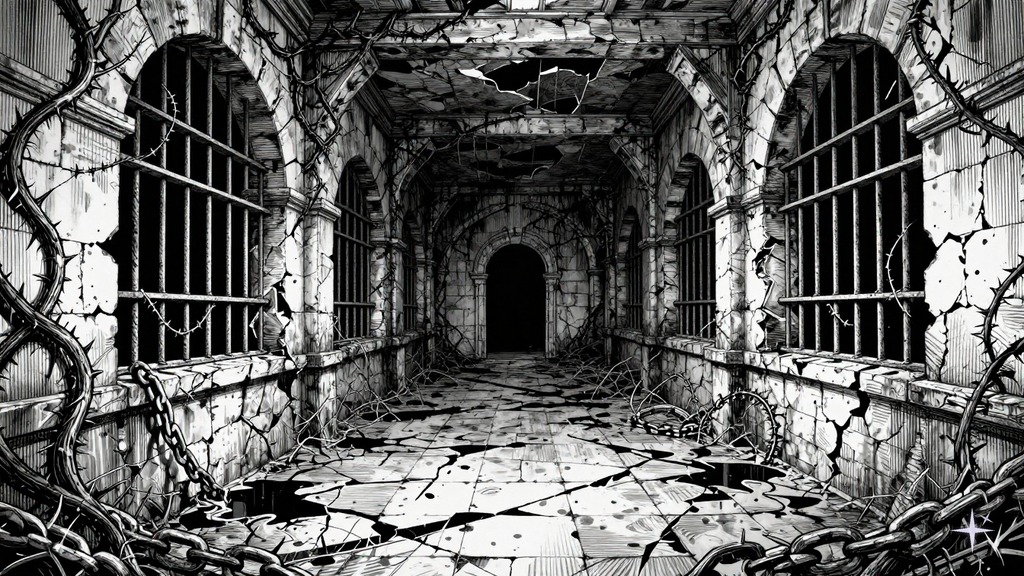
The series ran for roughly six years, which gave Kataoka and Kondou time to build out the world of Deadman Wonderland — a twisted prison-amusement-park hybrid where inmates with blood-manipulating powers fight for survival. The story follows Ganta Igarashi, a middle schooler falsely convicted of massacring his classmates and sentenced to this nightmare facility, and it takes his story all the way through to a real conclusion.
No more waiting for the next volume. No cancellation cliffhanger. It’s done.
How the Manga Ends (General Impressions)
Without spoiling specifics (that’s coming in the next section for those who want it), here’s the general shape of how Deadman Wonderland wraps up:
The ending centers on resolving Ganta’s personal journey and, more importantly, the central mystery that drives the entire series — the truth about the Red Man (a mysterious figure responsible for the massacre that sent Ganta to prison) and Ganta’s deeply complicated relationship with Shiro, a strange girl he meets inside the prison. If you’ve read even a few volumes, you know that Shiro’s role in the story is far more than what it first appears, and the finale puts that relationship front and center.
The tone of the final stretch shifts noticeably. Early Deadman Wonderland is relentless — blood-soaked gladiatorial combat, body horror, and a constant sense of dread. The ending doesn’t abandon those elements, but it moves toward something more emotionally driven. The focus narrows from the broader prison conspiracies and side character storylines down to the core emotional question of the series.
Reader reception has been genuinely divided. Some readers found the ending satisfying — a conclusion that honored the emotional heart of the story. Others walked away feeling like it came too fast, that too many threads were left hanging or resolved with a wave of the hand. Both reactions are valid, and we’ll dig into why in the “Was the Ending Rushed?” section below.
For now, the short version: the manga does end, it does provide closure on the main storyline, and it doesn’t just trail off into nothing. Whether that closure will satisfy you depends on what you’re looking for.
Spoiler Section — The Final Chapters (Spoilers Ahead)
⚠️ MAJOR SPOILERS BELOW — Skip to the next H2 heading if you haven’t read the manga yet. ⚠️
The final storyline reveals the full truth about the Wretched Egg — a powerful, destructive entity responsible for the Great Tokyo Earthquake (a catastrophic in-world event that reshaped the setting) and the original massacre in Ganta’s classroom. Shiro is the Wretched Egg, and her split personality is the result of horrific experimentation she endured as a child. The “Red Man” that destroyed Ganta’s life was Shiro’s alternate self, driven by pain and rage.
Ganta’s journey in the finale comes down to a choice: can he save Shiro, or does he have to stop her? The manga frames this as the emotional climax of the entire series. Ganta ultimately confronts the Wretched Egg not purely through combat but through his refusal to give up on Shiro as a person.
The resolution is bittersweet. Shiro is freed from the Wretched Egg’s influence, but the cost is heavy. The prison is dismantled. Ganta survives but is fundamentally changed.
Several side characters — Crow (Senji), a battle-hardened fellow inmate; Minatsuki, a fellow prisoner with a deceptive demeanor; Yoh, Minatsuki’s brother — get brief resolution scenes, though many readers felt these were too compressed to feel fully earned. The broader conspiracy involving Tamaki, the prison’s scheming promoter, and the facility’s administrators is dealt with, but some of the political and institutional threads feel secondary to the Ganta-Shiro emotional core.
The final pages show a time skip. Ganta, older now, is living in the aftermath. There’s a moment that suggests Shiro may still be alive — or at least that Ganta holds onto that hope. It’s deliberately open-ended on that specific point.
End of spoilers.
Was the Ending Rushed or Satisfying?
This is the question that follows Deadman Wonderland around, and the honest answer is: it depends on what you value in an ending.
Here’s the case for “rushed”: the series ran for six years across 13 volumes, but the final few volumes noticeably accelerate. Plot threads that had been building across multiple storylines get resolved in a handful of chapters. Characters who received significant development earlier — particularly some of the Deadmen (inmates with unique blood-based powers) — get sidelined in the final stretch. If you grew attached to the supporting cast, the ending can feel like it forgot about them.
The pacing of the last storyline suggests the creators were working with a tighter timeline than the story really needed. Because the manga was published chapter by chapter in a monthly magazine, there was a fixed schedule, and the compression shows. Revelations that could have breathed across two or three volumes get packed into one.
Here’s the counterpoint: the emotional core between Ganta and Shiro does reach a genuine conclusion. The central question of the series — whether Ganta can hold onto his humanity and his connection to Shiro in the face of everything — gets answered. It’s not a throwaway ending. The creators clearly knew what the emotional destination was; they just had to sprint to get there.
It’s also worth noting that the anime adaptation — which aired in 2011 (produced by Manglobe) and covered only the early portions of the story — left a massive number of viewers hanging. Many people come to the manga specifically because the anime ended without resolving anything. If that’s you, the manga delivers what the anime couldn’t: an actual ending. Is it a perfect ending? No. But it’s a real one, and that counts for a lot.
The most common reader sentiment lands somewhere in the middle: “The ending was okay. The journey was great.” That feels about right.
Series at a Glance
Here’s a quick reference for the full series:
| Detail | Info |
|---|---|
| Title | Deadman Wonderland |
| Authors | Jinsei Kataoka (story), Kazuma Kondou (art) |
| Volumes | 13 (Japanese and English) |
| Serialization | Monthly Shonen Ace, 2007–2013 |
| Publisher (JP) | KADOKAWA |
| Publisher (EN) | Viz Media |
| Status | Complete |
| Genres | Horror, action, sci-fi, dark psychological thriller |
| Anime Adaptation | Yes (Manglobe, 2011) — covers only a fraction of the full manga story |
The anime is often what brings people to the series, but it only adapts the opening chapters. If you’ve only watched the anime, you’ve experienced roughly a fifth of the full story. The manga is where the complete narrative lives.
Where to Buy the Complete Series
You’ll need all 13 English volumes to read the full story. There’s no official omnibus edition (a single book combining multiple volumes), but a complete manga bundle of all 13 volumes is available.
Starting point: Volume 1 introduces Ganta, the massacre, and his arrival at the Deadman Wonderland prison. It sets the tone immediately — if you’re into horror-action with a prison survival setting, you’ll know within the first volume whether this series is for you.
The finale: Volume 13 wraps everything up. This is the volume that answers every question the anime left hanging, and it’s the one that people asking “is the Deadman Wonderland manga finished” are ultimately looking for. If you’ve already read volumes 1 through 12, this is where it all comes together.
Deadman Wonderland
Digital editions are available through platforms like Kindle and other major digital manga storefronts if you prefer reading on a tablet or phone. The artwork translates well to digital, though some readers prefer physical volumes for the more detailed full-page illustrations.
Since there’s no box set, the most cost-effective approach for collecting the full series is to watch for individual volume pricing at major retailers and pick them up over time. The series has been in print for years, so availability is generally solid.
Should You Still Read Deadman Wonderland Today?
Short answer: yes, especially if you want a completed horror-action manga you can read start to finish without waiting for anything.
Here’s who this series is ideal for:
- Anime-only viewers who were left hanging by the show’s abrupt non-ending. The manga gives you the full story — all the revelations, all the character storylines, the actual conclusion. If you liked the anime’s premise and tone, the manga delivers on the promise the anime couldn’t keep.
- Readers who want a finished series to binge. At 13 volumes, Deadman Wonderland is a manageable length. You can read the whole thing in a few dedicated sessions. No waiting for the next volume, no worrying about cancellation. It’s all there.
- Fans of dark, intense action manga. The prison-amusement-park setting is genuinely creative. Inmates are forced to participate in deadly games for a paying audience, all while the facility hides underground gladiatorial fights between “Deadmen” — prisoners who can weaponize their own blood through abilities called “Branches of Sin.” The concept remains distinctive in the horror manga landscape.
- Readers who enjoy psychological tension alongside action. Deadman Wonderland isn’t just fight scenes. There’s conspiracy, manipulation, trauma, and moral ambiguity woven throughout. The relationship between Ganta and Shiro carries real emotional weight, and the question of who can be trusted inside the prison keeps the tension high even between combat sequences.
Here’s who might want to look elsewhere:
- Readers who need a perfectly clean, every-thread-resolved ending. As discussed above, the finale wraps up the emotional core but leaves some side threads feeling compressed. If an imperfect ending will ruin the whole experience for you, adjust your expectations going in.
- Readers sensitive to graphic violence and dark subject matter. Deadman Wonderland earns its horror tag. The series features significant violence and body horror, including depictions of harm to minors, human experimentation on children, and institutional cruelty. There is no sexual violence, but the physical violence is frequent and graphic. The manga presents these elements as part of its dystopian — a dark, oppressive fictional society — setting rather than gratuitously, but the content is intense and not suitable for younger or sensitive readers.
But Deadman Wonderland is a compelling read all the way through. The first volume hooks you with its premise. The middle volumes expand the world and the cast in ways the anime never reached. And even if the ending divides people, getting there is a ride worth taking.
Thirteen volumes. One complete story. A prison made of nightmares and spectacle. If that sounds like your kind of manga, grab volume 1 and see for yourself.