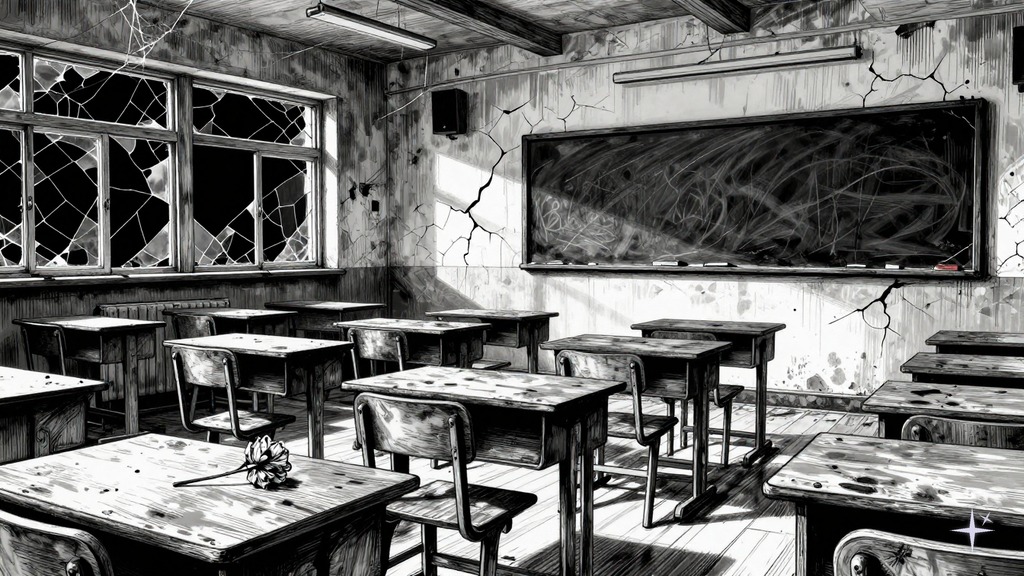
If you’ve heard about Another — maybe through the anime (Japanese animated series), maybe through a creepy recommendation list — and you’re looking for the Another manga reading order, good news: this is one of the simplest reading orders in horror manga. No complicated branching timelines, no extra side-story volumes, no debates about which part of the story to read first. Just one complete story, available in one book.
But there are a few things worth knowing before you start, especially if you want to experience the full story across different formats. And if you’re brand new to manga, this guide covers the basics you’ll need too. Let’s walk through everything.
Another Manga Reading Order: The Short Answer
The Another manga is a completed 4-volume series — and in English, all four volumes are collected in a single omnibus edition (an omnibus is a collected book that bundles multiple volumes into one). That’s it. One book, cover to cover, beginning to end.
There are no side-story manga, no alternate-timeline chapters, no prequel volume you need to track down. This is a self-contained, linear horror story about a cursed classroom, and it wraps up completely within those four volumes.
So the reading order for the manga itself is straightforward: start on page one, finish on the last page. Done.
A quick note if you’re new to manga: manga is a style of Japanese comics, and it reads right-to-left — the opposite direction from Western books and comics. When you open the Another omnibus, start from what would be the “back” of a regular English book. Panels on each page also read right-to-left, top-to-bottom. The omnibus includes a guide on this, but knowing it ahead of time will save you confusion on page one.
The only real reading order question worth thinking about is how the manga fits alongside the original novel by Yukito Ayatsuji (綾辻行人) and the anime adaptation. If you’re just here for the manga, you can stop reading this section and go grab the omnibus. But if you want the full picture — how each version connects, what order gives you the best experience, and what sequel material exists — keep going.
Complete Volume-by-Volume Breakdown
Even though the English release packages everything into one omnibus, the story was originally published in parts across four Japanese volumes before being collected. Here’s what each section covers, so you know what to expect as you read.
Volume 1 — The Curse Begins
The story opens with Koichi Sakakibara, a transfer student arriving at Yomiyama North Middle School. He’s placed in Class 3-3, and almost immediately, something feels wrong. His classmates are tense. Conversations stop when certain topics come up. And then there’s Mei Misaki — a quiet girl with an eyepatch whom everyone else seems to pretend doesn’t exist.
Volume 1 is all about building dread. The manga artist Hiro Kiyohara (清原紘) does exceptional work here using the layout and framing of each panel — the individual frames that make up a manga page — to create unease through character expressions and the way empty space fills a scene. You’ll feel the wrongness before anyone explains it. By the end of this section, you know that Class 3-3 carries a curse connected to death — but the rules are still murky.
A note on how this manga was made: Another started as a novel written by Yukito Ayatsuji. The manga is a visual retelling of that novel, drawn by a different artist — Hiro Kiyohara. This is common in manga publishing: a writer creates the original story, and an artist adapts it into manga form. Both creators are credited, and both shaped the final product.
Volume 2 — The Rules Take Shape
This is where the deaths start escalating and the mechanics of the curse become clearer. The class has rituals and countermeasures they’ve developed over the years, and Koichi starts learning why everyone is so afraid. The relationship between Koichi and Mei deepens as they investigate together, and the tension builds because the curse doesn’t care about your intentions — proximity to the truth doesn’t protect you.
Volume 2 is the section where Another shifts from atmospheric mystery into active horror. People die, and not gently. The manga doesn’t shy away from the violence of the curse, though it handles it with restraint compared to some horror manga — the focus stays on the fear of death rather than graphic spectacle.
Volume 3 — The Search Intensifies
The class goes on a trip, and the students — now desperate — try to find the source of the curse and stop it. This volume has some of the most intense sequences in the series. The isolation of being away from the familiar school setting, combined with the knowledge that the curse follows them, creates a pressure-cooker scenario.
If you’re the kind of reader who likes mystery stories, this is where the puzzle pieces start clicking together. Clues planted in earlier volumes start paying off, and you’ll likely find yourself flipping back to earlier pages to check details.
Volume 4 — The Climax
Everything converges. The identity of the curse’s source is revealed, the class reaches a breaking point, and the story delivers its resolution. Without spoiling specifics, Volume 4 is intense, emotional, and — for a horror story — surprisingly satisfying in how it ties things together.
The ending doesn’t leave loose threads dangling. When you close the omnibus after this final section, the story of Class 3-3’s curse is complete.
All four of these volumes are collected in the single English omnibus edition published by Yen Press, so you’ll experience the full story in one physical book.
Three Ways to Experience Another
Depending on how much time you have and how deep you want to go, here are three solid approaches.
The Quick Path — Manga Only
Just read the omnibus. That’s a perfectly valid and complete experience. You get the full horror story — the curse, the mystery, the resolution — with Hiro Kiyohara’s atmospheric artwork bringing it to life. The manga stands entirely on its own. You don’t need to have read the novel or watched the anime to understand or enjoy anything.
This path is best if you want a self-contained visual horror experience you can finish in one or two sittings. The omnibus collects roughly 740 pages across the four volumes, so most readers finish it in an afternoon or a single evening.
The Full Franchise Path
If you want the deepest possible experience with the Another world — meaning the complete set of stories told across novels, manga, and anime — here’s a suggested order:
- Start with the original Another novel by Yukito Ayatsuji — this is the original story that everything else is based on. The novel is a prose book (the story is told almost entirely through text, with only a small number of illustrations by Hiro Kiyohara — very different from manga’s page-by-page visual storytelling), and it’s the most detailed version of the story. The English translation is published by Yen Press as a standalone book, available through major booksellers. Reading the novel lets you sit with the mystery and atmosphere in a way that visual formats compress.
- Read the manga as a companion or alternative retelling. It follows the same core plot as the novel but translates it into visual horror. Kiyohara’s art adds a dimension that text alone can’t — you see the eeriness of Class 3-3 and the isolation of Mei Misaki.
- Watch the anime for a third perspective. The anime reorders certain events and moves at a different pace, so it still feels fresh even after the novel and manga. It’s available on major anime streaming platforms.
- Follow with the sequel and side-story novels for more of the Yomiyama world. These are text-only — no manga versions exist for them — so this is where the path becomes a reading-heavy commitment.
This path takes the most time, but if the curse of Class 3-3 hooks you, it’s rewarding to see how each format handles the same story differently.
The Sampler Path
Not sure if Another is for you? Read the first quarter of the omnibus — roughly the Volume 1 material. If the atmosphere pulls you in, if you find yourself wanting to know why everyone ignores Mei Misaki and what exactly happens to Class 3-3, keep going. The story only escalates from there.
If the manga’s pacing feels too slow or the style isn’t clicking, consider trying the anime instead. The anime moves at a faster clip and leans harder into certain visual horror elements. It’s available on major anime streaming services. Some people connect with one version more than the other, and that’s fine — the core story is the same either way.
How the Manga Connects to the Novel and Anime
One of the most common questions about Another is how the different versions relate to each other. Here’s the simple version:
The manga, the novel, and the anime all tell the same core story — the curse of Class 3-3 at Yomiyama North Middle School, Koichi Sakakibara’s arrival, his connection with Mei Misaki, and the desperate attempt to stop the deaths.
They’re not sequels to each other. They’re not alternate universes. They’re three versions of the same story, each made in a different format, each with its own strengths:
- The novel (by Yukito Ayatsuji) is the original. It has the most detailed character thoughts and world-building.
- The manga (art by Hiro Kiyohara) follows the novel fairly closely in character details and story structure. The visual format adds atmospheric horror through how Kiyohara frames scenes, designs characters, and uses empty space and silence on the page.
- The anime leans into animation-specific horror techniques — sound design, color, and movement — that neither the novel nor the manga can replicate.
You can start with any of them. You do not need to read the novel first to understand the manga. Each version stands completely on its own.
As for the broader story world: the sequel and side-story material that expands the Another universe exists only as novels. There are no manga versions of these follow-up stories. So if you finish the manga and want more, your next step is the novels — not more manga volumes.
Where to Buy Another in English
This is the easiest buying decision in manga. The complete Another manga is available as a single omnibus edition that collects all four Japanese volumes into one book. Published by Yen Press, it’s the only English-language manga release you need.
Another (manga)
There’s no need to hunt for individual English volumes 1 through 4 — they were never released separately in English. The omnibus is the one and only English manga edition. One purchase, complete story.
The omnibus is also available digitally through e-book platforms like Kindle and other major digital manga storefronts, which is a good option if you prefer reading on a tablet or want instant access.
Common Mistakes When Starting Another
A few pitfalls that trip people up — easy to avoid once you know about them.
Confusing the manga with the novel. They share the same title (“Another”) and the same original author (Yukito Ayatsuji), which leads some people to think they’re the same product. They’re not. The novel is a text-only book. The manga is a visual version of the story with art by Hiro Kiyohara. If you’re specifically looking for the manga, make sure you’re buying the omnibus with Kiyohara’s artwork on the cover, not the text-only novel.
Skipping to the anime and assuming the manga is redundant. The anime is great, but the manga isn’t just “the anime in book form.” The pacing is different, certain character moments land differently on the page, and Kiyohara’s art style creates a distinct horror atmosphere that animation doesn’t replicate. If you enjoyed the anime, the manga is still worth reading — not as a replacement, but because each version adds something the other doesn’t have.
Looking for sequel manga volumes. After finishing the omnibus, some readers go searching for “Another Volume 5” or “Another 2” in manga form. The story does have sequel and side-story material, but it’s all in novel form. There are no sequel manga volumes. The four-volume manga (one English omnibus) is the complete manga story.
Trying to find individual English volumes 1-4. The English release was only ever published as a single omnibus. If you see someone selling “Another Volume 1 English edition” as a standalone book, that’s either a mistake or the novel (which does have its own separate English release). For the manga, it’s one omnibus, one purchase, done.
Reading left-to-right. If you’re new to manga, remember: the Another omnibus reads right-to-left. Start from what looks like the back cover of a Western book. Panels read right-to-left across the page, top-to-bottom. Once you settle into it, it becomes natural quickly — but the first few pages can feel disorienting if you’re not expecting it.
—
That’s the full picture for reading Another in manga form. It’s a short, complete, and genuinely unsettling horror story — one of the tidiest reading orders you’ll ever encounter. Grab the omnibus, turn the lights down, and enjoy the curse of Class 3-3.