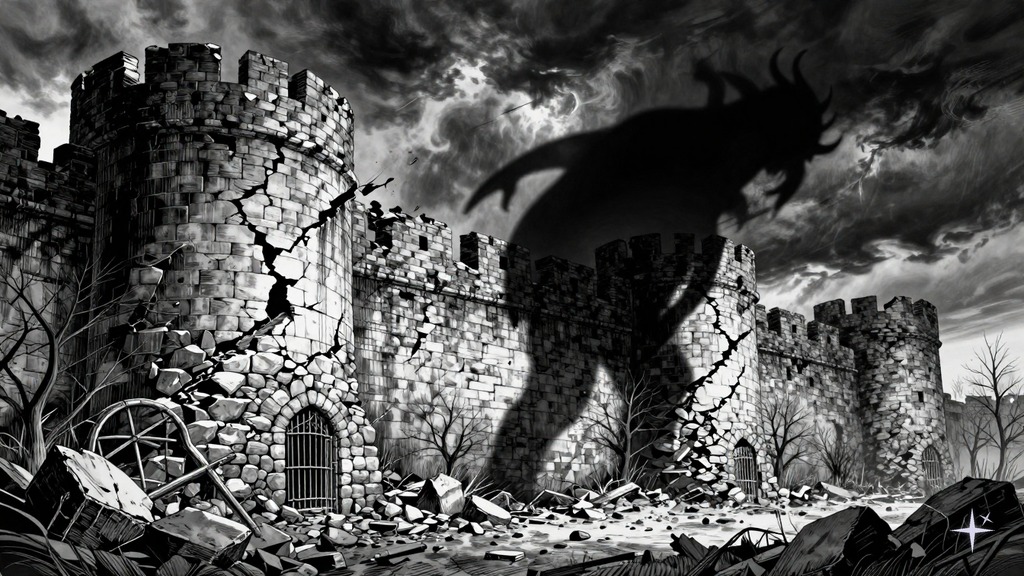
If you’ve seen the anime and want the full story in your hands — or you’re a horror manga fan wondering if Attack on Titan deserves shelf space — this guide covers all 34 Attack on Titan manga volumes, from formats and reading order to the key books every horror reader should own.
The series is complete. No cliffhangers, no waiting for the next release. You can read the entire story from first page to last, right now. That’s a huge advantage for anyone building a manga collection.
Let’s break down what you’re getting into.
All 34 Attack on Titan Manga Volumes: Completed Dark Fantasy Horror
Attack on Titan (進撃の巨人 — the original Japanese title) was created by Hajime Isayama (諫山創 in Japanese). The series ran from March 2010 to June 2021. The complete series spans 34 volumes and 139 chapters, all published in English by Kodansha Comics, the publisher responsible for translating and releasing the books outside Japan. The final English volume released on October 19, 2021, so the entire run has been available for years now.
If you’re new to manga, here’s how the format works: manga stories are first released as individual chapters in magazines, then collected into bound books called volumes. Each Attack on Titan volume contains roughly four chapters — so 139 chapters across 34 volumes.
For horror manga fans specifically, Attack on Titan earns its place on the shelf in ways the anime only hints at. The manga’s body horror — a subgenre focused on the violation, transformation, and destruction of the human body — is unflinching. Titans consuming humans isn’t just a plot device; it’s rendered with a visceral, nightmare quality that Isayama clearly relished drawing. Beyond the surface-level gore, the series builds layers of psychological horror, existential dread (the creeping realization that the things you believed in may be meaningless), and paranoia that deepen with every story arc. An arc, if you’re new to the term, is a self-contained storyline within the larger series — think of it like a season of a TV show.
What starts as a survival story about humanity hiding behind walls transforms into something far more disturbing. Without spoiling the specifics, the mid-series revelations reframe everything you’ve read with a sense of cosmic-scale terror. The final arcs push into apocalyptic imagery that feels genuinely bleak in a way few manga achieve.
The anime adaptation began in 2013 and brought massive global attention to the series, but the manga is the original — and for horror fans, it’s the more intense experience. Isayama’s art style, especially in the later volumes, conveys dread and violence with a rawness that animation naturally softens.
A quick note on the art: the early volumes have a rougher, less refined look that some readers find off-putting. Isayama’s drawing skill improves dramatically by the mid-teens, and the late volumes are seriously impressive. If Volume 1’s art doesn’t grab you, push through — it gets much better.
All 34 volumes are currently available in multiple formats, making this one of the most accessible completed horror manga series to collect.
The Most Affordable Way to Collect All 34 Volumes
Collecting 34 volumes of anything requires some budget planning. Here’s how the different format options stack up.
Individual Singles (Volumes 1–34)
The standard paperback singles from Kodansha Comics are the most common format. Each volume collects roughly four chapters, giving you the series exactly as it was originally collected in Japan. These are widely available at major booksellers and online retailers.
The advantage of singles is flexibility — you can buy a few at a time, hunt for deals on specific volumes, or replace a damaged copy without repurchasing a large collection. The downside is that 34 individual books take up significant shelf space, and the total cost at full list price adds up quickly.
Colossal Editions
Kodansha publishes oversized Colossal Edition volumes — large-format books that combine several standard volumes into one binding (sometimes called an omnibus format). These are physically larger than standard manga — roughly magazine-sized — which means bigger panels and more detail visible in Isayama’s artwork. For horror fans who want to see the body horror and action at a larger scale, these are especially appealing.
The Colossal Editions mean fewer individual books on your shelf and a lower per-volume cost compared to buying all 34 singles at full list price. The trade-off is that each book is hefty, and if you damage one, you’re replacing a bigger chunk of the series. If you’re committed to the Colossal Edition format, check availability across multiple retailers before assuming a volume is out of stock — these can sometimes go temporarily unavailable before restocks.
Box Sets
Box sets that bundle multiple volumes together may be available and can offer savings over buying each book individually. Availability varies by retailer, so it’s worth searching for current box set options if you plan to buy a large portion of the series at once. These can also be a good gift option since they arrive as a complete package.
Digital
If shelf space and budget are your primary concerns, the digital editions are the most economical path to owning the complete series. The full 34-volume run is available digitally, and digital manga frequently goes on sale through various platforms. You lose the physical collecting experience, but you gain instant access and portability.
General Buying Advice
Whichever format you choose, buying during major seasonal sales can save a meaningful amount on a 34-volume series. Comparing a couple of retailers before each purchase makes it easy to notice when prices drop. Mixing formats is also fine — some readers buy key volumes physically and read the rest digitally.
The most important thing is to commit to a format early. Switching from singles to Colossal Editions mid-series means duplicate purchases, which defeats the purpose of budget-conscious collecting.
Key Volumes Every Horror Fan Should Own
Attack on Titan is built as a single continuous narrative — 34 Attack on Titan manga volumes that form one long story from beginning to end. You need to read them in order, starting at Volume 1. Jumping ahead to later volumes won’t work because the horror of later revelations depends entirely on everything that came before.
That said, certain volumes stand out as peak horror experiences. Think of these as milestones that reward your commitment to the full read — reasons to keep turning pages, not starting points or shortcuts.
Volume 1: The Horror Begins
The series opens with one of the most iconic scenes in manga history — humanity’s first encounter with the Colossal Titan (a towering giant far larger than the other Titans) breaching the wall. Isayama wastes no time establishing the horror. Within the first chapter, you understand that humans are prey. The Titans — enormous humanoid creatures that devour people — are grotesque in design, and the sense of helplessness they create sets a tone that never fully lets up across the remaining 33 volumes. Volume 1 is the hook, and it’s a brutal one.
Volume 34 — the final volume — is available from Kodansha Comics and brings the entire story to its conclusion.
Attack on Titan
Volumes 5–8: The Female Titan Arc
The Female Titan storyline is where Attack on Titan graduates from survival horror into something more psychologically disturbing. Most Titans are mindless — they lumber and grab and eat without thought. So when a Titan appears that moves with intelligence and purpose, one that hunts specific people, it introduces paranoia into the mix. The body horror escalates significantly here, with transformation sequences that are genuinely unsettling on the page. These volumes also mark the point where you realize no character is safe, which is its own kind of horror.
Volumes 13–14: The Revelation Arc
This is where the series breaks your brain. Without spoiling the specific reveals, volumes 13 and 14 reframe nearly everything that came before with new context that’s deeply disturbing. The psychological horror peaks here — the enemy isn’t just outside the walls anymore. If you’ve only seen the anime adaptation of this storyline, the manga panels hit harder. Isayama’s panel arrangements in these chapters create a claustrophobic, paranoid atmosphere that benefits from the reader controlling the pacing.
Volumes 22–23: The Basement
The basement reveal is the most talked-about turning point in the series. Throughout the story, a mysterious basement has been teased as holding answers to the world’s biggest questions — and reaching it has been a driving goal for the characters. What starts as a mystery resolution becomes an existential nightmare. The scope of the horror expands from personal survival to something that encompasses entire civilizations and centuries of history. These volumes transform Attack on Titan from a dark fantasy action series into genuine existential horror. The dread here isn’t about being eaten — it’s about understanding why everything has happened.
Volumes 33–34: The Apocalyptic Finale
The final two volumes bring the series to its apocalyptic peak. The imagery in these chapters is the most extreme Isayama ever drew — massive in scale, bleak in tone, and unrelenting in its depiction of what the characters have become. The horror here is both physical and moral. Whether you find the ending satisfying is a matter of personal taste (fans are famously divided), but the horror content of these final volumes is undeniable.
Out-of-Print Risks and Reprint Availability
Good news: Attack on Titan is one of the best-selling manga series of all time, and Kodansha Comics keeps it in print. As of now, all 34 individual volumes remain widely available at major booksellers and online retailers. You’re unlikely to encounter the out-of-print nightmares that plague smaller or older horror manga series.
Still, a few things to keep in mind:
- Special editions and larger formats may cycle in and out of stock more frequently than the standard singles. Colossal Editions in particular can sometimes go temporarily unavailable at specific retailers before being restocked.
- Condition matters for older printings. Early printings of volumes 1 through 10 have been on shelves for over a decade now. If you’re buying from resellers or marketplace listings (sellers other than the retailer itself), inspect photos carefully — yellowed pages and shelf wear are common on older stock.
- The series is too popular to go fully out of print anytime soon. Kodansha has every financial incentive to keep this series available. But individual formats or editions could be discontinued over time as the series ages. If a particular edition matters to you, don’t wait indefinitely.
The general rule with completed manga series is that the first few years after completion are the easiest time to collect. We’re now several years past the finale, and availability remains strong — but it won’t stay that way forever.
Reading Order for New Readers and Anime Viewers
Main Series Reading Order
The reading order for Attack on Titan is refreshingly simple: Volume 1 through Volume 34, in order. There are no branching timelines, no alternate versions, no “read this arc first” complications. Start at the beginning, finish at the end.
Spin-Off Manga
Several spin-off manga exist — separate stories set in the same world that explore different characters or time periods, but are not part of the main 34-volume series. These include:
- Attack on Titan: Before the Fall — a prequel set before the main story, 17 volumes, complete
- Attack on Titan: No Regrets — a short backstory for a fan-favorite character, 2 volumes, complete
- Attack on Titan: Lost Girls — side stories focused on two of the main series’ female characters, 2 volumes, complete
All spin-offs are optional. They expand the world but are not required to understand or enjoy the main series. If you love the world and want more after finishing all 34 volumes, they’re worth exploring. But don’t read them first — they assume familiarity with the main story’s setting and characters.
Anime-to-Manga Mapping for Viewers
If you’ve watched the anime and want to know where to pick up in the manga — or where specific anime scenes fall — here’s a general guide:
| Anime Season | Approximate Manga Volumes |
|---|---|
| Season 1 | Volumes 1–8 |
| Season 2 | Volumes 9–12 |
| Season 3, Part 1 | Volumes 13–17 |
| Season 3, Part 2 | Volumes 18–22 |
| The Final Season, Part 1 | Volumes 23–27 |
| The Final Season, Parts 2–4 (the anime’s conclusion was split across multiple broadcast runs) | Volumes 27–34 |
These are approximate mappings — the anime occasionally reorders or condenses material. If you’ve watched through a specific season and want to continue in manga, starting a volume or two before the listed cutoff ensures you don’t miss content that was rearranged.
A note for viewers who’ve seen the entire anime: The “Why Read the Manga” section below explains why reading from Volume 1 is still worth your time, even if you know the full story. But if you specifically want to jump to a later starting point, use the table above and begin at least one volume before where your last watched season starts in the manga.
Why Read the Manga If You’ve Seen the Anime?
For horror fans specifically, this is an easy sell: the manga is more graphic, more unsettling, and more intense than the anime. Television animation — even a well-produced adaptation — necessarily softens some of the horror imagery for content guidelines and pacing. The manga lets Isayama’s raw artwork speak directly. Panels linger in ways that animated sequences don’t. You control the pacing, which means you can sit with a disturbing image for as long as it takes to fully register.
The mid-to-late series revelations also benefit from manga pacing. The anime often rushes through exposition that the manga gives room to breathe — and that breathing room is where the existential dread lives.
Even if you’ve seen every episode, reading the manga feels like experiencing a different — and for horror purposes, superior — version of the same story.
Who Should Read Attack on Titan — A Horror Fan’s Verdict
Who Will Love This
Attack on Titan is ideal for readers who want their horror mixed with action and narrative ambition. If you enjoy:
- Body horror — grotesque transformations, humans being consumed, the violation of physical boundaries
- Psychological dread — paranoia, betrayal, the slow realization that everything you believed was wrong
- Existential terror — horror that operates on a civilizational scale, where the threat isn’t just death but the meaninglessness of everything you fought for
- Action-driven pacing — horror that moves fast, with genuine stakes and spectacular action sequences between the dread
…then this series is going to land hard. The combination of all four across 34 volumes creates a reading experience that escalates relentlessly. The horror in volume 30 is incomparably larger in scope than the horror in volume 1, but both work because the series builds its nightmare carefully.
What This Isn’t
Attack on Titan is not pure horror. It’s a dark fantasy action series — meaning it combines traditional fantasy world-building with grim, violent, and morally bleak storytelling — with heavy horror elements. There are long stretches, especially in the middle storylines, focused on military strategy, political intrigue, and character development. These sections are well-written and serve the horror payoffs later, but if you’re looking for relentless atmospheric dread on every page, the pacing here is different.
Skip-It Signal
If you specifically want slow-burn, atmospheric horror — the kind where dread builds through silence and suggestion rather than action and revelation, like the work of Junji Ito (a manga artist famous for surreal, creeping horror stories like Uzumaki and Tomie) — Attack on Titan may feel too fast-paced for your tastes. The series excels at shock, scale, and escalation rather than quiet unease. That said, the mid-series revelations and the existential weight of volumes 22 through 34 do deliver a different, slower kind of dread that even atmospheric horror fans may find compelling. It’s worth sampling Volume 1 before deciding.
The Bottom Line
For horror manga fans, all 34 Attack on Titan manga volumes earn a spot on the shelf. The body horror is visceral, the psychological horror is deeply unsettling, and the existential dread of the mid-to-late volumes reaches a scale that very few manga even attempt. At 34 completed volumes, it’s a substantial commitment — but the series rewards that commitment with a horror experience that keeps escalating to the final page.
If you’ve been on the fence, grab Volume 1. You’ll know within two chapters whether this is your kind of nightmare.