Blood-C has exactly 4 manga volumes, and the series is complete. Whether you’ve seen the anime and want to know how the manga compares, or you’ve never encountered Blood-C before and just want a short horror manga to read, this guide covers everything: the full Blood-C manga volumes breakdown, what each book contains, and where to find them.
Let’s get into it.
Blood-C Manga Volumes: All 4 at a Glance
Here’s the quick version: Blood-C is a completed manga series spanning 4 volumes. The series was created by Production I.G — a well-known Japanese animation studio — and features story and character designs by CLAMP, a four-woman manga artist collective responsible for series like Cardcaptor Sakura and xxxHOLiC. The manga art was drawn by Kotone Ranmaru. It was published in Japan by KADOKAWA (one of Japan’s largest manga and media publishers) under the Kadokawa Comics Ace imprint, running from July 2011 to November 2012.
All four volumes are available in English from Dark Horse Comics, a major American comics and manga publisher known for releasing titles like Berserk and Hellsing.
The manga serves as a companion piece to the Blood-C anime series (anime being Japanese animation), which aired in 2011. Volumes 1–3 cover the events of the 12-episode TV anime in a condensed format, while Volume 4 adapts the theatrical sequel film Blood-C: The Last Dark. Together, the four volumes tell the complete Blood-C story — neither the anime nor the film is required before picking up the manga. Blood-C itself is part of the broader Blood franchise (a group of related but independent stories that includes Blood: The Last Vampire and Blood+), but it stands completely on its own. You don’t need any prior Blood franchise experience to pick this up and follow the story.
Here’s a quick reference:
| Detail | Info |
|---|---|
| Title | Blood-C |
| Volumes | 4 (complete) |
| Creators | Production I.G (animation), CLAMP (story and character design), Kotone Ranmaru (manga art) |
| Japanese Publisher | KADOKAWA (Kadokawa Comics Ace) |
| English Publisher | Dark Horse Comics |
| Japanese Run | July 2011 – November 2012 |
| Status | Completed |
At only four volumes, this is a very manageable read — especially if you’re looking to try horror manga without committing to a long-running series.
How the Story Is Structured Across 4 Volumes
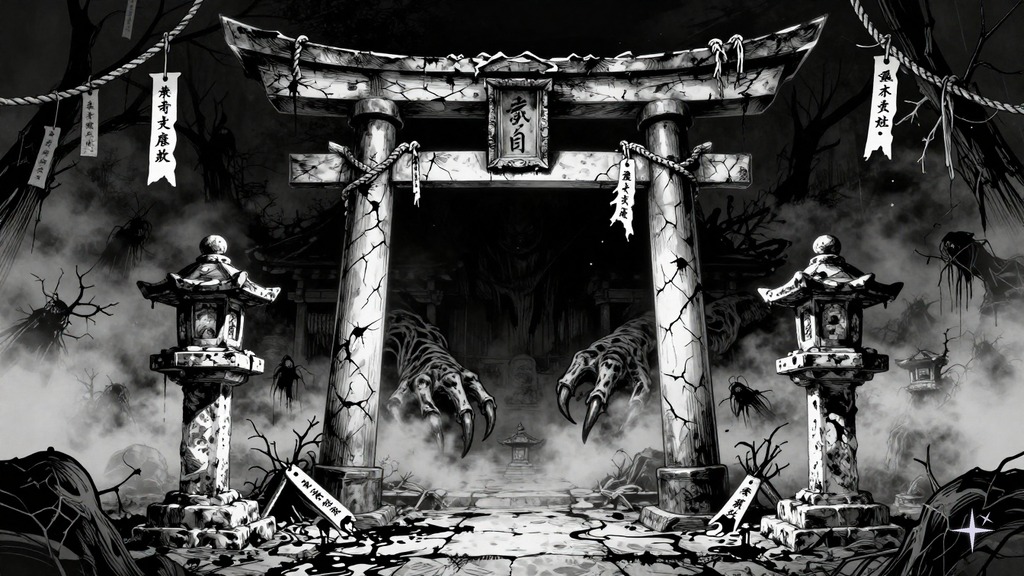
Blood-C follows Kisaragi Saya, a seemingly ordinary high school girl who also serves as a shrine maiden — a caretaker of a Shinto shrine, a role rooted in Japanese spiritual tradition. Her secret duty? Fighting creatures called Elder Bairns — grotesque monsters that prey on humans. The name comes from an archaic word for “children,” though these creatures are anything but innocent. By day, Saya goes to school, hangs out with friends, and lives what looks like a peaceful small-town life. By night, she takes up her father’s sacred sword and battles these things.
But something is deeply wrong with this town. And the deeper Saya gets into her battles, the more the cracks start to show.
Volumes 1–2 establish Saya’s world. You get her daily routine, her relationships with classmates and her father, and the early Elder Bairn encounters. These battles start intense and only escalate. More importantly, a creeping sense of unease builds beneath the surface — things don’t quite add up, conversations feel slightly off, and the town itself seems to be hiding something enormous.
Volumes 3–4 tear everything apart. The conspiracy at the heart of the story begins to unravel in Volume 3, and by Volume 4, the full scope of what’s been happening is laid bare. Without spoiling specifics, the series takes a hard turn into genuinely dark territory. The body count rises sharply, and Saya is forced to confront a truth about her own existence that changes the meaning of everything that came before.
The manga contains significant violence — this is a horror series that does not hold back, particularly in its closing chapters. Scenes include graphic monster attacks and on-page character deaths. If you’re sensitive to depicted violence or are buying this for someone else, that’s worth knowing going in.
Because the manga closely follows the anime storyline in a more condensed form, the pacing is tight. There’s very little padding or unnecessary material. Four volumes might sound short, but the story earns its length — every chapter pushes toward a conclusion that is bleak and uncompromising rather than neatly resolved. Readers who prefer hopeful endings should set expectations accordingly.
Complete Volume Breakdown
Note: Only Japanese release dates were confirmed at the time of writing. English editions from Dark Horse Comics followed the Japanese releases but exact English publication dates were not verified.
Volume 1
Japanese release: July 2011
The opening volume drops you into Saya’s life. She’s cheerful, kind, a little clumsy — the classic contrast that makes horror work so well. Her duties as a shrine maiden are established early, and her first encounters with the Elder Bairns set the tone for what kind of series this is going to be. These aren’t cute monsters. They’re unsettling, varied in design, and genuinely threatening.
Volume 1 also introduces the supporting cast — Saya’s classmates and her father, who serves as her guide in the fight against the Elder Bairns. The town itself is almost a character, with its quiet streets and pleasant surface hiding something rotten underneath. By the end of this volume, you’ll have a solid sense of the world and a nagging feeling that not everything is what it seems.
This is a strong entry point. It gives you enough action to hook you and enough mystery to keep you reading.
Volume 2
Japanese release: December 2011
Volume 2 ramps up both the action and the tension. The Elder Bairn battles grow more dangerous, and Saya begins to struggle — not just physically, but with the growing realization that something about her situation doesn’t make sense. The cracks in the town’s facade widen.
The supporting characters get more development here, which matters because this is a series where caring about those characters has consequences. Relationships deepen, daily life continues with its warm routine, but there’s an increasingly sinister undercurrent running through every interaction.
If Volume 1 was the setup, Volume 2 is where the unease becomes impossible to ignore. You can feel the story building toward something, and the pacing keeps you turning pages.
Volume 3
Japanese release: May 2012
This is the turning point. Volume 3 is where Blood-C shifts gears from “horror action with mystery elements” to “the mystery IS the horror.” The conspiracy behind the town, Saya’s role, and the true nature of the Elder Bairn attacks begins to come into focus.
The tone darkens considerably. Characters you’ve grown attached to are put in real danger, and the series doesn’t shy away from consequences. Saya’s questioning of her own reality intensifies — and the answers she starts finding are worse than the questions.
For readers who’ve been picking up on the clues scattered through the first two volumes, this is where those threads start connecting. For everyone else, it’s a genuine shock. Either way, Volume 3 makes it clear that this is not the story you thought you were reading.
Volume 4
Japanese release: November 2012
The finale. Volume 4 pulls back the curtain completely. The experiment — the real nature of everything Saya has experienced — is fully revealed. The climax is brutal in both its violence and its emotional weight.
This is the volume that will either make you a Blood-C fan or leave you stunned (or both). The series commits fully to its premise and doesn’t soften the ending for comfort. It’s a conclusion that fits the story’s themes — deception, identity, the cost of truth — even if it’s not a gentle landing.
Without the anime’s episode count to spread things out, the manga’s version of this finale hits fast and hard. Everything wraps up within this single volume, giving the series a definitive ending.
Volume 4 is a manga adaptation of Blood-C: The Last Dark, the theatrical sequel film — so finishing this volume means you have experienced the complete Blood-C story in manga form. The film itself is also available on home video if you want to see the same events animated.
Blood-C
Editions and Where to Buy Blood-C Manga Volumes in English
All four Blood-C manga volumes were released individually in English by Dark Horse Comics. Each volume is a standard manga-sized paperback. Digital editions may also be available through major ebook retailers for readers who prefer reading on a screen or have trouble finding physical copies, though digital availability should be verified at time of purchase.
As of now, there is no known omnibus edition (a single book collecting multiple volumes), deluxe edition, or box set for Blood-C in English. You’ll be collecting the four individual volumes.
One thing worth noting: Blood-C wrapped up over a decade ago. While the volumes are still available through major retailers, stock can fluctuate. Some volumes may occasionally be harder to find than others, especially if they go in and out of print. If you spot all four available at once, that’s a good time to grab them.
Since there are only four volumes total, the full series is a relatively affordable pickup compared to longer-running manga.
Buying tips:
- Check multiple retailers if a specific volume is out of stock at one — availability can vary
- Used copies in good condition are another solid option for older manga like this
- Keep an eye out during major seasonal sales when manga often sees reduced pricing
- If physical copies are unavailable, check for digital editions as a backup
Frequently Asked Questions
How many Blood-C manga volumes are there?
Four volumes total. The series is complete — no more volumes are coming. You can read the entire story from beginning to end right now.
Is the Blood-C manga the same as the anime?
Volumes 1–3 adapt the same story as the Blood-C TV anime in a condensed format. Volume 4 then adapts the theatrical sequel film Blood-C: The Last Dark, going beyond the 12-episode anime. The core characters and story arc are the same; the anime has more room to develop individual scenes and battles, while the manga moves at a faster pace and continues into the film’s story.
Who created Blood-C?
The original concept comes from Production I.G, the Japanese animation studio behind titles like Ghost in the Shell. CLAMP — a four-woman manga collective — is credited with the original story and character designs. The manga itself was drawn by Kotone Ranmaru. It’s a collaborative project — the anime came first, and the manga was produced alongside it.
Do I need to watch the anime first?
No. The manga tells the complete story on its own. That said, the anime provides additional context, expanded scenes, and a different experience of the same events. If you enjoy one version, the other is worth checking out — but neither is required before the other.
Is Blood-C connected to Blood+ or Blood: The Last Vampire?
Blood-C is part of the broader Blood franchise, which started with the 2000 short film Blood: The Last Vampire and continued with the Blood+ anime series. However, Blood-C is a standalone story. It shares common threads with the other entries — a sword-wielding heroine fighting monsters — but has its own characters, setting, and plot. You can read Blood-C without knowing anything about Blood+ or The Last Vampire.
What about Blood-C: The Last Dark?
Blood-C: The Last Dark is a theatrical film sequel whose story Volume 4 of the manga adapts. If you finish all four volumes, you have already experienced the complete Blood-C narrative — the film covers the same final arc in animated form. It is available on home video and through some streaming or digital rental platforms.
Is Blood-C appropriate for younger readers?
Blood-C contains significant violence, including graphic monster attacks and on-page character deaths, particularly in the later volumes. It also deals with themes of psychological manipulation and deception. It’s aimed at an older teen to adult audience. If you’re comfortable with horror manga in general, you’ll likely be fine — but this isn’t one to hand to a younger reader without checking it first.