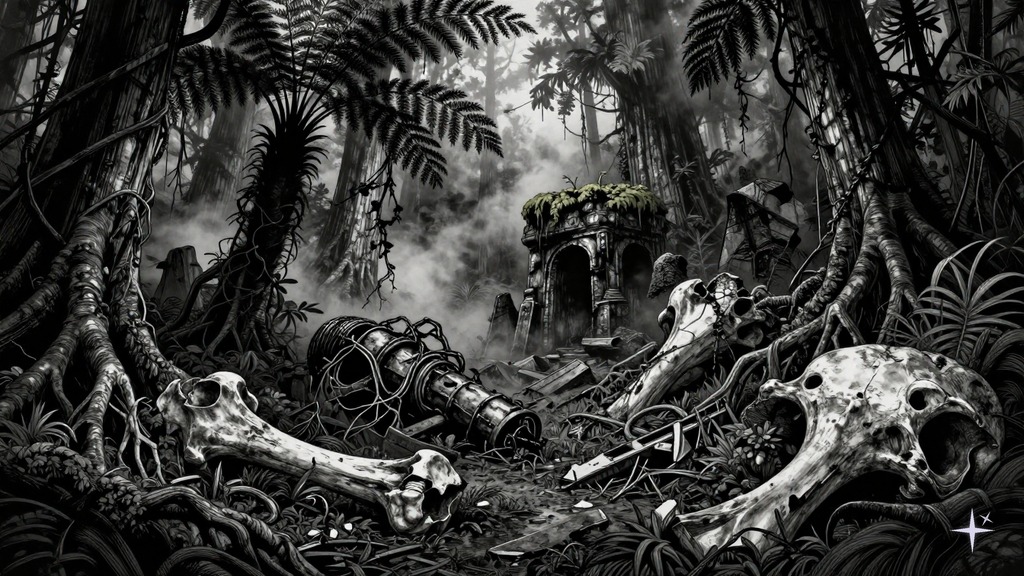
The Cage of Eden manga reading order is refreshingly simple. No spinoffs, no alternate timelines, no companion series to track down. Just 21 volumes of survival horror — a genre built on characters fighting to stay alive against dangerous creatures and environments while dread builds with every chapter — from start to finish.
Here’s how to read it in the right order, find copies, and avoid common mix-ups.
Cage of Eden Manga Reading Order — The Short Answer
Cage of Eden (エデンの檻 — the original Japanese title, useful if you’re searching Japanese-language sites or verifying editions) is a single, complete manga series. If you’re brand new to manga, these are Japanese comic books published as collected volumes, each containing multiple individual chapters. There are no spinoffs (separate series about side characters), no prequels, sequels, or side stories. The reading order is:
Volume 1 → Volume 2 → Volume 3 → … → Volume 21.
That’s it. That’s the whole reading order.
The series was written by Yoshinobu Yamada and published chapter by chapter in Weekly Shonen Magazine, a Japanese anthology magazine aimed at younger male readers where manga creators release new chapters on a weekly schedule. Serialization ran from 2008 to January 2013. The complete story spans 185 chapters collected across 21 volumes, and Kodansha Comics — one of Japan’s largest manga publishers, with a dedicated English-language imprint — published the full run in English.
There is no anime adaptation — so there’s no watch-first-or-read-first dilemma to worry about. The manga is the only official way to experience this story.
If you just needed the quick answer, there it is. But if you want to know what happens across those 21 volumes — without spoilers — read on.
Full Volume-by-Volume Breakdown
Cage of Eden tells one continuous survival horror story. There are no branching paths, no alternate versions, and no chapters published out of order. Every volume picks up right where the last one left off.
Rather than listing all 21 volumes individually (since the reading order is purely sequential), here’s a breakdown by story arc — meaning each major segment of the plot that focuses on a distinct set of challenges and revelations — so you know what kind of story you’re getting into at each stage.
Vols. 1–4 — Crash Landing and Survival
This is where everything begins. A plane full of students crashes on a mysterious island, and the survivors quickly realize they’re not dealing with ordinary wildlife. The creatures here are extinct animals — species that haven’t walked the Earth in millions of years. Think stranded teenagers, prehistoric predators, and people dying in ways nobody saw coming.
These opening volumes establish the core cast — led by Akira Sengoku, an ordinary student forced into a leadership role — and set the survival horror tone. They introduce the central mystery: where are they, and why are these creatures here? The early chapters balance group dynamics with genuine danger as the survivors try to organize, find resources, and simply stay alive.
If you’re testing whether Cage of Eden is for you, these four volumes give you a strong representative sample. The horror escalates quickly, the pacing is tight, and you’ll know by the end of Volume 4 whether you’re hooked.
Vols. 5–10 — Exploration and Factional Conflict
The middle act opens up as the survivors begin exploring the island more deliberately — and as the group splinters. Not everyone agrees on how to survive, and rival groups start forming with very different ideas about leadership and priorities. Some characters you’ve grown attached to end up on opposing sides, and the human threat becomes just as dangerous as the wildlife.
The island’s mysteries deepen through this stretch. New locations reveal unsettling clues about what this place actually is, and the creatures grow more dangerous. The psychological stakes escalate alongside the physical ones — trust breaks down, alliances shift, and the tension between human conflict and environmental threat keeps the pages turning.
This is where the series really hits its stride as both a mystery and a survival story. The questions pile up faster than answers arrive, and Yamada does a solid job keeping multiple threads moving without losing momentum.
Vols. 11–16 — The Island’s Secrets
Major revelations start landing in this stretch. The mysteries that have been building since Volume 1 begin to interlock, and the story shifts from pure survival into something more layered as the truth about the island starts surfacing.
Character deaths escalate the tension significantly — nobody feels truly safe, which gives the horror real weight. The series leans harder into its mystery elements here, and the pieces of the puzzle start clicking together in ways that reward paying attention to earlier details and callbacks.
Without spoiling specifics, this is the section where readers tend to get the most invested. The answers are genuinely surprising, and the stakes feel higher than ever.
Vols. 17–21 — Endgame and Resolution
The final five volumes bring the story to its conclusion. The truth behind the island is fully revealed, final confrontations play out, and the surviving characters face the consequences of everything that’s happened.
One thing worth mentioning: the ending has divided readers. Some find it satisfying, others feel it’s rushed or doesn’t fully deliver on the buildup. The story wraps up at Chapter 185 with no follow-up — what you get in Volume 21 is the definitive conclusion.
Going in with that awareness can actually help. Many readers who acknowledge the ending’s flaws still consider the journey absolutely worth taking, and you can form your own opinion without feeling blindsided.
Three Ways to Read Cage of Eden
Since Cage of Eden has no filler — meaning no chapters or volumes that pad out the series without advancing the main plot — the reading paths here are less about what to skip and more about how deep you want to commit upfront.
Complete Path: All 21 Volumes
Read Volume 1 through Volume 21 in order. This is the recommended approach for the full survival horror experience. Every volume advances the main plot — there’s nothing to skip, no bonus content that’s optional. The story was written as one continuous narrative, and it reads best that way. All 185 chapters serve the central story, which is one of the advantages of a tightly plotted 21-volume series.
Sampler Path: Volumes 1–4
Not sure if survival horror manga is your thing? Read the first four volumes. They cover the crash landing, the first encounters with the island’s creatures, and enough of the core cast dynamics to give you a clear picture of what the next 17 volumes will feel like. If you’re hooked by the end of Volume 4, you’ll want to keep going. If the premise hasn’t grabbed you by then, the series probably isn’t for you — and that’s totally fine.
Single-Volume Test: Volume 1
If even four volumes feels like too much of a commitment before you know whether you’ll enjoy the series, start with just Volume 1. It introduces the premise, the main characters, and the first encounters with the island’s creatures. You won’t get the full scope of the mystery, but you’ll know within those first chapters whether the tone and storytelling style click for you.
Where to Buy Cage of Eden in English
All 21 volumes of Cage of Eden were published in English by Kodansha Comics. Here’s what to know about finding copies:
Digital is generally the easiest and most affordable route. You can find the full 21-volume lineup on platforms like Amazon’s Kindle store, Apple Books, and other digital manga storefronts. Digital editions tend to remain available even when physical copies become scarce, and you can start reading immediately. Digital volumes also typically cost less per volume than their physical counterparts, which adds up across a 21-volume series.
Physical copies can be trickier. Since the series is complete and has been out for a while, some individual volumes may be harder to find at standard retail prices. Stock varies by retailer, so it’s worth checking multiple sources if a specific volume isn’t showing up at one store. The typical retail price for manga volumes in this format falls in the standard Kodansha single-volume range — buying all 21 does represent a meaningful investment, so digital is worth considering if budget is a factor.
A practical buying tip: before committing to the full physical set, check availability on later volumes — particularly Volumes 17 through 21. Nothing is more frustrating than getting invested in a series only to discover the final volumes are temporarily out of stock. Confirming you can access the ending before you start saves a lot of headaches. You can pick up Volume 21 from major retailers to lock in the conclusion early.
Cage of Eden
If you’re buying physical and notice certain volumes are out of stock, check back periodically. Kodansha titles do get restocked, though the timing can be unpredictable for older completed series.
Common Reading Order Mistakes to Avoid
Cage of Eden’s reading order is simple, but there are a few common points of confusion worth clearing up:
There is no sequel, “Season 2,” or continuation. The story ends at Volume 21, Chapter 185. Yamada has not returned to this series. If you see anyone online discussing a “Cage of Eden 2” or a continuation, they’re either confused or referring to fan speculation. The published story is complete.
No anime adaptation exists. Don’t waste time looking for a watch order or trying to figure out where an anime stops and the manga continues. There is no anime. The manga is the only official way to experience Cage of Eden.
Don’t confuse it with other survival manga. Cage of Eden sometimes gets mixed up with other survival-themed series — particularly ones involving groups stranded in dangerous environments. If you’re searching online, confirm you’re looking at the right title by checking for author Yoshinobu Yamada and publisher Kodansha Comics.
Don’t skip volumes thinking they’re padding. Every one of the 21 volumes contains plot-relevant content. There are no recap volumes, no side-story collections, and no anthology chapters. Volume 1 through Volume 21, straight through — that’s the complete Cage of Eden manga reading order and the only way to get the full experience.