Looking for info on the Gankutsuou manga volumes and wondering how many there are? The answer: 3 volumes total, and the series is complete. This is a self-contained gothic sci-fi story you can finish in an afternoon or two — no waiting for new releases, no tracking down dozens of books. Here’s the full breakdown.
How Many Gankutsuou Manga Volumes Are There?
The Gankutsuou (巌窟王) manga is 3 volumes total, and the series is complete. The whole story is told across those three books, with a definitive beginning, middle, and end.
The manga was published in Japan by Kodansha, running from December 2005 to July 2008. All three volumes were also released in English, making this an accessible pickup for English-speaking readers.
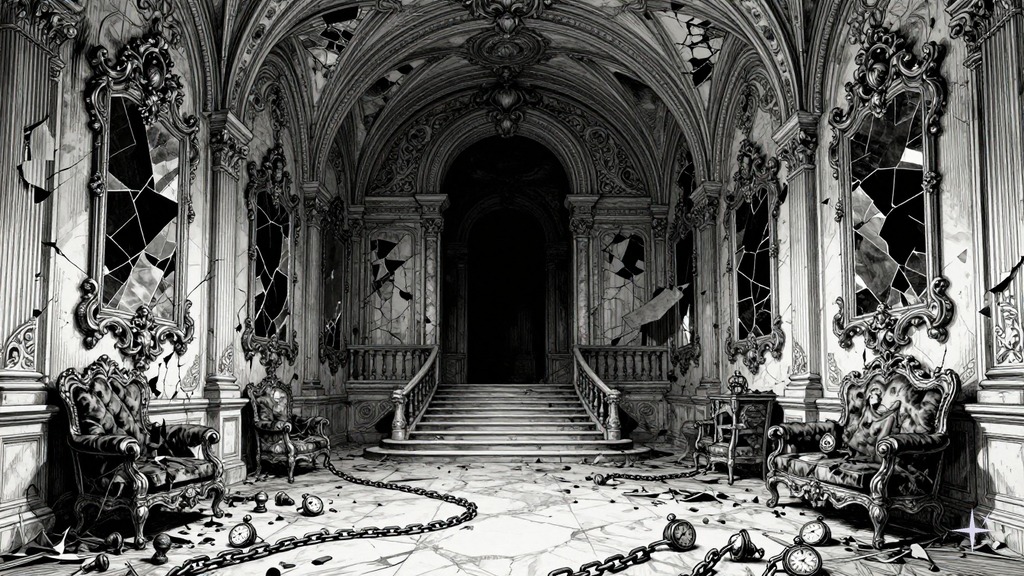
So what is Gankutsuou, exactly? It’s a gothic science-fiction reimagining of Alexandre Dumas’ classic novel The Count of Monte Cristo — but set in a far-future version of Paris where aristocratic intrigue, dark revenge, and psychological horror collide with futuristic technology and otherworldly visual design. “Gothic” here means dark, atmospheric storytelling with themes of death, decay, and aristocratic corruption — think crumbling grandeur and a constant sense of dread lurking beneath the surface. If you enjoy stories built around slow-burning tension, moral ambiguity, and unsettling manipulation rather than jump scares, this manga will feel right at home alongside more traditional horror titles.
The manga features art and story draft by Mahiro Maeda (前田真宏), with script and additional story elements by Yura Ariwara (有原由良). Maeda is also the co-creator and director of the Gankutsuou anime (more on that below), and his background in animation gives the manga a distinctive, atmospheric visual style that sets it apart from typical manga adaptations.
All 3 Volumes at a Glance
Here’s a quick reference for the entire series. The characters mentioned here — Albert and the Count — are introduced fully in the volume breakdowns that follow, so don’t worry if the names are unfamiliar:
| Volume | JP Release | What It Covers |
|---|---|---|
| Vol. 1 | December 2005 | The mysterious Count arrives; a young aristocrat’s fateful encounter |
| Vol. 2 | July 2006 | The Count’s revenge deepens; growing doubts and suspicion |
| Vol. 3 | July 2008 | Climax and conclusion of the revenge plot |
The manga follows a futuristic retelling of Dumas’ classic revenge story, centering on the Count of Monte Cristo himself — his machinations, his inner workings, and the devastating schemes he sets in motion against the Parisian aristocracy. Where the anime focused on the young Albert de Morcerf, the manga shifts perspective to the Count, expanding on events left out or only briefly mentioned in the anime. It’s a story about manipulation, obsession, and the cost of vengeance — wrapped in gorgeous sci-fi gothic imagery.
Notice that gap between Volume 2 (July 2006) and Volume 3 (July 2008) — that’s a two-year wait between the second and final volumes. If you’re reading them all now, though, you get to skip that wait entirely.
Volume 1 — The Count’s Arrival
The first volume introduces Albert de Morcerf, a privileged young man from Parisian high society, and his fateful encounter with the enigmatic Count on Luna (yes, the moon — this is far-future sci-fi). Albert is immediately drawn to the Count’s charisma and mystery, setting the stage for everything that follows.
Volume 1 does an excellent job establishing the series’ gothic atmosphere. There’s a persistent sense of unease beneath the surface glamour — you can feel that something is deeply wrong with the Count, even as Albert (and the reader) are pulled into his orbit. The psychological tension starts here and never really lets up.
This volume was released in Japan in December 2005, marking the beginning of the manga’s serialization. (For context: many manga series are first published chapter by chapter in magazines, then collected into the bound volumes you buy. This is how Gankutsuou was originally released in Japan before being collected into the three books.)
Volume 2 — Unraveling Secrets
The second volume is where the Count’s elaborate revenge against the Parisian aristocracy begins to take shape in earnest. What seemed like charm and generosity in Volume 1 starts to reveal itself as calculated manipulation. The Count systematically targets the families of those who wronged him, and the consequences are devastating.
Meanwhile, Albert begins to question the Count’s true nature and motives. The tension between Albert’s admiration for the Count and his growing suspicion is the emotional core of the series, and Volume 2 is where that conflict really starts to bite.
Released in July 2006, this middle volume keeps the pacing tight despite being the bridge between setup and payoff.
Volume 3 — The Final Reckoning
The concluding volume brings the Count’s revenge to its climax. Everything that’s been building across the first two books comes to a head as Albert is forced to confront the full truth about the Count — and about his own family’s role in the Count’s suffering.
This is where the series earns its horror elements. The psychological damage inflicted by the Count’s schemes, the moral ambiguity of revenge, and the question of whether anyone can truly emerge unscathed from this kind of obsessive hatred — it all lands in Volume 3. The series wraps up all its threads, giving readers a proper conclusion.
Released in July 2008, this final volume closed out a manga that, despite its short length, tells a complete and emotionally resonant story.
Which Edition Should You Buy?
This one’s straightforward: there’s only one English edition of the Gankutsuou manga. The original 3-volume release is it — no omnibus editions, no deluxe hardcovers, no collected re-releases have been published.
Here’s what that means for you as a buyer:
- English edition: 3 individual volumes. This is your only option for reading in English.
- Japanese edition: Also 3 volumes, published by Kodansha.
- No digital-exclusive or special editions exist as far as the verified data shows.
Because the series is completed and the English volumes have been out for quite some time, availability can be inconsistent. These volumes may be out of print, which means you might be looking at secondhand copies as your primary option. That’s just the reality with shorter, older manga series — but the upside is that you only need three books, so tracking them down is a much smaller project than hunting for a long-running series with dozens of volumes.
When searching for used copies, knowing the publisher name can help you confirm you’re looking at the right edition. Keep an eye on the spine and copyright page — the English release was published by Del Rey Manga (a now-discontinued imprint of Del Rey Books, a branch of Ballantine Books, part of the Random House publishing group), so matching the volume number and ISBN is the most reliable way to verify you have the correct books.
Where to Find the Gankutsuou Manga in English
Since the English volumes may no longer be in active print, here are the main ways to track them down:
Amazon (new and used) — Amazon is often the easiest starting point. You can find the volumes through third-party sellers on the platform, and the used marketplace tends to have copies cycling through. Availability will vary — that’s normal for out-of-print manga, so check back periodically if you don’t see what you need right away.
Gankutsuou 1: The Count of Monte Cristo (Gankutsuou: the Count of Monte Cristo, 1)
Used book marketplaces — Sites like eBay, ThriftBooks, and AbeBooks are solid options for tracking down out-of-print manga. Because Gankutsuou is only three volumes, you have a realistic chance of completing the set without too much hunting.
Library systems — Don’t overlook your local library. Many library systems carry manga, and even if your branch doesn’t have Gankutsuou on the shelf, you can often request an interlibrary loan — that’s when your library borrows a copy from another library in their network on your behalf. This is a genuinely great way to read the series for free before deciding whether you want to own it.
A note on pricing: Out-of-print manga can fluctuate in price — sometimes dramatically. A volume might be inexpensive one month and pricey the next, depending on supply. If you see a reasonable price, it’s worth grabbing. And if prices seem high, patience and regular checking tend to pay off eventually.
Manga vs. Anime: Which Comes First?
One thing that surprises many readers: the Gankutsuou manga is actually based on the 2004–2005 anime series of the same name, produced by the animation studio Gonzo. In most cases, a manga comes first and an anime adaptation follows — but here it’s the reverse. The anime is the original version, and the manga adapts its storyline into comics format across the three volumes.
So should you watch the anime first or read the manga first? Either order works. The manga condenses the anime’s story to fit three volumes, so you’ll get the core plot and themes either way. If you prefer reading and want the quickest path through the story, the manga is efficient. If you want the full visual and audio experience that inspired the manga, the anime is worth seeking out. Neither version spoils the other in a way that ruins the experience — they’re two versions of the same revenge tale.
FAQ
Is the Gankutsuou manga finished?
Yes. The series is complete at 3 volumes. There are no ongoing chapters, no continuation planned — the story has a definitive beginning, middle, and end.
Is the manga the same as the anime?
The manga adapts the storyline from the 2004–2005 anime series. The core story beats are shared, but the manga naturally condenses and adjusts things to fit the comics format across just three volumes.
Who created the Gankutsuou manga?
Art and story draft by Mahiro Maeda, script and additional story elements by Yura Ariwara, based on the classic novel The Count of Monte Cristo by Alexandre Dumas. Maeda also served as the co-creator and director of the anime adaptation.
Is there an omnibus or collected edition?
No single-volume omnibus or deluxe/hardcover reprint has been released. However, a boxed set collecting all three original Del Rey volumes together (ASIN B005ZFQ49G) may be available through third-party sellers — it’s the same three books sold as a set, not a new edition. If you want a collected format, that’s your closest option.
Is this a horror manga?
It’s more accurately gothic sci-fi with strong horror and psychological thriller elements. “Psychological thriller” means the tension comes from mind games, manipulation, and dread rather than monsters or violence. The series doesn’t rely on jump scares or graphic content — its horror comes from manipulation, obsession, and the slow revelation of how far the Count will go for revenge. If you enjoy atmospheric dread and morally complex stories, it scratches a similar itch to more traditional horror manga.
Were the English volumes released on different dates than the Japanese ones?
The Japanese release dates are December 2005, July 2006, and July 2008. English release dates were not confirmed during research for this article, so if you see different dates on a retailer listing, that likely reflects the English publication timeline rather than an error.