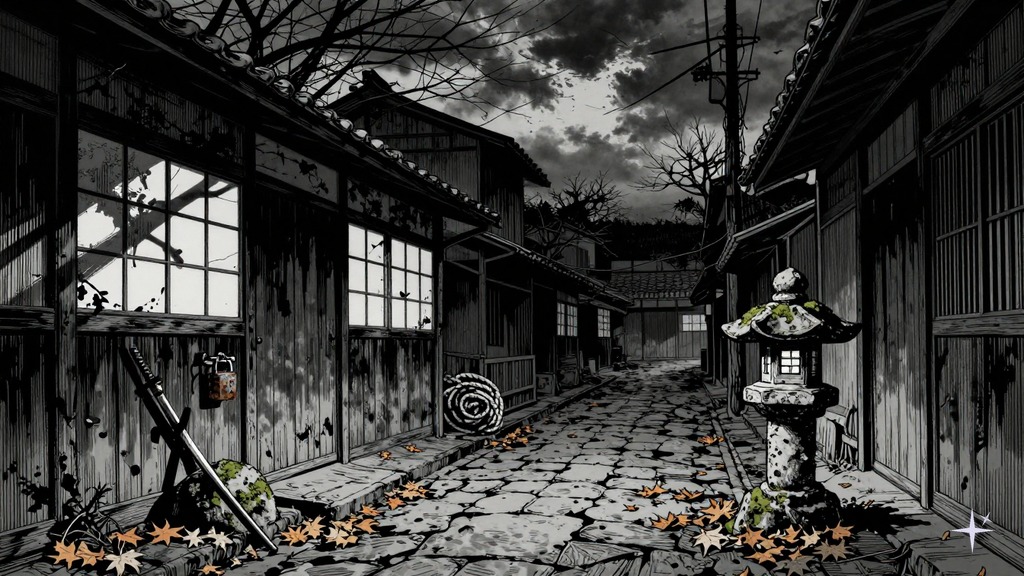
If you’ve been searching for how many House of Five Leaves manga volumes there are, whether the series is finished, or what order to read them in — you’re in the right place. For anyone new to manga (Japanese comics published as small, illustrated books that you read right-to-left), this quiet, atmospheric series set in historical Japan flies under the radar compared to flashier titles, but it rewards patient readers with one of the most compelling character studies in the medium. Let’s break it all down.
House of Five Leaves Has 8 Manga Volumes — Complete Series
The quick answer: House of Five Leaves is 8 volumes long, and the series is complete.
There’s nothing left to wait for. The manga by Natsume Ono (オノ・ナツメ) was originally published in Japan through Shogakukan’s Monthly IKKI magazine — a now-defunct publication from one of Japan’s largest manga publishers. The first Japanese volume came out in September 2006, and the eighth and final volume landed in October 2010. All 8 volumes have been released in English as well.
This is a fully self-contained story with a beginning, middle, and definitive ending. For readers who’ve been burned by manga that go on indefinite hiatus or stretch past 30+ volumes with no resolution in sight, House of Five Leaves is refreshingly finite. You can buy the whole thing, read it at your own pace, and experience a complete story without ever wondering if the next volume will come out.
That completed status also makes it a great series to gift or recommend to someone just getting into manga — there’s no “you’ll have to wait for volume 47” caveat attached.
A note on genre: If you found this article through Horror Manga Guide, you might be wondering whether House of Five Leaves counts as horror. It’s not horror in the traditional sense — there are no monsters or supernatural scares. But it shares DNA with the darker side of the site’s catalog: psychological tension, morally complicated characters, and an atmosphere of quiet menace that fans of horror-adjacent stories will recognize and appreciate.
What Each Volume Covers
Each manga volume is a single paperback book, typically around 200 pages, collecting several chapters of the serialized story. Here’s a spoiler-light overview of what to expect from each one, so you can get a sense of the story’s shape without ruining any of its carefully constructed reveals.
Volume 1: The Ronin and the Kidnapper
The story opens with Masanosuke Akitsu — a skilled but painfully timid ronin (a masterless samurai, someone trained as a warrior but without a lord to serve) who can’t hold a bodyguard job because he freezes up under social pressure. He’s broke, directionless, and struggling to survive in Edo (the old name for Tokyo, during Japan’s feudal period roughly spanning the 1600s–1800s — a time of rigid class structures and strict social rules). Then he meets Yaichi, a languid, enigmatic man who leads a small kidnapping-for-ransom group called the Five Leaves. Yaichi hires Masa as his bodyguard, and Masa — despite his moral discomfort — finds himself drawn into the group’s world. Volume 1 establishes the central tension that drives the entire series: Masa knows these people are criminals, yet something about them (and especially Yaichi) compels him to stay.
Volume 2: Deeper Into the Group
Masa gets pulled further into the Five Leaves’ operations, and we start to see the other members as more than background figures. Each person in the group has their own reasons for being there, their own history. The manga begins layering in early backstory fragments — enough to make you curious, not enough to satisfy. Ono’s pacing here is deliberately slow, building atmosphere and the relationships between characters rather than rushing toward action.
Volume 3: Yaichi’s Shadow
The mystery at the heart of House of Five Leaves starts to take shape in this volume. Yaichi’s hidden past begins to surface, and it becomes clear that the Five Leaves’ leader is carrying something far heavier than his casual demeanor suggests. Masa’s quiet persistence — his refusal to stop asking questions, even when Yaichi deflects — starts to crack open doors that have been shut for years.
Volume 4: Outside Eyes
Tensions escalate as the Five Leaves’ kidnapping activities draw attention from people outside the group. The stakes shift from personal drama to genuine danger, and the question of whether the group can continue to operate without consequences becomes urgent. This volume marks a turning point — the story’s leisurely pace tightens, and you start to feel that events are moving toward something unavoidable.
Volumes 5–6: Revelations
These are the volumes where Ono pulls back the curtain on Yaichi’s origins and the deeper moral foundations of the Five Leaves. The biggest reveals surface here — the kind that reframe earlier scenes and make you want to flip back to Volume 1 to see what you missed. The relationship between Masa and Yaichi reaches new emotional depth as Masa finally begins to understand the person he’s been following.
Volumes 7–8: Climax and Conclusion
The final two volumes bring every thread to its resolution. The story builds to its climax with the same measured pace it maintained throughout — no sudden tonal shifts, no jarring action forced in at the last minute. The ending is satisfying and complete, wrapping up each character’s journey and the story’s bigger questions without leaving loose ends dangling.
One note on format: the English release consists of standard single volumes. There are no collected multi-volume editions or special compiled editions currently confirmed for this series. You’re collecting 8 individual books.
Reading Order and Where to Start
Good news: the reading order for House of Five Leaves manga volumes couldn’t be simpler.
Read Volume 1 through Volume 8, in order. That’s it.
One note for completeness: a spinoff manga, Kozure Dōshin, was serialized by Natsume Ono from 2013 to 2014 and collected into a single Japanese volume in 2015 — but it has never been licensed or released in English. For English readers, the main 8-volume series is the only available content to purchase. It’s one straight line from start to finish. You pick up Volume 1, and you read sequentially until you close Volume 8. If you’ve ever been intimidated by a franchise where dozens of related books, shows, and spinoffs make the reading order feel like a puzzle, House of Five Leaves has none of that complexity.
Why You Shouldn’t Skip Around
This is worth flagging because the series’ slow pacing might tempt some readers to jump ahead: don’t skip volumes. House of Five Leaves is a story where character development happens in quiet moments — a glance, a half-finished sentence, a small gesture that only matters because you saw what happened three chapters ago. Ono builds her character work gradually, and skipping even one volume means missing the groundwork for later emotional payoffs.
If you’re used to action manga where you can jump into any storyline and mostly follow along, this series works differently. The reward here comes from accumulation — from watching Masa slowly change, from piecing together Yaichi’s past one fragment at a time. Sequential reading isn’t just recommended, it’s where the whole experience lives.
A Strong Entry Point for Manga Beginners
At only 8 volumes, House of Five Leaves is a great pick for readers who are new to manga or who want to try something outside the mainstream. It’s short enough to finish in a weekend of dedicated reading, long enough to develop real emotional weight, and complete enough that you’ll never be left hanging. The Edo-period setting also gives it a distinctive flavor that sets it apart from contemporary-set series.
Manga vs. Anime — What the 8 Volumes Add
House of Five Leaves received a 12-episode anime (animated TV series) adaptation that aired in 2010 around the time the manga was wrapping up. The anime covers the broad strokes of the story but compresses material from all 8 manga volumes into those 12 episodes. If you’ve already watched the anime, you might be wondering whether the manga is worth your time too.
Short answer: yes, absolutely.
What the Manga Does Differently
The manga provides significantly more psychological depth than the anime can fit into its runtime. Ono’s storytelling relies heavily on internal moments — characters sitting with their thoughts, processing events silently, revealing themselves through what they don’t say. That kind of storytelling needs space, and 8 volumes of manga give it far more room to breathe than a compressed anime adaptation.
You’ll find more detailed backstories for the supporting cast, more atmospheric scene-setting that builds the Edo-period world, and more of the small interpersonal moments that make the Five Leaves feel like a real group of complicated people rather than tools to move the plot forward.
What the Anime Does Well
The anime brings Ono’s distinctive art style to life with movement, voice acting, and a soundtrack that suits the story’s moody atmosphere. If you watched the anime first and loved the tone, the manga is where you go to get more of that tone — deeper, slower, with layers the anime had to trim for time.
Which Should You Start With?
Either works as an entry point. But if you’re going to experience both, starting with the manga gives you the fullest version of the story first. You won’t feel like the anime is retreading ground — instead, you’ll appreciate how it translates what you read into a different medium.
Where to Buy House of Five Leaves in English
All 8 volumes of House of Five Leaves are available in English. The series has been published in both print and digital formats, so you have options depending on how you prefer to read.
Print Volumes
The individual print volumes are available through major retailers. Since this is a completed series that’s been out for a while, availability can vary — some volumes may be easy to find new, while others might require a bit of hunting. Because the series is finished, you’ll also sometimes see complete 8-volume sets appear on the used market, which can be a convenient way to grab everything at once.
Volume 8 is readily available and serves as the series’ conclusion.
House of Five Leaves
Digital Volumes
If shelf space is a concern (or if you just prefer reading on a tablet or phone), the digital editions are a reliable option. Digital versions tend to stay available permanently, which avoids the out-of-print hunting that can sometimes come with older physical manga. All 8 volumes are available digitally.
Tips for Collecting the Full Set
- Check multiple retailers. Availability and pricing can differ between stores, so it’s worth comparing before you commit.
- Used sets appear periodically. Because the series is complete and has a dedicated fanbase, full sets do show up in secondhand marketplaces. Condition varies, so check seller descriptions carefully.
- Digital is the safest bet for immediate access. If any individual print volume is temporarily out of stock, the digital version will still be there.
Is House of Five Leaves Worth Reading?
Let’s talk about who this series is for — because House of Five Leaves isn’t trying to appeal to everyone, and that’s one of its strengths.
Who Will Love It
If you enjoy tension that comes from characters rather than combat, this manga was made for you. The “action” in House of Five Leaves is almost entirely internal — characters wrestling with their pasts, their loyalties, their sense of right and wrong. The kidnappings that drive the plot are less about thrilling crime sequences and more about what participating in them reveals about each character.
Fans of characters who aren’t clearly good or evil will find a lot to chew on here. Masa is sympathetic but passive to a fault. Yaichi is charismatic but deliberately secretive. The supporting cast members all occupy uncertain moral ground that shifts as you learn more about them. If you like your characters complicated and your moral lines blurry, this delivers.
Readers who appreciate distinctive art styles should know that Ono’s visual approach is unlike most manga you’ll encounter. Her drawing style is loose and minimalist — characters have stretched proportions, faces are suggested with just a few carefully placed lines, and backgrounds focus on mood over precise detail. It looks nothing like mainstream manga art, and that’s entirely intentional. The style creates a dreamlike quality that reinforces the story’s themes of hidden identities and uncertain loyalties, giving the whole series a shadowy, atmospheric feel. If you’ve seen screenshots of the anime, the manga’s art is even more stripped-down than that. But if you need highly detailed, polished art to enjoy a comic, this might not click for you visually.
Historical fiction fans will appreciate the Edo-period setting, which Ono uses not as a backdrop for samurai sword fights but as a social environment — the strict class system of feudal Japan, where people were locked into roles by birth, and where economic desperation pushed many toward crime as the only way out. It’s historical fiction in the literary sense, not the adventure sense.
Who Might Want Something Else
If you’re looking for fight scenes, fast pacing, or conventional manga action, House of Five Leaves will likely feel too slow. The series takes its time deliberately, and if quiet character work doesn’t hold your attention, those 8 volumes might feel longer than they are.
Ono’s art style is consistent throughout all 8 volumes, so if it doesn’t click with you after the first volume, it won’t change later. That said, many readers who were initially unsure about the art found that it faded into the background once the story hooked them — something worth keeping in mind before writing it off too quickly.
The Bottom Line
At 8 volumes, House of Five Leaves is a compact commitment with a genuinely satisfying conclusion. It’s the kind of manga that sticks with you because of its characters and atmosphere rather than spectacle. For readers who want something quieter, stranger, and more psychologically rich than the typical manga recommendation, this is a fantastic pick. Grab Volume 1, give it a chapter or two, and see if its particular rhythm clicks for you. If it does, you’ve got one of the most rewarding short series in manga waiting ahead.