If you’re asking “is the Bakemonogatari manga finished?” — yes, it is. The series is complete at 22 volumes, and every volume is available in English right now. Whether you’ve been waiting for the series to wrap up before starting or you just discovered it exists, you can read the entire story from beginning to end today. Here’s the full picture.
Yes — The Bakemonogatari Manga Is Finished at 22 Volumes
The Bakemonogatari manga adaptation is complete. It ran from June 2018 to May 2023 and concluded at 22 volumes total. In Japan, it was published by Kodansha — one of Japan’s largest manga publishers — under the title 化物語. The English edition, published by Vertical Comics (an imprint that specializes in bringing Japanese manga and novels to English-speaking readers), is also fully released at 22 volumes. So if you’re picking this up in English, you can read the entire story from start to finish without waiting for future releases.
A quick note on what this manga actually is: Bakemonogatari is a manga adaptation of a novel. In other words, the original story was written as a book first, and then it was retold in manga form — the same way a movie might be based on a novel. The original book was written by NISIOISIN (a pen name stylized in all-caps — he’s one of the most prolific fiction writers in Japan), and the manga artwork is by Oh!Great (also a pen name — this is a veteran manga artist known for highly detailed, dynamic illustration). The manga isn’t an original story; it’s a retelling of the Bakemonogatari novel through sequential art, with Oh!Great bringing the supernatural world to life visually.
This is worth emphasizing because the Monogatari franchise — “Monogatari” is the umbrella name for the larger series that Bakemonogatari belongs to — is sprawling. There are dozens of novels, multiple anime seasons, and various adaptations. This particular manga covers the Bakemonogatari portion of the story, which is the opening section of the larger Monogatari universe. You don’t need to have read anything else to pick this up and enjoy it.
For anyone who’s been holding off until the series finished, the wait is over. All 22 volumes are out there.
How the Manga Wraps Up (Spoiler-Free)
Without getting into specifics that would ruin the experience, here’s what you can expect from the Bakemonogatari manga’s story and conclusion.
The series follows Koyomi Araragi, a high school student who encounters people afflicted by supernatural aberrations. “Aberrations” is the in-universe term for cursed spirits, phantoms, and entities that latch onto emotional vulnerabilities — think of them as supernatural manifestations of human pain. Each story arc — meaning a self-contained storyline that runs across several chapters before reaching its own conclusion — typically centers on a different character dealing with an aberration that reflects their psychological struggles. There’s a girl weighed down — literally — by the emotional burden of her family. A classmate haunted by a snake spirit tied to unresolved jealousy. The supernatural elements aren’t just window dressing; they’re metaphors for very human pain.
The manga works through these encounters across its 22-volume run, building relationships and deepening the cast along the way. The final volumes bring the Bakemonogatari story to its conclusion, tying together the threads that have been developing since volume 1.
As for whether the ending lands — without spoiling anything, the manga delivers a conclusion that feels earned and emotionally satisfying. The central relationships reach genuine resolution, and the character growth that has been building across all 22 volumes pays off in a way that feels warm rather than bleak. It wraps up its character arcs and doesn’t leave readers hanging with unresolved plot threads. If you’ve been worried about an abrupt or unsatisfying ending, you can go in with confidence.
Oh!Great’s Art Is the Star
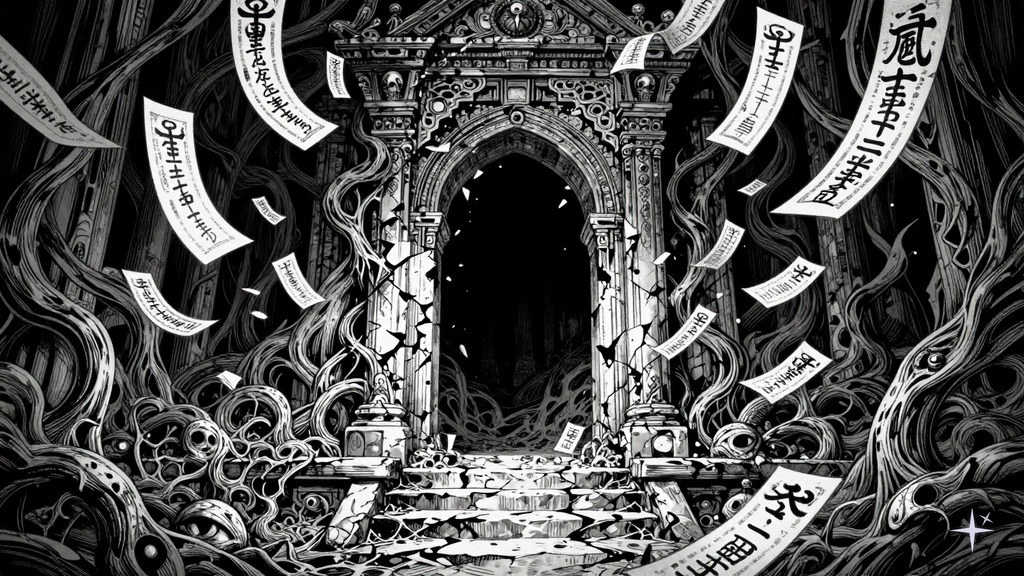
One thing that genuinely sets this manga apart is Oh!Great’s artwork. The level of detail in the supernatural sequences is remarkable. Aberrations aren’t just described in dialogue the way they are in the novels — they’re rendered with intricate, sometimes overwhelming visual design. The horror elements feel more immediate and visceral in manga form because you’re seeing these entities on the page, often across double-page spreads (artwork that stretches across two facing pages to create a single wide image — a technique used for the most impactful moments).
The character work is equally strong. Facial expressions, body language, and the way panels are arranged on each page carry emotional weight that complements the dialogue-heavy storytelling. Monogatari stories are known for characters talking — a lot — and Oh!Great finds ways to make those conversations visually dynamic rather than static. Even if you already know the story from other versions, Oh!Great’s visual interpretation gives you something genuinely new.
A Note on Content Maturity
The Bakemonogatari manga carries mature content. Oh!Great’s art style includes fanservice (sexualized character depictions), and some supernatural sequences contain graphic imagery. The series also deals with themes including emotional abuse, trauma, and the psychological weight behind each character’s affliction. It’s not age-restricted in the same way as explicitly adult manga, but it’s aimed at older teens and adults. If you’re considering this for a younger reader or are sensitive to sexual content and intense supernatural imagery, it’s worth previewing a volume before committing to the full set.
Does the Anime Cover the Same Story?
This is one of the most common points of confusion for people coming to the Bakemonogatari manga, so let’s clear it up.
The Bakemonogatari anime and the Bakemonogatari manga are not different parts of the same story told in sequence. They’re independent adaptations of the same source material — NISIOISIN’s Bakemonogatari novel. Think of it like two different film adaptations of the same book. The anime actually came first by nearly a decade, so the manga isn’t a “manga version of the anime.” Both went back to the original novel and told that story in their own way.
What’s Different Between Them?
The core story beats are the same: Araragi encounters people cursed by aberrations, and each storyline follows the resolution of those supernatural afflictions. The dialogue and character relationships are faithful to the source novel in both versions.
Where they diverge is in visual style and atmosphere. The anime leans into abstract, experimental visual direction — rapid text cuts, bold color choices, and unusual camera-like techniques that feel more like an art film than a typical animated series. The manga, by contrast, delivers a more grounded but hyper-detailed visual experience through Oh!Great’s illustration style. Supernatural entities that might appear as abstract shapes or fleeting images in the anime become fully realized, intricately drawn creatures in the manga. (The manga itself is black-and-white, as is standard for most manga — so if you’re used to the anime’s vivid color work, the experience will feel different in that regard too.)
Neither version is “better” — they’re genuinely different experiences built on the same foundation. If you loved the anime and want to revisit the story with a completely different visual approach, the manga delivers that. If you haven’t seen the anime at all, the manga stands entirely on its own.
Do I Need to Watch the Anime First?
No. The manga is a self-contained adaptation. You can read it with zero prior Monogatari knowledge and follow everything perfectly. If anything, coming in fresh might be the best way to experience Oh!Great’s artwork without preconceptions from the anime’s distinctive style.
Where to Buy the Complete Bakemonogatari Manga
All 22 volumes of the English edition are available now, published by Vertical Comics. The series is available in both physical and digital formats at major retailers.
Since the series is finished, you can collect it at whatever pace you want — binge the whole thing or pick up a few volumes at a time. There’s no waiting for future releases or worrying about cancellation.
If you’re ready to start from the beginning, volume 1 is the place to jump in. The character introductions and story arcs build on each other, so this isn’t a series where you can start at a random point:
Bakemonogatari Volume 1 — where the story begins.
And for collectors who want confirmation that the finale is out there waiting, here’s the concluding volume:
Bakemonogatari Volume 22 — the final volume of the series.
BAKEMONOGATARI (manga)
A Few Buying Tips
- Start with volume 1. The character introductions and story arcs build on each other from the very first chapter.
- This is a standalone manga. You don’t need to buy other Monogatari manga or light novels — which are short, illustrated Japanese novels typically published in a compact paperback format — to enjoy this series. It adapts the Bakemonogatari story specifically, and the manga tells that story completely within its 22 volumes.
- Physical volumes showcase Oh!Great’s art beautifully. The detailed artwork really benefits from print, especially the double-page spreads. Digital is perfectly fine too, but if art quality is a priority for you, physical is worth considering.
- Budget consideration: Each volume is priced at a standard manga retail price. Collecting all 22 volumes is a commitment, so if you’re testing the waters, grabbing the first two or three volumes is a low-risk way to see if the series clicks for you before going all in.
What Comes After Bakemonogatari in the Monogatari Series?
If you finish the 22-volume Bakemonogatari manga and want more from this universe, it helps to understand where the manga sits within the larger franchise.
The Bakemonogatari manga covers the first novel in the Monogatari series. The broader franchise, written by NISIOISIN, spans dozens of novels that continue far beyond the Bakemonogatari story. These include titles like Kizumonogatari (a prequel), Nisemonogatari, and many others — each following different characters and supernatural encounters in the same world.
As of the manga’s completion, the Bakemonogatari manga is the only Monogatari manga adaptation of this scope. If you want to continue beyond where the manga ends, the light novels are the primary way to do that. The anime adaptations also cover significantly more of the Monogatari timeline than the manga does, so those are another option for continuing the story.
But to be clear: the Bakemonogatari manga tells a complete, self-contained story. You can read all 22 volumes, close the last one, and feel satisfied without ever touching another Monogatari product. Everything beyond it is optional.
FAQ
How many volumes of Bakemonogatari manga are there?
There are 22 volumes in both the Japanese and English editions. The series is complete — no additional volumes are planned or forthcoming.
Is Bakemonogatari a horror manga?
It’s not pure horror, but it has strong supernatural and dark elements that overlap with the genre. The series features cursed spirits, aberrations, and psychological tension. Characters are haunted, possessed, and tormented by entities tied to their emotional pain. There’s also a significant amount of comedy and romance woven throughout, so it’s more of a supernatural blend — dark and eerie when dealing with aberrations, but balanced with warmth and humor in its character interactions. If you enjoy manga that mixes creepy, unsettling supernatural elements with character-driven drama and humor, Bakemonogatari fits that description well. And if you’re here because you were checking whether the series is finished before committing to it: yes, the complete 22-volume run is available now, so you can experience that full range from start to finish.
Do I need to read the light novels before the manga?
No. The manga is a self-contained adaptation of the Bakemonogatari novel. It tells the complete story within its 22 volumes, and you don’t need any outside context to follow or enjoy it.
That said, the light novels (short, illustrated Japanese novels — a format common in Japan that sits between traditional novels and manga) expand the broader Monogatari universe significantly. There are many more story arcs beyond what Bakemonogatari covers. If you finish the manga and want more, the novels are the way to continue deeper into the franchise. But they’re not a prerequisite for the manga at all.