If you’re wondering whether the Platinum End manga is finished or still ongoing — the short answer is yes, it’s done. The series is fully complete, and you can read the entire story right now without waiting for new volumes. Here’s everything worth knowing about the manga, its ending, and whether it’s worth picking up today.
Yes, Platinum End Manga Is Finished — Here’s When It Ended
Platinum End is a completed manga spanning 14 volumes. The final volume released in Japan on February 4, 2021, bringing the story to its conclusion. All 14 volumes are also available in English, published by VIZ Media — so English-speaking readers have full access to the complete series.
For anyone unfamiliar, manga are Japanese comics, typically read right-to-left, and most manga series are first published chapter-by-chapter in magazines before those chapters are collected into book-sized volumes you can buy individually. That’s exactly how Platinum End rolled out — it ran in Shueisha’s Jump SQ. magazine (a monthly Japanese manga magazine) before being collected into its 14-volume run.
The manga was created by Tsugumi Ohba (story) and Takeshi Obata (art), the same duo behind Death Note — one of the most well-known manga series ever made, a cat-and-mouse thriller about a student who gains the power to kill anyone by writing their name in a supernatural notebook. They also created Bakuman., a manga about aspiring manga creators trying to break into the industry. If you’ve read either of those, you already know what this creative team is capable of.
A TV anime adaptation also aired, beginning on October 8, 2021, for anyone who prefers watching to reading. Between the manga and the anime, you’ve got options for experiencing the story.
So if you’ve been holding off because you weren’t sure whether the manga was still running — no need to wait. The whole thing is wrapped up and ready to read from start to finish.
How Platinum End’s Ending Wraps Up the Story
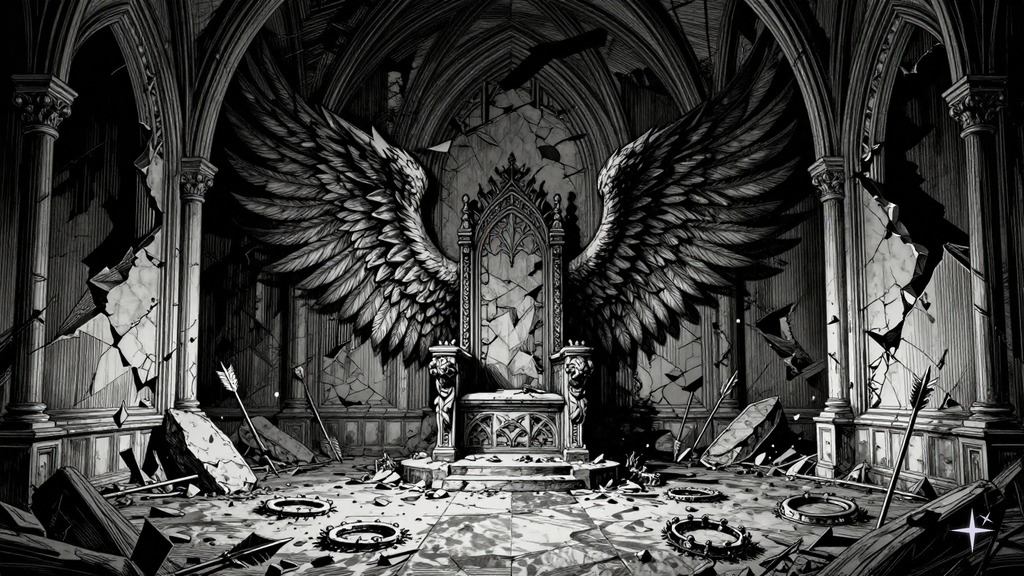
The premise of Platinum End is a dark competition with divine stakes. Thirteen candidates — including the protagonist, Mirai Kakehashi — are each chosen by an angel and granted supernatural powers: wings for flight and arrows that can control or kill. Their goal: compete against each other to become the next God. The manga leans hard into thriller territory early on, with life-and-death confrontations, strategic mind games, and a growing sense of paranoia among the candidates. If you’ve ever enjoyed a story where characters are thrown into a deadly contest with strict rules and escalating danger, that’s the core setup here.
But the ending takes the series in a direction many readers didn’t expect. Rather than building to a climactic final battle, the last stretch of the story pivots sharply toward philosophy. Questions about the nature of God, the meaning of free will, and whether humanity needs a creator at all take center stage. The action-thriller elements fade into the background as the story wrestles with these heavier ideas.
Spoiler Warning — Final Outcome
If you want to go in blind, skip this section. For everyone else who wants to know what actually happens:
The god candidate competition narrows down, and ultimately the remaining candidates are forced to confront whether anyone should become God at all. The story builds toward the idea that God’s role might be an impossible burden — and that the very concept of divinity may be more harmful than helpful. In the final chapters, the last candidate standing makes a choice that has cosmic-scale consequences rather than a personal triumph. The result is devastating and bleak: rather than a new God being crowned, the story reaches an ending rooted in the destruction of the divine role itself, with Mirai’s fate tied directly to that outcome. It’s an ending about ideas more than individual victory, and it leaves readers to sit with uncomfortable implications rather than offering clean resolution.
The tonal shift is significant. If the first half of the series feels like a supernatural death game, the ending feels closer to a philosophical thought experiment — less “who wins?” and more “should anyone win at all?” That contrast is central to how readers experience (and argue about) the conclusion.
Was the Ending Satisfying or Rushed?
This is where things get interesting — and where opinions split hard.
Platinum End’s ending is one of the most debated manga conclusions in recent memory. Reader reception has been genuinely mixed, and you’ll find passionate arguments on both sides.
What People Liked
Supporters of the ending praise its thematic ambition. The story tries to say something meaningful about existence, free will, and the weight of divine responsibility. It doesn’t take the easy route of a triumphant victory, and for readers who appreciate bold narrative swings, that willingness to go somewhere uncomfortable is the point. The ending asks questions it doesn’t fully answer — and some readers find that compelling rather than frustrating.
What People Didn’t Like
Critics argue the tonal shift feels abrupt. After spending many volumes building tension around a survival competition — complete with strategic battles and personal rivalries — the story pivots to existential philosophy in a way that can feel like a different manga entirely. Some readers found the conclusion intellectually cold and emotionally unsatisfying, especially after investing in Mirai’s struggles and the fates of the other candidates. The pacing of the final chapters also drew criticism, with some feeling the philosophical material needed more room to breathe.
The Death Note Comparison
It’s hard to talk about Platinum End’s reception without mentioning Death Note. Since both manga share the same creators, the comparison is unavoidable. Death Note delivered one of manga’s most iconic rivalries and a memorable ending of its own. Platinum End was always going to be measured against that standard, and for many readers, the comparison didn’t work in its favor. That said, if you haven’t read Death Note, you can absolutely enjoy Platinum End on its own terms — prior knowledge of the creators’ other work isn’t required.
The Honest Take
If you enjoy manga that takes philosophical risks and doesn’t prioritize giving readers a feel-good conclusion, Platinum End’s ending might work for you. If you’re expecting the same kind of tightly wound thriller payoff throughout, you may come away frustrated. Neither reaction is wrong — this is genuinely a series where your experience will vary depending on what you want from a story’s final act.
Series Details at a Glance
| Detail | Info |
|---|---|
| Title | Platinum End (プラチナエンド) |
| Story | Tsugumi Ohba |
| Art | Takeshi Obata |
| Volumes | 14 (both Japanese and English) |
| Status | Completed |
| Publisher (JP) | Shueisha (Jump SQ.) |
| Publisher (EN) | VIZ Media |
| EN Rating | Mature |
| Anime | TV series (aired starting October 2021) |
| Other works by creators | Death Note, Bakuman. |
The Mature rating from VIZ Media is worth noting if you’re buying this for someone younger or if you’re sensitive to heavy content. The series deals with suicide, violence, manipulation, and existential despair. These themes are woven into the narrative throughout — particularly suicide, which is central to Mirai’s backstory from the very first chapter. If you read horror manga regularly, none of this will be beyond what you’re used to, but it’s worth knowing before you buy.
Where to Buy the Complete Manga
Since the Platinum End manga is fully complete at 14 volumes in English, you can buy the entire series and read it straight through — no cliffhangers, no waiting for the next release.
All 14 volumes are published by VIZ Media and available in both physical and digital formats. You can find physical copies at major bookstores, online retailers, and manga specialty shops. The series is widely stocked, so availability shouldn’t be an issue.
For the most convenient option, you can grab the complete set or start with Volume 1 to see if the series clicks for you before committing to all 14 books.
Platinum End, Vol. 14 (final volume)
Since the manga has been complete for several years now, you’ll often find used copies in good condition at lower prices too. Completed manga series circulate frequently in secondhand markets, and physical volumes tend to stay in solid shape with normal care.
Digital readers will find the full series available through VIZ Media’s digital platform, Amazon Kindle, and other major digital manga storefronts. Digital is a solid option if you prefer reading on a tablet or phone — and at 14 volumes, the series is a manageable commitment either way.
Who Should Still Pick Up Platinum End Today
Even though the ending is polarizing, Platinum End is still a manga worth considering for the right reader. Here’s who’s most likely to enjoy it:
Fans of deadly competition stories. If you love manga where characters compete in high-stakes contests with supernatural rules and lethal consequences, the bulk of Platinum End delivers exactly that. The angel powers create interesting strategic possibilities, and the tension between candidates drives most of the story. Think stories where a group of strangers are pitted against each other with escalating danger — that’s the framework here.
Death Note fans who want more from the same creators. If you loved the intensity of Death Note and want to see Ohba and Obata tackle divine horror themes, Platinum End is the natural next read. Both manga share common threads — protagonists navigating moral gray areas, supernatural abilities with specific rules, and characters trying to outthink each other — even if the execution goes in a different direction.
Readers who enjoy philosophical manga. If you appreciate stories that ask uncomfortable questions about existence, purpose, and whether humanity can handle the concept of God, the later volumes of Platinum End will give you plenty to think about. The ending is more rewarding if you go in expecting a cerebral experience rather than a pure action payoff.
Horror manga readers comfortable with heavy themes. The Mature rating reflects genuinely dark content — suicide is a core theme from the opening pages, violence is frequent and serious, and despair runs through the story. It’s worth flagging for readers who might be newer to darker material, though the series handles these subjects with narrative seriousness.
A fair warning: go in expecting a cerebral, polarizing ending rather than a crowd-pleasing finale. Readers who adjust their expectations tend to have a better experience with the manga overall. The first several volumes are genuinely gripping thriller manga regardless — even readers who disliked the ending generally agree the setup and middle act are strong.
Platinum End is a complete, thought-provoking manga from two of the most notable creators in the medium, and at 14 volumes, it’s a manageable commitment. Grab Volume 1, see if the premise hooks you, and go from there.