Can You Read Junji Ito’s Sensor on MangaDex?
The short answer: probably not, at least not in any complete or reliable way.
For anyone unfamiliar, MangaDex is a popular website where fans upload manga translations (called scanlations — fan-made scans and translations of manga that haven’t been officially released in a given language, or that fans translated independently). It’s free to use, which is a big part of its appeal.
Sensor is licensed in English by VIZ Media, one of the largest publishers of translated manga in North America. When a company like VIZ buys the rights to publish a manga in English, they control how it’s distributed — and that means free fan translations on sites like MangaDex typically get taken down.
Here’s how that works in practice:
- When a manga gets an official English license, MangaDex removes or restricts fan-translated chapters for English-speaking regions
- Even if a listing for Sensor exists on MangaDex, the actual chapters are usually unavailable or incomplete
- This isn’t a glitch or oversight — it’s MangaDex respecting the publisher’s license
What this means for you: If you’re specifically looking for Sensor, MangaDex isn’t going to be a reliable source. The most consistent way to read it is through official channels, which we’ll cover below.
If cost is the reason you were looking on MangaDex, here’s the good news: your local library very likely carries Junji Ito’s manga, and Sensor’s single-volume format makes it especially library-friendly. Many library systems also offer free digital lending through apps like Hoopla and Libby (also called OverDrive) — these are free apps that connect to your library card and let you borrow digital books, including manga, at no cost. It’s worth checking before you spend anything.
Beyond the free library route, Sensor is one of the easier Junji Ito titles to access because it’s a single standalone volume — no multi-volume commitment, no tracking down out-of-print editions. One book, one purchase, done.
What Is Sensor About? (Spoiler-Free Overview)
Sensor is a standalone, single-volume manga by Junji Ito, originally published in Japan in 2019 by Asahi Shimbun Publications. A standalone volume means the entire story is contained in one book — no sequels, no prequels, no additional volumes needed. The English edition from VIZ Media runs approximately 240 pages, which translates to roughly a one-to-two-hour read depending on how much time you spend with the artwork.
The Premise
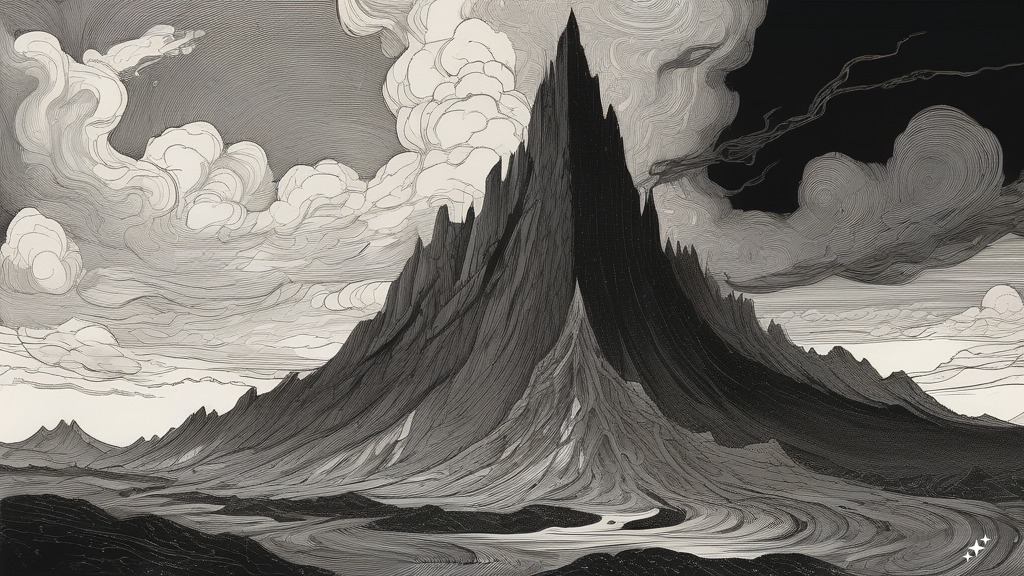
A woman named Kyoko Byakuya travels to a remote mountain village nestled near a volcano. The village has a strange history — volcanic eruptions have produced golden, hair-like threads that drift down from the sky and blanket the landscape. The villagers have built an entire belief system around these threads, worshipping them as something divine.
Kyoko’s encounter with the village sets off a chain of supernatural events that spirals into full-blown cosmic horror — a genre focused on vast, unknowable forces that make humanity feel insignificant in the face of the universe. The story moves from the volcanic mountain into broader territory involving light, darkness, and forces that dwarf human understanding.
Tone and Themes
If you’ve read other Junji Ito works, Sensor occupies a specific niche in his catalog:
- Cosmic horror is front and center — this isn’t body horror (horror focused on grotesque transformations of the human body) or psychological dread, though those elements appear. The scale here is enormous, touching on themes of entities and forces beyond human comprehension — similar in spirit to the writings of H.P. Lovecraft, the early 20th-century author who pioneered this kind of horror
- Sensory perception plays a key role — the title “Sensor” isn’t random. The story explores how humans perceive and process the incomprehensible
- Cult-like devotion — the mountain village’s worship of the golden threads is unsettling in a quiet, creeping way
- Continuous narrative — unlike Ito’s anthology collections (books of short, unconnected stories, like Shiver, Smashed, and Fragments of Horror), Sensor tells one sustained story across its full page count
How It Compares to Other Ito Works
This is worth flagging because it shapes expectations:
- Sensor is not episodic (meaning it doesn’t tell a series of separate short stories). If you love Ito because of his short stories — the tight, punchy tales with devastating final-page reveals — Sensor works differently. It’s building toward something larger across the entire volume.
- It’s closest in feel to Remina, Ito’s other cosmic horror single volume about a planet hurtling toward Earth. Both go big on scale and cosmic dread.
- It’s less like Uzumaki than you might expect. Uzumaki has a creeping, escalating structure where each chapter adds a new layer of spiral-themed horror. Sensor is more of a single mystery unfolding.
One Honest Note
Sensor is one of Junji Ito’s most polarizing works. Reader reactions tend to split sharply. The first half — the mountain village, the golden threads, the atmosphere — is widely praised. The second half and especially the ending divide people. Some readers feel the cosmic horror payoff lands beautifully. Others feel the story loses its footing as the scope expands.
Fans of cosmic horror who enjoy ambiguity and aren’t expecting a neatly tied ending tend to appreciate it more. If you prefer Ito’s work where the horror is visceral and concrete (like Uzumaki’s body transformations), the more abstract cosmic elements here might not hit the same way.
That said, it’s a single volume. Even if the ending doesn’t fully work for you, the art alone is worth the read. Which brings us to…
Where to Read Sensor Legally
Since MangaDex isn’t a reliable option for this title, here are the actual ways to get your hands on Sensor.
Physical Hardcover
The English-language hardcover was released by VIZ Media in August 2021. It’s widely available:
- Amazon — Search for “Sensor” by Junji Ito (it’s easy to find and usually in stock)
- Barnes & Noble — Available both in-store and online
- Local comic shops — Many carry VIZ’s Junji Ito releases, especially the popular titles
- Other online bookstores — Check your preferred retailer
The physical edition has a striking cover and Ito’s detailed artwork benefits from being held in your hands at full print size. For a single-volume manga at around 240 pages, it’s a very manageable purchase.
Digital Options
If you prefer reading digitally, Sensor is available across all major platforms:
- Kindle (Amazon)
- Apple Books
- Kobo
- Google Play Books
- VIZ.com digital store
Digital editions are usually a few dollars cheaper than physical, and you get instant access.
Library Options
This is the free legal route, and it’s genuinely worth trying:
- Check your local library’s catalog — Many libraries stock Junji Ito’s manga, especially his VIZ releases. Sensor’s single-volume format makes it a library-friendly title.
- Hoopla — A free app that connects to your library card and lets you borrow digital books, including manga. If your library subscribes, check for Sensor here.
- Libby (OverDrive) — Another free digital library lending app. Works the same way — you just need a library card.
One thing to note: unlike some manga that offer free chapter previews on VIZ’s app or website, Sensor does not have a free official preview. It’s purchase-only (or library-borrow).
Quick Comparison: How to Get Sensor
| Method | Cost | Format | Access Speed |
|---|---|---|---|
| Physical hardcover | ~$13-17 USD | Shipping time | |
| Kindle / digital purchase | ~$10-14 USD | Digital | Instant |
| Library (physical) | Free | Depends on availability | |
| Library (Hoopla/Libby) | Free | Digital | Instant if available |
| MangaDex | N/A | N/A | Not reliably available |
Is Sensor Worth Buying? What to Expect
Let’s break this down practically, since you’re deciding whether to spend money (or a library trip) on this.
What Works
The art is phenomenal. Even by Ito’s standards, Sensor has some breathtaking pages. The volcanic landscapes, the golden threads drifting through the air, the cosmic imagery in the second half — there are panels in this book that could be framed. Ito’s linework and detail are at their peak here, with dense patterns of intersecting lines creating incredible texture and depth.
The atmosphere in the first half is incredible. The mountain village sequence is genuinely eerie. The quiet wrongness of the villagers, the beauty of the golden threads contrasted with the volcanic destruction, Kyoko’s growing unease — it’s classic Ito building dread through imagery and pacing.
It’s a complete story in one volume. No cliffhangers, no waiting for the next volume, no 14-volume commitment. You sit down, read it in one or two sessions (roughly one to two hours), and you’ve experienced the whole thing. At roughly 240 pages, it respects your time.
What Divides Readers
The ending. Without spoiling anything, the story’s resolution leans heavily into abstract cosmic horror territory. If you’re comfortable with ambiguity — the idea that some things are simply beyond human comprehension and the story reflects that — you’ll likely find it satisfying. If you want clear answers and a tightly resolved plot, you might feel let down.
The pacing in the second half. The story shifts gears significantly around the midpoint. The intimate, village-focused horror opens up into something much larger and more abstract. Some readers find this thrilling. Others feel it loses the grounded tension that made the first half so effective.
Character depth. Kyoko is more of a vehicle for experiencing the horror than a deeply developed character. This is common in Ito’s work — his stories are typically driven by concept and atmosphere rather than character arcs — but it’s more noticeable in a full-volume narrative than in a short story.
Who Will Love This
- Fans of cosmic horror and fiction in the tradition of H.P. Lovecraft
- Readers who enjoyed Remina and want more of that cosmic scale from Ito
- Anyone who appreciates Ito’s art and wants to see him draw volcanic landscapes and cosmic entities
- Readers looking for a quick, self-contained Ito experience
Who Might Want to Start Elsewhere
- If this is your first Junji Ito manga, Sensor probably isn’t the ideal starting point. His short story collections give a broader and more representative introduction to his style, and Uzumaki is widely considered his masterpiece — it’s the title most fans recommend as a first read. Either of those will give you a better sense of what makes Ito special before you try his more experimental work.
- If you prefer body horror or psychological horror over cosmic abstraction, other Ito works will hit harder.
- If ambiguous endings frustrate you, be aware going in.
Uzumaki (3-in-1 Deluxe Edition)
How It Stacks Up Against Other Ito Single Volumes
| Title | Length | Horror Type | Ending Reception |
|---|---|---|---|
| Sensor — ~240 pages) | Cosmic horror, mystery | Divisive | |
| Remina | 1 volume (~240 pages) | Cosmic horror, survival | Mixed to positive |
| Gyo | 2 volumes (or 1 deluxe) | Body horror, sci-fi | Polarizing but memorable |
| Dissolving Classroom | 1 volume | Dark comedy horror | Generally positive |
| Smashed | 1 volume (short story collection) | Varied horror shorts | Widely praised |
Other Junji Ito Manga to Explore After Sensor
If Sensor clicked for you — or even if it didn’t quite land but you’re intrigued by Ito’s art and ideas — here’s where to go next.
Uzumaki (3-in-1 Deluxe Edition)
Uzumaki (3-in-1 Deluxe Edition) is widely considered Ito’s masterpiece, and for good reason. A small coastal town becomes obsessed with spirals — the shape itself becomes a source of cosmic horror. The escalation across its chapters is masterful, moving from unsettling oddities to full apocalyptic body horror.
Uzumaki (3-in-1 Deluxe Edition)
Why read it after Sensor: If you liked Sensor’s cosmic themes but wanted tighter pacing and more visceral horror, Uzumaki delivers on both fronts. The deluxe edition collects all three volumes in one hardcover.
Remina
A newly discovered planet is named after a scientist’s daughter. The planet begins hurtling toward Earth. Society turns on the girl Remina, blaming her for the approaching catastrophe. Cosmic horror meets mob mentality.
Why read it after Sensor: This is the closest title in Ito’s catalog to Sensor’s cosmic horror tone. If you enjoyed Sensor’s scale and themes of unknowable forces, Remina goes even bigger and wilder. It’s also a single volume, so the commitment is identical.
Tomie
Ito’s first published series (his debut) about an impossibly beautiful girl who cannot die — and who drives everyone around her to obsession and murder. More episodic than Sensor, with each chapter exploring a different encounter with Tomie.
Why read it after Sensor: If Sensor’s continuous narrative didn’t quite work for you but you want more Ito, Tomie’s chapter-by-chapter structure lets you dip in and out. Each chapter is essentially a self-contained horror story.
Fragments of Horror and Shiver: Selected Stories
Two short story collections that showcase Ito’s range. Shiver includes some of his most famous standalone stories. Fragments of Horror leans into more experimental territory.
Junji Ito Story Collection 3 books set bundles Fragments of Horror with two other Ito collections if you want to dive deep into his short-form work.
Note: this is a multi-book set put together by a third-party seller, not an official publisher box set.
Junji Ito Story Collection 3 books set: Lovesickness, Deserter, Fragments of Horror
Why read them after Sensor: If you want to experience the tight, devastating short-story format that made Ito famous. These collections include stories with those iconic final-page horror reveals that Ito does better than anyone.
Dissolving Classroom
Dissolving Classroom follows a brother and sister who travel from town to town. The brother apologizes obsessively — and his apologies have horrifying physical consequences for everyone around him. Dark comedy meets body horror.
Dissolving Classroom (Junji Ito)
Why read it after Sensor: It’s a completely different tone — darkly funny where Sensor is atmospheric and serious. A good change of pace after Sensor’s heavy cosmic dread, and another affordable single volume.
A Quick Note on Availability
Most of Junji Ito’s major works are published in English by VIZ Media, which means the same MangaDex situation applies across the board — licensed titles aren’t reliably available there. The good news is that VIZ keeps Ito’s catalog well-stocked and in print. Physical copies are widely available at bookstores and online retailers, and digital editions are on all major platforms.
In terms of free versus paid access: none of Ito’s single-volume works (Sensor, Remina, Dissolving Classroom, etc.) offer free chapter previews through VIZ’s website or app. They’re all purchase-or-borrow only. Your best free option across the board is your local library — Ito’s manga is popular enough that many library systems carry multiple titles in both physical and digital formats.
Final Thoughts
If you came here searching for Sensor on MangaDex, the reality is that it’s a licensed VIZ title and won’t be reliably available on that platform. The good news is that it’s a single, affordable volume that’s easy to find through official channels — physical, digital, or at your local library.
Sensor is a fascinating, beautiful, and occasionally frustrating entry in Junji Ito’s catalog. The cosmic horror imagery is some of his best work, the mountain village sequence is genuinely haunting, and the themes of perception and cosmic insignificance give it a philosophical weight that some of his other works don’t attempt.
Is it his best manga? Probably not — most readers would point to Uzumaki or his short story collections for that. But it’s a unique, ambitious work that’s absolutely worth experiencing, especially if cosmic horror is your thing. At 240 pages and a single volume, the time and money investment is minimal.
Check your library catalog first — you might be able to read it tonight for free. Otherwise, grab a copy from your preferred bookstore and see for yourself. That’s the beauty of a standalone volume — low risk, potentially huge reward.