What Is Gantz Manga About? — Premise in 60 Seconds
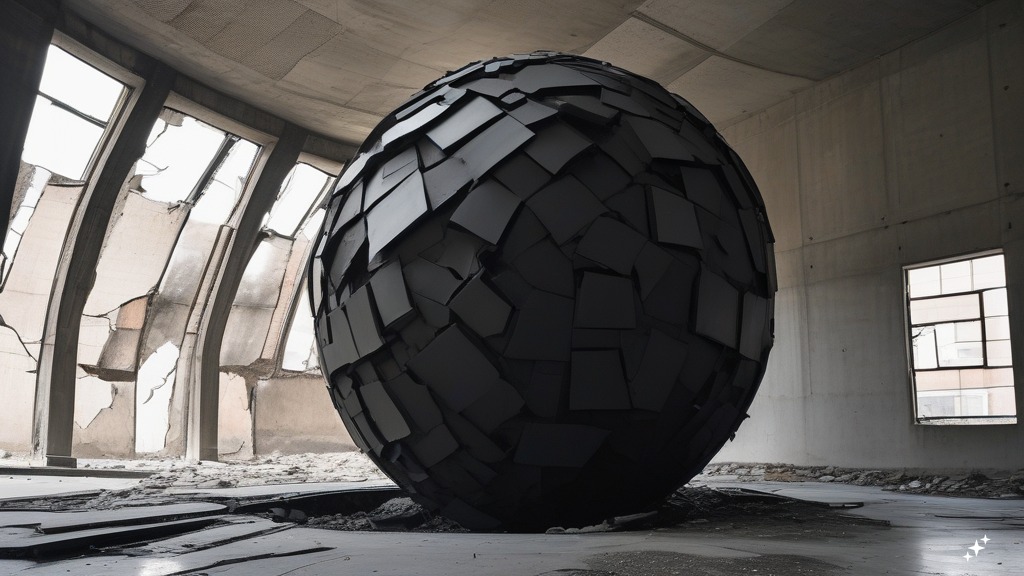
Two high school students — Kei Kurono and Masaru Kato — die in a subway accident. Instead of staying dead, they’re teleported to a bare Tokyo apartment where a featureless black sphere called Gantz sits in the middle of the room.
Gantz gives them skintight suits, bizarre weapons, and a target. Their job: hunt down and kill aliens hiding in the city. Complete the mission and survive, and you earn points. Die during the mission, and you’re gone for real this time.
Reach 100 points and you get a choice — win your freedom and have your memory wiped, revive a dead teammate, or receive an upgraded weapon.
That’s the setup. What makes Gantz remarkable is where it goes from there. The missions escalate from small neighborhood hunts to something much, much bigger. By the final stretch of the series, the scope has expanded into full-scale global alien invasion.
Gantz is a seinen manga — meaning it’s aimed at adult male readers rather than teens — created by Hiroya Oku. It was published chapter-by-chapter in Weekly Young Jump (a manga anthology magazine) from 2000 to 2013, running for 383 chapters across 37 volumes. A volume collects roughly 10 chapters into a single book. The series is complete — no waiting for new chapters.
Why Gantz Still Hits Hard — What Makes It Worth Reading
Gantz has been finished for over a decade now, and people still talk about it constantly. Here’s why it holds up.
Anyone can die, and Oku means it. This isn’t a series where main characters are protected from death by narrative convenience. People you’ve spent volumes getting attached to will be torn apart in a single panel. That threat is real from chapter one to the final page, and it creates a level of tension that most action manga can’t match.
The art is something else. Oku draws in a hyper-detailed, almost photorealistic style. The alien designs are wildly creative — genuinely unsettling creatures that range from absurd to terrifying. And the action sequences are meticulously staged. You can follow every movement, every impact. When something violent happens (and it happens constantly), you feel the weight of it.
It asks interesting questions about ordinary people in impossible situations. Not everyone in the Gantz room is brave. Some people freeze, some turn selfish, some become cruel. Watching how different personalities react to being handed a gun and told to kill or die — that’s the real engine of the story.
The escalation never stops. Gantz starts as a weird, contained survival game. Then the missions get harder. Then the teams get bigger. Then the world starts to notice. The scope of the story keeps expanding in ways that feel earned because Oku laid the groundwork volumes in advance.
But here’s the honest part: Gantz is not for everyone, and the reasons it’s not for everyone are baked into its DNA. The series is deeply nihilistic. It contains gratuitous violence, nudity, and sexual content — some of which serves the story’s themes, and some of which really doesn’t. That’s both a feature of the manga’s unflinching approach and a completely valid reason to skip it. The content warnings section at the bottom of this guide goes into more detail.
Every Major Arc Explained — Spoiler-Free Gantz Manga Guide
Gantz has ten major arcs (named story segments, each covering a set of missions) that carry the story from a small apartment in Tokyo to the end of the world. Here’s what each section covers without spoiling the specific events.
The major arcs in order: Onion Alien, Tanaka Alien, Buddhist Temple, Shorty Alien, Kill Kei Kurono, Dinosaur Alien, Ring Alien, Oni Alien (Osaka), Italian, and Katastrophe (Invasion).
Early Missions — Onion Alien through Buddhist Temple (Vols. 1–10)
This is your introduction to the Gantz room, the rules, and the cast. You meet Kurono and Kato, learn how the point system works, and watch the first few teams stumble through missions they barely understand.
The early arcs establish the most important thing about Gantz: the stakes are real. Characters you like — characters who seem important — will die. Oku trains you early to never feel safe, and it makes every mission after this land harder.
The alien designs in these opening arcs are deliberately strange. The Onion Alien is almost goofy-looking, which makes the sudden brutality of the fights even more jarring. That contrast between the absurd and the horrific is a signature Gantz move.
If you’re testing whether Gantz is for you, these early volumes will tell you everything you need to know. If you can handle the tone and content here, you’re good for the rest.
Mid-Game — Shorty Alien through Oni Alien / Osaka (Vols. 10–26)
This is where the series really opens up. The team roster changes — sometimes dramatically — and the missions escalate in difficulty and scale. New characters are introduced, some of whom become central to the story.
The Osaka arc (volumes 20–26) is widely considered the peak of the entire series. It features a massive, multi-team battle where Gantz rooms from different cities are pitted against the same enormous threat simultaneously. The action choreography here is incredible, the stakes are immense, and the body count is enormous.
If you’ve seen the Gantz:O CGI film, this is the arc it adapts. But the manga version has significantly more depth — more characters, more buildup, more payoff.
The mid-game section also deepens the mystery of what Gantz actually is and why the hunts are happening. Oku starts dropping hints that there’s something much larger going on behind the black sphere.
Endgame — Italian Arc through Katastrophe / Invasion (Vols. 26–37)
The final stretch of Gantz changes the entire nature of the story. What started as a survival game transforms into a full-scale war as aliens invade Earth on a global level.
The Katastrophe arc (also called the Invasion arc) is massive in scope. Cities fall. Millions die. The Gantz technology is deployed on a scale that was previously unimaginable.
This is the most divisive section of the manga. Some readers love the escalation — it feels like the logical conclusion of everything the series has been building toward. Others feel the story loses focus when it moves from tight, mission-based tension to sprawling warfare.
The ending itself is abrupt. It provides closure for Kurono’s personal arc but leaves some larger questions about the Gantz world unanswered. Depending on what you’re looking for in an ending, this will either feel appropriately restrained or frustratingly incomplete.
Honest take: the Osaka arc is the high point. If the final stretch doesn’t land as hard for you, that’s a common experience, and it doesn’t erase the incredible run that came before it.
Anime, Movie, and Spinoffs — How They Connect to the Manga
Gantz has been adapted multiple times across different formats. Here’s how each one relates to the source material. A quick note for anyone new to these terms: manga is the printed comic, anime is the animated TV series, and a CGI film is a computer-generated movie — three different ways to experience the same story.
Gantz Anime (2004) — 26 Episodes
The anime adaptation covers roughly the first 90 chapters of the manga (out of 383), then diverges into an anime-original ending.
The animation quality is decent for 2004, and it captures the tone of the early arcs well. But it cuts and changes significant content from the manga — entire character subplots are dropped, and the anime invents its own ending rather than following the story where Oku eventually took it (somewhere much bigger and more ambitious).
The recommendation: If you watch the anime and enjoy it, read the manga from the beginning anyway. You’ll get the full experience, including everything the anime cut or changed. If you’re choosing one or the other, the manga is the way to go.
Gantz:O (2016 CGI Film)
This is a computer-animated film that adapts the Osaka arc — the section widely considered the best part of the series.
Gantz:O is genuinely impressive. The animation holds up well, the action is spectacular, and it captures the intensity of the Osaka arc faithfully. It’s available on Netflix (check your region) and is a great way to get a taste of Gantz before committing to 37 volumes.
Just know that the film drops you into the middle of the story. You won’t have the full context for who everyone is or why the Gantz system works the way it does. It still works as a standalone experience, but the manga gives you the complete picture.
Gantz:G — 3 Volumes
A spinoff — a separate story set in the same world — with a different cast operating under the same Gantz rules. Same basic premise — people die, get teleported, hunt aliens — but with new characters and new missions. Art by Keita Iizuka, based on Oku’s original concept.
This is a short read at only 3 volumes. It’s a nice side dish if you finish the main series and want more of the Gantz world, but it’s entirely optional.
Gantz:E — 8 Volumes and Counting
The most recent spinoff, and a genuinely creative one. Gantz:E takes the Gantz concept and drops it into the Edo period of Japanese history — feudal Japan, roughly the 1600s through the 1800s. Story by Hiroya Oku, art by Jin Kagetsu.
It ran in Weekly Young Jump from 2020 to 2023, then moved to Shueisha’s YanJan! app, where it’s still going. One catch: unlike the main series and Gantz:G, there’s no official English release yet.
Eight volumes deep, it’s a self-contained spinoff that works whether you’re a longtime Gantz fan or just curious about a historical twist on the concept.
How to Read Gantz Manga — Volumes, Omnibus, and Reading Order
Format Options
| Format | Details | Best For |
|---|---|---|
| Single Volumes | 37 volumes, published by Dark Horse Comics | Collectors who want individual books |
| Omnibus Editions | 12 omnibus volumes (each collects 3 volumes into one thicker book) | More affordable way to collect — significantly cheaper per volume than buying singles |
| Digital | Available on Kindle and other digital platforms | Readers who prefer screens or want instant access |
The omnibus editions are the most cost-effective way to read the physical manga. Each one collects three volumes, so you get through the series faster and spend less overall.
All volumes are currently in print from Dark Horse — no issues with availability. Dark Horse is a well-regarded publisher and their Gantz translation reads cleanly throughout the series.
Reading Order
The reading order is straightforward:
- Gantz (main series, 37 volumes) — Read this first. It’s the core story.
- Gantz:G (3 volumes) — Optional spinoff with a new cast. Read after the main series.
- Gantz:E (8 volumes and counting) — Edo-period spinoff. Read anytime after the main series, or even standalone if the concept grabs you.
There’s no complicated continuity between the spinoffs and the main series. Read the main 37 volumes, and everything else is bonus content.
Where to Start Buying
If you want to test the waters before going all-in on 37 volumes, here are a few sensible starting points:
- Gantz Omnibus Vol. 1 — Covers the first three volumes of the story. This gives you the setup, the first mission, and enough content to know whether the series is for you.
Gantz Omnibus Vol.1
- Gantz:O film — If you’d rather watch before you read, the CGI film on Netflix adapts the best arc in the series and works as a standalone experience.
- Gantz:E — If you want something shorter, this Edo-period spinoff stands on its own. Just note it’s Japanese-only for now, so there’s no English edition to buy yet.
Content Warnings — What to Expect Before You Start
This section exists because Gantz is significantly more graphic than most manga, even compared to other horror and adult-oriented series. Knowing what you’re getting into before you spend money is important.
- Extreme graphic violence and gore throughout the entire series. This is not occasional — it is constant. Characters are dismembered, crushed, torn apart, and killed in highly detailed, realistic art. The violence is a core element of the series, not an occasional shock moment.
- Frequent nudity and sexual content. The series contains extensive nudity across its run. Some of it is connected to character relationships; some of it exists purely as gratuitous content aimed at a certain segment of the audience.
- Scenes of sexual assault, particularly in the early volumes. These scenes are disturbing and are not handled with particular sensitivity.
- Deeply nihilistic tone. The series does not offer easy comfort. Bad things happen to good people with no narrative justification. That’s part of the point Oku is making, but it can be genuinely draining across 37 volumes.
- Rated Mature. Not suitable for younger readers by any measure.
Here’s the straightforward version: if you are sensitive to graphic violence, sexual content, or depictions of sexual assault, Gantz is not a good fit for you, and no amount of “but the story is really good” changes what’s actually on the page. There are plenty of excellent horror and action manga that don’t require this level of content tolerance.
If you can handle the above and you’re drawn to high-stakes survival fiction with incredible art, Gantz manga is one of the most intense, memorable series you’ll ever read. Grab that first omnibus and see for yourself.