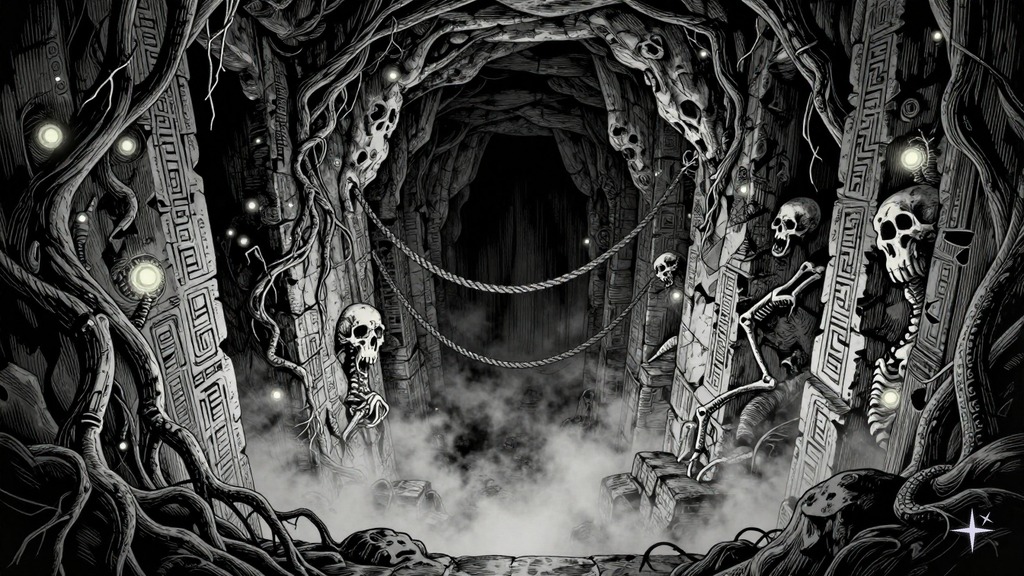
If you’re searching for manga like Made in Abyss, you already know how hard that mix of wonder and dread is to find anywhere else. Adorable character designs next to scenes that made you set the book down and stare at a wall — it’s not something you just replace.
But you can find manga that scratch similar itches. The trick is knowing which itch you’re trying to scratch, because Made in Abyss does a lot of things at once, and no single series replicates all of them. So instead of pretending there’s one perfect substitute, this guide breaks down the core appeal into categories and matches each one with series worth your time. Twelve picks, organized by what hooked you hardest.
What Makes Made in Abyss So Hard to Replace
Made in Abyss by Akihito Tsukushi (つくしあきひと) is an ongoing dark-fantasy adventure manga — meaning the story is still being published, with new chapters releasing over time. The English edition is published by Seven Seas Entertainment (the company that translates and prints it for English-speaking readers), with 14 volumes currently available. It’s been running since 2013, serialized in Bamboo Comics, and shows no signs of stopping.
For readers who haven’t finished the series yet or are still considering picking it up: Made in Abyss follows two young protagonists — Riko, a determined girl obsessed with exploring a massive pit called the Abyss, and Reg, a robot boy with no memory of his origins — as they descend into increasingly dangerous depths. What makes the series feel irreplaceable comes down to a handful of appeal pillars that rarely appear together in one work:
- Mysterious vertical world — The Abyss itself is the star. A massive, layered pit where every level deeper brings stranger wonders and worse dangers. The sense of descending into the unknown drives everything.
- Body horror consequences — Going deeper has a physical cost. The Curse of the Abyss — a phenomenon that causes increasingly severe physical harm to anyone who ascends from the lower layers — isn’t metaphorical. It warps, breaks, and reshapes bodies. Every step forward is paid for in flesh.
- Childlike protagonists facing brutal reality — Riko and Reg are kids. The manga doesn’t soften the world for them. That contrast between their innocence and the horrors they encounter creates a tension most series won’t touch.
- Lore-dense exploration — Relics, creatures, the layered history of civilizations that came before. Made in Abyss rewards the reader who pays attention to every background detail. (By “lore,” we mean the internal history, mythology, and rules of the fictional world — the kind of detail you piece together across many chapters.)
- Emotional gut-punches — It earns its devastating moments through genuine attachment. You care about these characters, and the story knows it.
Every recommendation below connects to at least one of these pillars. Some hit two or three. None hit all five — that’s what makes the original special.
A note on format: manga is published in collected volumes, each typically running around 180–200 pages. When this guide describes a series as “completed,” that means the story has reached its intended ending — you can read the whole thing without waiting months or years for new releases. “Ongoing” means the story is still being published.
If you’re not caught up on the series itself, Made in Abyss Vol. 14 is the latest English release.
Made in Abyss Vol. 14
Dark Exploration and Forbidden Worlds
If the part of Made in Abyss that hooked you was the going deeper — the feeling that the environment itself is hostile and unknowable, that the architecture of the world is trying to kill you — these two picks lean hard into that particular dread.
Blame! by Tsutomu Nihei
Blame! is one of the most atmospheric manga ever put to paper. Set inside an impossibly vast megastructure — imagine a self-replicating city that has expanded so far beyond its original boundaries that no one knows where it ends, with corridors stretching for thousands of kilometers in every direction — it follows a lone wanderer named Kyrii searching for a human with specific genetic markers. That’s about as much plot as you get, and that’s the point.
Tsutomu Nihei lets the architecture do the talking. Pages and pages of cavernous spaces, impossible structures, and oppressive silence. Dialogue is sparse. Exposition is almost nonexistent. You piece together the world the same way Kyrii does: by walking through it and surviving what it throws at you.
The appeal match to Made in Abyss is the environmental dread. The megastructure in Blame! functions a lot like the Abyss — it’s vertical, labyrinthine, and actively hostile. Going deeper (or further, in this case) means encountering stranger and more dangerous entities. The Safeguard — automated defense systems that attack unauthorized humans — serve a similar role to the creatures of the Abyss. The territory itself fights back.
Where it differs: Blame! is cold. There’s no warmth or emotional bonding between characters the way Riko and Reg share in Made in Abyss. It’s a lonely, almost meditative reading experience. If you want the exploration and the dread without the emotional attachment, this is your pick. It’s also a completed series, so you can read the whole thing without waiting.
Biomega by Tsutomu Nihei
Another Nihei work, but with a very different energy. Biomega takes place in a world overrun by a synthetic virus that transforms humans into drone-like creatures. The protagonist, Zoichi Kanoe, rides a motorcycle through decaying urban landscapes at terrifying speed, trying to locate individuals immune to the virus.
Where Blame! is slow and contemplative, Biomega is relentless forward momentum. The appeal match here is body transformation horror combined with that Made in Abyss feeling of pushing through dangerous terrain because stopping isn’t an option. The virus reshapes people in grotesque ways, and the deeper Zoichi goes into infected zones, the worse things get.
It’s shorter and more action-oriented than Blame!, which makes it a good entry point if you want Nihei’s world-building sense without the commitment of his longer works. The decaying world has that same quality as the deeper layers of the Abyss — beautiful in its destruction, terrifying in its implications.
Manga Like Made in Abyss: Cute Characters, Cruel World
This is Made in Abyss’s signature trick and the thing people talk about most. The art style is soft and rounded. The characters are adorable. And then the story does that to them. If the tonal whiplash — that jarring shift between warm, gentle moments and sudden horror — is what hit you hardest, these three series understand that weapon.
The Promised Neverland
The Promised Neverland is probably the single most-recommended companion to Made in Abyss, and for good reason. A group of children live in an idyllic orphanage called Grace Field House, lovingly cared for by their “Mom.” Then they discover what’s actually happening to the kids who get “adopted.”
The appeal overlap is almost eerie. You’ve got young protagonists in a world that looks safe and warm on the surface but hides something monstrous underneath. The children have to use their intelligence and resourcefulness to survive against threats that vastly outpower them. The art style keeps that soft, appealing look even as the horror escalates — a deliberate choice that mirrors Made in Abyss’s approach.
Where The Promised Neverland leans harder is in the psychological horror and strategic survival angle. The early story sections in particular play like a chess match between the children and Mom, and the tension is incredible. It’s a completed series, which is a plus if you want a full story with a definitive ending.
The first volume sets the hook fast — you’ll know within a few chapters whether this is for you.
The Promised Neverland, Vol. 1 (VIZ Media)
Shadows House
Shadows House builds its horror more slowly, but the payoff is worth the patience. In a sprawling gothic mansion, shadow-like nobles are each paired with a “living doll” — human children who serve as their faces. The dolls clean, serve, and are utterly devoted to their shadow masters. The surface is charming, almost cozy. The reality underneath is deeply unsettling.
The appeal match is the cute-yet-dark aesthetic and the mystery-layered world-building. Like Made in Abyss, Shadows House reveals its world in layers. Every time you think you understand the rules, a new floor of the mansion opens up and everything shifts. The children navigate institutional horror — a system designed to control and consume them — and the gradual realization of what the Shadows House actually is mirrors the escalating revelations about the Abyss.
It’s less viscerally violent than Made in Abyss, but the creeping dread and the sense that adorable characters are trapped in something terrible make it a strong match for fans of that specific emotional register.
Somali and the Forest Spirit
Here’s the one that might make you cry even harder than Made in Abyss. Somali and the Forest Spirit follows a golem — a seemingly emotionless guardian of the forest — who discovers a human child in a world where humans have been hunted nearly to extinction. The golem decides to find other humans who can take Somali in, and the two set off on a journey through a beautiful, fantastical, and profoundly dangerous world.
The appeal match is almost painfully direct: a trek across a beautiful but dangerous world, an emotional bond between unlikely companions, and a looming existential threat that hangs over every warm moment. The world design is gorgeous — lush forests, strange civilizations, creatures both wondrous and threatening. But Somali is a human child in a world that would kill her if it knew what she was, and the golem’s body is slowly breaking down.
If the dynamic between Riko and Reg is what pulled you into Made in Abyss — the bond between a fragile human and a non-human protector traveling through a world that wants to destroy them — Somali and the Forest Spirit captures that exact emotional frequency. It’s shorter and more intimate in scale, but the emotional weight per page rivals anything in the Abyss. The card below is for Vol. 1:
Somali and the Forest Spirit Vol. 1 (Kindle, Titan)
Body Horror and Transformation
The Curse of the Abyss isn’t just a plot mechanic — it’s the physical price of curiosity. Your body pays for what your mind wants to know. If that element resonated with you, these three series make the body itself a site of horror.
Parasyte by Hitoshi Iwaaki
Parasyte is a classic for a reason. Alien parasites fall to Earth and burrow into human brains, taking over their hosts completely. Shinichi Izumi gets partially infected — the parasite takes over his right hand instead of his brain — and he’s stuck coexisting with an alien entity named Migi while other, fully-taken hosts hunt them both.
The appeal match is the body as battleground. Shinichi’s transformation isn’t just physical — as Migi integrates with him, he starts losing emotional responses, becoming more efficient and less human. The horror isn’t just in the graphic transformations (and they are graphic — parasites reshape heads into blade-armed killing machines) but in the quiet erosion of identity. You watch Shinichi become something other than what he was, and you’re never sure how much of the original person remains.
That mirrors the Curse of the Abyss beautifully. In Made in Abyss, going deeper costs you your body and eventually your humanity. In Parasyte, coexisting with the alien costs you the same things, just through a different mechanism. It’s a completed series, tightly paced, and doesn’t overstay its welcome.
Gantz by Hiroya Oku
Gantz is not for everyone, and that’s worth saying upfront. It’s a violent, often shocking death-game manga where recently deceased people are resurrected in a room with a black sphere and forced to hunt aliens in brutal combat scenarios. The body destruction is extreme — characters are torn apart, crushed, and killed in graphic detail. The psychological toll is equally heavy. The series also contains explicit sexual content and sexual violence throughout, which is a significant tonal departure from Made in Abyss — be aware of that going in.
The appeal match is escalating physical horror and expendable characters. Gantz shares Made in Abyss’s willingness to hurt its cast — badly and permanently. No one is safe. The missions get harder, the enemies get stranger, and the body count climbs. There’s also a sense of being trapped in a system you don’t understand, forced to go deeper into increasingly dangerous encounters.
Where it differs sharply from Made in Abyss is tone. Gantz is cynical, darkly sexual, and often nihilistic. There’s none of Made in Abyss’s wonder or warmth. But if the unflinching brutality and the “anyone can die” tension are what you’re after, Gantz delivers that in excess.
Dorohedoro by Q Hayashida
Dorohedoro is a wild card recommendation, and one of my favorites to suggest to Made in Abyss fans. It takes place in a chaotic world split between the Hole (a grimy, rain-soaked city) and a sorcerers’ realm where magic users practice their craft on the Hole’s residents. The protagonist, Caiman, has had his head transformed into a lizard’s by a sorcerer and is hunting down the one responsible.
The appeal match is unique world-building, body transformation as everyday reality, and dark humor offsetting horror. In Dorohedoro’s world, sorcerers warp flesh casually — it’s just what they do. Bodies are reshaped, destroyed, and reconstructed as a matter of course. The world itself is as richly imagined and layered as the Abyss, with its own history, rules, power structures, and mysteries that unfold over the full run of the series.
What makes Dorohedoro special — and what connects it to Made in Abyss despite the very different surface tone — is the way it builds a world so specific and detailed that you want to live in it despite how terrible it is. The Hole is disgusting. The sorcerers’ world is dangerous. And yet both are fascinating, full of weird charm and unexpected beauty. That’s the same magic the Abyss works: you know going deeper is a death sentence, but you understand why people can’t stop. Dorohedoro is a completed series with a deeply satisfying conclusion.
Lore-Dense Worlds That Reward Patience
Made in Abyss doesn’t hand you its world on a plate. The history of the Abyss, the relics, the lost civilizations, the hierarchy of its most elite explorers — all of it comes in fragments that reward careful reading and rereading. If you loved assembling that puzzle, these series offer similarly rich mythologies.
Berserk by Kentaro Miura
Berserk is the elephant in any dark-fantasy manga discussion, and for good reason. Kentaro Miura’s legendary epic follows Guts, a lone warrior with an enormous sword, through a medieval world where demonic forces operate behind the scenes of human history. The mythology is layered and intricate — secret demonic lords, alternate planes of reality, and a philosophical framework about fate and free will — all built up over decades of storytelling.
The appeal match is richly layered world mythology, graphic horror, and a protagonist pushing through impossible suffering. Guts endures things that would break any other character, and he keeps moving forward. That resonates with Made in Abyss’s theme of paying an unbearable price to go deeper. The horror imagery in Berserk is some of the most disturbing in all of manga — there are sequences that have permanently scarred generations of readers.
The series contains extreme violence, sexual violence, and deeply disturbing imagery. It’s a masterwork, but it demands a strong stomach. Following Miura’s passing, the series is being continued by Studio Gaga — Miura’s group of longtime assistants — under the supervision of Kouji Mori, Miura’s close friend and the only person Miura personally told the intended ending to.
Claymore by Norihiro Yagi
Claymore follows half-human, half-monster warriors created by a shadowy organization to hunt demonic beings called Yoma. The catch: using their monster powers too much transforms them into the very things they hunt. Sound familiar?
The appeal match is body transformation as the cost of power, organizations with hidden agendas, and escalating reveals about the world’s true nature. Claymore starts as a relatively straightforward monster-hunting story and gradually peels back layers to reveal conspiracies, hidden histories, and a world far more complex than it first appeared. That structural approach — start simple, add layers, recontextualize everything — is exactly what Made in Abyss does with its descending levels.
It’s a completed series with a satisfying conclusion, and the power escalation is handled well enough that the final battles feel earned rather than inflated. The world-building in the second half especially rewards patient readers who paid attention to early details.
Children Surviving Against Monstrous Odds
Made in Abyss puts children in genuine peril. Not teenager-coded adults, not superpowered chosen ones — actual kids, vulnerable and overwhelmed, forced to survive in situations that would crush most adults. If that specific dynamic is what gripped you, these two classics lean into it completely.
Drifting Classroom by Kazuo Umezu
Drifting Classroom is a foundational horror manga. An entire elementary school is suddenly transported to a desolate, hostile wasteland. No adults survive the initial chaos with any capacity to lead. The children — grade schoolers — must organize, survive, and face threats both environmental and human.
The appeal match is children forced into survival horror with no safety net. There is no benevolent guide, no powerful protector, no hidden power waiting to awaken. These are kids, and they have to figure out everything themselves. The environmental hostility mirrors the Abyss — the landscape itself is deadly, and going further from the school brings worse dangers.
Umezu’s art style dates from the 1970s and is more exaggerated than what you’ll see in contemporary manga, but the raw intensity hasn’t faded. The emotional core — children trying to maintain their humanity in an impossible situation — connects directly to what makes Made in Abyss so affecting. It’s a completed classic and relatively short, making it an accessible read. English editions have been reprinted multiple times; availability may vary, so check a few retailers if your first search comes up empty.
Dragon Head by Minetaro Mochizuki
Dragon Head starts in darkness. A school train trip ends in catastrophe when a tunnel collapses, trapping survivors underground. The few teenagers who survive must navigate the ruined tunnel system to reach the surface — and what they find outside is worse than what was below.
The appeal match is claustrophobic descent, psychological breakdown, and young characters confronting apocalyptic dread. The early chapters in the tunnel are suffocating — the darkness, the injuries, the gradual mental deterioration of the survivors. One character’s descent into violent madness is portrayed with disturbing realism. When they finally emerge, the devastated world outside offers no relief.
Dragon Head shares Made in Abyss’s understanding that the journey itself is the horror. Moving forward is terrifying. Staying put is death. The characters are pushed past every breaking point, and the psychological realism of their reactions — fear, denial, paranoia, desperate hope — gives the horror real weight. It’s a completed series and one of the most underrated horror manga available.
How to Choose Your Next Read
Here’s a quick reference matching each recommendation to the Made in Abyss appeal factors that drove you here. The table uses a three-star scale: ★★★ means the series is a strong match for that appeal, ★★ is a moderate match, ★ is a light connection, and a dash (—) means that appeal factor isn’t really present.
| Series | Exploration | Body Horror | Cute-Cruel Contrast | Lore Depth | Child Protagonists |
|---|---|---|---|---|---|
| Blame! | ★★★ | ★ | — | ★★ | — |
| Biomega | ★★ | ★★★ | — | ★ | — |
| The Promised Neverland | ★ | — | ★★★ | ★★ | ★★★ |
| Shadows House | ★ | — | ★★★ | ★★ | ★★★ |
| Somali and the Forest Spirit | ★★★ | — | ★★★ | ★ | ★★★ |
| Parasyte | — | ★★★ | — | ★ | — |
| Gantz | ★ | ★★★ | — | ★ | — |
| Dorohedoro | ★★ | ★★★ | ★ | ★★★ | — |
| Berserk | ★★ | ★★★ | — | ★★★ | — |
| Claymore | ★ | ★★ | — | ★★★ | — |
| Drifting Classroom | ★★ | ★ | — | ★ | ★★★ |
| Dragon Head | ★★ | ★ | — | ★ | ★★★ |
Start here based on what you loved most:
- “I loved the sense of descending into the unknown” → Blame! first, then Biomega
- “The cute-meets-cruel tone wrecked me” → The Promised Neverland, then Somali and the Forest Spirit
- “The body horror and physical cost of exploration” → Parasyte for something tight and complete, Dorohedoro for something sprawling and weird
- “I want to get lost in deep lore and mythology” → Berserk if you want a commitment, Claymore if you want something you can finish
- “Kids in real danger with no easy escape” → Drifting Classroom for the classic, Dragon Head for something more psychologically grounded
Most of these series are available both as physical volumes and through digital manga platforms — check your preferred retailer or reading app for availability.
And if you’re not fully caught up on Made in Abyss itself — it’s ongoing with 14 English volumes from Seven Seas Entertainment. The story is still descending, and the deeper layers continue to deliver the same mix of wonder and devastation that made you fall in love with it in the first place. There’s nothing else quite like it, but the twelve series above each carry a piece of what makes it special.