Manga Reading Order, Explained in 60 Seconds
Here’s the short version of manga reading order: manga pages read right-to-left, top-to-bottom. For any series, start at Volume 1 and follow the numbers in order. That’s it — that covers about 90% of what you need to know about manga reading order.
This guide covers everything beginners actually need: how to read a single page, how to follow a series from start to finish, and how to keep track of what you’ve read. Most readers finish a single volume in 1-2 hours, so you can practice everything here in one sitting.
How to Read a Manga Page (Right-to-Left Panel Flow)
The Basic Reading Pattern
Start at the top-right corner of the page. Read panels right-to-left across each row, then move down to the next row. It’s the exact opposite of how you’d read a Western comic or book.
Speech bubbles within each panel also follow this pattern — read them right-to-left, top-to-bottom. When a character has multiple speech bubbles in one panel, start with the one closest to the top-right.
Here’s a tip that really helps: trace the reading path with your finger for the first few pages. It might feel awkward at first, but after 10-15 pages, your eyes will start following the pattern naturally. Most people get comfortable within a single chapter.
Page Numbering and Book Orientation
Page 1 is on the right-hand side when you open the book. The Western “back” of the book is actually the manga “front.” You turn pages from left to right — the opposite of English books.
Don’t worry about accidentally starting from the wrong end. Most English-language manga include a “stop” page at the Western front that warns you to flip the book around. It usually says something like “You’re reading the wrong way!” with a helpful diagram.
About Flipped Editions
In the 1980s-90s, some publishers mirror-flipped manga artwork for left-to-right reading. Today, over 95% of licensed manga keeps the original right-to-left format. If you buy any new manga from a bookstore or online, it almost certainly reads right-to-left. Flipped editions are only a concern if you’re hunting for vintage releases from the 90s.
How Manga Volumes and Chapters Work
Chapters → Magazines → Tankōbon Volumes
Manga chapters first appear in serialized magazines in Japan — publications like Weekly Shōnen Jump (a magazine focused on action-adventure stories for younger male readers) or Monthly Afternoon. “Serialized” just means chapters release on a regular schedule, similar to how TV shows air weekly episodes. A typical chapter runs 18-20 pages.
After enough chapters accumulate, they get collected into tankōbon (compiled volumes). A typical tankōbon contains 8-10 chapters for weekly series, or 4-7 for monthly series, and runs 150-200 pages. These collected volumes often include bonus content like author notes or side stories.
When you buy manga at a bookstore, you’re almost always buying tankōbon volumes, not individual chapters. The volume is what gets that spine number — Volume 1, Volume 2, etc.
Single Volumes vs. Omnibus Editions
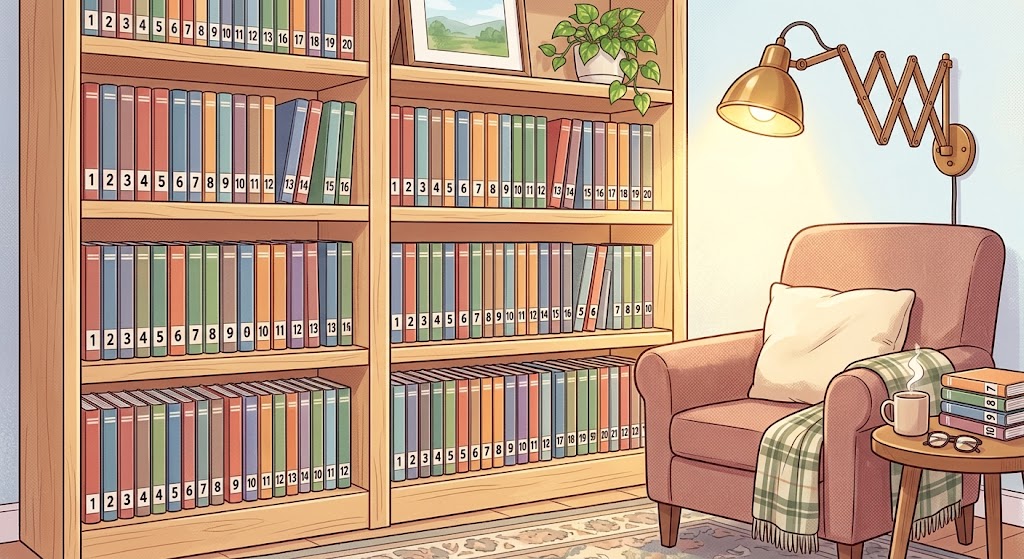
Single volumes mirror the original Japanese release. They’re lighter, easier to carry, and each one has its own unique cover art on the spine (the narrow side you see when books are shelved) that looks amazing lined up on a shelf.
Omnibus editions (sometimes called 2-in-1 or 3-in-1) compile multiple volumes into one larger book. They cost less per volume — great for catching up on a long series without breaking the bank. The tradeoff is that they’re bulkier and heavier.
Go with singles for series you love and want to display proudly. Choose omnibus editions when you’re catching up on a 20+ volume series on a budget. Both are valid choices.
Series Reading Order — From Simple to Complex
Straightforward Series (Just Follow the Numbers)
Good news: most manga series are completely straightforward. Start at Volume 1, read in order, and you’re golden. No reading guides, no complicated timelines, no stress.
Examples of simple sequential series: One Piece (110+ volumes, one continuous story), Bleach (74 volumes), Demon Slayer (23 volumes). Just follow the spine numbers and enjoy the ride.
Series Split by Marketing, Not by the Author
Here’s something that trips up beginners: some famous series appear to be “split” into parts, but that split only exists in the anime version (the animated TV adaptation) — not in the original manga.
Dragon Ball is the classic example. The manga is one continuous 42-volume story. The “Dragon Ball” vs “Dragon Ball Z” division is a Western marketing decision for the anime. For the manga, just read Dragon Ball Volumes 1-42 in order.
Knowing this saves confusion at the bookstore. If you see Dragon Ball Volume 1 and Dragon Ball Z Volume 1, they’re not separate series — some publishers just label later volumes as “Z” for marketing recognition.
Series with Spin-Offs and Sequels
A spin-off is a related series featuring side characters or different storylines from the same fictional world. When a manga has spin-offs or sequels, the general rule is simple: read the main series first, then explore the extras.
For big franchise universes with multiple connected series, each individual series typically stands alone. You can start anywhere. When in doubt about reading order, publication order is almost always correct. The order things came out is the order the creators intended them to be experienced.
If you accidentally buy the wrong volume or start with a spin-off by mistake, don’t worry — just grab Volume 1 of the main series when you can and start fresh. No permanent damage done.
Standalone Manga That Need No Reading Order
Not all manga requires a multi-volume commitment. Many excellent horror titles are self-contained in a single volume or collected edition — perfect for beginners who want to practice the right-to-left reading skill before diving into a long series.
Standalone manga lets you experience a complete story in one sitting. You get the full emotional arc, the complete character journey, no cliffhangers, no waiting for the next volume. It’s a great way to see if you enjoy the manga reading experience before committing to a 20+ volume series.
Uzumaki (3-in-1 Deluxe Edition) by Junji Ito
Uzumaki by Junji Ito is a masterpiece of horror manga, collected here in one deluxe hardcover edition. The story follows a small coastal town consumed by an obsession with spirals — an increasingly disturbing fixation that warps both minds and bodies. With all three original volumes in one book, you can experience this complete horror tale in a single read. It’s the perfect introduction to Japanese horror manga and Junji Ito’s iconic unsettling artwork.
Tomie: Complete Deluxe Edition by Junji Ito
Tomie was Junji Ito’s debut work, and this deluxe edition collects every Tomie story in one volume. Tomie is an enigmatic girl who drives men to madness — and murder — yet somehow keeps returning. The episodic structure means you can read chapters in any order, making it an ideal first horror manga. Each story stands alone while building on the central mystery of who (or what) Tomie really is.
How to Track Your Manga Reading Order
Apps and Tools for Managing Your Collection
If you’re just reading one series, you don’t need an app — just remember which volume you’re on. Once you’re reading multiple series at once, tracking becomes helpful. Here are some manga-specific tools:
MangaTime (iOS/Android): Sends chapter release alerts and tracks your reading progress. Great for staying current with ongoing series.
Mangacollec: Features a release calendar and collection manager. Particularly useful for preventing duplicate purchases — it’ll warn you if you’re about to buy a volume you already own.
Biblora: A minimalist, privacy-focused manga tracker. If you want something simple without social features, this is a solid choice.
General book trackers like Goodreads and StoryGraph also work, but they lack manga-specific features like chapter tracking.
Low-Tech Methods That Work
Apps aren’t for everyone. These simple approaches work just as well:
Bookmark + notes app: Just note the last volume and chapter number you finished. “Uzumaki Chapter 8” — that’s all you need.
Shelf organization: Keep manga in volume order on your shelf. Separate “read” from “to-read” stacks. Physical organization makes it obvious where you left off.
For complex franchises: Before starting a big interconnected series, screenshot or save a reading order chart from a fan wiki. Having that reference saved locally beats trying to reconstruct the order later.
Where to Buy Manga
You can find manga at most major bookstores — chains like Barnes & Noble, Books-A-Million, and independent bookshops typically stock popular titles. Check the graphic novel or manga section.
Online, Amazon and BookDepository offer the widest selection, including harder-to-find volumes. Right Stuf Anime specializes in manga and often has sales. For used copies at lower prices, check eBay, ThriftBooks, or local used bookstores.
When buying online, double-check that you’re getting the correct volume number. “Volume 1” of a series will have a “1” on the spine — verify this in product images before checkout to avoid accidentally starting mid-series.
Quick-Reference Cheat Sheet
- Page reading direction: right → left, top → bottom
- Book orientation: open from the “back” (right side)
- Series order: follow volume numbers (1, 2, 3…)
- When confused by spin-offs: publication order is the safest default
- Edition choice: singles for display, omnibus for budget
- Track progress: use a manga tracker app or a simple note with last volume/chapter read
That’s everything you need to get started. The right-to-left reading feels strange for about 10 pages, then becomes completely natural. Pick up Volume 1 of something that looks interesting and dive in — you’ll be reading like it’s second nature before you finish the first chapter.
For the latest pricing, please check Amazon.