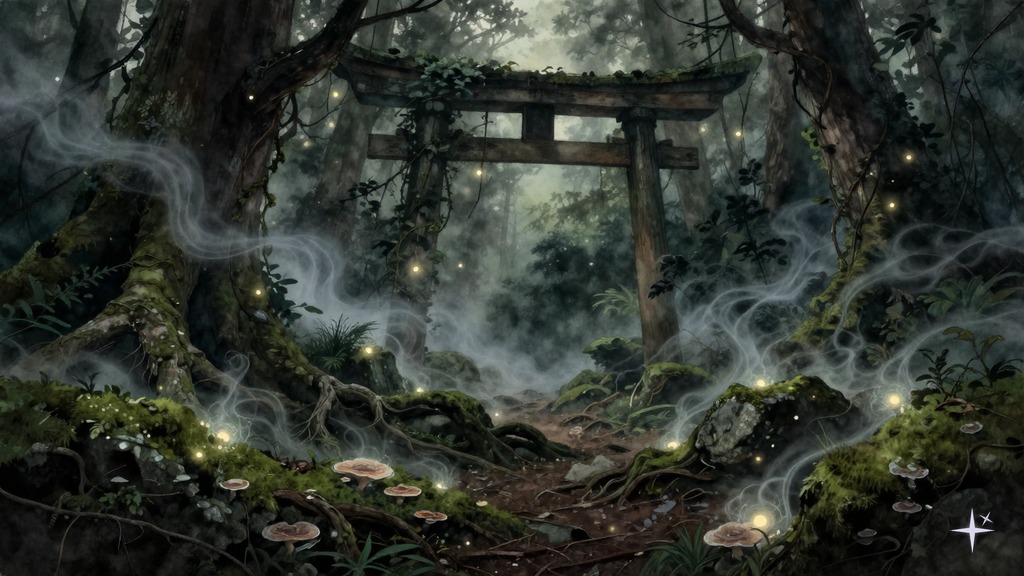
If you’ve been searching for information on the Mushishi manga volumes — how many there are, which editions exist, and whether the series is finished — you’re in the right place. The quick answer: Mushishi has 10 volumes total, and the series is complete. This is a beautifully strange supernatural manga (Japanese comic) that doesn’t get nearly enough attention in English-language horror and dark fantasy conversations, and sorting out the publishing history can be confusing. Let’s clear it all up.
For anyone brand new to manga, a quick practical note: manga pages are read right-to-left, the opposite direction from Western comics. The first time you open a volume it might feel backwards, but you’ll adjust within a few pages. Most English editions include a note on the first or last page explaining this.
Mushishi Has 10 Manga Volumes — And the Series Is Complete
Here’s the full picture: Mushishi (蟲師) has 10 volumes total, and the series is complete. No waiting for new releases, no indefinite hiatuses. The full story exists, start to finish, in those 10 books.
The manga was created by Yuki Urushibara (漆原友紀) and published by Kodansha in Japan. It follows Ginko, a wandering specialist who studies and deals with mysterious creatures called Mushi — primitive life forms that exist alongside (and sometimes dangerously entangle with) the natural world. Each chapter is essentially a self-contained story as Ginko travels from village to village, encountering people whose lives have been touched or disrupted by Mushi in haunting, often melancholy ways.
In English, the manga was originally released by Del Rey — a now-defunct manga publishing label — before the English-language publishing rights transferred to Kodansha Comics, which is the current publisher. We’ll get into the specific editions below, because this is where things get a little complicated for new buyers.
What makes Mushishi special in the horror and supernatural manga space is its tone. This isn’t a series that goes for jump scares or graphic violence. The horror here is atmospheric and quiet — the creeping unease of a world where invisible forces can reshape your body, steal your memories, or trap you in an endless winter. It’s closer to folk horror or weird fiction (a literary tradition of eerie, otherworldly strangeness) than anything you’d find in mainstream horror manga. At just 10 volumes, it’s a manageable commitment that rewards careful, unhurried reading.
English Editions of the Mushishi Volumes — Del Rey Singles vs. Collector’s Edition
This is the section that trips people up, so let’s walk through it carefully.
The Original Del Rey Singles
Mushishi was originally published in English by Del Rey, a manga label that was active before Kodansha Comics took over many of its titles. Del Rey released the series as individual volumes — but here’s the wrinkle: volumes 8, 9, and 10 were combined into a single collected book (meaning all three volumes bound together in one physical book) rather than being released separately. That combined edition carries the ASIN 0345505603.
So if you’re collecting the Del Rey singles, your shelf would have volumes 1 through 7 as individual books, and then one thicker book containing volumes 8, 9, and 10. There were no other collected editions in the Del Rey run — just that final combined volume.
The Del Rey singles may be difficult to find at standard retail prices since they’ve been out of print for some time. Secondhand sellers, used bookstores, and resale marketplaces are typically where these turn up. Prices can vary widely depending on condition and demand, so patience helps if you’re building a complete Del Rey set.
If you’re looking to grab that combined volumes 8/9/10 edition to finish your collection, it’s still findable through major online retailers.
Mushishi
The Kodansha Collector’s Edition
More recently, Kodansha Comics has issued a Collector’s Edition reprint of Mushishi. This is a larger-format reissue — the kind of presentation that gives Urushibara’s detailed, atmospheric artwork more room to breathe on the page. If you’re coming to Mushishi fresh and don’t already own any volumes, the Collector’s Edition is likely your most accessible current print option.
Because these Collector’s Editions reformat the content, the volume numbering and total count differ from the original 10-volume breakdown. The Collector’s Edition line condenses the series into fewer, thicker books. Check the Kodansha Comics listings for current availability, as volumes in this line have been releasing over time rather than all at once.
Which Edition Should You Pick?
For most new readers, the simplest path is the Kodansha Collector’s Edition — it’s the current in-print option and the larger format is a genuine upgrade for a manga this visually rich. If you already own some Del Rey singles and want to complete the set, hunting down the remaining volumes secondhand is totally viable, just be prepared for some price variation on the harder-to-find individual books.
The source story is the same across both editions, but the Collector’s Edition uses an entirely new English translation and new lettering — which differs from the original Del Rey translation. Beyond format and availability, the translation difference is worth keeping in mind when choosing your edition.
Reading Order and Where to Start
Good news: Mushishi is one of the most beginner-friendly manga series when it comes to reading order. There’s no complicated sequence to follow.
Just Start With Volume 1
Mushishi is a series where each chapter tells a self-contained story — meaning every chapter works on its own with a beginning, middle, and end, rather than being one piece of a single continuous plot. While Ginko is the recurring protagonist and the worldbuilding around Mushi gradually deepens, you don’t need to remember plot threads from three volumes ago to understand what’s happening in the current chapter. There are no sprawling multi-volume storylines and no padding — every chapter is a real Mushishi tale.
That said, the recommended approach is straightforward: start with Volume 1 and read sequentially. Here’s why:
- Gradual worldbuilding: Early chapters introduce the concept of Mushi and Ginko’s role in simple, accessible ways. Later chapters build on that foundation with more complex and emotionally layered stories. Reading in order lets that understanding develop naturally.
- Tonal calibration: Urushibara’s storytelling rhythm is distinctive — meditative, unhurried, sometimes dreamlike. Starting from the beginning lets you settle into that pace before encountering some of the more challenging or emotionally heavy later stories.
- Occasional callbacks: While each chapter works on its own, there are occasional references to earlier encounters or supporting characters who reappear. These moments land better if you’ve read what came before.
The No-Pressure Reading Experience
One of the genuine pleasures of Mushishi is that its self-contained chapter structure means you can read at your own pace without any anxiety about keeping up with a larger plot. Put it down for a month, pick it back up, and you won’t be lost. Read one chapter before bed as a standalone short story. Binge all 10 volumes in a weekend. It works either way.
This makes Mushishi an excellent recommendation for readers who feel intimidated by long-running manga series or who have limited reading time. Ten volumes, no unnecessary detours, no need to look up character guides online to remember who’s who.
Manga vs. Anime — Why the Manga Is Worth Reading Too
Many people come to Mushishi through the anime adaptation (an animated TV series based on the manga), which is widely regarded as one of the best anime series ever made. If that’s you — if you watched the anime and are wondering whether the manga is worth reading too — the answer is a strong yes, and here’s why.
The Anime Adapted Most but Not All of the Manga
The Mushishi anime (which ran across two seasons plus special episodes) adapted a significant portion of the manga’s chapters. However, not every manga chapter made it into the anime. The manga contains additional stories that anime-only viewers have never encountered. These aren’t throwaway stories — they’re full Mushishi tales with the same quality and atmosphere as the ones that were adapted.
For anime fans looking to experience Ginko’s complete collection of encounters, the manga is the only way to get there.
A Different Atmospheric Experience
Reading the manga offers something distinct from watching the anime. The anime is celebrated for its gorgeous animation, ambient sound design, and evocative soundtrack — all of which create a specific mood. The manga creates that mood through different means entirely.
Urushibara’s artwork carries the eerie, otherworldly tone through dense, detailed natural environments and careful arrangement of panels on each page. The silence of a manga panel hits differently than the silence in an anime scene. The way Mushi are drawn — often as delicate, almost beautiful intrusions into otherwise realistic landscapes — creates an unsettling contrast that’s unique to the printed page.
Reading the manga after watching the anime isn’t redundant. It’s experiencing the same world through a fundamentally different medium, and both versions have strengths the other can’t replicate.
For Anime Fans: What You Gain
- The original source material — experience Urushibara’s stories exactly as she created them on the page, in the medium they were made for
- Urushibara’s original artwork — the manga came first, and the anime’s visual direction was built from these pages
- Your own pacing — linger on a page, reread a chapter, absorb the atmosphere without the anime’s fixed episode runtime
- A portable Mushishi experience — the books travel well for something this atmospheric
Where to Buy Mushishi Manga Volumes in English
Let’s talk practical shopping. Here’s how the current landscape breaks down.
Print Options
Kodansha Collector’s Edition — This is the most straightforward current print option. These larger-format volumes are available through major book retailers and online shops. If you want new copies at standard retail pricing, this is the edition to look for.
Del Rey singles (volumes 1–7 individually, plus the combined 8/9/10 edition) — These are out of print, so you’re looking at secondhand markets. Used bookstores, resale platforms, and online marketplaces that specialize in used books are your best bets. Condition and pricing will vary. The combined volumes 8/9/10 edition tends to be slightly easier to find than some of the individual middle volumes, which can be scarce.
Digital Options
Mushishi is available digitally through major manga and ebook platforms, including Kindle, BookWalker, and other digital storefronts that carry Kodansha titles. Digital is a great option if you want immediate access without worrying about print availability, and it’s typically the most affordable way to read the complete series.
Tips for Building Your Collection
- Don’t mix editions mid-collection if shelf consistency matters to you. The Del Rey singles and Kodansha Collector’s Editions have different physical dimensions, spine designs, and volume breakdowns — and they use different English translations (the Collector’s Edition features an all-new translation and lettering, distinct from the original Del Rey translation). They’ll look mismatched on a shelf, and you’d be switching translations mid-series. Pick one format and stick with it.
- If completing a Del Rey set, the combined Vol. 8/9/10 is your final piece. Don’t accidentally buy three separate books thinking they exist in Del Rey format — they were only ever released as that combined edition.
- Digital-first, print-later is a valid strategy. Read the series digitally to confirm you love it, then invest in the Collector’s Edition for your shelf. No shame in that approach — it’s practical.
Is Mushishi Worth Reading?
Absolutely. But let me be specific about who it’s worth reading for, because Mushishi isn’t trying to be everything to everyone — and that’s exactly what makes it great.
What Makes It Special
Mushishi is a masterwork of atmospheric supernatural storytelling. The horror here is the quiet kind — the kind that unsettles you through mood, implication, and the slow realization that the natural world is stranger and more dangerous than it appears. There’s no gore, no monsters leaping out of shadows, no apocalyptic stakes. Instead, there are villagers who can’t stop hearing a river that dried up years ago. Children whose shadows move independently. A woman whose eyes see nothing but darkness, except when it snows.
Urushibara builds a version of rural, pre-modern Japan where the boundary between the human world and something older and more alien is paper-thin. Ginko walks that boundary with calm competence, but even he can’t fix everything. Some stories end in quiet tragedy. Some end in fragile hope. All of them feel earned.
Who Will Love This
- Fans of atmospheric horror — if you enjoy slow-burn unease and the folk horror tradition (stories rooted in rural settings where old, strange forces intrude on everyday life), Mushishi is your manga
- Readers who want something meditative — this series rewards patience and attention; it’s the opposite of adrenaline-fueled action manga
- Anime fans looking for the source material — if you loved the anime, the manga is where it all started, and the printed page delivers a distinct atmospheric experience
- Newcomers to manga — at 10 completed volumes with self-contained chapters, there’s almost no barrier to entry
- Anyone who appreciates beautiful artwork — Urushibara’s natural environments and creature designs are stunning
Who Might Want Something Different
If you’re looking for fast-paced horror with high body counts, plot twists, and escalating stakes, Mushishi won’t scratch that itch. It’s deliberately slow and contemplative. Each chapter is a self-contained mood piece, not a building block in a larger thriller. That’s a feature, not a bug — but it’s worth knowing upfront. If that sounds more like your speed, series like Parasyte or Hellsing might be a better starting point.
The Bottom Line
Mushishi is 10 volumes of quiet, eerie, deeply beautiful supernatural manga. The series is complete, the editions are available, and the reading order couldn’t be simpler. Whether you’re a longtime anime fan finally picking up the manga or a newcomer looking for something outside the mainstream, this series is well worth your time. The Kodansha Collector’s Edition is the easiest way to start — grab Volume 1 from any major book retailer and see for yourself.