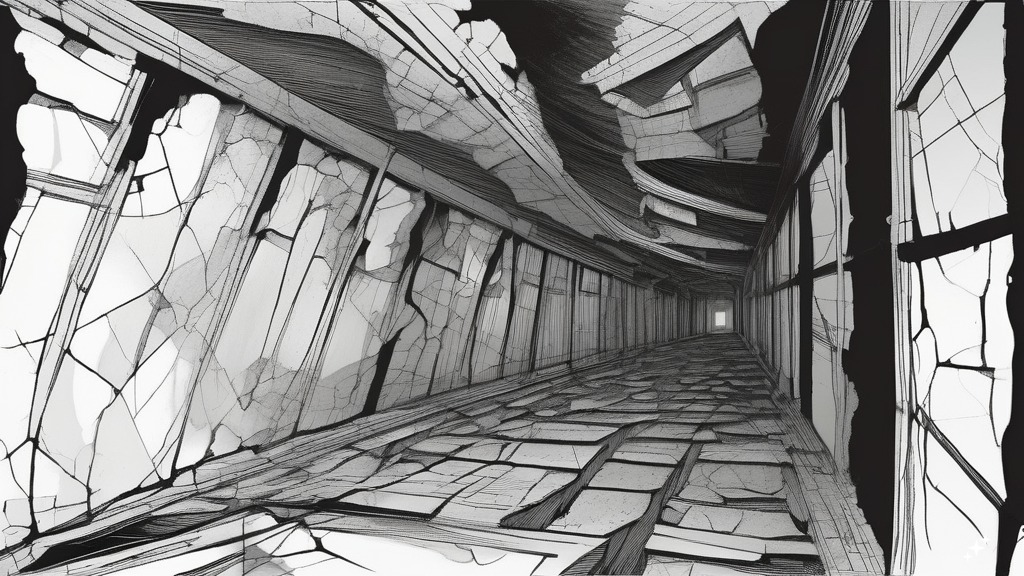
The Scariest Horror Manga at a Glance
Here’s a quick overview before we get into the details. The first 11 titles are covered in depth in the sections below; the remaining titles round out the list.
A few notes on reading the table:
- Volumes refers to the individual collected books in a manga series. Manga stories are originally serialized in magazines, then collected into paperback volumes (typically around 180–220 pages each). Some series are also available in larger-format collected books — see the notes on editions below.
- Beginner Friendly? uses a simple scale: Yes means accessible to someone who has never read manga before; Moderate means the story or art style may take some adjustment; No means the title assumes familiarity with the medium, has no official English release, or is otherwise challenging for a first-timer.
| Title | Author | Volumes | Type of Horror | Beginner Friendly? |
|---|---|---|---|---|
| Uzumaki | Junji Ito | 3 (or 1 Deluxe) | Cosmic / body horror | Yes |
| Tokyo Ghoul | Sui Ishida | 14 + 16 (sequel) | Action horror | Yes |
| Blood on the Tracks | Shuzo Oshimi | 17 | Psychological | Yes |
| Goodnight Punpun | Inio Asano | 13 | Psychological | Moderate |
| Dorohedoro | Q Hayashida | 23 | Action horror / dark comedy | Yes |
| Berserk | Kentaro Miura | 43+ | Dark fantasy / horror | Moderate |
| Homunculus | Hideo Yamamoto | 15 | Psychological | No |
| Blame! | Tsutomu Nihei | 10 (or 6 Master Ed.) | Environmental / cosmic | No |
| Dragon Head | Minetaro Mochizuki | 10 | Claustrophobic / apocalypse | Moderate |
| Fuan no Tane | Masaaki Nakayama | 3 + 4 (sequel) | Pure dread / short horror | No (no official English) |
| Franken Fran | Katsuhisa Kigitsu | 8 | Medical body horror | No |
| Parasyte | Hitoshi Iwaaki | 8 | Body horror / sci-fi | Yes |
| The Drifting Classroom | Kazuo Umezz | 6 (Perfect Edition) | Survival horror | Yes |
| I Am a Hero | Kengo Hanazawa | 22 | Survival horror / zombie | Moderate |
| Chainsaw Man | Tatsuki Fujimoto | 20+ (completed (March 2026)) | Action horror | Yes |
| Gyo | Junji Ito | 2 (or 1 Deluxe) | Body horror | Yes |
| Hellstar Remina | Junji Ito | 1 | Cosmic horror | Yes |
| Tomie | Junji Ito | 3 (or 1 Deluxe) | Psychological / body | Yes |
| Blade of the Immortal | Hiroaki Samura | 30 (or 10 Deluxe) | Samurai horror | Moderate |
| Dead Dead Demon’s Dededede Destruction | Inio Asano | 12 | Slow-burn existential | Moderate |
Now let’s get into the individual titles.
A Quick Note on Manga Editions
You’ll see terms like “Deluxe Edition,” “Omnibus,” and “Perfect Edition” throughout this guide. Here’s what they mean:
- Standard volumes are the regular individual paperback books, usually around 180–220 pages each.
- Omnibus editions collect multiple standard volumes into one thicker book — for example, a 3-in-1 omnibus bundles three volumes together.
- Deluxe Editions are larger-format hardcover books with higher print quality. They typically collect two or three standard volumes and cost more per book, but the bigger page size lets you appreciate detailed artwork.
- Perfect Editions are similar to Deluxe Editions — larger format, higher quality, sometimes with bonus content.
Publishers — the companies that translate and release manga in English — include names like Viz Media, Kodansha Comics, Dark Horse Comics, and Seven Seas Entertainment. You don’t need to memorize these; they’re mentioned throughout so you know which version of a book to look for when shopping.
A single standard manga volume typically costs $10–$15 USD. Deluxe editions run $25–$50. Box sets that collect an entire series offer the best per-volume value.
Uzumaki by Junji Ito — The One Everyone Talks About (For Good Reason)
There’s a reason Uzumaki tops virtually every scariest horror manga list. It’s not just a great horror manga — it’s the title that pulls thousands of new readers into the genre every year.
The setup is deceptively simple: the small coastal town of Kurouzu-cho becomes infected by spirals. Not a virus. Not a curse (exactly). Just… spirals. They appear in everything — snail shells, hair, pottery, the inner ear, the sky. And they drive people insane.
What makes Uzumaki so effective is Junji Ito’s ability to take something mundane — a shape you see a hundred times a day — and make it permanently, irrevocably unsettling. The horror escalates slowly across three volumes, from creepy to disturbing to genuinely apocalyptic. And Ito’s drawing skill is unmatched; his detailed, precise artwork makes every grotesque transformation feel unnervingly real.
The 3-in-1 Deluxe Edition is the best way to read it. It collects all three volumes in a beautiful hardcover with larger pages that really let the art breathe. Honestly, just grab it and see for yourself — there’s a reason this is the first horror manga most people recommend.
Uzumaki (3-in-1 Deluxe Edition)
- Volumes: 3 (collected in 1 Deluxe Edition)
- Publisher: Viz Media
- Content warning: Body horror, death, disturbing imagery
Tokyo Ghoul by Sui Ishida — Action Horror With Real Emotional Weight
Tokyo Ghoul walks the line between action manga and horror manga, and it walks it well. Ken Kaneki is an ordinary college student who survives a date with a ghoul — a creature that looks human but feeds on human flesh — and wakes up as a half-ghoul himself.
The horror here isn’t just the monsters. It’s watching Kaneki’s identity fracture under impossible pressure. He doesn’t belong in the human world anymore, and the ghoul world doesn’t fully accept him either. The series asks hard questions about what makes someone a monster, and it doesn’t always give comfortable answers.
The original 14-volume run is a complete story. The sequel series, Tokyo Ghoul:re (16 volumes), is a direct continuation that concludes the larger narrative — same world, same characters, new chapter of the story. If you’re testing the waters, the Complete Box Set covering volumes 1–14 is a great value — you get the full first series in one purchase.
Tokyo Ghoul Complete Box Set (Vols. 1-14)
- Volumes: 14 (original) + 16 (:re sequel)
- Publisher: Viz Media
- Content warning: Graphic violence, torture, cannibalism, psychological trauma
Blood on the Tracks by Shuzo Oshimi — A Mother’s Love as Horror
This one is terrifying precisely because there are no monsters. Blood on the Tracks is the story of Seiichi, a middle-school boy, and his mother Seiko. On the surface, Seiko is the perfect doting mother. Underneath… something is very, very wrong.
Blood on the Tracks 1
Oshimi is a master of using manga’s visual language to create dread. Faces distort at key moments. Panels stretch and compress to make you feel the suffocating weight of Seiko’s control. The pacing is deliberately slow — agonizingly slow — and that’s the point. You’re trapped in this relationship alongside Seiichi, watching things deteriorate and unable to look away.
If you want horror manga that relies entirely on psychological dread with virtually no gore, this is the one.
- Volumes: 17
- Publisher: Vertical / Kodansha Comics
- Content warning: Psychological abuse, depictions of violence, suicide
Goodnight Punpun by Inio Asano — The Manga That Breaks You
Goodnight Punpun isn’t marketed as horror. It’s usually categorized as drama or everyday-life storytelling. But if horror is about making you feel genuine dread and discomfort, Punpun qualifies more than most titles that wear the genre label proudly.
Punpun Onodera is drawn as a simple bird-like doodle — a deliberate choice by Inio Asano to create distance between the reader and the protagonist. Everyone around him is drawn in Asano’s hyperrealistic style. As Punpun grows from a child into a deeply troubled young adult, the contrast between his cartoonish appearance and the realistic horror of his life becomes almost unbearable.
This manga deals with depression, abuse, obsession, and self-destruction with an unflinching honesty that will leave you staring at the ceiling at 3 AM. It’s not scary in the “something’s in the closet” sense. It’s scary because it feels true.
- Volumes: 13 (collected in 7 omnibus editions — each omnibus bundles roughly two volumes)
- Publisher: Viz Media
- Content warning: Suicide, sexual content, domestic violence, depression — this one is heavy
Dorohedoro by Q Hayashida — Grimy, Violent, and Weirdly Fun
Dorohedoro is horror manga for people who want to have a great time while being horrified. Set in a world split between the Hole (a grimy, poverty-stricken district) and the Sorcerers’ world (where magic users experiment on humans), it follows Caiman — a man whose head has been transformed into a reptilian shape by a sorcerer’s curse.
Dorohedoro, Vol. 1
Q Hayashida’s art is dense, chaotic, and full of gleeful violence. People get dismembered, resurrected, turned inside out, and worse. But there’s a warmth to the cast and a darkly comic tone that keeps things from ever feeling hopeless. Caiman and his friend Nikaido running a dumpling restaurant between bouts of ultraviolence is the kind of absurd contrast that makes this series so beloved.
The full series runs 23 volumes. If you’re curious, grab Volume 1 and see if the vibe clicks — you’ll know within the first chapter.
- Volumes: 23
- Publisher: Viz Media
- Content warning: Extreme graphic violence, body horror, dark comedy
Berserk by Kentaro Miura — Dark Fantasy Horror at Its Peak
Berserk is one of the most influential manga ever created, and its horror elements are a huge part of why. Kentaro Miura (who passed away in 2021; the series is being continued by his studio, Studio Gaga, under Kouji Mori’s supervision) spent decades crafting a world of staggering beauty and staggering cruelty, following Guts — the Black Swordsman — on his quest for vengeance against Griffith, the man who sacrificed everyone Guts loved.
The series’ most infamous sequence — spanning volumes 12–13 — is one of the most traumatic stretches in all of manga. You’ll need to read the preceding volumes to fully feel its impact, but every page of setup makes the payoff more devastating. Beyond that sequence, Berserk’s horror runs through its entire world: monstrous transformed humans called Apostles, a group of godlike entities known as the God Hand, and the casual brutality of the medieval setting Miura built. Dread permeates even the quieter moments.
The Deluxe Editions from Dark Horse Comics are the recommended format: oversized hardcovers that collect three volumes each, with stunning print quality that does justice to Miura’s extraordinary artwork.
- Volumes: 42 (ongoing by Studio Gaga)
- Publisher: Dark Horse Comics (Deluxe Editions)
- Content warning: Extreme graphic violence, explicit sexual violence, torture — Berserk does not hold back
Homunculus by Hideo Yamamoto — Trepanation and Psychological Collapse
Here’s where we get into titles that go beyond the typical recommendation lists.
Homunculus starts with a wild premise: Nakoshi, a homeless man living in his car between a luxury hotel and a tent city, agrees to undergo trepanation — having a hole drilled in his skull — as part of a medical student’s experiment. It’s a real (and ancient) surgical procedure, and in the story, it gives Nakoshi the ability to see people’s inner psychological trauma manifested as grotesque physical distortions, which he calls “homunculi.”
Homunculus (Omnibus) Vol. 1-2
What starts as a supernatural curiosity quickly becomes something far more disturbing. The homunculi Nakoshi sees in others are deeply unsettling — but the real horror is what happens to Nakoshi himself over the course of 15 volumes. His grip on reality loosens. The line between what he sees and what’s real dissolves. By the end, you’re not sure if the trepanation gave him a gift or just accelerated a breakdown that was already coming.
Hideo Yamamoto (who also created Ichi the Killer) has a knack for making you deeply uncomfortable without relying on cheap shock. The horror here is slow, cumulative, and psychological.
- Author: Hideo Yamamoto
- Volumes: 15 (collected in omnibus editions)
- Publisher: Seven Seas Entertainment
- Content warning: Nudity, sexual content, psychological distress, body horror imagery
Blame! by Tsutomu Nihei — Architectural Horror in a Dying Megastructure
Most horror manga scares you with things — monsters, ghosts, killers. Blame! scares you with space.
The setting is the City: an incomprehensibly vast cybernetic megastructure that has been expanding without purpose or control for thousands of years. Entire civilizations have risen and fallen inside it. The scale is so enormous that characters can walk for weeks without reaching a wall. Killy, the protagonist, wanders this structure searching for humans who carry a specific genetic trait — the key to communicating with the City’s governing system and stopping its endless, purposeless growth.
Tsutomu Nihei’s art is what makes this work. His backgrounds are impossibly detailed renderings of industrial architecture, decaying infrastructure, and organic-mechanical hybrids stretching into infinity. The silence is deafening — Blame! has very little dialogue, sometimes going entire chapters with barely a word spoken. The horror is environmental: the feeling of being impossibly small in an impossibly large space that was not built for you and does not care that you’re there.
This is not a beginner-friendly manga. There’s minimal hand-holding, the plot is deliberately sparse, and you’ll spend a lot of time just absorbing the art and atmosphere. But if cosmic-scale existential dread is your thing, nothing else comes close.
- Author: Tsutomu Nihei
- Volumes: 10 (original) or 6 (Master Edition, a larger-format reprint from Kodansha Comics)
- Publisher: Kodansha Comics
- Content warning: Violence, disturbing imagery, intense isolation
Dragon Head by Minetaro Mochizuki — Claustrophobic Apocalypse
Dragon Head opens with one of the most effective horror setups in manga: a school field trip train enters a tunnel. There’s an earthquake. The tunnel collapses at both ends. Most of the students are dead. Three survivors wake up in total darkness, surrounded by rubble and corpses, with no way out and no idea what happened.
The first several volumes, set almost entirely inside the collapsed tunnel, are pure claustrophobic dread. The darkness. The lack of food and water. The sound of the tunnel settling. And one of the survivors, Nobuo, begins to unravel psychologically in ways that make the physical danger feel almost secondary.
When the characters finally escape the tunnel, they discover something worse: Japan has been devastated by an unknown catastrophe. The sky is ash-gray. Civilization has collapsed. And people are behaving in ways that suggest the disaster broke something fundamental in the human psyche.
Important note on availability: The English edition was published by Tokyopop (a now-defunct manga publisher) and is out of print. You can find secondhand copies online, but expect to pay a premium for complete sets. It’s worth the hunt if the premise grabs you.
- Author: Minetaro Mochizuki
- Volumes: 10
- Publisher: Tokyopop (out of print — secondhand copies only)
- Content warning: Graphic violence, psychological breakdown, claustrophobic settings, death
Fuan no Tane by Masaaki Nakayama — Short Shocks That Haunt You
This is the deep cut on the list — the one that even dedicated horror manga readers might not have encountered. Fuan no Tane (roughly translated as “Seeds of Anxiety”) is an anthology of ultra-short horror vignettes, each running just 2 to 8 pages. There are no recurring characters. There’s no overarching plot. There are no explanations.
Each story presents a single unsettling scenario — often rooted in Japanese folklore and urban legends (think stories passed around about strange encounters in everyday places — figures standing at the end of hallways, faces appearing in windows) — and ends abruptly, offering no resolution. You see something wrong. You feel the dread. And then it’s over, and you’re left to fill in the gaps yourself.
This format is devastatingly effective. Many of the stories are the kind of thing that will flash through your mind when you’re walking home alone at night. The art is rough and sketchy in a way that makes everything feel uncomfortably real, like someone’s hasty illustration of something they actually saw.
The original series runs 3 volumes, with a 4-volume sequel called Fuan no Tane+.
Important note on availability: There is no official English release. Unofficial translations made by fans exist online, but if you prefer to read through officially licensed channels, this one will require knowing Japanese or hoping for a future English-language release. It’s included here because it’s genuinely one of the scariest things in the medium, and it deserves more attention from English-language publishers.
- Author: Masaaki Nakayama
- Volumes: 3 + 4 (sequel: Fuan no Tane+)
- Publisher: No official English release
- Content warning: Disturbing imagery, supernatural horror, no content warnings within the work itself (the brevity means scares arrive without warning)
Franken Fran by Katsuhisa Kigitsu — Medical Horror With a Smile
Franken Fran is what happens when you combine a cheerful, eager-to-please protagonist with medical body horror so extreme it becomes darkly funny.
Fran Madaraki is the creation of a genius (and absent) surgeon. She takes on his patients while he’s away, performing impossible surgeries with a relentlessly sunny attitude. The catch: her solutions always work technically, but the results are grotesque, ethically nightmarish, and frequently worse than the original problem. A patient wants to be beautiful? Fran can do that. The result will haunt your dreams.
The disconnect between Fran’s cheerful personality and the visceral horror of what she creates is the engine of the entire series. It’s like watching a cooking show where the chef is friendly and competent and the dish keeps turning out to be made of human organs. You laugh, then you gag, then you laugh again.
There’s also a sequel series, Franken Fran Frantic, which runs another 8 volumes.
- Author: Katsuhisa Kigitsu
- Volumes: 8 (+ 8 volumes of Franken Fran Frantic)
- Publisher: Seven Seas Entertainment
- Content warning: Extreme body horror, medical horror, dark comedy, disturbing imagery
More Terrifying Titles Worth Your Time
The following five titles absolutely belong on any scariest horror manga list. Several of these are among the most beginner-friendly options on this entire list — if the deep-dive titles above feel too intense or too niche for your first read, start here instead.
Parasyte by Hitoshi Iwaaki
Aliens called Parasytes infiltrate human brains and take over their bodies. One fails to reach the protagonist Shinichi’s brain and instead takes over his right hand. They form an uneasy partnership to survive. 8 volumes of tense, philosophical body horror that’s a great entry point if you want something complete and not too long. Published by Kodansha Comics.
The Drifting Classroom by Kazuo Umezz
An entire elementary school is transported to a barren wasteland. The children must survive with no adults to help them. Kazuo Umezz’s art is bold and emotionally exaggerated, and the kids-in-peril premise still hits hard decades after publication. 6 volumes in the Perfect Edition from Viz Media. One of the best starting points for survival horror fans.
I Am a Hero by Kengo Hanazawa
The best zombie manga ever made. A struggling manga assistant witnesses Japan’s zombie outbreak in real time. Starts slow and realistic, then escalates into something extraordinary. 22 volumes, published by Dark Horse Comics.
Chainsaw Man by Tatsuki Fujimoto
Denji, a dirt-poor teenager with a chainsaw devil bonded to his body, becomes a devil hunter. The horror elements are wild and unpredictable — Fujimoto loves subverting your expectations when you least expect it. 20+ volumes and ongoing. Published by Viz Media. Extremely beginner-friendly and a massive hit worldwide.
Gyo by Junji Ito
Fish with mechanical legs invade land. It sounds ridiculous. It is absolutely not funny when you’re reading it. The Deluxe Edition also includes The Enigma of Amigara Fault, one of the most famous short horror manga stories ever drawn. Published by Viz Media. A great short-commitment Junji Ito sampler.
How to Pick Your First Scary Manga
Not all horror is the same, and the scariest manga for you depends on what kind of fear you respond to. Here’s a quick framework:
By Type of Fear
- Cosmic / existential dread — You want to feel small and insignificant in the face of something incomprehensible. – Start with: Uzumaki, Hellstar Remina, Blame!
- Body horror / gore — You want visceral, physical horror that makes your skin crawl. – Start with: Gyo, Parasyte, Franken Fran
- Psychological horror — You want horror that gets inside your head and stays there. – Start with: Blood on the Tracks, Goodnight Punpun, Homunculus
- Survival horror — You want characters fighting to stay alive in hostile environments. – Start with: The Drifting Classroom, I Am a Hero, Dragon Head
- Action horror — You want fights and monsters alongside the scares. – Start with: Chainsaw Man, Tokyo Ghoul, Dorohedoro
By Time and Budget Commitment
| Length | Volumes | Titles | Approximate Cost |
|---|---|---|---|
| Short read (one sitting) | 1–3 | Uzumaki (Deluxe), Hellstar Remina, Gyo (Deluxe) | $15–$25 per book |
| Medium commitment | 8–15 | Parasyte (8), Blood on the Tracks (17), Tokyo Ghoul (14), Homunculus (15), Blame! (10) | $80–$170 for a full series |
| Long haul | 20+ | Berserk (43+), Dorohedoro (23), I Am a Hero (22), Goodnight Punpun (13 / 7 omnibus) | $150–$500+ depending on edition |
Content Warning Guide
Some horror manga goes to very dark places. Here’s a heads-up on specific content:
- Sexual violence: Berserk (explicit depiction), I Am a Hero (depicted)
- Extreme gore: Franken Fran, Dorohedoro, Berserk, Chainsaw Man
- Suicide / self-harm depiction: Goodnight Punpun, Blood on the Tracks, Homunculus
- Psychological abuse: Blood on the Tracks, Goodnight Punpun
- Minimal gore options: Blood on the Tracks, Goodnight Punpun, Fuan no Tane — these rely on psychological dread rather than graphic violence
Frequently Asked Questions About Horror Manga
What is the #1 scariest manga of all time?
Most horror fans and critics point to Uzumaki by Junji Ito. It’s consistently ranked first across reader polls, critic lists, and recommendation threads. The combination of Ito’s meticulous artwork, the escalating cosmic dread of the spiral curse, and the way it makes an everyday shape permanently unsettling puts it at the top for good reason.
That said, “scariest” is personal. If psychological realism frightens you more than supernatural horror, Blood on the Tracks or Goodnight Punpun might hit harder. If isolation and vast empty spaces get under your skin, Blame! might be the one that stays with you longest.
Is horror manga scarier than horror anime?
For most readers, yes. Manga lets you control the pacing — you can linger on a disturbing image or rush past it, and that control (and the temptation to look longer than you should) creates a different kind of engagement than watching an anime at a fixed pace. The detailed still images also tend to linger in your mind longer than animation.
There are great horror anime out there (the Uzumaki anime adaptation, Mononoke, Shiki), but the general consensus among horror fans is that the manga versions deliver scares more effectively.
What Junji Ito manga should I read first?
Two great starting points:
- Uzumaki (3-in-1 Deluxe Edition) if you want a full, complete story — beginning, middle, end. It’s his most celebrated work and the best introduction to his style.
- Gyo Deluxe Edition if you want a shorter commitment. It includes the main Gyo story plus The Enigma of Amigara Fault, one of the most famous horror manga short stories ever drawn. It’s a perfect sampler of what Ito can do.
Are there horror manga for people who don’t like gore?
Absolutely. Several of the scariest titles on this list use almost no graphic violence:
- Blood on the Tracks — Psychological horror about a toxic mother-son relationship. The terror comes from facial expressions and atmosphere, not blood.
- Goodnight Punpun — Existential dread and emotional devastation. The horror is entirely human.
- Fuan no Tane — Short supernatural vignettes that rely on implication and dread. What you don’t see is what scares you.
Where can I buy horror manga in English?
Most titles on this list are available through standard retailers:
- Amazon has the widest selection, including box sets and deluxe editions
- Local bookstores — many carry manga sections now; they can also special-order titles
- Barnes & Noble and other chain bookstores
The major English-language manga publishers (Viz Media, Kodansha Comics, Dark Horse Comics, Seven Seas Entertainment, Yen Press) cover the vast majority of titles on this list. You’ll find their books at any retailer that sells manga.
Out-of-print exceptions: Dragon Head (Tokyopop) requires secondhand hunting. Fuan no Tane has no official English release.
Start Reading
Horror manga is a deep, rewarding genre with something for every type of reader. If you’ve never picked one up before, Uzumaki is the safest starting recommendation — it’s accessible, self-contained, and genuinely terrifying. If you want something with more action, Tokyo Ghoul or Chainsaw Man will get you hooked fast. And if you want something that will quietly haunt you for weeks, Blood on the Tracks is waiting.
Uzumaki (3-in-1 Deluxe Edition)
Grab one, start reading, and welcome to the genre. It’s good in here.