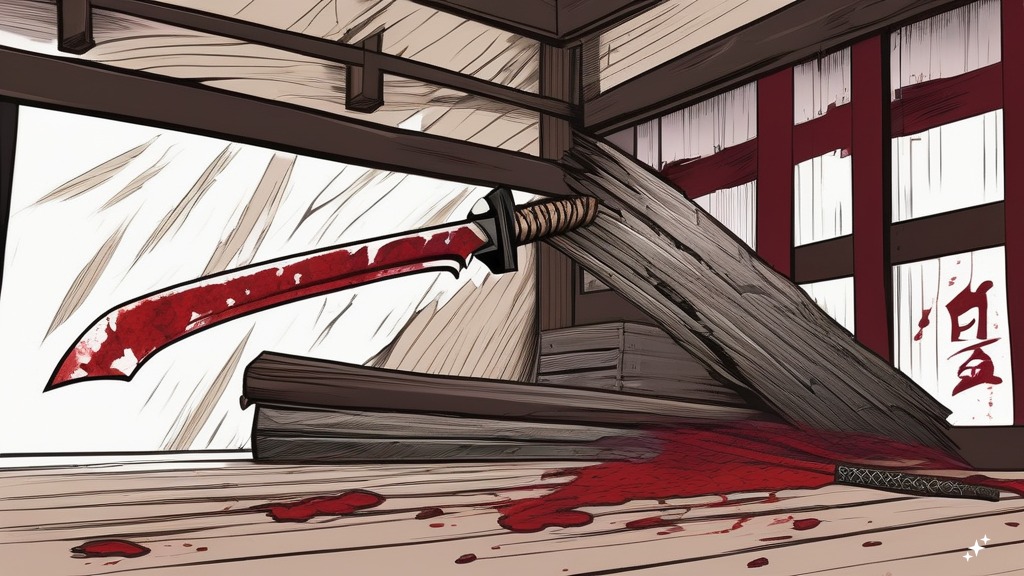
Shigurui Manga vs Anime — The Short Answer
Here’s the bottom line: the Shigurui anime (12 episodes, produced by Madhouse in 2007) adapts only the first roughly 6–7 volumes of a 15-volume manga. It ends mid-story. There was never a season 2. Madhouse — the animation studio behind the adaptation — never continued it.
That means the anime covers less than half the manga. The climactic duel, the resolution of every major character’s storyline, the actual ending — none of that is in the anime. It simply stops.
Both versions are brutally violent. Both are atmospheric and slow-burning. But they differ significantly in scope, graphic content, and completeness. If you want the full Shigurui experience, the manga is the only way to get it — though as noted above, accessing it in English is a challenge we’ll address below.
| Manga | Anime | |
|---|---|---|
| Length | 15 volumes (84 chapters) | 12 episodes (~one broadcast season) |
| Story coverage | Complete | ~First 6–7 volumes only |
| Ending | Full conclusion | Stops mid-story |
| Graphic content | More extreme | Censored/toned down |
| MyAnimeList score | highly rated (check MyAnimeList for current score) (high for the platform) | ~7.34 |
For English-speaking readers: Since the manga has no licensed English edition, your most actionable option right now is the anime. If the anime hooks you and you want the full story, the “Which Should You Start With?” section below covers your options.
What Shigurui Is — A Quick Primer
For those coming in fresh: Shigurui (literally “Death Frenzy”) is a seinen manga — “seinen” meaning it’s targeted at adult male readers, typically featuring more mature themes and complex storytelling than manga aimed at younger audiences. It was created by Takayuki Yamaguchi (art) and based on Norio Nanjō’s novel about a historical sword tournament. The manga was serialized — meaning chapters were published periodically in a manga magazine — in Champion RED from 2003 to 2010 and ran for 15 volumes (84 chapters), published by Akita Shoten.
The setting is the early Edo period in Japan (roughly the early 1600s, a time of relative peace under the Tokugawa shogunate, when samurai culture was rigidly codified). The inciting event: the eccentric lord Tokugawa Tadanaga orders a sword tournament fought with real blades instead of wooden practice swords. This is effectively a death sentence for the participants.
The story focuses on two men:
- Fujiki Gennosuke — missing one arm
- Irako Seigen — blind
Both are disciples of the Kogan-ryū — a fictional sword school (a “ryū” is a martial arts lineage or tradition, essentially a school of combat technique passed down from master to student). Both men have been destroyed — physically and psychologically — by their involvement with it. The series unfolds largely in flashback, showing how these two warriors went from ambitious young swordsmen to the broken figures standing in the tournament ring.
It’s historical fiction, but the tone is pure horror. The violence is methodical and anatomically precise. The psychological damage inflicted on every character is relentless. If dark historical horror appeals to you and you’re willing to sit with deeply uncomfortable material, Shigurui is worth the effort.
How Much of the Manga Does the Anime Cover?
This is the single most important thing to understand about the Shigurui anime:
The 12-episode anime adapts roughly the first 6–7 volumes — approximately 32 chapters out of 84 total.
That’s less than half the manga.
The anime ends at a dramatic moment, but it’s a midpoint, not a conclusion. Here’s what the anime does not include:
- The full tournament with real swords
- The final duel between Fujiki and Irako
- The resolution of Irako’s storyline
- The fates of several major supporting characters
- The complete backstory of the Kogan-ryū school’s collapse
- The actual ending — which is devastating and ties everything together
No season 2 was ever produced. The anime was a single twelve-episode run — that’s all it ever was, and as of now there are no announced plans to continue the adaptation.
If you watch the anime and stop there, you’ve experienced something powerful but fundamentally incomplete — like reading half a novel and putting it down.
Story Differences — What the Anime Changes
Even within the portion of the manga it does adapt, the anime makes notable changes in pacing, content, and tone.
Pacing and Structure
The anime is extremely slow and deliberate. Long silences. Still frames held for uncomfortable durations. Atmospheric sound design doing heavy lifting. Entire scenes play out with minimal dialogue, relying on visual tension.
The manga, by contrast, moves through story beats faster. Yamaguchi’s page layouts are dense — each page is divided into multiple panels (the individual frames that make up a manga page), and there’s substantially more narration and characters’ inner thoughts rendered as text on the page. Backstory sections that the anime stretches into full episodes are sometimes covered in a handful of pages in the manga.
Neither approach is wrong — they’re just different. The anime’s slowness creates a suffocating, oppressive mood that some viewers find hypnotic and others find frustrating. The manga’s density means you’re absorbing more story information per “unit of time” spent with it.
Some backstory sections are also reordered in the anime. The broad chronology is the same, but certain reveals land at different moments depending on which version you’re experiencing.
Content and Censorship
This is where the gap widens significantly.
The manga is substantially more graphic than the anime — in both violence and sexual content. The anime, despite its reputation as one of the most violent anime ever broadcast, actually censors or obscures several of the manga’s most extreme moments.
Specific differences include:
- Gore and mutilation — The manga depicts injuries with anatomical precision. Severed limbs, exposed organs, and the physical mechanics of sword wounds are rendered in meticulous detail. The anime sometimes cuts away, uses shadow, or reduces the duration of these images.
- Sexual violence — The manga contains several scenes of sexual assault and exploitation that are central to character motivations and the horror of the Kogan-ryū school. The anime tones some of these down or cuts them entirely.
- Disturbing subplots — Certain character storylines involving cruelty, degradation, and psychological abuse are more fully developed in the manga. The anime condenses or omits some of this material.
To be clear: the anime is still intensely violent and disturbing. It aired late-night in Japan and carries appropriate content warnings. But if you read the manga after watching the anime, you’ll encounter material that goes further than what the adaptation showed.
The Ending (The Major Difference)
This deserves its own emphasis because it’s the reason most people ultimately need to read the manga.
The anime stops mid-story. It doesn’t adapt:
- The complete tournament sequence with real swords
- The final confrontation between Fujiki Gennosuke and Irako Seigen
- The aftermath and fates of the surviving characters
- The thematic conclusion that ties together everything the series has been building toward
The remaining 8–9 volumes of the manga contain some of the most powerful material in the entire series. The ending is bleak, fitting, and brings the story’s themes of obsession, loyalty, and destruction to a devastating close.
Watching only the anime is like reading a three-act novel and stopping after the first act. You’ll have a strong impression, but you won’t have the full picture.
Art and Atmosphere Compared
Both the manga and anime are visually striking, but they achieve their impact through very different means.
Yamaguchi’s Manga Art
Takayuki Yamaguchi’s artwork in Shigurui is legendarily detailed. His draftsmanship is among the most precise in manga:
- Anatomical accuracy — Muscle groups, bone structure, and the physics of sword strikes are rendered with near-medical precision. When a blade cuts into flesh, you can see exactly what’s being severed and why it matters.
- Edo-period environments — Architecture, clothing, garden layouts, and historical details are meticulously researched and drawn.
- Unflinching gore — The violence is made more disturbing by how carefully it’s illustrated. There’s nothing cartoonish or exaggerated about the injuries. They look real.
- Character expression — Yamaguchi excels at subtle facial work. Fear, madness, resignation, and cruelty are communicated through small details in the eyes and mouth.
The static nature of manga panels actually works in Shigurui’s favor. A single image of a wound or a moment of violence can be studied (or flinched away from) at the reader’s own pace. The detail rewards — and punishes — close attention.
The Anime’s Visual Approach
The 2007 Madhouse anime takes a different path:
- Muted, desaturated color palette — The show looks washed out, almost sepia-toned. Color is used sparingly, which makes the moments of vivid red blood more shocking.
- Extremely slow pacing — Camera movements are minimal. Characters hold poses. The editing lets silence and stillness do the work.
- Limited animation — Whether due to budget or artistic choice, the anime often relies on still images with camera pans rather than fluid animation. This creates a strange, almost tableau-like quality that mirrors the manga’s panel compositions.
- Sound design — The anime’s greatest unique asset. The sound of a blade being drawn, the ambient noise of a training hall, the oppressive quiet between characters — the audio atmosphere is superb and creates an experience the manga simply can’t replicate.
Here’s something interesting: the manga’s static images are paradoxically more visceral than the animation in many cases. Yamaguchi’s level of detail in a single panel often surpasses what the anime conveys in motion. The anime creates dread through pacing and atmosphere; the manga creates it through sheer visual precision.
Both approaches work. They’re complementary rather than competing.
Which Should You Start With?
This depends on what you’re looking for and what’s accessible to you — and accessibility is the key constraint here.
If you want the complete story: Read the manga
The manga is the only option for the full narrative. The anime is unfinished. If completeness matters to you — and for a story this carefully constructed, it matters a lot — the manga is non-negotiable.
If you’re a publisher reading this: please license Shigurui. The audience is there.
If you want a taste before committing: Watch the anime first
The anime is a legitimate work of art in its own right. Its atmosphere, sound design, and pacing create an experience the manga can’t replicate. If you’re unsure whether Shigurui is for you, the anime is the most accessible and reasonable way to find out — especially for English-speaking readers.
If you watch the anime and want to continue with the manga, you have two options:
- Pick up from around volume 7 — This is where the anime’s coverage roughly ends. You’ll miss some material the anime condensed or cut, but you’ll be able to follow the story.
- Start from volume 1 — The recommended approach. The manga contains significant content the anime omitted, and experiencing the full work from the beginning gives you the complete picture.
Where to Read and Watch Shigurui
The Anime
- Title: Shigurui: Death Frenzy
- Episodes: 12
- Studio: Madhouse
- Year: 2007
- English release: Funimation (Blu-ray/DVD with English dub — an English voice-acted version, as opposed to Japanese audio with subtitles). Physical copies are available through Amazon.
- Streaming: Availability varies by region and platform. As of this writing, check Crunchyroll, Amazon Prime Video, and Funimation’s library for current streaming options in your region. Availability changes frequently, so if it’s not on one platform, try another or consider the physical Blu-ray.
The Manga
- Title: Shigurui
- Author (art): Takayuki Yamaguchi
- Based on: Norio Nanjō’s novel about the Suruga castle sword tournament
- Volumes: 15 (84 chapters)
- Serialized in: Champion RED / Champion RED Ichigo (Akita Shoten), 2003–2010
- English license: None (as of this writing)
- French edition: Published by Meian, available for French readers
If You Love Shigurui, You Might Also Enjoy…
Shigurui occupies a specific niche — historical horror with meticulous art and unflinching violence. Here are some series in adjacent territory:
- Berserk Deluxe Volume 5 by Kentaro Miura — The towering achievement of dark fantasy manga. Medieval European setting instead of feudal Japan, but the same commitment to detailed art, graphic violence, and psychological horror. Available in gorgeous oversized Deluxe Editions from Dark Horse — these are large-format hardcover collections that compile multiple standard volumes into one premium book.
Berserk Deluxe Volume 5
- Blade of the Immortal Deluxe Volume 1 by Hiroaki Samura — Another samurai series with stunning artwork and extreme violence. More action-oriented than Shigurui, but shares its fascination with the cost of the sword. Available in Deluxe Edition hardcovers from Dark Horse.
Blade of the Immortal Deluxe Volume 1
- Vagabond Vol. 4 (VIZBIG Edition) — A more contemplative take on the samurai genre by Takehiko Inoue, based on the life of Musashi Miyamoto, Japan’s most legendary swordsman. Less horror, more philosophy, but the art is on par with the best in the medium. VIZBIG Editions are oversized volumes that collect multiple standard volumes together.
Vagabond Vol. 4 (VIZBIG Edition)
- Blood on the Tracks by Shūzō Oshimi — Contemporary setting, but shares Shigurui’s interest in psychological damage and slow-building dread. The horror here is domestic rather than martial.
Blood on the Tracks 1
- Homunculus (Omnibus) Vol. 1-2 by Hideo Yamamoto — Psychological horror manga with a similarly unflinching approach to human darkness. Different genre, same willingness to go to deeply uncomfortable places.
Homunculus (Omnibus) Vol. 1-2
Each of these shares something with Shigurui — whether it’s the art quality, the darkness, or the willingness to push boundaries — while being its own distinct work.
Final Thoughts
Shigurui is one of those series where the manga-vs-anime question has an unusually clear answer: the manga is the complete work, and the anime is a beautifully crafted but incomplete adaptation of less than half of it.
The anime is worth watching. Its atmosphere, sound design, and visual approach create something the manga can’t replicate. But it stops before the story’s most important events, and there’s no continuation coming.
If Shigurui interests you at all, the manga is where the full experience lives. The lack of an official English release is genuinely frustrating — this is a series that deserves the deluxe hardcover treatment — but for now, the anime serves as the most accessible entry point for English-speaking readers.
Just know going in: whatever version you choose, Shigurui doesn’t flinch. And neither should you.