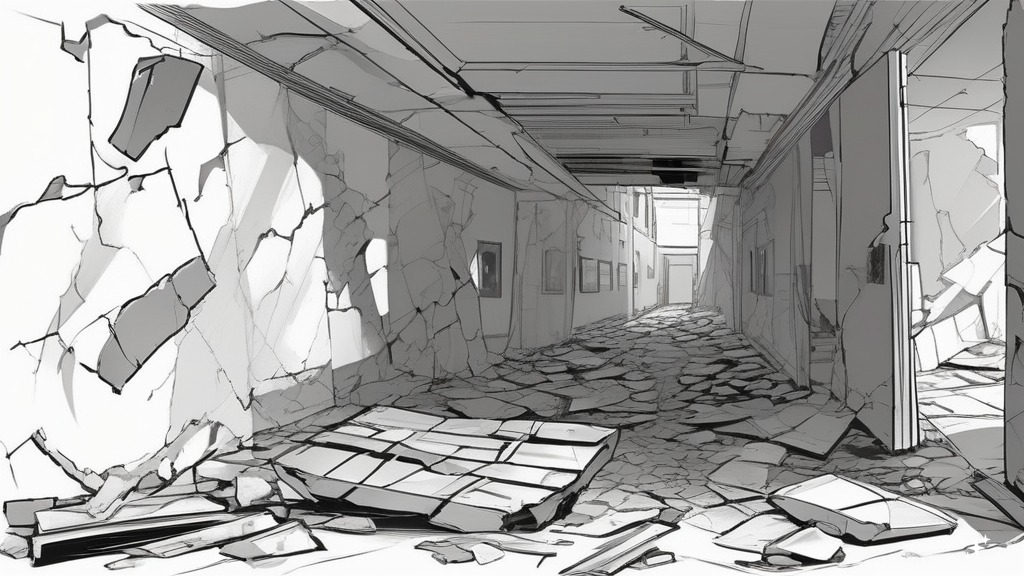
Survival Horror vs Horror — The Core Difference
Horror manga wants to make you feel something disturbing — dread, revulsion, existential unease, the creeping sense that something is deeply wrong. The point is the emotional and psychological experience of fear itself.
Survival horror manga wants you to feel all of that plus the suffocating pressure of: “How are these characters going to stay alive?” The fear isn’t just atmospheric — it’s practical. There’s a ticking clock, dwindling resources, and real consequences for every decision.
| Horror Manga | Survival Horror Manga | |
|---|---|---|
| Primary emotion | Dread, unease, revulsion | Dread + desperate tension |
| Central question | “What is happening?” | “How do we survive this?” |
| Protagonist type | Varies — can be anyone | Usually ordinary people |
| Threat style | Often inexplicable or unstoppable | Persistent and escalating, but fightable |
| Resource focus | Rarely central | Core mechanic — food, weapons, shelter matter |
| Group dynamics | Optional | Almost always central |
| Reader experience | Unsettled, disturbed | Intense tension, page-turning urgency |
Uzumaki (3-in-1 Deluxe Edition)
That table is the quick reference. Now let’s dig into what each genre actually looks like on the page.
What Makes Horror Manga “Horror”
Horror is a massive umbrella. It covers everything from body horror (stories focused on disturbing transformations of the human body) to cosmic horror (stories where the threat is so vast and alien that humans can’t comprehend or fight it) to psychological horror to supernatural horror — and plenty of manga blends multiple types at once.
What ties it all together is intent: horror manga exists to disturb you. To get under your skin. To make you feel something you wouldn’t feel reading any other genre.
Here’s what “pure” horror manga typically looks like:
- The threat is often inexplicable. You can’t fight a spiral. You can’t negotiate with a cosmic planet hurtling toward Earth. The horror comes from encountering something that doesn’t operate by any rules you understand.
- Survival isn’t really the point. Characters may live or die, but the manga isn’t structured around the question of how they’ll survive. It’s structured around the experience of encountering the horrifying thing.
- Atmosphere does the heavy lifting. Horror manga lives and dies on mood. The pacing, the panel composition, the slow reveal — these are the tools that create fear.
- The protagonist is often a witness, not a fighter. In many horror manga, the main character observes, investigates, or is subjected to the horror. They aren’t gathering resources and building defenses.
Some classic examples:
- Uzumaki by Junji Ito (one of Japan’s most celebrated horror manga artists) — A town slowly consumed by spirals. There’s no fighting it. There’s no survival strategy. The horror is the spirals themselves and what they do to people, buildings, and reality.
- Tomie by Junji Ito — A manga series about an immortal girl who drives people to obsessive love and murderous violence. Her victims aren’t trying to survive in a wilderness — they’re trapped by something psychological and supernatural. There’s no “surviving” Tomie in any practical sense.
- Hellstar Remina by Junji Ito — A single-volume manga about a living planet that devours everything in its path. Humanity panics. The horror is cosmic and total — individual survival planning barely matters against something that can eat a planet.
- Monster by Naoki Urasawa (a manga creator known for long-form psychological thrillers) — A psychological thriller about a doctor hunting a serial killer across Europe. The horror is human, cerebral, and slow-burning. It’s a cat-and-mouse game, not a survival scenario.
Notice the pattern: in horror manga, the fear comes from what the threat is. The threat itself — its nature, its implications, its visual reality — is the point.
What Makes Manga “Survival Horror”
Survival horror manga shares horror’s DNA but builds a completely different structure around it. The term “survival horror” was originally coined by the video game Resident Evil in 1996, but the concept in manga actually predates that — The Drifting Classroom by Kazuo Umezz was doing this in 1972, decades before anyone had a label for it.
Here are the five pillars that tend to show up in survival horror manga:
Pillar 1 — An Ordinary Protagonist
Survival horror depends on vulnerability. The main character can’t be a superpowered warrior or a trained killing machine — that would undermine the entire tension.
Hideo in I Am a Hero is a struggling manga assistant — someone who helps a lead artist by drawing backgrounds and other supporting work rather than creating their own series. Not a soldier. Not a cop. A guy who draws for someone else’s manga and talks to himself. When zombies overrun Japan, he’s wildly unprepared — and that’s exactly the point.
The kids in The Drifting Classroom are elementary schoolers. They have no survival training, no weapons, no adults they can rely on. When their school is transported to a desolate wasteland, they have to figure out everything from scratch with the emotional maturity of children.
The ordinary protagonist is what makes survival horror manga feel different from action horror. You’re not watching a powerful fighter take on monsters. You’re watching someone like you — or someone even more helpless than you — try not to die.
Pillar 2 — Resource Scarcity
In horror manga, resources rarely matter. In survival horror manga, they’re everything.
Food runs out. Weapons break or have limited ammunition. Medicine is finite. Shelter is temporary. Characters have to make gut-wrenching decisions about who gets what, how to ration, and what they’re willing to do to get more.
This creates a type of tension that pure horror doesn’t — the slow, grinding anxiety of watching supplies dwindle while the threat remains constant.
Pillar 3 — Isolation or a Cut-Off Environment
Survival horror manga almost always traps its characters somewhere:
- Dragon Head by Mochizuki Minetaro — Characters are trapped in a collapsed tunnel after a catastrophic event. They literally can’t see, can’t escape, and don’t know what’s happened to the outside world.
- The Drifting Classroom — A school transported to an unknown wasteland. No way home. No contact with anyone.
- I Am a Hero — Technically set in all of Japan, but zombie-overrun Japan might as well be an alien planet. Infrastructure is gone. Help isn’t coming.
Isolation removes the safety net. There’s no calling for backup, no hospital down the street, no police. The characters are on their own, and the reader feels that claustrophobia on every page.
Pillar 4 — A Persistent, Escalating Threat
In horror manga, a terrifying encounter might resolve — or at least shift — within a single storyline before a new one begins. In survival horror manga, the threat doesn’t go away. It gets worse.
The zombies in I Am a Hero don’t stop coming. The wasteland in The Drifting Classroom doesn’t become less hostile. The darkness in Dragon Head doesn’t lift.
This ongoing, escalating danger is what gives survival horror manga its page-turning quality. There’s no moment where the characters can exhale and feel safe. And neither can you.
Pillar 5 — Group Dynamics and Moral Dilemmas
This might be the most compelling pillar. When people are trapped together with limited resources and a constant threat, social structures break down and reform in ugly, fascinating ways.
Survival horror manga loves to explore:
- How quickly hierarchies form under pressure
- Who becomes a leader and who becomes a tyrant
- How groups fracture along lines of fear, selfishness, and desperation
- The moral choices that arise when survival conflicts with decency — do you share food with everyone, or hoard it for the people most useful to the group?
The Drifting Classroom is especially devastating here. Watching elementary school children try to form a functioning society while everything around them is trying to kill them — it’s both horrifying and deeply human.
How Survival Horror Creates Tension Differently
Here’s the key distinction in how it feels to read these:
Horror manga creates tension through the unknown and the inexplicable. You keep reading because you need to understand what’s happening, even as it repulses you.
Survival horror manga creates tension through dwindling hope. You keep reading because you’re desperately rooting for characters to make it through the next crisis — knowing that the odds are getting worse every chapter.
Both are incredibly effective. They just work on you in different ways.
Side-by-Side — Horror Manga vs Survival Horror Manga Examples
The best way to understand the difference is to compare specific manga that share surface-level similarities but land in completely different genres.
Uzumaki vs I Am a Hero
On paper, these have something in common: both feature an escalating supernatural threat that takes over a Japanese town, and both follow characters trying to cope with a world going wrong.
But the experience of reading them is night and day.
Uzumaki is cosmic, inexplicable horror. The spirals don’t care about the characters. There’s no strategy that works against them. The horror is in watching reality itself twist into something impossible. You read it in a state of mesmerized dread.
I Am a Hero is grounded survival horror. Hideo has to find weapons, figure out where to go, decide who to trust, and make moment-to-moment decisions that determine whether he lives or dies. The zombies are horrifying, but the real tension comes from the practical question: what does this ordinary, anxious man do next?
| Uzumaki | I Am a Hero | |
|---|---|---|
| Threat | Spirals — cosmic, inexplicable | Zombies — physical, fightable |
| Protagonist | Kirie — observes and endures | Hideo — scavenges and makes tactical decisions |
| Core tension | What are the spirals doing to reality? | How does Hideo survive the next 24 hours? |
| Resource focus | Minimal | Central — weapons, shelter, allies |
| Genre | Cosmic horror / body horror | Survival horror |
Tomie vs The Drifting Classroom
Both involve people confronting something that shouldn’t exist. But the structure is completely different.
Tomie’s victims are powerless against her. She’s a supernatural force that operates on obsession and compulsion. The horror is in watching people destroy themselves — there’s no “surviving” Tomie in any practical sense.
The Drifting Classroom drops elementary school children into a hostile wasteland and says: figure it out. They have to organize, ration food, establish rules, deal with internal threats (panicking adults, bullies, children losing their minds), and somehow stay alive. It’s survival horror in its purest form.
Monster vs Dragon Head
Both are dark, psychologically intense manga. But they’re doing very different things.
Monster is a psychological thriller — a genre focused on mental tension, manipulation, and unease rather than physical danger. Dr. Tenma, a gifted surgeon, is hunting a former patient named Johan — a charismatic serial killer — across Europe in a slow-burn cat-and-mouse narrative. The horror comes from Johan’s nature — what he is, what he’s done, what he represents. Tenma is never worried about finding food or shelter.
Dragon Head drops its characters into a collapsed tunnel after a catastrophe and makes basic survival the entire story. Light. Food. Sanity. Getting out. The horror is real and physical — the world has ended, and these characters are buried in the dark. Every chapter is about solving the next immediate problem or dying.
Hellstar Remina vs The Promised Neverland
Both feature characters facing an overwhelming, hostile force. But the reader experience is polar opposite.
Hellstar Remina is cosmic horror where humanity is essentially doomed. A living planet is coming to eat Earth. Individual survival planning is almost meaningless against that scale of threat. The manga is about the horror of total helplessness and the ugliness of human panic.
The Promised Neverland is built entirely on survival strategy. The children at Grace Field House — an orphanage that is far more sinister than it appears — discover a terrible truth and spend the entire series planning their escape, gathering information, finding resources, and outsmarting their captors. It’s survival horror with an intricate, layered structure where every chapter advances the escape plan or introduces a new obstacle.
| Hellstar Remina | The Promised Neverland | |
|---|---|---|
| Threat | Planet-eating cosmic entity | Demons + institutional captors |
| Protagonist agency | Almost none — humanity is helpless | Extremely high — every decision matters |
| Core tension | Existential dread | Escape planning and survival strategy |
| Resource focus | Minimal | Central — information, allies, supplies |
| Volumes | 1 (self-contained) | 20 |
Manga That Blur the Line
Genres aren’t rigid boxes with clear borders. Plenty of manga sits somewhere between horror and survival horror, borrowing elements from both. Here are some notable examples:
Gantz (by Hiroya Oku, 37 volumes)
Gantz is a manga with a forced-combat structure — recently deceased people are brought back to life and forced to fight aliens in deadly missions. It has obvious survival elements, as characters are dropped into combat scenarios and have to kill their targets to survive. But the heavy action focus and sci-fi weapons (suits that give superhuman strength, guns that can level buildings) shift it away from classic survival horror.
The characters aren’t scrounging for food in a collapsed tunnel. They’re gearing up with alien technology and fighting in what often feels more like an action manga with horror elements. Gantz is intense and gruesome, but the vulnerability that defines survival horror is frequently undercut by how powerful the characters can become.
Where it sits: Action horror with survival-game structure. Not quite survival horror in the classic sense.
Cage of Eden (by Yoshinobu Yamada, 21 volumes)
Cage of Eden strands a group of students on a mysterious island populated by extinct animals — prehistoric predators like giant birds and saber-toothed cats in an isolated, unexplained setting. The survival elements are strong: shelter-building, food-gathering, navigating a hostile environment.
But the horror comes more from mystery and danger than from dread. It’s closer to a survival adventure with horror moments than a true survival horror manga. The tone is tense but doesn’t sustain the suffocating atmosphere that defines the genre.
Where it sits: Survival adventure with horror elements. Heavy on the survival, lighter on the horror.
Fort of Apocalypse (by Yuu Kuraishi and Kazu Inabe, 10 volumes)
This one lands closest to pure survival horror on this list. A zombie outbreak hits a juvenile detention center, trapping inmates and guards together in a confined space with limited resources and escalating danger.
The prison setting adds a psychological horror layer — the characters were already trapped before the zombies showed up. Social hierarchies, power struggles, and moral compromises are baked into the premise. Fort of Apocalypse hits nearly all five survival horror pillars.
Where it sits: Solidly survival horror with strong psychological horror elements.
Biomega (by Tsutomu Nihei, 6 volumes)
Biomega is a manga by Tsutomu Nihei, the artist known for the sci-fi series Blame!. It features a world devastated by a virus that transforms humans into grotesque drones. It has survival elements — the world is hostile, resources are scarce, and the threat is persistent.
But the protagonist, Zoichi Kanoe, is a synthetic human — an artificially created being with abilities far beyond any normal person. He rides a motorcycle equipped with an artificial intelligence companion and fights with superhuman capabilities. That directly undermines the “ordinary protagonist” pillar that survival horror depends on. When your main character can outrun and outfight nearly anything, the sense of vulnerability evaporates.
Where it sits: Post-apocalyptic (set after civilization has collapsed) action horror. Survival elements exist, but the protagonist’s power level pulls it away from survival horror.
The Takeaway
Genre labels are tools for finding what you’ll enjoy, not rigid categories to argue about. A manga can have survival horror elements without being “a survival horror manga.” The pillars described earlier are useful guidelines, not a checklist where a manga fails if it misses one.
If a manga has you thinking “how are they going to stay alive?” — it’s working in survival horror territory, even if it also does other things.
Survival Horror vs Horror Manga — Which Should You Read First?
This depends entirely on what kind of experience you’re looking for. Here’s a quick guide:
If you want to feel scared, unsettled, or deeply disturbed:
Start with horror manga. The focus on atmosphere, dread, and the inexplicable creates a reading experience that gets under your skin and stays there.
Best starting point: Uzumaki by Junji Ito. It’s available as a single 3-in-1 Deluxe Edition (three volumes collected into one large hardcover book) — one book, self-contained, complete story. You don’t need to commit to a long series. Just grab that one volume and see for yourself. There’s a reason it’s one of the most recommended horror manga of all time.
Uzumaki (3-in-1 Deluxe Edition)
Uzumaki (3-in-1 Deluxe Edition)
Runner-up: Tomie by Junji Ito. It’s available as a single hardcover collection and works as a series of interconnected short stories, so you can read at your own pace. If Uzumaki is cosmic dread, Tomie is obsessive, human-driven horror — a great companion read.
If you want white-knuckle tension and characters fighting to survive:
Start with survival horror manga. The combination of resource scarcity, group dynamics, and persistent danger creates a page-turning urgency that’s almost addictive.
Best starting point: The Promised Neverland. It’s 20 volumes (each volume is a paperback book collecting several chapters), widely available, and compelling from the very first chapter. The survival structure hooks you immediately — you’ll want to know how the kids are going to pull off their escape, and every volume raises the stakes.
Runner-up: The Drifting Classroom — available in a Perfect Edition from VIZ (a “Perfect Edition” is a larger-format reprint that collects multiple original volumes into fewer, higher-quality books). It’s older (originally published in 1972), but it holds up remarkably well. If you want survival horror at its most raw and intense, this is it.
If you want psychological unease:
Horror manga tends to lean this way. Monster by Naoki Urasawa is the gold standard for psychological horror/thriller in manga form. It’s available as 18 standard volumes or 9 Perfect Edition volumes — the Perfect Editions are the more convenient way to collect it. It’s a slow burn, but the unease builds to something extraordinary.
If you want action-driven horror with high stakes:
Survival horror manga leans this way, though some titles blur into action horror. Fort of Apocalypse (10 volumes) delivers zombies, confined spaces, and hard moral choices with a faster pace. Gantz goes even harder on the action if you don’t mind straying from pure survival horror.
Quick Reference: Survival Horror vs Horror — Where to Start
| What you want | Read this | Format notes |
|---|---|---|
| Pure horror, short commitment | Uzumaki (3-in-1 Deluxe Edition) | Single hardcover, self-contained |
| Pure horror, short stories | Tomie (Hardcover) by Junji Ito | Single hardcover collection |
| Survival horror, beginner-friendly | The Promised Neverland | 20 volumes |
| Survival horror, classic | The Drifting Classroom Perfect Edition | 3 large-format volumes |
| Survival horror, zombie action | I Am a Hero | 22 volumes, omnibus editions available |
| Psychological horror | Monster Perfect Edition | 9 volumes |
| Action horror with survival elements | Gantz | 37 volumes |
One More Thing
You don’t have to pick a lane. Some of the best manga reading experiences come from bouncing between genres — reading Uzumaki one week and I Am a Hero the next. They scratch completely different itches, and both are worth your time.
The survival horror vs horror distinction isn’t about which is better. It’s about understanding what each genre does so you can find exactly the kind of manga that’ll keep you up at night — whether that’s because you’re too disturbed to sleep, or because you can’t stop turning pages to find out if the characters make it.
Either way, you’re in for a great time.