If you’ve been searching for how many Tekkonkinkreet: Black & White manga volumes there are, you’re not alone — the answer is weirdly confusing for such a short series. Between Japanese collected editions, English omnibus releases, anniversary printings, and out-of-print copies floating around, it’s easy to get turned around.
This guide breaks it all down plainly: how many volumes exist, which editions are available, the reading order, and whether the series is worth your time. A quick note before we dive in: Tekkonkinkreet isn’t traditional horror in the monsters-and-jump-scares sense, but it deals with psychological darkness, urban decay, and intense violence in ways that horror readers tend to connect with — which is why it earns a place on this site.
Tekkonkinkreet: Black & White Has 3 Manga Volumes (33 Chapters, Completed)
Here’s the short answer: Tekkonkinkreet: Black & White is complete at 3 volumes containing 33 chapters total. The series is finished — no ongoing releases, no missing volumes to hunt down.
Taiyo Matsumoto (松本大洋) wrote and illustrated the entire series. It was originally published chapter by chapter in Big Comic Spirits, a Japanese manga magazine — this is how most manga starts, with individual chapters appearing in a magazine before being collected into book form. The publisher was Shogakukan, one of Japan’s major publishing houses. The serialization ran from July 1993 to March 1994 — roughly eight to nine months. That’s still a notably compact run, and it shows in the story’s pacing. Tekkonkinkreet reads like a single, concentrated burst of creative energy rather than a drawn-out serial.
For a manga that carries this much weight — thematically, visually, emotionally — three volumes is almost shockingly compact. There’s no filler. No storylines that drag. The story of Black and White, two street kids fighting to survive in a crumbling city called Treasure Town, unfolds with a directness that most longer series can only dream of. You get a complete, self-contained narrative in roughly the same page count some manga use for a single storyline.
That compactness is part of what makes the series so well-regarded. Every chapter pulls its weight, and the result is a story that feels dense and purposeful from the first page to the last.
Every Edition of Tekkonkinkreet: Black & White Explained
This is where things get a little tricky — not because the editions are complicated, but because the format changed between the Japanese and English releases.
Original Japanese Tankobon (3 Volumes)
In Japan, Tekkonkinkreet was published as three separate tankobon — the standard book-format collections that gather serialized manga chapters into individual volumes — by Shogakukan:
| Volume | Release Date |
|---|---|
| Vol. 1 | March 1994 |
| Vol. 2 | May 1994 |
| Vol. 3 | July 1994 |
These original volumes followed the standard format — three separate books covering the 33-chapter story. If you’re a collector who reads Japanese or simply wants the original format, these are the ones to look for, though they can be difficult to find outside of secondhand markets.
English Omnibus — All 3 Volumes in 1 Book
For English readers, VIZ Media — the main publisher responsible for translating and releasing manga in English for Western markets — has published the series as a single all-in-one omnibus. An omnibus is simply a collected edition that combines multiple volumes into one physical book. This is the key point that confuses people: the story is 3 volumes of content, but in English you buy 1 book.
The 30th Anniversary Edition is the current definitive English release from VIZ. “Anniversary edition” just means a commemorative reprint — the story content is the same as any other edition, but the packaging is updated. It collects the complete 33-chapter story in a single volume at approximately 600 pages, which means you don’t need to track down multiple books or worry about whether you have the right set.
Why the Confusion?
If you search for “Tekkonkinkreet volumes” online, you’ll see references to 3 volumes (the Japanese count) and 1 volume (the English omnibus). Both are correct — they’re just describing different editions. The content is the same across all of them. Three Japanese books’ worth of manga, collected into one English book.
Older single-volume English printings may exist in secondhand markets from previous VIZ releases, but these can be harder to find and may command collector prices. For anyone buying fresh, the 30th Anniversary omnibus is the straightforward choice.
Reading Order and Where to Start
Good news: there’s nothing complicated here.
Tekkonkinkreet: Black & White is a single continuous story — you read it from beginning to end. There are no alternate reading orders, no branching timelines, no prequels or sequels, and no related side series that slot in between chapters.
With only 33 chapters across roughly 600 pages, this is genuinely a one-sitting read if you’ve got a free afternoon, or a comfortable weekend read if you prefer to take your time and sit with the artwork. Matsumoto’s visual storytelling is dense enough that slowing down actually rewards you — the individual framed images on each page that seem chaotic at first glance reveal careful composition when you look longer.
There are no companion series, side stories, or “read this first” prerequisites. If you’ve picked up the omnibus, you have everything. Open to page one and go.
One note for anyone curious about the animated film adaptation: the manga stands completely on its own. You don’t need to have seen the movie before reading, and the manga doesn’t require any supplementary material to make sense. It’s a fully self-contained experience.
Where to Buy Tekkonkinkreet: Black & White Manga
The simplest and most practical way to own the complete series in English is the 30th Anniversary Edition omnibus from VIZ Media. One book, complete story, done.
This edition collects all 33 chapters — the full content of the three original Japanese volumes — in a single physical book at approximately 600 pages. For a series this short, the omnibus format makes perfect sense. You’re not committing to a shelf full of volumes or worrying about tracking down a missing book in a set. It’s all right there.
The 30th Anniversary Edition is available through major retailers and is straightforward to find. It’s the most current English printing and the easiest version to get your hands on right now.
tekkonkinkreet black white
As for older English printings — previous VIZ editions of Tekkonkinkreet that were published in different formats — these may still turn up in used bookstores or secondhand online listings. However, they’re likely out of print, and the anniversary edition contains the same story content. Unless you’re specifically collecting older printings for their cover art or format, the current edition covers everything you need.
A quick note on value: the omnibus collects three volumes’ worth of manga in one book — roughly 600 pages of content. Compared to buying three separate volumes individually, an omnibus format like this typically offers solid value per page. Check the publisher’s suggested retail price to set your expectations before shopping.
Is Tekkonkinkreet Worth Reading?
Yes — with a caveat about what you’re getting into.
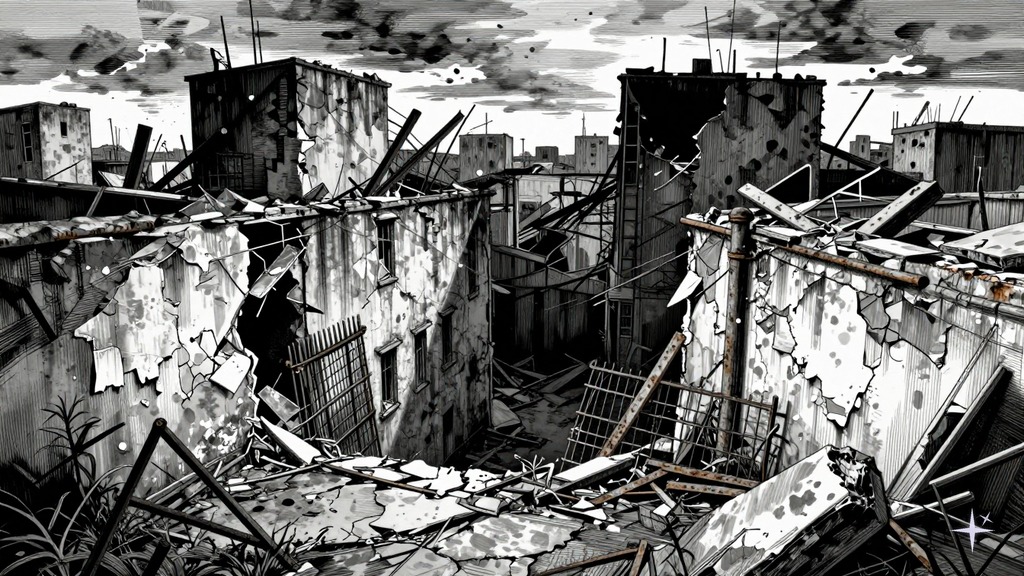
Tekkonkinkreet: Black & White is not a conventional manga in almost any sense. Matsumoto’s art style is raw and kinetic, full of scratchy drawn lines and compositions that feel like they’re vibrating with nervous energy. Characters are drawn with exaggerated, unconventional proportions — intentionally strange and striking rather than polished. Backgrounds are impossibly detailed cityscapes that crumble and breathe. If you’re used to clean, polished manga art, this will look radically different — and that’s the point.
The Story
The story follows Black and White, two orphaned kids who survive on the streets of Treasure Town — a fictional city that’s equal parts nostalgic neighborhood and urban nightmare. Black is violent, fierce, and protective. White is innocent, strange, and seemingly disconnected from reality. Together they form a unit that keeps Treasure Town’s criminal elements in a fragile balance.
When yakuza — Japanese organized crime syndicates — and developers move in to reshape the city, that balance shatters. The story becomes a meditation on innocence, violence, and what happens when the things that ground us are stripped away.
What Kind of Reader Will Love This
As mentioned up top, Tekkonkinkreet isn’t traditional horror — you won’t find monsters or jump scares here. But it’s deeply unsettling in ways that horror fans tend to appreciate. The series deals with psychological darkness, urban decay, the exploitation of vulnerable people, and the fine line between protecting someone and becoming a monster yourself. Scenes of violence are present and can be intense, though the manga treats them with weight rather than spectacle.
This is a great fit if you enjoy:
- Psychologically intense stories that prioritize atmosphere and character over plot mechanics
- Visually experimental manga where the art style is inseparable from the storytelling
- Dark, ambiguous narratives that don’t wrap everything up neatly
- Short, complete series that you can experience as a whole rather than committing to dozens of volumes
It’s less ideal if you prefer straightforward narrative structures, clean art styles, or stories that provide clear answers to their central questions. Tekkonkinkreet communicates through feeling, imagery, and juxtaposition as much as through dialogue and plot — it operates more like a poem than a novel.
Matsumoto’s Artistic Legacy
Taiyo Matsumoto is one of the most distinctive voices in manga. His work consistently pushes against the medium’s visual conventions, and Tekkonkinkreet is often cited as one of his most concentrated achievements. The series packs an enormous amount of visual and emotional information into its 33 chapters. His page-to-page rhythm feels improvisational and surprising, but always intentional — each scene flows into the next with a momentum that keeps pulling you forward.
For readers who are exploring manga beyond mainstream genres, Tekkonkinkreet serves as a powerful example of what the medium can do when freed from formula. It’s a short commitment with lasting impact.
The Bottom Line
Three volumes of content. One English book to buy. A story about two kids and a dying city that refuses to leave your imagination quietly. If any of that sounds appealing, grab the omnibus and give it a read. At 33 chapters and roughly 600 pages, the time investment is minimal — and if it clicks for you, it really clicks.