So you’ve heard about Zom 100: Bucket List of the Dead — maybe through the anime, maybe through a friend losing their mind over it — and now you want to read the manga. Great choice. Here’s the quick answer: there are 20 volumes of Zom 100 in English, published by Viz Media, and the series is still ongoing with more volumes on the way. In Japan, the series has reached 22 volumes in its original release.
Whether you watched the anime and want to continue the story in manga form, or you’re picking up your first volume with no prior experience, this guide covers everything — volume count, reading order, story structure, editions, and where to buy. If you’re coming from the anime, you’ll find specific guidance below on where the adaptation leaves off and whether to start from the beginning.
If you’re completely new to manga, a quick note on format: manga series are released as individual volumes — compact paperback books, typically around 180–200 pages each, collecting several chapters that originally ran in a Japanese magazine. When people ask “how many volumes,” they’re asking how many of these collected books exist. That’s what this guide covers.
How Many Zom 100 Manga Volumes Are There?
Zom 100: Bucket List of the Dead is written by Haro Aso (story) and illustrated by Kotaro Takata (art). It runs in Shogakukan’s Monthly Sunday Gene-X magazine in Japan — meaning new chapters come out monthly in that magazine before being collected into volumes. The English edition is published by Viz Media.
As of the most recent releases, the English edition has 20 volumes, and the Japanese edition has 22 volumes. The series is ongoing in both languages, with new volumes still releasing. Because it’s an active series, these counts will continue to grow — check Viz Media’s release schedule for the latest.
For anyone unfamiliar with the premise: Akira Tendo is a young man ground down to nothing by his soul-crushing corporate job. He works brutal hours for an exploitative company, and life has lost all color. Then one morning he wakes up to discover the zombie apocalypse has arrived — and instead of despair, he feels free. For the first time in years, he doesn’t have to go to work. He writes a bucket list of 100 things he wants to do before he becomes a zombie, and the series follows him checking items off that list while navigating a world overrun by the undead.
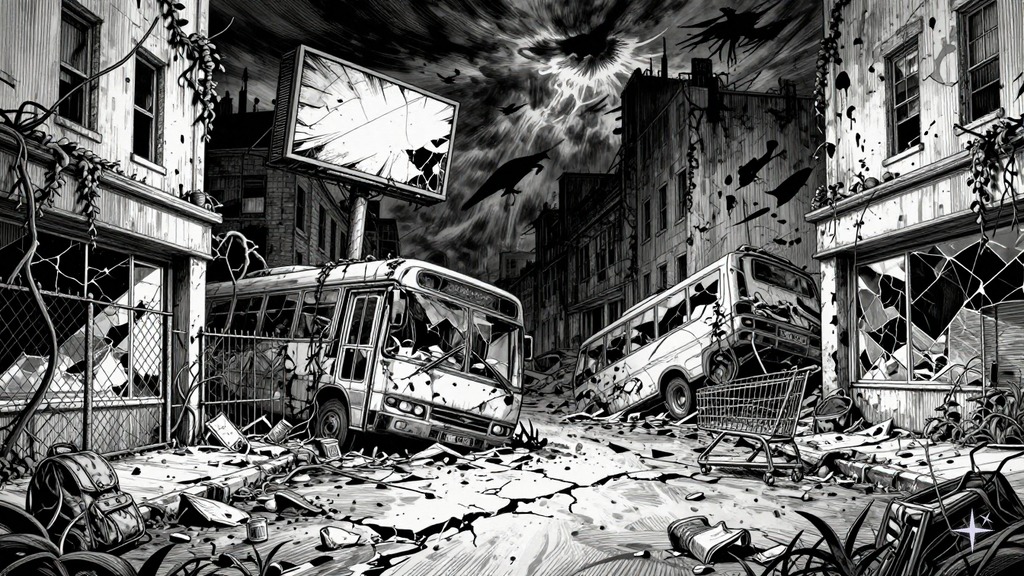
Don’t let the comedic setup fool you, though. This is a horror manga at its core. Kotaro Takata draws genuinely disturbing zombie horror — body horror (grotesque physical transformation and mutation), visceral survival scenarios, and real tension that the comedy makes hit even harder. The sharp contrast between goofy bucket-list hijinks and brutal zombie violence is a big part of what makes the series special. When the horror lands, it lands.
How the Story Is Structured
Zom 100 doesn’t follow a single linear plot the way some manga do. Instead, the story is built around Akira’s bucket-list goals. Each story arc — a multi-chapter storyline that plays out across part of a volume or several volumes — typically centers on one or more items from the list. Learn to surf, go on a road trip, visit an aquarium — each goal becomes the framework for a new adventure.
The recurring structure looks something like this:
- Lighthearted goal — Akira picks something fun or meaningful from his bucket list
- Zombie danger escalation — the attempt to accomplish that goal runs headfirst into the reality of the apocalypse
- Emotional payoff — the arc resolves with character growth, a moment of genuine warmth, or a hard-earned victory
This structure keeps the series feeling fresh volume to volume. You’re never stuck in one setting or one type of conflict for too long.
As the series progresses, the story layers in more complexity. Early arcs are mostly about Akira rediscovering joy and freedom. Mid-series arcs introduce a growing cast of companions and start exploring how different people respond to societal collapse — including human antagonists who turn out to be far more dangerous than the zombies. Later arcs raise the stakes considerably, with deeper worldbuilding, more intense horror, and emotional character arcs that give real weight to the comedy-horror balance.
The tonal balance shifts gradually too. The early volumes lean more heavily into comedy and the exhilaration of freedom. As the cast grows and the world gets fleshed out, the horror elements become more prominent and more disturbing. It’s a smart escalation — by the time things get really dark, you’re invested enough in these characters to feel every bit of it.
Story Progression by Phase
Rather than listing every single volume, here’s how the story flows across its major phases. This should help you understand what you’re getting into without spoiling specific plot points.
Opening Phase (Volumes 1–3)
This is where the hook lives. Volume 1 opens with Akira’s miserable corporate existence rendered in washed-out, lifeless panels — and then the zombie apocalypse hits, and the art explodes into color and energy. It’s one of the most effective tonal shifts in recent manga. Most manga pages are printed in black and white, which makes the occasional color pages in these volumes hit even harder. These early volumes establish Akira’s bucket list, introduce the rules of the zombie-infested world, and let you fall in love with the premise.
The horror here is already present — Takata draws zombies with stomach-churning detail — but the dominant feeling is joy and liberation. It’s infectious.
Group Formation Phase (Volumes 4–8)
Akira can’t do everything alone. This stretch introduces the core cast: Kencho (Akira’s best friend and partner in absurd bucket-list schemes), Shizuka (capable, serious, and a perfect counterbalance to Akira’s enthusiasm), and Beatrix (a German tourist with her own survival skills and energy). The group dynamic adds both comedy and emotional depth.
These volumes lean into road-trip adventure territory, with each new location bringing fresh zombie scenarios and creative survival challenges. The horror set pieces get more elaborate, and you start seeing Takata push his art further — more detailed environments, more grotesque zombie designs, more dynamic action sequences.
Mid-Series Phase (Volumes 9–14)
This is where the series starts showing its teeth. The threats scale up significantly — not just in terms of zombie danger, but through human antagonists who exploit the apocalypse for power. Some of the most unsettling content in the series comes not from the undead but from the living, and the manga doesn’t shy away from exploring how societal collapse brings out the worst in certain people.
The comedy is still here, but the balance tips more toward horror and character drama. Emotional stakes deepen as the cast faces real losses and difficult choices.
Later Phase (Volumes 15–20)
Higher stakes, expanded worldbuilding, and character arcs that pay off storylines set up many volumes earlier. The series continues to find new ways to challenge its cast and surprise readers. Without spoiling specifics, this stretch includes some of the manga’s most ambitious storytelling and most intense horror sequences.
Since the series is still ongoing, this phase is actively developing. New volumes continue the story.
Which Edition Should You Buy?
For English readers, the primary option is the Viz Media standard single volumes. These are the widely available editions you’ll find at bookstores and online retailers in both physical and digital formats.
Physical vs. Digital
Both work well, but there’s a strong case for physical here. Kotaro Takata’s artwork is detailed and expressive — the zombie designs, the action sequences, the contrast between bleak corporate panels and vibrant post-apocalypse spreads — all of it rewards reading on a physical page where you can take in the full detail at print size.
That said, digital is perfectly fine too. If you prefer reading on a tablet or want instant access, the digital editions contain the same content. It’s really about your reading preference.
Special Editions
As of the current English release lineup, Viz Media publishes Zom 100 in standard single-volume format. No official VIZ omnibus edition (multiple volumes collected into one larger book) or box set has been part of the English release schedule — though third-party retail bundles of the singles do circulate on marketplaces. The single volumes are your go-to.
Price Expectations
Viz Media single volumes for Zom 100 carry an MSRP in the range typical for standard manga volumes — generally around $11–$15 per volume at list price. With 20 volumes currently available, that means collecting the full English run so far is a meaningful investment, so many readers start with Volume 1 to make sure the series clicks before committing further.
Where to Start
Volume 1. The opening volume’s tonal shift from corporate horror to zombie-apocalypse freedom is one of the best hooks in manga — you’ll know within the first chapter whether this series is for you. If you’ve already watched the anime, it’s still worth starting from Volume 1. The manga’s art and pacing offer a different experience, and you’ll pick up details and character moments the anime condensed or skipped. That said, if you’d rather jump ahead, the anime’s first season covers roughly the first several volumes — check online episode-to-chapter guides for the exact transition point.
Key Volumes Where the Story Peaks
Every volume of Zom 100 is worth reading, but certain ones stand out as high points. Here are the moments that tend to convert casual readers into devoted fans — kept spoiler-free so you can experience them fresh.
Volume 1: The Tonal Shift
This is the one that sells the entire series. The contrast between Akira’s dead-eyed corporate existence and his explosion of joy when the apocalypse frees him is unforgettable. Takata’s art transformation between these two states is masterful — you can literally see the color and energy return to Akira’s world. If you read one volume and don’t feel it, the series might not be for you. But almost everyone feels it.
Mid-Series Horror Peaks
Without naming specific volumes (spoiler territory), the arcs where human antagonists take center stage contain some of the series’ most disturbing and compelling horror. The manga makes a sharp point: zombies are a force of nature, but humans who choose cruelty are truly terrifying. These arcs also push the main cast into their most vulnerable moments, and the emotional weight hits harder because of all the comedy and warmth that preceded it.
The Bucket-List Payoffs
Some of the most satisfying moments in the series come when a bucket-list goal that seemed like pure comedy turns out to carry real emotional significance. These payoffs are scattered throughout the run and reward long-term readers. The series has a gift for setting up something that looks silly and then making you genuinely emotional about it several volumes later.
Where to Buy Zom 100 Manga Volumes in English
You’ve got several solid options for picking up the series.
Physical Copies
- Amazon — Viz Media physical editions are widely available. You can find individual volumes easily.
- Barnes & Noble — Carries the full Viz Media lineup in-store and online. A good option if you want to browse in person.
- Independent bookstores — Many local shops stock popular manga, and most can order specific volumes if they’re not on the shelf.
- Crunchyroll Store — An online option for manga buyers looking to build a collection. Availability for specific volumes may vary, so check current stock.
The latest volume in the English release is Vol. 20, which continues the ongoing story.
Zom 100: Bucket List of the Dead, Vol. 20
Digital Options
- Kindle — Digital editions available through Amazon’s Kindle store
- Viz.com — Viz Media’s own digital platform carries the series
- BookWalker — A digital manga storefront (website and app) with a large catalog
For readers who already subscribe to digital manga services: Zom 100 runs in a seinen (older audience) magazine, not a Shonen Jump title, so it is not included in the Shonen Jump subscription on the Viz Manga app. You’d need to purchase volumes individually through Viz’s digital store or one of the other platforms listed above.
Buying Advice for New Readers
Grab Volume 1 and see how you feel. The first volume is a complete emotional experience on its own — you’ll know immediately whether this series clicks for you. If it does (and it probably will), you’ll want to keep going.
Frequently Asked Questions
How many volumes of Zom 100 are out in English?
The English edition from Viz Media has 20 volumes, with the series still ongoing and new volumes continuing to release. In Japan, the original edition has reached 22 volumes. Check Viz Media’s release schedule for the most current volume count and upcoming release dates.
Is Zom 100 finished or still ongoing?
The series is ongoing. It continues to run in Monthly Sunday GX in Japan, and Viz Media continues publishing the English translation. There are more volumes to come.
Is there an omnibus or box set available?
As of the current English release lineup, Zom 100 is published by Viz Media in standard single volumes. No official omnibus editions (collected multi-volume books) or VIZ box sets have been released for this series in English — marketplace listings that look like sets are third-party bundles of the individual volumes.
Is Zom 100 actually horror?
Yes. The comedic premise can be misleading, but Zom 100 is genuine horror manga. It features:
- Zombie horror — detailed, grotesque zombie designs and violent encounters
- Body horror — disturbing transformation and infection scenes depicting physical mutation
- Survival tension — real stakes and genuine danger for the cast
- Human horror — antagonists whose cruelty surpasses the zombie threat
- Dark themes — corporate exploitation, societal collapse, and loss
The comedy doesn’t soften the horror — it amplifies it. The contrast between lighthearted moments and genuine dread is exactly what makes the series effective as horror. Think of it as a zombie survival story where the protagonist’s optimism is both the source of comedy and the emotional core that makes the dark moments devastating.
Does the anime cover the full manga story?
No. The anime adaptation covers only a portion of the manga’s story. If you’ve watched the anime and want to continue, you’ll need the manga — and there’s significantly more material beyond what the anime has adapted. Many readers recommend reading from Volume 1 even if you’ve seen the anime, because the manga’s art and pacing offer a different experience. If you’d rather pick up where the anime left off, online episode-to-chapter guides can help you find the right starting volume.
What age is Zom 100 appropriate for?
The series contains graphic zombie violence, body horror, mature themes, and occasional sexual humor (mostly played for comedy, such as characters in embarrassing or revealing situations — it’s not a prominent focus of the series but does come up). It’s published under Viz Media’s standard manga line. Older teens and adults are the target audience. If you’re comfortable with zombie horror and dark comedy, you’ll be fine.
—
Zom 100: Bucket List of the Dead is one of those rare series that genuinely earns both halves of its genre — the horror is horrifying, and the comedy is hilarious. With 20 English volumes out and the series still going strong, there’s plenty to dig into. Grab Volume 1, meet Akira on the worst-best day of his life, and see why this one has so many readers hooked.