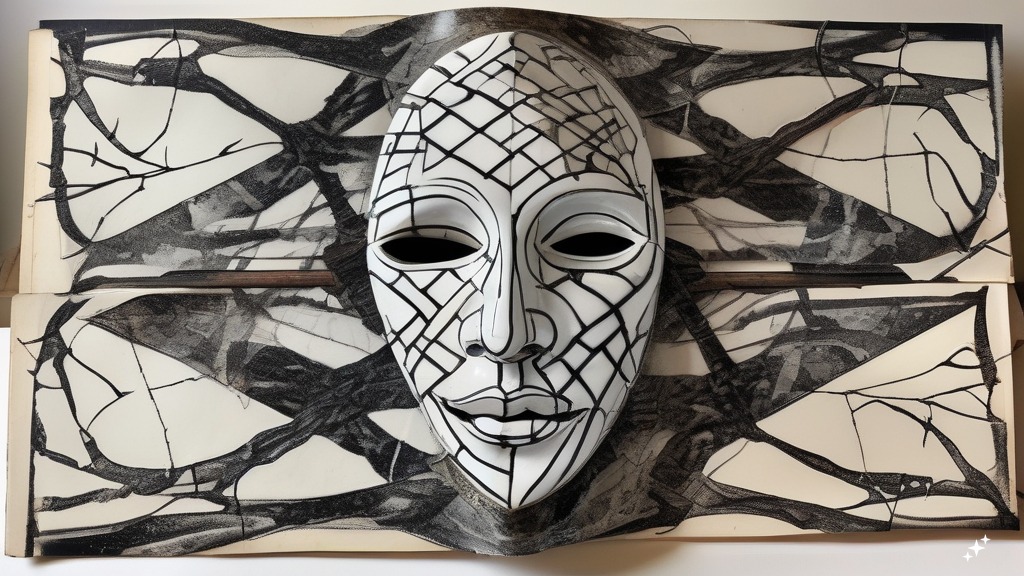
What Is the Junji Ito No Longer Human Book?
No Longer Human is a 616-page hardcover manga adapting Osamu Dazai’s classic 1948 Japanese novel of the same name (Ningen Shikkaku). It’s drawn and adapted by Junji Ito, one of the most recognized names in horror manga.
Here are the basics:
- Publisher (English): VIZ Media
- Format: Single hardcover omnibus — meaning all three original Japanese volumes are collected into one book
- Genre: Psychological horror / drama, published in Japan as a seinen title (manga aimed at adult men, though the audience skews broader than that label suggests)
- Release date (English): December 17, 2019
- critically acclaimed, ranking on top bestseller charts in late 2019 and demonstrating how far its reach extends beyond the typical manga audience
This is not a typical Junji Ito horror manga. There are no cursed towns, no supernatural monsters stalking people through corridors. Instead, it’s a literary adaptation with horror elements layered on top — Ito uses his signature visual style to externalize the psychological torment of the main character.
Who is this book for?
- Junji Ito fans who want to see him work outside his comfort zone
- Readers curious about Dazai’s novel but drawn to a visual format
- Anyone who loves psychological horror manga that prioritizes atmosphere and dread over jump scares
- Literary manga readers looking for something heavy and beautifully drawn
If that sounds like you, you’ll probably love this. If you’re strictly looking for the supernatural horror Ito is famous for, keep reading — the next sections will help you decide.
The Source Novel — Osamu Dazai’s No Longer Human
To understand what Ito is adapting, a little background on the source material helps.
Osamu Dazai’s No Longer Human (1948) is the one of the best-selling novels in Japanese history. It’s a short, devastating book written in the form of notebooks left behind by a man named Ōba Yōzō, chronicling his life from childhood through his total psychological collapse.
The novel’s structure:
- Prologue — A stranger discovers three notebooks and photographs
- First Notebook — Yōzō’s childhood, his inability to understand other people, his habit of playing the clown to mask his inner terror
- Second Notebook — His young adult years, failed relationships, a suicide attempt, deepening alienation
- Third Notebook — Addiction, further destruction, institutionalization
- Epilogue — A brief coda from an outside perspective
The core themes running through Dazai’s novel are:
- Alienation — Yōzō feels fundamentally disconnected from other human beings, as though he’s a different species
- Masked identity — He performs normalcy to survive, hiding his true self behind humor and agreeableness
- Self-destruction — Alcohol, drugs, and self-harm as responses to unbearable inner pain
- The question of what makes someone “human” — Yōzō feels he has been disqualified from humanity itself
The novel is autobiographical in many ways — Dazai himself struggled with addiction and multiple suicide attempts, and he died by suicide shortly after completing the book.
Do you need to read the novel first? No. Ito’s manga is fully self-contained. It follows the novel’s plot closely enough that you’ll get the complete story. That said, if you’ve already read Dazai’s book, the manga becomes a fascinating conversation between two artists across decades — you’ll notice exactly where Ito’s horror sensibility reshapes the material.
What Junji Ito Changes (and Keeps)
This is probably the most important section if you’re trying to figure out what kind of reading experience to expect.
What Ito Keeps Faithful
Ito follows Dazai’s plot structure and three-notebook format very closely. The story beats, the key relationships, the trajectory of Yōzō’s life — all of it tracks with the novel. Character dialogue and internal monologue draw heavily from Dazai’s text. If you’ve read the novel, you’ll recognize scene after scene.
This isn’t a “loose inspiration” — it’s a genuine, respectful adaptation.
What Ito Adds
Here’s where it gets interesting. Ito layers his signature horror imagery over Dazai’s realist narrative:
- Grotesque visions and hallucinations — Yōzō sees distorted, monstrous figures that represent his psychological state
- Body horror elements — Faces warp, figures contort, the familiar becomes alien. (Body horror is a subgenre focused on disturbing transformations of the human body — it’s one of Ito’s specialties.)
- Visual metaphors for inner torment — The things Dazai described in prose, Ito makes you see
These horror elements aren’t random or gratuitous. They serve a specific purpose: making Yōzō’s internal anguish external and visible. When Yōzō looks at people and can’t understand them, Ito draws those people as genuinely inhuman, monstrous. When Yōzō’s mental state deteriorates, the artwork deteriorates with it — becoming more chaotic, more horrifying.
The result is something that reads as atmospheric dread rather than scare-driven horror. There are no “gotcha” moments. Instead, there’s a slow, building sense of wrongness that mirrors the character’s experience.
The Tone Difference
If you’re coming from Ito’s other well-known works — Uzumaki (a story about a town consumed by an obsession with spirals) or Tomie (a series about a girl who keeps coming back from the dead) — expect a very different rhythm. Those works are driven by escalating supernatural threats. No Longer Human is driven by a man’s quiet, relentless self-destruction. The horror is psychological and existential.
It’s more slow-burn, more literary, and honestly more emotionally heavy than most of Ito’s other work.
The English edition also includes a bonus short story by Ito, separate from the main adaptation — a nice addition for a volume this substantial.
Edition Details — What You Get in This Book
One of the nice things about No Longer Human is that there’s only one English edition — no confusing volume numbers, no “which edition should I get?” decisions.
| Detail | Info |
|---|---|
| Title | No Longer Human (Junji Ito) |
| Publisher | VIZ Media (VIZ Signature — a VIZ label used for their more literary and mature manga releases) |
| Format | Hardcover omnibus (all volumes in one book) |
| Pages | 616 |
| Trim size | 5.5″ × 7.88″ |
| Contents | All 3 original Japanese volumes (24 chapters) + bonus content |
| ISBN | 978-1974707096 |
| ASIN | 1974707091 |
| Release date | December 17, 2019 |
| Age rating | T+ (Older Teen, 16+) |
No Longer Human (Junji Ito)
Physical Quality
The hardcover binding is solid — important for a book this thick. The paper stock is good quality, which matters a lot for Ito’s artwork. His detailed linework — including the dense layered hatching he uses to build shadow and texture — can get muddy on cheap paper, but it looks sharp here.
At 616 pages in hardcover, this is a substantial object. It has real shelf presence, and the production values match the content.
Value
For the page count and physical quality, this is genuinely good value. You’re getting three full volumes of meticulously drawn Junji Ito artwork in a premium format. Compared to buying three separate volumes of most manga series, the single collected format works out well.
Content Warnings
This section is here because No Longer Human deals with heavier subject matter than most manga, including most of Ito’s other work. The horror here isn’t supernatural — it’s rooted in real human suffering.
VIZ Media rates this T+ (Older Teen, 16+).
Specific content warnings:
- Suicide and self-harm — This is a central theme throughout the book, not a passing mention. Multiple attempts are depicted.
- Substance abuse — Alcohol and drug addiction are major plot elements
- Sexual assault — Present in the narrative
- Depression and mental illness — The entire story is essentially a portrait of severe mental illness
A note for parents and gift-givers: The manga format and Junji Ito’s name might suggest this is similar to his other horror collections — creepy but ultimately fantastical. No Longer Human is different. The emotional weight is real and heavy. The subject matter is grounded in actual human pain. It’s a beautiful, powerful work, but it’s not something to give casually to a younger reader without knowing what’s inside.
If you or someone you know is struggling with the themes described above, support is available. In the US, the 988 Suicide and Crisis Lifeline can be reached by calling or texting 988. Readers outside the US can search for their local crisis support line — the International Association for Suicide Prevention maintains a directory at https://www.iasp.info/resources/Crisis_Centres/.
Is It Worth Reading?
Short answer: yes, with caveats depending on what you’re looking for.
You’ll Love It If…
- You’re a Junji Ito fan who wants to see him stretch beyond supernatural horror. This shows a different side of his artistry — disciplined, restrained, emotionally precise.
- You’re interested in Dazai’s novel but prefer a visual format, or want a companion piece to a book you’ve already read.
- You love psychological horror manga that prioritizes mood and character over plot twists and monsters.
- You appreciate beautiful, detailed artwork. Even by Ito’s standards, the draftsmanship here is impressive — 616 pages of careful, expressive linework.
You Might Not Enjoy It If…
- You’re expecting Uzumaki or Tomie-style supernatural horror. The horror elements are present but serve the literary adaptation, not the other way around.
- Heavy themes of suicide and addiction are difficult for you. This book doesn’t shy away from any of it.
- You want a fast-paced story. This is a slow, contemplative narrative about one person’s gradual disintegration. The pacing mirrors the novel — deliberate and unflinching.
How It Compares to Other Junji Ito Works
| No Longer Human | Uzumaki | Ito’s Short Story Collections | |
|---|---|---|---|
| Type | Literary adaptation | Original work | Original stories |
| Horror style | Psychological, atmospheric | Supernatural, escalating | Varied — body horror, otherworldly dread, surreal nightmares |
| Pacing | Slow-burn, literary | Building dread with climax | Self-contained per story |
| Tone | Heavy, emotionally devastating | Eerie, increasingly nightmarish | Ranges from creepy to darkly comic |
| Monsters? | Metaphorical only | Very much yes | Usually yes |
| Best for | Literary manga fans, readers drawn to this specific premise | Horror fans of all kinds | New Ito readers sampling his range |
If you’re brand new to Junji Ito, this probably isn’t the best starting point — unless the premise of a psychological horror literary adaptation is specifically what drew you here, in which case go for it. Otherwise, his short story collections or Uzumaki give you a better sense of what makes him famous. No Longer Human is especially rewarding once you already know his style and can appreciate how he’s applying it to completely different material.
If you’ve already read and loved his horror work, No Longer Human is a fascinating next step. Seeing Ito channel his talents into something this emotionally ambitious is genuinely striking.
Where No Longer Human Fits in Ito’s Catalog
For context, No Longer Human isn’t the only time Ito has adapted a classic literary work. He also adapted Mary Shelley’s Frankenstein, published in English by VIZ Media as a hardcover in 2018. That adaptation takes a similar approach — Ito brings his visual style to a well-known story while staying faithful to the source material. You don’t need to read his Frankenstein first; the two are completely independent. Both adaptations show Ito engaging seriously with source material rather than just slapping his art style onto someone else’s story.
Within his broader body of work, No Longer Human sits in a unique spot — it’s the most “literary” thing he’s done, and arguably the most emotionally demanding. His horror collections like Uzumaki, Tomie, and various short story volumes remain his signature work, but No Longer Human shows range that not every manga artist attempts.
Quick Recommendations Based on What You’re Looking For
If you want to start with Junji Ito’s horror work first:
Grab Uzumaki (3-in-1 Deluxe Edition) — it’s his most celebrated supernatural horror work, collected in one beautiful hardcover. It’ll show you exactly what Ito does best, and then No Longer Human will hit differently once you see him apply those skills to literary adaptation.
Uzumaki (3-in-1 Deluxe Edition)
If you want more Ito after No Longer Human:
The Junji Ito Story Collection 3 Books Set (including Lovesickness, Deserter, and Fragments of Horror) gives you a wide sampling of his short horror work — a nice contrast to the long-form literary adaptation.
Note: this is a multi-book set put together by a third-party seller, not an official publisher box set.
Junji Ito Story Collection 3 books set: Lovesickness, Deserter, Fragments of Horror
If No Longer Human is exactly what you want:
Just get it. One hardcover, 616 pages, everything included. No complicated buying decisions. The opening pages will tell you immediately whether this is your kind of book.
Final Thoughts
Junji Ito’s No Longer Human is one of the most unusual and rewarding manga you can own. It’s a collision between one of Japan’s greatest literary works and one of manga’s greatest horror artists, and the result is something that belongs to neither category entirely — it’s its own thing.
It’s heavy. It’s beautiful. It’s 616 pages of an artist working at the height of his powers on material that clearly matters to him.
Not everyone will love it — and that’s fine. But if the idea of Junji Ito pouring his art into a devastating psychological portrait appeals to you even a little, it’s absolutely worth your time.