What Is the Disturbing Manga Iceberg?
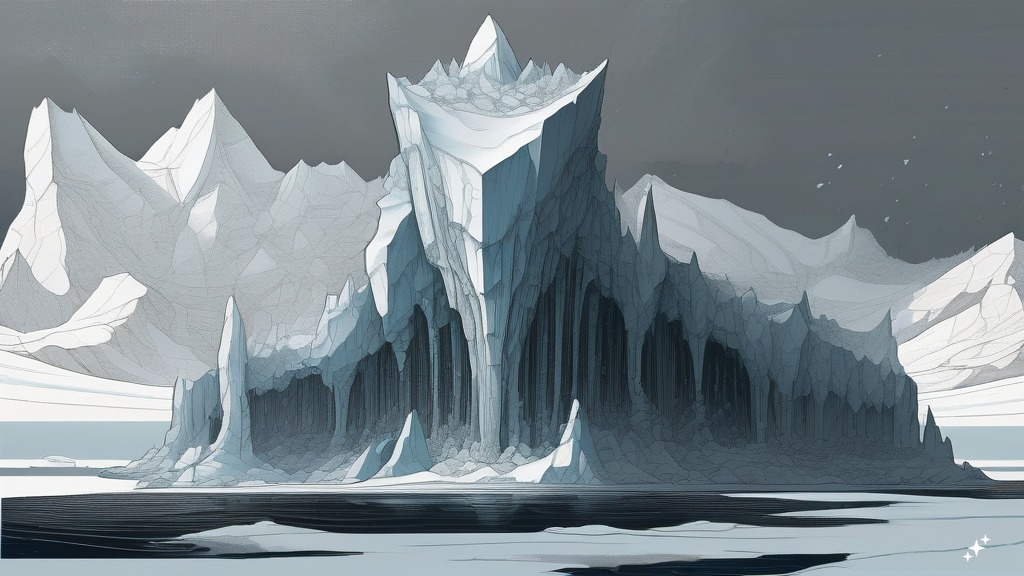
If you’re not familiar with the iceberg chart format, here’s how it works: imagine an iceberg in the ocean. The tip poking above the surface represents things everyone knows — popular, mainstream, easy to find. As you go deeper underwater, titles become more obscure, more extreme, or both.
The disturbing manga iceberg applies this structure to horror and disturbing manga. The surface holds well-known series with huge fanbases. The mid-levels hold titles that are acclaimed but push into uncomfortable psychological territory. The deep levels contain graphic, extreme content. And the very bottom — the abyss — holds works so disturbing that they’re infamous even among people who’ve never read them.
A few important things to understand about the iceberg before we get into specific titles:
- It was popularized through YouTube explainer videos and Reddit threads. There’s no single “official” version — multiple people have made their own variations, so the exact placement of titles varies.
- Deeper does not mean better. This is a common misunderstanding. The iceberg measures a combination of obscurity and intensity, not quality. Some of the best horror manga ever made sits right at the surface.
- It’s not a checklist. The iceberg is descriptive, not prescriptive. It maps what exists. It’s not daring you to read everything.
Before we go further, a quick note on terms. Manga is originally published in Japanese, so throughout this guide you’ll see references to English-language publishers — companies like VIZ Media, Yen Press, Kodansha USA, Seven Seas Entertainment, and Dark Horse Comics. These are the major publishers that translate and release manga in English. When a title has been released by one of these publishers, it means you can buy a legitimate English version. When it hasn’t, the title is harder to find in English — which is part of what pushes certain manga deeper on the iceberg.
With that in mind, let’s work our way down.
Surface Level — Gateway Horror Manga Everyone Knows
The surface of the iceberg is packed with titles you’ve probably already heard of — or maybe already read. These are widely available in English, have massive fanbases, and are the starting point for almost everyone’s horror manga journey.
Junji Ito — Uzumaki and Tomie
No horror manga conversation starts without Junji Ito. He’s the most recognizable name in the genre worldwide, and for good reason.
Uzumaki is his masterpiece — a story about a small town consumed by an obsession with spirals. It sounds absurd on paper, and that’s part of what makes it so effective. Ito takes a shape — something you see every day — and makes it the source of escalating dread rooted in forces far beyond human understanding. The series is 3 volumes long and available as a beautiful 3-in-1 Deluxe Edition hardcover from VIZ Media. It’s a perfect starting point: disturbing enough to hook you, short enough to finish in a weekend, and brilliantly drawn throughout. The Deluxe Edition is a premium hardcover, so if you want to test the waters at a lower price point, Ito’s shorter story collections — like Alley or Stitches — are a cheaper way in.
Uzumaki (3-in-1 Deluxe Edition)
Alley: Junji Ito Story Collection
Stitches (Junji Ito)
Tomie is Ito’s other essential work — a collection of connected but self-contained stories (each one works on its own, but they share the same central character) about a supernaturally beautiful girl who drives men to obsession and murder, only to regenerate and start the cycle again. Where Uzumaki is about environmental dread, Tomie is about the horror of obsession and toxic desire. It’s got a different rhythm — each chapter is its own story rather than building toward one climax — but it’s just as rewarding.
If you only ever read surface-level horror manga, Ito alone could keep you busy for a long time.
Tokyo Ghoul
Tokyo Ghoul by Sui Ishida blends horror with dark action in a way that appealed to millions of readers. The story of Ken Kaneki — a college student who becomes half-ghoul after a transplant surgery gone wrong — explores identity, violence, and what it means to be a monster. It’s one of the best-selling manga series globally, with a massive anime adaptation that introduced even more people to the story.
Tokyo Ghoul Complete Box Set (Vols. 1-14)
It earns its place on the iceberg because it does contain genuinely disturbing imagery — torture scenes, body horror (meaning graphic depictions of the human body being transformed, mutilated, or violated), and psychological breakdowns. But it’s wrapped in an action-driven framework similar to titles aimed at younger male readers, which makes it highly accessible.
Corpse Party: Blood Covered
Corpse Party: Blood Covered is a supernatural survival horror manga adapted from the cult video game of the same name. Written by Makoto Kedouin with art by Toshimi Shinomiya, it follows a group of students trapped in a haunted, decaying elementary school after a ritual goes wrong. The manga runs 5 volumes in the English Yen Press edition (10 volumes in the original Japanese — each English volume combines two Japanese volumes).
What makes it surface-level isn’t that it’s tame — it gets very graphic — but that it’s well-known through its game franchise and anime adaptations. If you’ve played the game, the manga expands on the story. If you haven’t, it stands on its own as a solid supernatural horror read.
Gantz
Gantz by Hiroya Oku is a 37-volume sci-fi action-horror series about people who die and are resurrected to fight aliens in deadly missions controlled by a mysterious black sphere. It ran from 2000 to 2013 in a Japanese manga magazine before being collected into book form, and it’s published in English by Dark Horse Comics. It was one of the most talked-about manga of its era among adult readers.
Gantz sits at the surface level because it’s widely available and has a huge readership, but make no mistake — it’s extremely violent. The gore is detailed and frequent, and the series also contains sexual content. It’s the kind of title that surprises people who pick it up expecting a standard action manga.
Why These Titles Are the Entry Point
What unites these surface-level titles:
- High production quality — the art is polished, the storytelling is tight, and they’ve all been translated and released in English by major publishers
- Wide availability — you can find them in bookstores, libraries, and every major online retailer
- Large communities — there are active fanbases to discuss them with, spoiler-free guides, and anime adaptations that complement the reading experience
If you’re new to horror manga, this is where you start. There’s enough here to keep you reading for months before you even think about going deeper.
Mid-Level — Psychological Horror That Pushes Boundaries
This is where things shift. The mid-level of the disturbing manga iceberg isn’t necessarily more gory than the surface (though some of it is). What sets it apart is psychological intensity. These titles deal with uncomfortable themes — abuse, identity dissolution, moral ambiguity — in ways that sit with you long after you put the book down.
Blood on the Tracks by Shuzo Oshimi
Blood on the Tracks by Shuzo Oshimi is a slow-burn domestic horror manga about a boy named Seiichi and his mother Seiko, whose love curdles into something suffocating and dangerous. It’s 17 volumes, completed in 2023, and published in English by Vertical (an imprint of Kodansha USA).
Blood on the Tracks 1
There are no monsters in Blood on the Tracks. No ghosts, no curses. The horror is entirely human — a mother whose need for control escalates into abuse, and a son whose perception of reality warps under her influence. Oshimi’s art is distinctive: realistic faces with expressions that capture unease better than almost any other manga artist working today.
This is the title that tends to surprise people the most on the iceberg. It looks quiet. It reads slowly. And then it devastates you.
Happiness by Shuzo Oshimi
Happiness is another Oshimi work — 10 volumes, published by Kodansha USA. On the surface, it’s a vampire story: a high school outcast named Makoto is bitten and begins transforming. But Oshimi uses the vampire framework to explore adolescent isolation, the desire to belong, and the violence that erupts when that desire is denied.
It’s bleaker and more atmospheric than most vampire manga. If you liked Oshimi’s style in Blood on the Tracks, Happiness is the natural next read — shorter, more contained, and deeply melancholic.
Homunculus by Hideo Yamamoto
Homunculus by Hideo Yamamoto follows Susumu Nakoshi, a homeless man who agrees to undergo trepanation — a real (and ancient) surgical procedure where a hole is drilled into the skull, historically believed to relieve pressure or alter perception. After the procedure, Nakoshi begins seeing distorted, monstrous versions of the people around him — visual manifestations of their psychological trauma.
Homunculus (Omnibus) Vol. 1-2
Published in English as collected editions (multiple volumes bound together in one book) by Seven Seas Entertainment, Homunculus is a manga that blurs the line between horror and psychological drama. The “monsters” aren’t supernatural threats — they’re visual metaphors for repressed pain. It’s deeply unsettling, not because of violence, but because of how accurately it portrays emotional damage.
If you want horror that makes you think rather than makes you flinch, Homunculus is one of the best options at this level.
Franken Fran by Katsuhisa Kigitsu
Franken Fran takes a sharp turn from the psychological realism of the other mid-level titles — and a fair warning: while it sits at the mid-level on most iceberg charts, it’s significantly more graphic than Blood on the Tracks or Homunculus. It’s an 8-volume dark comedy about Fran, a chirpy, well-meaning surgical genius who “helps” people by performing extreme body modifications — transplants, hybrid creatures made from mixed biological parts, radical transformations — that always go horrifyingly wrong.
Published by Seven Seas Entertainment, it’s structured as a series of standalone stories and is darkly funny in a way that catches readers off guard. The body horror is extremely graphic, but the tone is almost cheerful, which creates this bizarre dissonance that’s hard to describe until you’ve experienced it. Imagine a medical horror manga where the surgeon is genuinely trying her best and the results are still nightmarish.
It sits at the mid-level because the comedic framing makes it less psychologically taxing than something like Blood on the Tracks. That said, if graphic depictions of bodies being taken apart and reassembled specifically bother you, Franken Fran will test your limits hard.
What Separates This Tier
The mid-level is defined by:
- Psychological realism — even fantastical setups (vampires, trepanation) are used to explore real human emotions
- Ambiguous morality — there are rarely clear heroes or villains, just people making increasingly disturbing choices
- Uncomfortable themes — parental abuse, identity crisis, bodily autonomy, social isolation
- Less mainstream visibility — these titles have dedicated fanbases but aren’t household names like Junji Ito or Tokyo Ghoul
This tier is where a lot of readers find their sweet spot — disturbing enough to feel genuinely challenging, but with enough craft and intention behind the darkness to make it feel worthwhile.
Deep Level — Extreme Violence and Ero-Guro Territory
Content warning: this section discusses manga containing graphic depictions of violence, sexual violence, and body horror. Some titles in this tier are not appropriate for all readers. Please research content warnings before seeking out anything mentioned here. A quick search for “[title] content warnings” on Google will usually surface relevant information, and sites like AniList or MyAnimeList often include content tags and user warnings.
Here’s where the iceberg goes dark. The deep level contains titles defined by graphic violence, sexual content, or both — often to a degree that will genuinely shock even experienced horror manga readers. These aren’t “a little intense.” They are extreme.
The section heading mentions “ero-guro” — short for “erotic-grotesque,” a Japanese artistic and literary tradition that combines sexual and grotesque imagery, often as a form of transgression or social commentary. We’ll cover its history in more detail in the Abyss section, but you’ll see the term come up from here on. It refers to a specific tradition, not just “gross stuff.”
Dead Tube by Mikoto Yamaguchi and Touta Kitakawa
Dead Tube is a death game manga — a subgenre where characters are forced into survival competitions with lethal consequences. The premise: a social media platform where users upload videos of extreme acts — including murder — and the least-viewed creator each round is killed. Written by Mikoto Yamaguchi with art by Touta Kitakawa, it has run in a Japanese manga magazine since May 2014 and spans 27 volumes (ongoing as of this writing).
Dead Tube does not hold back. The gore is detailed, the sexual violence is frequent, and the story uses its premise to comment on voyeurism and internet culture — though opinions vary on how effectively. It has no official English print release, which is part of why it sits at the deep level: you need to actively seek it out.
This is a title where knowing what you’re getting into beforehand is essential.
Ichi the Killer by Hideo Yamamoto
If you recognize the name Hideo Yamamoto from the Homunculus entry above — yes, same author. Ichi the Killer is his other major work, and tonally, it’s a completely different beast. It follows the intersecting stories of Ichi, a psychologically manipulated young man who kills with bladed boots, and Kakihara, a yakuza (Japanese organized crime) enforcer who derives pleasure from pain, searching for his missing boss.
The manga is infamous for extreme violence that blends sadism and masochism. You may know it through the controversial 2001 live-action film. The manga goes further. It’s a dark exploration of violence, manipulation, and the blurry line between victim and perpetrator, but the graphic content means most readers will bounce off hard.
Shintaro Kago
Shintaro Kago isn’t a single title — he’s an author whose entire body of work lives at this level. A Japanese guro (grotesque) manga artist known for satirical, surreal works, Kago uses extreme body horror as a vehicle for political and social commentary.
His stories often read like dark absurdist thought experiments: what if human bodies worked like machines? What if violence was bureaucratic? The art is detailed and clinical, which somehow makes the horror worse. Kago has a small but intensely devoted readership among people who appreciate guro as an art form, but his work is genuinely extreme and not suited for casual browsing.
Bradherley’s Coach by Hiroaki Samura
Bradherley’s Coach by Hiroaki Samura (known for Blade of the Immortal) is a collection of interconnected short stories set in a Victorian-era world where orphan girls are selected for what they believe is a prestigious life serving a nobleman — only to face exploitation and sexual violence.
It’s short, beautifully drawn, and absolutely harrowing. Samura’s art skill makes the cruelty feel more visceral, not less. This is one of the titles that often provokes the strongest reactions on the iceberg because the gap between the art quality and the content’s brutality is so wide.
What Defines This Tier
- Graphic sexual violence — not implied, not suggested, depicted
- Extreme gore — beyond what even most horror manga shows
- Limited or no official English releases — many deep-level titles exist only as unofficial translations created by fans and shared online (these occupy a legal gray area, since they’re not authorized by the original publishers)
- Deliberate provocation — some of these works are intentionally transgressive, pushing boundaries as a creative or political choice
This is the point on the iceberg where the question shifts from “is this good?” to “why does this exist?” — and for some of these works, there are genuinely interesting answers to that question. For others, there aren’t. Research before reading.
The Abyss — The Most Disturbing Manga in Existence
The bottom of the iceberg. These titles are infamous — discussed more often than they’re actually read, and for most people, that’s the right call. This section exists to explain what’s down here and why it appears on every version of the disturbing manga iceberg. It is not a recommendation list.
Strong content warning: this section discusses works containing extreme depictions of violence, sexual violence, and child exploitation. These descriptions are kept brief and factual. Most readers should skip the actual works entirely.
Shojo Tsubaki by Suehiro Maruo
Shojo Tsubaki (published in English as Mr. Arashi’s Amazing Freak Show by Blast Books in 1993) is a manga by Suehiro Maruo. It originally ran from 1983 to 1984 in Garo, an underground Japanese manga magazine that published alternative and experimental work outside the mainstream industry.
Maruo is considered a pioneer of the ero-guro aesthetic in manga. Shojo Tsubaki tells the story of a young girl named Midori who joins a traveling freak show after her mother’s death, only to suffer horrific abuse. It contains graphic depictions of child exploitation, which is why it sits at the very bottom of every iceberg chart.
The work is historically significant as part of Japan’s underground manga movement. It is also deeply, genuinely disturbing in a way that goes beyond what most people can or should engage with.
Mai-chan’s Daily Life by Waita Uziga
Mai-chan’s Daily Life (2004) by Waita Uziga is widely cited as the single most disturbing manga ever created. It depicts a maid with a supernatural healing factor who is subjected to extreme torture and violence by her employer’s guests.
The content is explicitly designed to shock. There is no deeper theme being explored, no political commentary — it exists at the furthest extreme of ero-guro as pure transgression. It appears at the bottom of every iceberg chart for this reason. This is the title people point to when they say “the abyss.”
For the overwhelming majority of readers: knowing it exists is enough. You don’t need to read it.
The Ero-Guro Nansensu Movement
Understanding why these works exist means understanding ero-guro nansensu — a Japanese artistic movement that originated in the 1920s. The name combines “erotic,” “grotesque,” and “nonsense,” and the movement began as a rebellion against the conservative values of Japan’s Showa era (roughly 1926–1989), using extreme imagery to provoke and challenge social norms.
Ero-guro was never just about shock value in its original form. It was a deliberate rejection of censorship and social conformity. Over the decades, the movement evolved — some artists carried on its satirical and political traditions (Shintaro Kago being a modern example), while others pushed into content that’s extreme for its own sake.
This context doesn’t make the abyss-level content easier to engage with, but it does explain why these works keep appearing in discussions about manga history. They represent an extreme endpoint of a century-old artistic tradition.
Why These Works Persist in Iceberg Discussions
You might wonder: if these titles are so extreme that most people shouldn’t read them, why do they keep showing up?
A few reasons:
- Morbid curiosity is a natural human impulse — the iceberg format is designed to make you wonder “what’s at the bottom?”
- Historical significance — works like Shojo Tsubaki are part of manga history, even if they’re not part of most readers’ libraries
- The iceberg is a map, not a recommendation — including something at the bottom doesn’t endorse it, it acknowledges it exists
- They define the boundary — without the abyss, there’s no scale. The deep level seems extreme until you learn what’s below it.
How to Navigate the Disturbing Manga Iceberg as a Beginner
If you’ve made it through this entire guide and you’re wondering where to actually start — good news, it’s simple.
Start at the Surface
Junji Ito is the ideal entry point for any horror manga newcomer. Full stop. Grab Uzumaki or one of his story collections like Alley and see how they hit you. Uzumaki is available as a gorgeous Deluxe Edition hardcover, but if you want to spend less upfront while you figure out whether horror manga is for you, Ito’s individual story collections are shorter and more affordable.
Uzumaki (3-in-1 Deluxe Edition)
Alley: Junji Ito Story Collection
If you want something with more action, Tokyo Ghoul will scratch that itch while still delivering genuinely dark content.
Tokyo Ghoul Complete Box Set (Vols. 1-14)
Each Tier Escalates Significantly
The jump between tiers is not gradual. Going from Uzumaki to Blood on the Tracks is a shift in tone and subject matter. Going from Blood on the Tracks to Dead Tube is a massive leap in graphic content. And going from the deep level to the abyss is a jump most readers never need to make.
Research content warnings before going deeper. This is not the genre for blind purchases. A quick search for “[title] content warnings” on Google, or checking a site like AniList or MyAnimeList, will tell you what you’re getting into and help you decide whether it’s something you want to engage with.
The Iceberg Is Descriptive, Not Prescriptive
This is worth repeating: reading everything on the iceberg is not the goal. The iceberg maps what exists in the world of disturbing manga. It’s a tool for discovery, not a dare.
Some readers will find their happy place at the surface and stay there forever. That’s great — there’s an enormous amount of incredible horror manga at that level. Others will explore the mid-level and find titles like Blood on the Tracks or Homunculus that become genuine favorites. A smaller number will venture into the deep level and find value in the extremity.
Almost nobody needs to go to the abyss. Knowing it’s there is enough.
Find Your Comfort Boundary
The most useful thing the iceberg does is help you discover where your personal line is. Everyone has one. Here’s a rough guide:
- “I want creepy and atmospheric” — stay at the surface. Junji Ito will keep you very happy.
- “I want horror that makes me genuinely uncomfortable” — explore the mid-level. Shuzo Oshimi’s work is a great place to start.
- “I want extreme horror and I know what I’m signing up for” — the deep level has what you’re looking for, but please research individual titles first.
- “I want to understand what’s at the very bottom” — this guide has covered it. If you’re still curious, the ero-guro history section above gives you the cultural context for why those works exist.
A Note on Availability
As you go deeper into the iceberg, official English releases become less common. Surface-level titles are all widely available — you can walk into a bookstore and find them. Mid-level titles mostly have official translations, though some may require ordering online. Deep-level and abyss titles often have limited or no official English releases, which is part of what keeps them obscure.
If a title interests you, check whether an official English edition exists before looking for unofficial fan-made translations. Supporting official releases keeps horror manga getting licensed and published in English.
Recommended Starting Path
If you want a structured way to explore the iceberg, here’s a path that gradually increases intensity:
- Uzumaki — cosmic body horror, accessible and brilliant
- Alley or Stitches — more Junji Ito at a lower price point, great for testing your appetite
- Blood on the Tracks — domestic horror that’s quiet and devastating
- Homunculus — psychological horror with a surreal visual language
- Decide from here — you’ll know by this point whether you want to go deeper
Uzumaki (3-in-1 Deluxe Edition)
Alley: Junji Ito Story Collection
Stitches (Junji Ito)
Blood on the Tracks 1
Homunculus (Omnibus) Vol. 1-2
That gives you a path from the surface through the mid-level that covers a range of styles and themes. From there, you’ll have enough context to decide whether the deep level interests you or whether you’ve found your sweet spot.
The iceberg is vast. There’s no rush to explore it all, and there’s real wisdom in knowing when to stop. Happy reading — and take care of yourself along the way.