If you’re looking for the Fire Force manga reading order, the answer is straightforward: start at Volume 1, read to Volume 34, done. No branching timelines, no separate side series you need to track down, no alternate versions of the story.
But “just read it in order” doesn’t tell you much about what you’re actually getting into — and there’s one major connection to another series that can change how the ending hits. This guide covers the full volume-by-volume breakdown, different approaches depending on how much time you have, and the Soul Eater question that comes up constantly.
Fire Force Manga Reading Order — Start at Volume 1, Read Straight Through
Fire Force (炎炎ノ消防隊) is a completed manga series by Atsushi Ohkubo — 304 chapters across 34 volumes. For readers new to manga, each volume collects roughly 8–10 individual chapters into a single book. The series was published in English by Kodansha Comics, a major manga publisher. It originally ran in Japan’s Weekly Shonen Magazine (a weekly anthology that serializes manga chapter by chapter) from September 2015 through February 2022, with collected volumes published from February 2016 through May 2022. No chapters are missing from the English release, and there are no side volumes to worry about.
The reading order is the order the volumes were published. Chapter 1. Volume 1. Go.
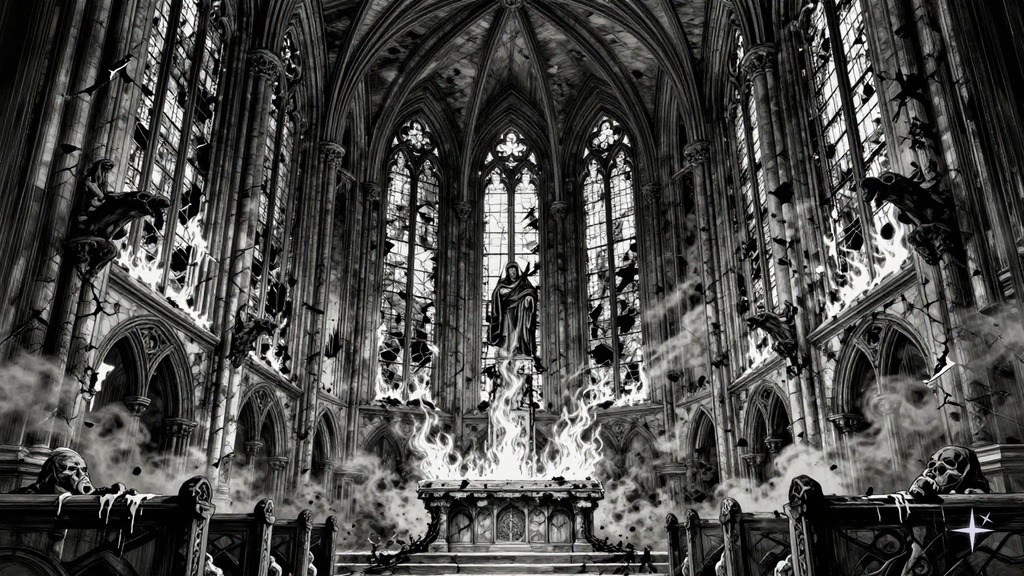
What makes this worth emphasizing: Fire Force starts out looking like a fairly standard supernatural action manga about firefighters battling people who spontaneously combust into flame monsters (called Infernals). The action framework is real — there are fire-powered battles, rival squads, and training sequences. But Ohkubo layers in conspiracy-driven horror from the very first volume, and the series grows progressively darker as it goes. By the final third, you’re deep in existential and religious horror territory that recontextualizes everything that came before.
That slow build is the entire point. Fire Force rewards reading from the beginning because the early “lighter” volumes are doing critical setup work. The foreshadowing is dense. Details that seem like throwaway worldbuilding in Volume 2 become devastating reveals twenty volumes later.
There is exactly one place to start: Chapter 1, Volume 1.
The Full Volume-by-Volume Breakdown
Here’s what each stretch of the series covers, broken into story segments (often called “arcs” — self-contained chunks of the larger narrative) without spoiling specific plot turns. Use this to know roughly where you are in the story and what tone to expect.
Volumes 1–6: The Foundation
The opening stretch introduces the core concept — spontaneous human combustion, Infernals (humans who have transformed into flame monsters), and the Special Fire Force companies tasked with putting them to rest. You meet protagonist Shinra Kusakabe and the members of Company 8 as they investigate why combustion cases are increasing.
These volumes establish the action-horror blend that defines the series. The fights are kinetic and visually inventive (Ohkubo’s art is consistently spectacular), but there’s an undercurrent of conspiracy from the start. Someone — or something — is deliberately creating Infernals. The horror here is mostly atmospheric: something is deeply wrong with this world, and Company 8 keeps bumping into walls when they try to investigate.
Don’t mistake these for “just setup.” The conspiratorial undertones in Volumes 1–6 are the foundation for everything that follows.
Volumes 7–12: The Horror Deepens
This is where Fire Force starts showing its teeth. A sinister cult built around a figure called the Evangelist — a mysterious entity whose true nature is one of the series’ central mysteries — enters the picture. The Pillars plotline (referring to certain individuals chosen by the Evangelist for a terrifying purpose) introduces a layer of body horror and psychological manipulation that shifts the series into darker territory.
Body horror, for those unfamiliar with the term, is horror that focuses on the violation or transformation of the human body — think disturbing physical changes forced on characters against their will. Fire Force leans into this heavily from here on. Characters are manipulated, transformed, and broken in ways that go well beyond standard action-series conflict. Ohkubo starts exploring what it means to have your body and identity taken from you — themes that will escalate relentlessly through the rest of the series.
If you were on the fence after the early volumes, this stretch is where Fire Force declares what kind of story it actually is.
Volumes 13–18: The Great Cataclysm
The revelations start coming faster here. The true nature of the Infernals, the history of the Great Cataclysm (a world-reshaping disaster in the series’ backstory), and the horrifying scope of the Evangelist’s plans all come into focus.
This is the section where Fire Force fully commits to horror. The action remains excellent, but the existential dread becomes the driving force. What seemed like a world with a new-monster-every-chapter problem turns out to be something far more disturbing. Readers who came for the action and stayed for the creeping unease will find that balance tipping hard toward cosmic horror — horror that deals with vast, incomprehensible forces beyond human understanding.
Volumes 19–24: Apocalyptic Escalation
The Evangelist’s plan moves into its active phase, and the disturbing truths about how this world was constructed come to light. “Apocalyptic” isn’t an exaggeration — the stakes become genuinely world-ending, and the horror shifts from personal body horror to something vast and almost incomprehensible.
These volumes are where Ohkubo’s ambition for the series becomes fully visible. The scale of what he’s been building toward is staggering, and the revelations rewrite your understanding of everything that came before. If you’ve read the creator’s earlier work, you may start noticing connections here that add another layer entirely (more on that below).
Volumes 25–30: The Endgame
The final story segments begin in earnest. Increasingly unsettling revelations about the origins of the world pile up, and the line between what’s real and what’s constructed becomes terrifyingly thin.
The horror in these volumes is existential in the truest sense — it’s about the nature of reality itself. Ohkubo takes concepts he introduced as seemingly straightforward supernatural elements and reveals them to be something far stranger and more disturbing.
Volumes 31–34: The Final Arc
The cosmic horror underlying the entire narrative resolves here. Without spoiling anything: the ending is ambitious, weird, and deeply connected to themes Ohkubo has been developing across his entire career as a manga creator.
These final four volumes are polarizing among readers — some find the conclusion brilliant, others find it too abstract. But love it or not, the ending is clearly what Ohkubo was building toward from the very beginning. The foreshadowing is all there if you go back and look.
Three Ways to Approach Fire Force
The Completionist Path
Read all 34 volumes of Fire Force, and also read Atsushi Ohkubo’s earlier series Soul Eater for the shared thematic and universe connections that deepen the final arc. This is the most rewarding way to experience the full scope of what Ohkubo built across both series. (See the Soul Eater section below for details on the connection.)
The Story-Only Path
Read all 34 volumes of Fire Force, straight through. Nothing to skip — there are no volumes of side content or material unrelated to the main plot that you could cut without losing important story or character development. Every volume matters.
This is the path for most readers. Fire Force stands completely on its own, and you don’t need any outside context to follow and enjoy the story. Most readers finish the full series in a few weeks of regular reading, though your pace will obviously depend on how much time you have.
The Sampler Path
Read Volumes 1–3 to test whether Fire Force’s horror-action blend works for you. By Volume 3, the darker conspiracies start surfacing and you’ll have a clear sense of where the series is headed tonally.
If the early volumes feel too light for your horror tastes, it’s worth knowing that the series gets significantly darker — the tone of Volume 12 is drastically different from Volume 1. Readers who found the opening stretch too action-heavy but were intrigued by the conspiracy threads often find the payoff worth the patience. That said, if Ohkubo’s core storytelling approach doesn’t click for you at all by Volume 3, pushing further may not change that.
The Soul Eater Connection — Should You Read It First?
This is the question that comes up in every Fire Force discussion. The short answer: no, you do not need to read Soul Eater before Fire Force. Fire Force is a self-contained story, and every plot point makes sense without Soul Eater knowledge. You will not be confused by the ending if you haven’t read the earlier series.
Now for the longer context. Atsushi Ohkubo created both Soul Eater and Fire Force. Late in Fire Force’s run, the manga reveals a significant story-level connection between the two series’ worlds — meaning this link is officially part of both stories, not a throwaway reference or hidden nod. It’s a deliberate, plot-relevant link that recontextualizes elements of both stories.
But does reading Soul Eater first make Fire Force better?
For the final arc specifically, yes — it adds a layer of depth and emotional resonance that you simply can’t get otherwise. The connection between the two worlds is one of the most ambitious things Ohkubo has done as a creator, and it hits hardest if you’re familiar with both sides.
For horror fans specifically: Soul Eater’s gothic horror tone — think witches, death gods, and madness as a cosmic force, all filtered through a Halloween-flavored visual style — complements Fire Force’s body horror and apocalyptic dread beautifully. They’re different flavors of dark. Together, they form a remarkably cohesive horror universe.
The suggested approach: If you have the time, read Soul Eater first (or at least before you hit Fire Force’s final volumes). If you want to get straight into Fire Force, go for it — you can always read Soul Eater afterward and then revisit the ending with new eyes.
One important note: avoid looking up what the specific connection between the series is before you read both. It’s a major late-series reveal in Fire Force, and having it spoiled significantly diminishes the impact.
Where to Buy Fire Force in English
All 34 volumes are available in English from Kodansha Comics in three formats:
Single volumes (34 paperback volumes) are the original English release. At typical retail prices of roughly $10–13 each, a full single-volume collection runs approximately $340–$440 at list price before any discounts. This is a substantial shelf commitment, but the uniform Kodansha printings look great together. The cover art throughout the series is excellent — Ohkubo’s design sense is one of his greatest strengths. His art is detailed and dynamic, with page layouts that reward a full-size reading experience.
Omnibus editions (12 volumes — the first ten each collecting three single volumes, the final two collecting two volumes each, in a larger-format paperback) offer a more shelf-efficient and budget-friendly way to own the complete series physically. The omnibus line was released from November 2022 through September 2024, so all twelve volumes are currently available.
Box sets are also available, bundling multiple single volumes together — for example, Box Set 1 covers Volumes 1–6. These can offer savings over buying individual volumes and make a convenient entry point.
On cost: Keeping an eye out for bundle deals, box sets, or sales at major retailers can bring the per-volume cost down meaningfully from list price. The omnibus editions in particular offer more pages per dollar than the single volumes.
Digital editions are available through major manga platforms and are an equally complete way to read the series. Digital is a strong option for budget-conscious readers, for those without shelf space, or for anyone testing the waters — grab the first few volumes digitally, and if you’re hooked, decide whether you want to commit to physical for the full run. You’re getting the same story and the same art either way.
The card below shows Vol. 34, the final volume — a quick way to confirm the complete run, with Volume 1 and the rest reachable from the same retailer pages:
Fire Force
Common Reading Order Mistakes to Avoid
Assuming the Anime Covers Everything
If you’ve never watched the Fire Force anime and are coming to the series fresh, you can skip this section entirely — just start at Volume 1.
For those who watched the anime first: the Fire Force anime adaptation differs from the manga in pacing and some content. If you’re thinking about picking up the manga “where the anime left off,” be cautious — you may be missing material that the anime condensed or rearranged. The manga is the complete, definitive version of the story.
The safest approach if you’re coming from the anime: start the manga from Volume 1. Yes, you’ll be re-covering some familiar ground, but Ohkubo’s art carries details and foreshadowing that the anime couldn’t always replicate, and you’ll catch setup for later reveals that hits differently on the page.
Skipping Early Volumes Because They Seem Too Light
This is the most common mistake with Fire Force. The early volumes have a brighter tone and more conventional action structure, which leads some horror-focused readers to skip ahead or drop the series before it gets dark.
Don’t. The horror foreshadowing in those early chapters is essential for the later payoffs. Ohkubo is deliberately establishing a “normal” baseline so that the gradual corruption of that normalcy hits harder. Scenes that seem like standard comedy in Volume 2 take on completely different meaning when you reach Volume 20. The slow build is the horror.
Spoiling the Soul Eater Connection Before Reading Either Series
If you’re researching the Fire Force manga reading order online, you will inevitably encounter discussions about how Fire Force connects to Soul Eater. Many of these discussions spoil the specific nature of the connection, which is revealed late in Fire Force’s run.
This is a genuine “the less you know, the better” situation. The reveal is one of the most memorable moments in the series, and it works best when it catches you off guard. If you’ve already been spoiled, the story still works — but if you haven’t, protect that experience. Bookmark whatever Soul Eater discussion you’ve found and come back to it after you finish Fire Force Volume 34.
—
The Fire Force manga reading order is simple — 34 volumes, start to finish, no detours. The commitment is real but so is the payoff for reading from the beginning. Grab Volume 1, settle in, and let the slow burn do its work.